

Digital Infrastructure Standards Every New Facility Plan Should Address
For project managers and engineering leads planning new facilities, Digital Infrastructure standards should be treated as a core design requirement, not a late-stage checklist. From power reliability and thermal control to sensor accuracy, data integrity, and compliance readiness, the right standards framework helps reduce risk, protect uptime, and ensure long-term operational performance in increasingly complex industrial environments.
Why Digital Infrastructure standards are moving to the front of facility planning
A visible shift is taking place across industrial projects, advanced manufacturing sites, logistics hubs, data-intensive plants, and semiconductor-adjacent environments: digital systems are no longer support utilities. They now shape production continuity, traceability, energy performance, automation readiness, and even market access. As a result, Digital Infrastructure standards are becoming a board-level and project-gate issue rather than a commissioning-stage concern.
This change is especially relevant for new facilities tied to high-value electronics, industrial IoT, precision sensing, power conversion, clean environments, and high-availability operations. In these settings, a weak standardization strategy can create hidden downstream costs: unstable network architecture, poor grounding, thermal hotspots, incompatible sensor data, audit failures, and expensive retrofits once the plant is already running.
For project leaders, the practical question is no longer whether standards matter. The real question is which Digital Infrastructure standards should be addressed early, how they interact across disciplines, and what changes in technology and compliance are making the old “install now, optimize later” mindset increasingly risky.
The strongest trend signals changing facility requirements
Several trend signals explain why Digital Infrastructure standards now influence design decisions from day one. First, facilities are handling more real-time data from smart sensors, machine vision, environmental monitoring, and connected equipment. Second, energy quality and thermal management have become critical because higher computing density and automated controls increase sensitivity to power disturbances. Third, customer and regulatory expectations are rising around cybersecurity, data traceability, and validation of critical systems.
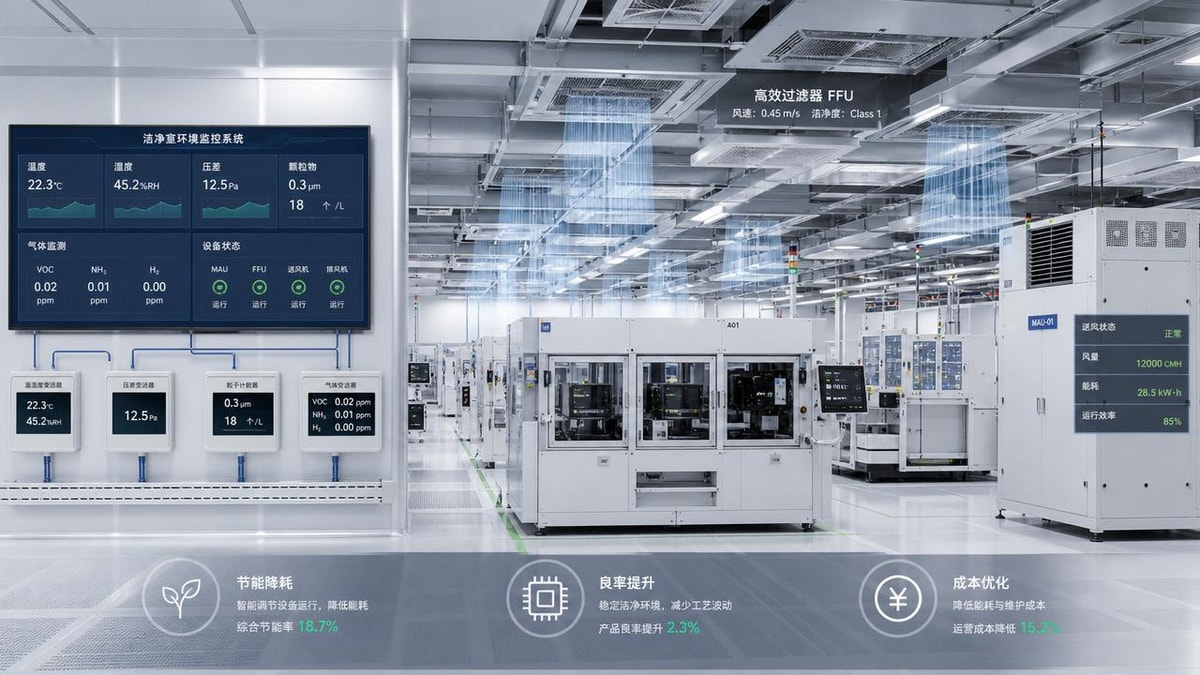
In semiconductor-related and sensory-infrastructure environments, these changes are even sharper. A modern facility may rely on sub-second data capture, highly stable environmental parameters, and tightly controlled uptime conditions. Small deviations in airflow, temperature, vibration, gas monitoring, or power conditioning can ripple through quality, yield, and safety performance. That is why Digital Infrastructure standards are increasingly tied to operational resilience, not just IT design.
What is driving the shift behind Digital Infrastructure standards
The shift is not driven by one technology alone. It is the result of several pressures converging. Automation systems need reliable data. Advanced equipment needs stable electrical and thermal conditions. Corporate governance teams need evidence of control. And investors increasingly expect resilience in supply chains and operational assets.
For engineering managers, this means standards must be viewed as an integrated framework across facilities engineering, OT, IT, environmental controls, and quality systems. In practice, project teams should connect Digital Infrastructure standards with recognized references such as ISO/IEC frameworks for information and testing quality, structured cabling standards, grounding and bonding practices, redundancy design principles, and industry-specific requirements where cleanroom, semiconductor, or industrial process conditions apply.
The influence of semiconductor and sensory-infrastructure trends is also important. As industries adopt smarter power modules, MEMS-based monitoring, edge analytics, and denser control architecture, infrastructure tolerance narrows. Systems have to perform consistently under heat load, electromagnetic interference, vibration, and data-intensive operating cycles. This is one reason why Digital Infrastructure standards are now part of future-readiness discussions rather than only compliance reviews.
The standards areas new facility plans should address first
Project teams often lose time by treating standards as separate technical checklists. A more useful approach is to identify the few standards domains that influence the most downstream decisions. For most new facilities, the following areas deserve early and structured attention.
1. Power continuity and power quality
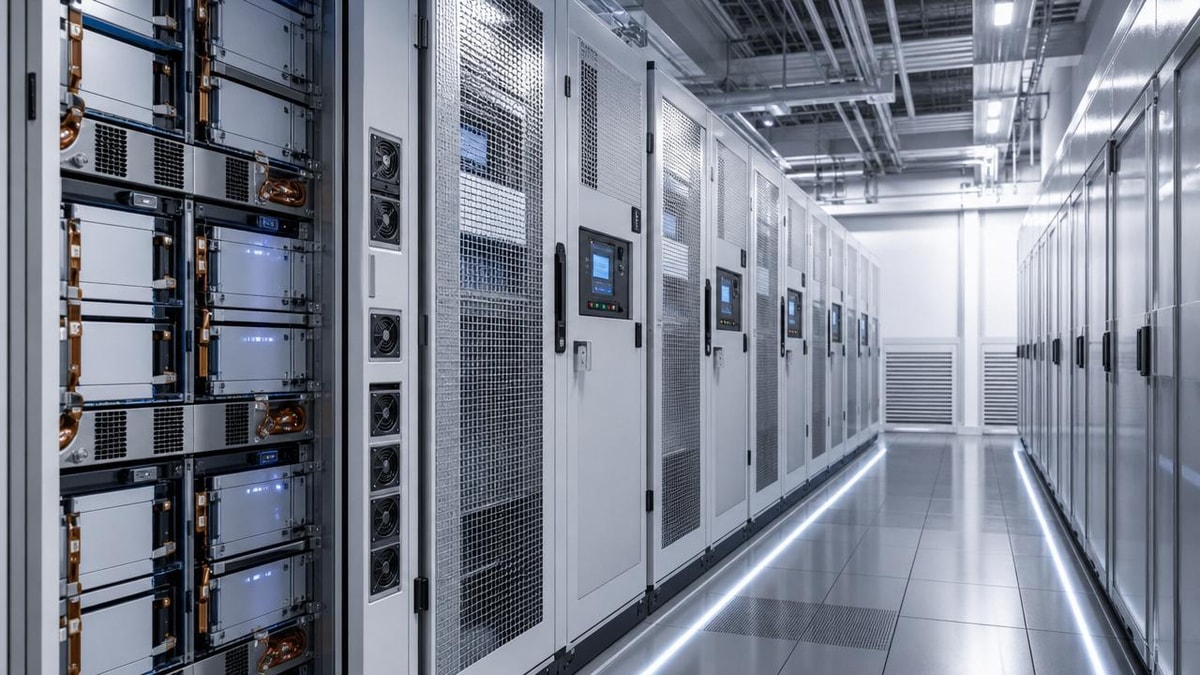
High-value facilities increasingly depend on clean, stable, and monitored power. Standards planning should cover redundancy philosophy, UPS strategy, harmonics, transient protection, grounding, and the monitoring needed to detect degradation before failure. In power semiconductor and high-precision environments, this is directly linked to equipment health, process consistency, and safety.
2. Thermal management and environmental stability
Heat is now a digital infrastructure issue as much as a building-services issue. Edge equipment, control cabinets, server racks, machine interfaces, and sensing nodes all have thermal limits. Standards should define acceptable environmental ranges, airflow paths, hotspot prevention, and monitoring strategy. Facilities that ignore this early often face reliability drift after occupancy.
3. Structured connectivity and network segmentation
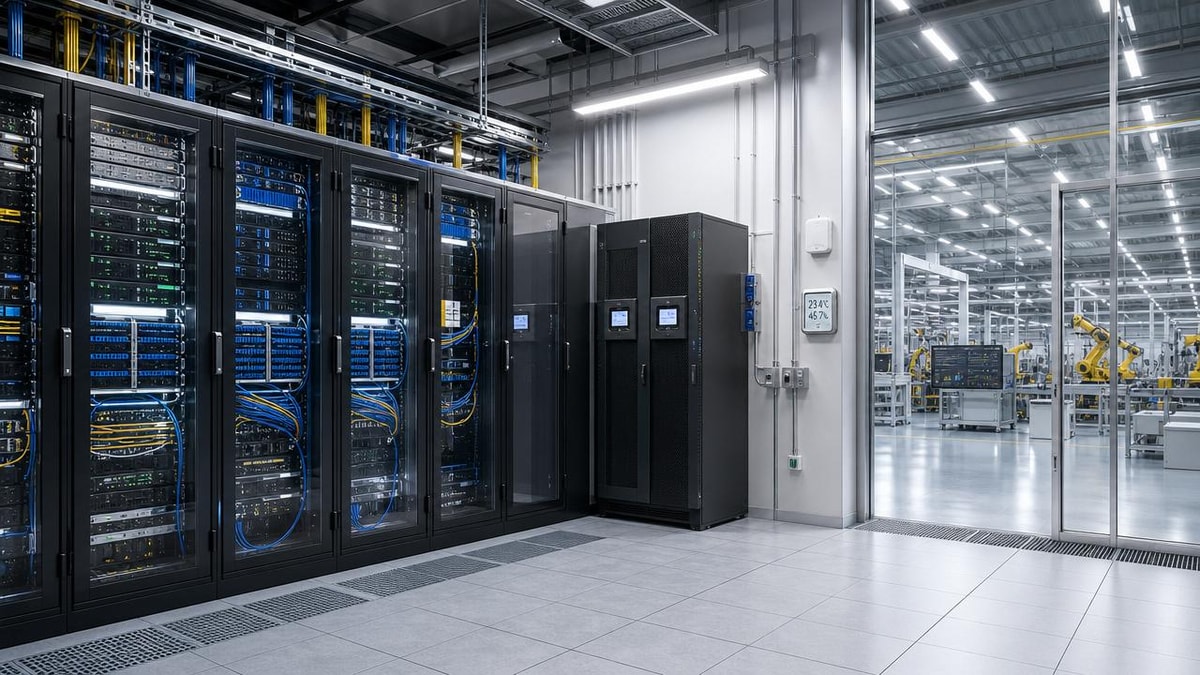
Digital Infrastructure standards should guide cable pathways, fiber strategy, labeling, patching discipline, EMI-aware routing, and the separation of business IT, OT, safety, and critical process zones. This is especially relevant where future automation expansion is likely. Overbuilding slightly at design stage is usually far cheaper than disruptive recabling later.
4. Sensor integrity, calibration, and time alignment
As facilities depend more on environmental sensing and machine data, standards for sensor placement, calibration intervals, reference traceability, and timestamp consistency become operational essentials. Poor data quality does not always fail visibly at startup, but it undermines analytics, alarms, and root-cause investigations over time.
5. Cybersecurity and access governance
A new facility without defined cyber architecture is already behind. Project plans should reflect standards-driven segmentation, privileged access control, secure remote maintenance methods, asset visibility, and change management. The trend is clear: cyber expectations are moving closer to operational reliability requirements, not sitting separately from them.
6. Documentation, testing, and validation readiness
Commissioning data, test records, as-built documentation, and validation logic should be aligned with Digital Infrastructure standards from the beginning. This supports handover, audits, expansion phases, and insurance or customer reviews. In complex facilities, undocumented infrastructure becomes a long-term operational liability.
Who feels the impact most and where projects often break down
The impact of changing Digital Infrastructure standards is not uniform. Some teams encounter cost pressure, while others face schedule risk or performance risk. Understanding who is affected helps project leaders build stronger coordination earlier.
A recurring breakdown point is the handoff between design consultants, equipment suppliers, automation vendors, and internal operations teams. Each group may assume someone else owns standards coordination. The result is a facility that appears complete on paper but lacks coherence in redundancy logic, monitoring architecture, naming conventions, or sensor validation. That is why Digital Infrastructure standards should be assigned clear ownership at project governance level.
How to judge whether your facility plan is ready for the next five years
The best planning decisions are not based only on current capacity. They are based on how change will continue. Project managers should therefore test their facility plan against likely future conditions: more sensors, more automation, tighter reporting requirements, more remote diagnostics, greater energy scrutiny, and stricter customer expectations around resilience.
A practical readiness check starts with a few judgment questions. Can the infrastructure scale without major rewiring or shutdowns? Are power and cooling assumptions based on actual digital load growth? Is there a documented standard for time-synced data across critical systems? Can operations teams trace alarm events back to validated sensor data? Has cyber segmentation been designed into the architecture rather than added afterward? If the answer to several of these questions is unclear, the project likely needs stronger Digital Infrastructure standards integration.
What project leaders should do now
The immediate response should not be to create more paperwork. It should be to improve decision timing. First, define a standards baseline before detailed design is frozen. Second, map dependencies between electrical, HVAC, controls, networking, sensor systems, and compliance requirements. Third, require vendors to state how their solutions align with the project’s Digital Infrastructure standards instead of relying on generic datasheets.
It is also wise to build a tiered priority model. Some standards elements are mission-critical on day one, such as grounding integrity, redundancy design, cyber zoning, calibration traceability, and test documentation. Others can be phased, such as advanced analytics layers or noncritical visualization enhancements. This helps protect budget discipline without weakening the facility’s long-term digital backbone.
For organizations operating near semiconductor, clean process, or high-reliability industrial environments, the value of stronger Digital Infrastructure standards is strategic. It supports supply chain confidence, process repeatability, better data fidelity, and smoother expansion as technology requirements evolve.
Final judgment for planning teams
The market direction is clear: facility value is increasingly determined by how well physical systems and digital systems are designed together. Digital Infrastructure standards are not just a technical formality. They are a design discipline that influences resilience, efficiency, compliance, and future adaptability.
If your organization is planning a new site, a major expansion, or a high-availability upgrade, the most useful next step is to confirm where standards decisions are still implicit rather than documented. Review power quality assumptions, thermal risk points, sensor governance, connectivity architecture, cybersecurity boundaries, and validation requirements. Those questions will reveal whether the project is prepared for the next operating cycle or only for initial handover.
For project managers and engineering leads, that is the core takeaway: address Digital Infrastructure standards early, treat them as cross-functional design criteria, and use them to guide better judgment before cost, complexity, and operational risk become harder to control.
Get weekly intelligence in your inbox.
No noise. No sponsored content. Pure intelligence.
 Apr 28, 2026When do rapid prototyping 3D printing services save real costWhen do rapid prototyping 3D printing services save real cost
 Apr 28, 2026What Can Go Wrong in Fan-out Wafer Level Pkg?What Can Go Wrong in Fan-out Wafer Level Pkg?
 Apr 28, 2026What Makes Optical LiDAR Modules Better for Autonomy?What Makes Optical LiDAR Modules Better for Autonomy?
 Apr 28, 20262026 Market Trends in Supply Chain Resilience for Fabs2026 Market Trends in Supply Chain Resilience for Fabs
 May 03, 2026Commercial EV Charging Station Installation: Site Issues to Catch EarlyCommercial EV Charging Station Installation: Site Issues to Catch Early
 May 03, 2026Photovoltaic Modules for Residential Use: What Actually Impacts PaybackPhotovoltaic Modules for Residential Use: What Actually Impacts Payback
 May 03, 2026Solar Panels Wholesale USA: Pricing Factors That Change Bulk OrdersSolar Panels Wholesale USA: Pricing Factors That Change Bulk Orders
 May 03, 2026Lithium Ion Batteries Manufacturer in China: How to Shortlist Reliable PartnersLithium Ion Batteries Manufacturer in China: How to Shortlist Reliable Partners
 May 03, 2026ESS Energy Storage Lithium Ion Batteries: What Affects Lifetime MostESS Energy Storage Lithium Ion Batteries: What Affects Lifetime Most
 May 03, 2026ESS Energy Storage for Renewable Energy: Sizing Basics That MatterESS Energy Storage for Renewable Energy: Sizing Basics That Matter
 May 03, 2026Cost-Effective Hybrid Inverters Without Hidden Performance Trade-OffsCost-Effective Hybrid Inverters Without Hidden Performance Trade-Offs
 May 03, 2026Hybrid Inverters for Solar Energy Systems: When They Make More SenseHybrid Inverters for Solar Energy Systems: When They Make More Sense
 May 03, 2026Semiconductor Fabrication Supplier Risks That Delay Capacity ExpansionSemiconductor Fabrication Supplier Risks That Delay Capacity Expansion
 May 03, 2026Supply Chain Resilience in Electronics Manufacturing Starts with Dual SourcingSupply Chain Resilience in Electronics Manufacturing Starts with Dual Sourcing
 May 03, 2026How Cleanroom Environment Control Solutions Affect Operating CostsHow Cleanroom Environment Control Solutions Affect Operating Costs
 May 03, 2026Environment Control Solutions for Cleanrooms: What Impacts Yield MostEnvironment Control Solutions for Cleanrooms: What Impacts Yield Most
 May 03, 2026How Digital Infrastructure Shapes Smarter City Expansion PlansHow Digital Infrastructure Shapes Smarter City Expansion Plans
 May 03, 2026Digital Infrastructure for 5G Networks: Build Now or Upgrade LaterDigital Infrastructure for 5G Networks: Build Now or Upgrade Later
 May 03, 2026Digital Infrastructure Standards Every New Facility Plan Should AddressDigital Infrastructure Standards Every New Facility Plan Should Address
 May 03, 2026IC Testing Standards That Reduce Rework in Volume ProductionIC Testing Standards That Reduce Rework in Volume Production
 May 03, 2026Industrial IoT Certification: What Matters Before System RolloutIndustrial IoT Certification: What Matters Before System Rollout
 May 03, 2026Autonomous Systems for Industrial Automation: Common Integration MistakesAutonomous Systems for Industrial Automation: Common Integration Mistakes
 May 03, 2026Choosing an Autonomous Systems Supplier for Scalable AutomationChoosing an Autonomous Systems Supplier for Scalable Automation
 May 03, 2026Autonomous Systems OEM vs Supplier: What Changes in Project ControlAutonomous Systems OEM vs Supplier: What Changes in Project Control
 May 03, 2026How to Vet a MEMS Sensors Manufacturer for Long-Term SupplyHow to Vet a MEMS Sensors Manufacturer for Long-Term Supply
 May 03, 2026MEMS Sensors for Medical Devices: Key Factors Before Product ApprovalMEMS Sensors for Medical Devices: Key Factors Before Product Approval
 May 03, 2026How MEMS Sensors Improve Stability in Industrial Motion MonitoringHow MEMS Sensors Improve Stability in Industrial Motion Monitoring