Advanced Semiconductor Packaging Trends Shaping Chiplet Design in 2026
Advanced Semiconductor Packaging is redefining chiplet design in 2026, as enterprises demand higher bandwidth, lower power loss, and stronger supply chain resilience. For autonomous platforms, power electronics, and sovereign digital infrastructure, packaging now determines not only performance, but also thermal stability, yield economics, and lifecycle reliability. In this environment, Advanced Semiconductor Packaging has shifted from a backend task to a board-level and system-level strategy.
Why a checklist is essential for Advanced Semiconductor Packaging decisions
Chiplet roadmaps now span foundry nodes, interposers, substrates, test flows, and software-aware power delivery. A checklist prevents teams from optimizing one layer while creating bottlenecks elsewhere.
This matters across the broader industrial landscape. AI edge systems, EV power domains, industrial sensing, and secure infrastructure all depend on packaging choices that balance density, heat, latency, and supply continuity.
In 2026, Advanced Semiconductor Packaging also carries geopolitical weight. Sovereign manufacturing strategies increasingly favor package architectures that can absorb substrate shortages, node fragmentation, and regional test constraints.
Core checklist for evaluating chiplet packaging in 2026
- Map bandwidth targets first, then select 2.5D, fan-out, or 3D stacking based on interconnect density, latency tolerance, and package escape routing limits.
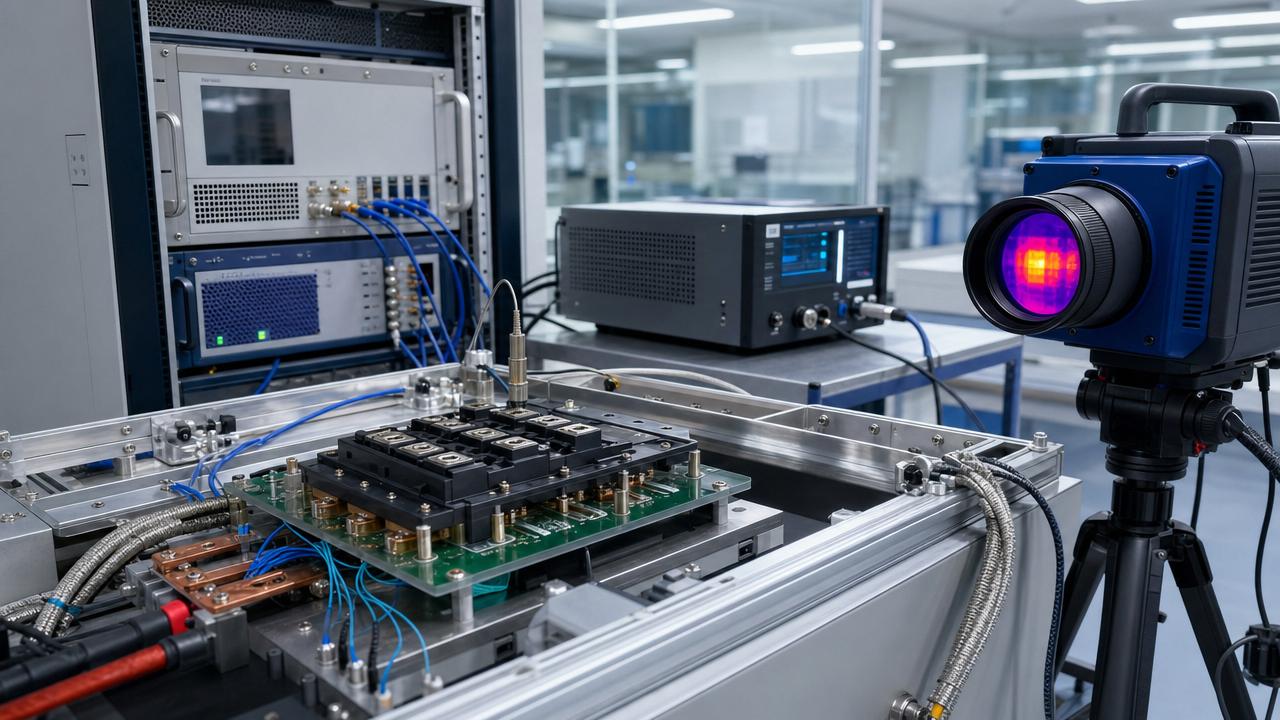
- Quantify thermal headroom at package level, including hotspot migration, lid strategy, TIM aging, and cold-plate compatibility under real workload bursts.
- Validate substrate availability early, especially for ABF, glass core pilots, and high-layer organic builds that may constrain scale-up timelines.
- Compare power delivery network options by IR drop, decoupling efficiency, and transient response rather than relying only on nominal package resistance figures.
- Align chiplet partitioning with test strategy so known-good-die assumptions, burn-in coverage, and final package screening support acceptable yield economics.
- Check warpage risk across assembly temperatures, underfill behavior, and board attach conditions to avoid reliability loss during volume ramp.
- Review signal integrity and electromagnetic coupling together, especially where high-speed SerDes, HBM interfaces, and mixed-signal sensor islands coexist.
- Benchmark material choices against operating environment, including vibration, humidity, corrosive gases, and thermal cycling typical in industrial infrastructure.
- Confirm standards alignment with SEMI, AEC-Q100, JEDEC, and internal qualification protocols before architecture freeze and supplier nomination.
- Model total lifecycle cost, not just package unit price, including scrap exposure, field return risk, energy efficiency, and redesign probability.
Key Advanced Semiconductor Packaging trends shaping chiplet design
2.5D remains the pragmatic high-bandwidth baseline
For many compute and sensing platforms, 2.5D offers the strongest balance of maturity and performance. Silicon interposers support dense die-to-die links without the thermal stress of full vertical integration.
Advanced Semiconductor Packaging in this segment is increasingly defined by interposer power routing, HBM proximity, and package-level repair economics rather than raw interconnect pitch alone.
Hybrid bonding pushes 3D integration forward
Hybrid bonding is moving from pilot status toward broader deployment. It improves vertical interconnect density and reduces parasitics, supporting memory-centric and logic-on-logic chiplet designs.
However, this form of Advanced Semiconductor Packaging raises demands for surface planarity, contamination control, and defect inspection. Process discipline becomes as important as architecture ambition.
Fan-out and panel-level approaches expand cost flexibility
Fan-out packaging supports thinner profiles and shorter interconnects for edge AI, sensor fusion, and mixed-domain modules. Panel-level formats may improve scale economics where substrate complexity can be reduced.
These options are gaining attention because Advanced Semiconductor Packaging must increasingly serve both premium performance products and cost-sensitive industrial deployments.
Co-design replaces handoff-based development
Package, die, board, and thermal design can no longer be separated into late-stage handoffs. Electrical, mechanical, and manufacturing constraints now shape chiplet partitioning from the start.
This is one of the most important shifts in Advanced Semiconductor Packaging. Teams that adopt co-design reduce rework, qualification delay, and hidden integration loss.
Application scenarios that require different packaging priorities
Autonomous and edge intelligence systems
Autonomous systems need high compute density, fast memory access, and deterministic sensing pipelines. Packaging must support thermal bursts, vibration resistance, and mixed workloads across logic, memory, and sensor interfaces.
Here, Advanced Semiconductor Packaging should be judged by sustained throughput per watt and field reliability, not only benchmark peak speed.
Power electronics and high-efficiency conversion
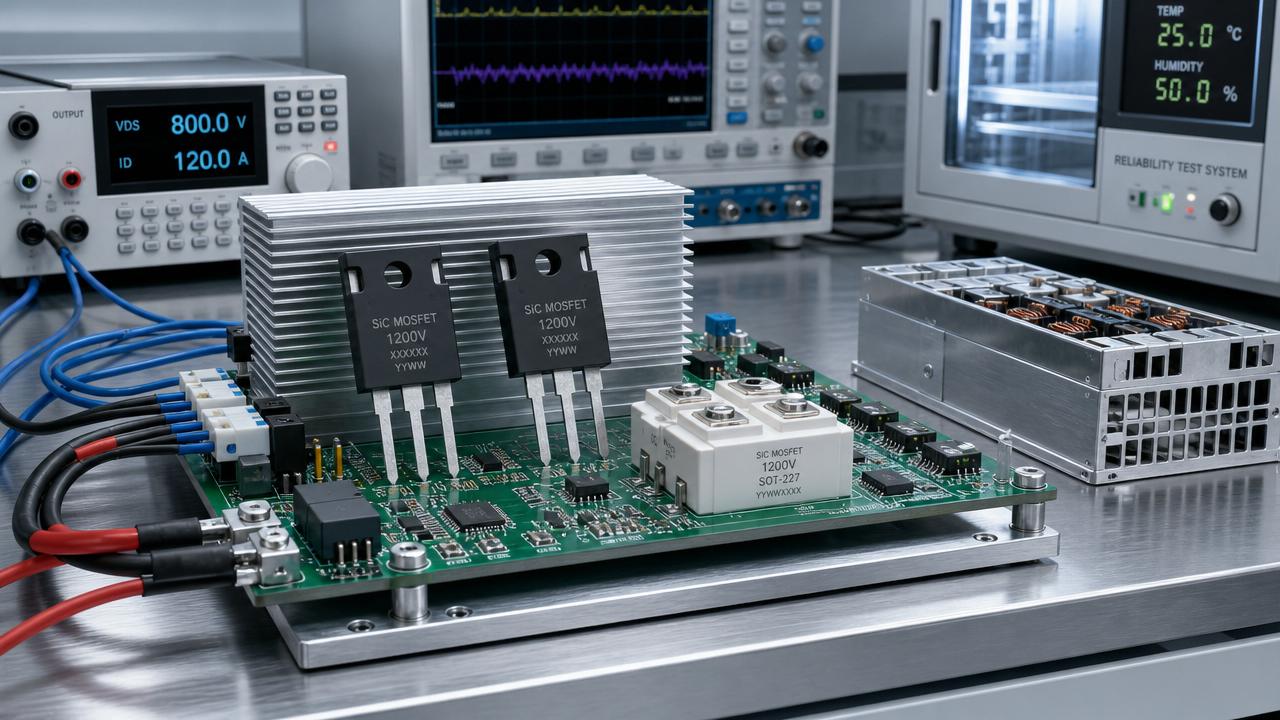
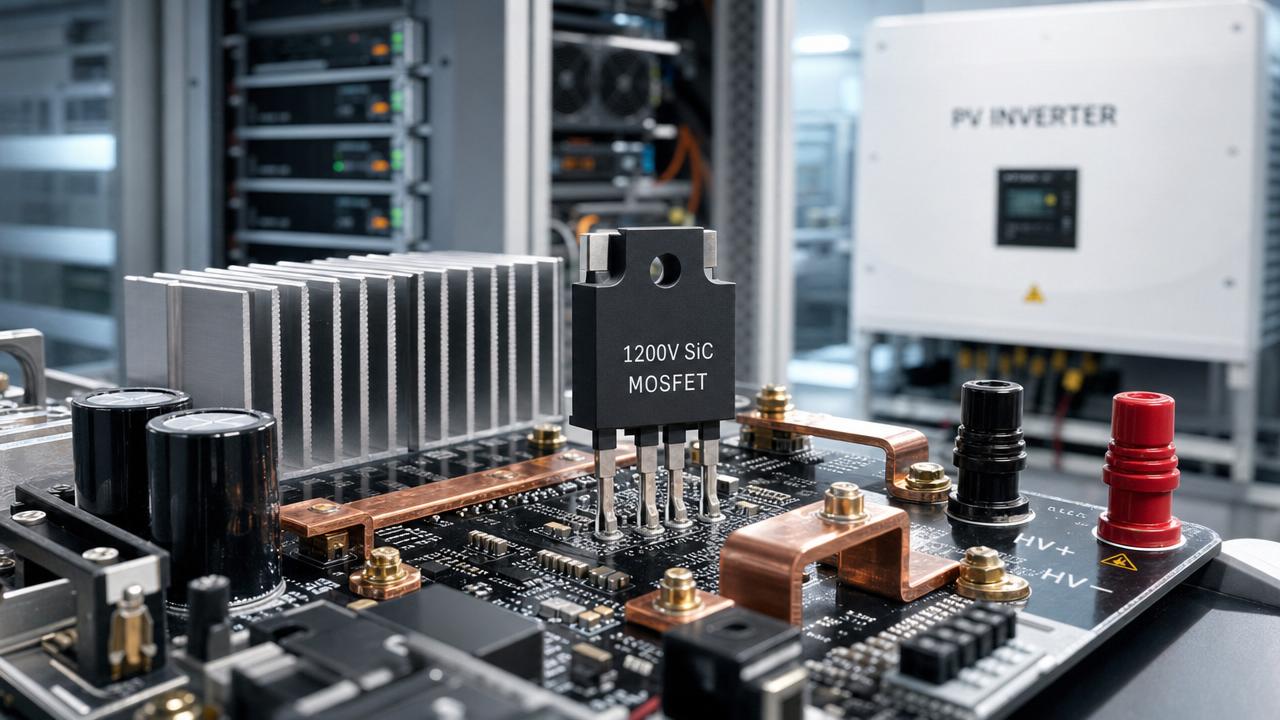
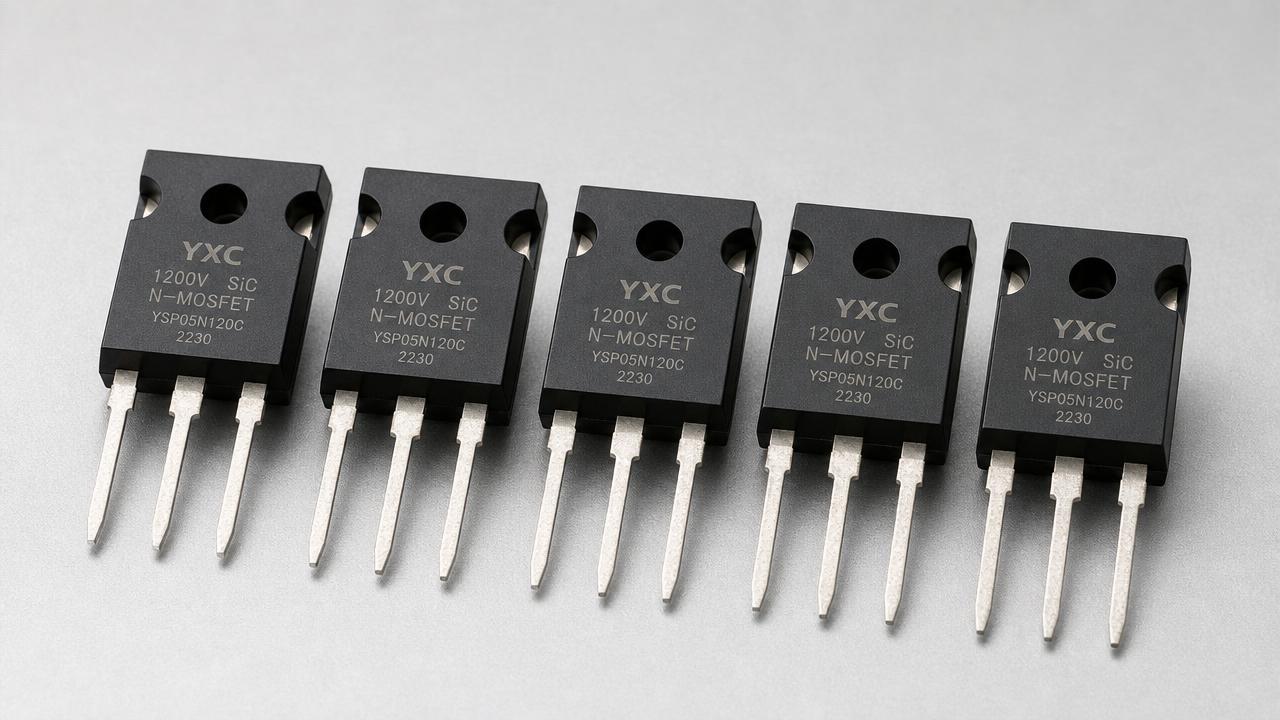
In SiC and GaN systems, package parasitics directly affect switching behavior, EMI, and heat removal. Chiplet logic may support control, sensing, and protection functions around the power stage.
Advanced Semiconductor Packaging in this context must emphasize low inductance paths, robust thermal spreading, and long-cycle material reliability under harsh electrical stress.
Industrial IoT and sensor-rich infrastructure
Industrial sensing platforms often combine MEMS, analog front ends, edge processing, and secure connectivity. Packaging choices affect noise isolation, calibration stability, and environmental endurance.
For these systems, Advanced Semiconductor Packaging should support modular chiplet replacement and qualification traceability across long deployment cycles.
Commonly overlooked risks
- Ignoring test escape costs. A brilliant chiplet partition can fail commercially if compound yield and final test coverage are not modeled together.
- Underestimating thermal interface aging. Initial thermal performance may look acceptable, then degrade after cycling, vibration, or contamination exposure.
- Assuming substrate supply is interchangeable. Not all vendors can meet the same line width, flatness, stack-up, or warpage control requirements.
- Treating reliability standards as paperwork. Qualification methods strongly influence material selection, assembly flow, and field return probability.
- Separating security from packaging. Chiplet interfaces, debug access, and heterogeneous sourcing can create new hardware trust vulnerabilities.
Practical execution steps
Start with three models in parallel: bandwidth and latency, thermal resistance and hotspot distribution, and supply chain exposure by material and process node.
Then run a down-select between at least two package architectures. Compare 2.5D, fan-out, or 3D options using identical workload assumptions and qualification gates.
Next, build a package-risk matrix covering substrate dependency, known-good-die confidence, assembly complexity, and field service consequences. This makes Advanced Semiconductor Packaging decisions more defensible.
Finally, require design reviews that include packaging, test, thermal, and reliability data together. Packaging decisions made in isolation rarely hold up in production.
Conclusion and next action
Advanced Semiconductor Packaging is now a strategic lever for chiplet design in 2026. The winning approach combines bandwidth scaling, thermal discipline, qualification rigor, and supply resilience within one decision framework.
Use the checklist above to audit current package assumptions, identify hidden bottlenecks, and prioritize architectures that match both technical and operational goals.
Where long-term infrastructure, power efficiency, and trusted manufacturing matter, Advanced Semiconductor Packaging should be treated as a first-order design decision, not a backend optimization.
Get weekly intelligence in your inbox.
No noise. No sponsored content. Pure intelligence.
 Apr 28, 2026When do rapid prototyping 3D printing services save real costWhen do rapid prototyping 3D printing services save real cost
 Apr 28, 2026What Can Go Wrong in Fan-out Wafer Level Pkg?What Can Go Wrong in Fan-out Wafer Level Pkg?
 Apr 28, 2026What Makes Optical LiDAR Modules Better for Autonomy?What Makes Optical LiDAR Modules Better for Autonomy?
 Apr 28, 20262026 Market Trends in Supply Chain Resilience for Fabs2026 Market Trends in Supply Chain Resilience for Fabs
 Jun 02, 2026Third-Generation Semiconductors: SiC vs GaN ChoicesThird-Generation Semiconductors: SiC vs GaN Choices
 Jun 02, 2026Custom Sheet Metal Fabrication Cost Drivers ExplainedCustom Sheet Metal Fabrication Cost Drivers Explained
 Jun 02, 2026AR Glasses Adoption: Key Use Cases and LimitsAR Glasses Adoption: Key Use Cases and Limits
 Jun 02, 2026Supply Chain Intelligence for Semiconductor Risk ControlSupply Chain Intelligence for Semiconductor Risk Control
 Jun 02, 2026Monocrystalline Solar Cost Risks in 2026 ProjectsMonocrystalline Solar Cost Risks in 2026 Projects
 Jun 02, 2026METI Adds 1200V SiC Modules to Green Export ListMETI Adds 1200V SiC Modules to Green Export List
 Jun 02, 2026Huawei, SMIC Detail Copper SiC MOSFET ReliabilityHuawei, SMIC Detail Copper SiC MOSFET Reliability
 Jun 02, 2026Microchip 1200V SiC MOSFETs Gain DoD PriorityMicrochip 1200V SiC MOSFETs Gain DoD Priority
 Jun 02, 2026EN 62368-3 Sets Hot EMI Test for 1200V SiCEN 62368-3 Sets Hot EMI Test for 1200V SiC
 Jun 02, 2026Toshiba 1200V SiC MOSFET Nears ProductionToshiba 1200V SiC MOSFET Nears Production
 Jun 01, 2026Servo Motors Wholesale: How to Compare Supplier ValueServo Motors Wholesale: How to Compare Supplier Value
 Jun 01, 2026Aluminum Extrusions: Cost Drivers in Custom ProjectsAluminum Extrusions: Cost Drivers in Custom Projects
 Jun 01, 2026Smart Manufacturing for Pharmaceutical Industry in 2026Smart Manufacturing for Pharmaceutical Industry in 2026
 Jun 01, 2026Robot Vacuum Cleaners: Features That Actually MatterRobot Vacuum Cleaners: Features That Actually Matter
 Jun 01, 2026Collaborative Robots: Key Safety Risks Before DeploymentCollaborative Robots: Key Safety Risks Before Deployment
 Jun 01, 2026Japan METI Launches Green Semiconductor Export White ListJapan METI Launches Green Semiconductor Export White List
 Jun 01, 2026Wolfspeed Launches 3.3kV SiC Module for Solid-State Transformers at PCIM 2026Wolfspeed Launches 3.3kV SiC Module for Solid-State Transformers at PCIM 2026
 Jun 01, 2026EU RED Amendment Draft Requires EMI Thermal Stability Testing for ≥1000V SiC Power DevicesEU RED Amendment Draft Requires EMI Thermal Stability Testing for ≥1000V SiC Power Devices
 Jun 01, 2026Infineon 1200V+ SiC Modules Lead Times Extended to 36 Weeks GloballyInfineon 1200V+ SiC Modules Lead Times Extended to 36 Weeks Globally
 May 31, 2026Laboratory Incubators: Common Temperature Control RisksLaboratory Incubators: Common Temperature Control Risks
 May 31, 2026Port Automation Tech for Bulk Terminals: 2026 TrendsPort Automation Tech for Bulk Terminals: 2026 Trends
 May 31, 2026Supply Chain Intelligence Reports: Risk Signals to TrackSupply Chain Intelligence Reports: Risk Signals to Track
 May 31, 2026Industrial IoT Platform for Predictive Maintenance ROIIndustrial IoT Platform for Predictive Maintenance ROI