Japan METI Launches Green Semiconductor Export White List
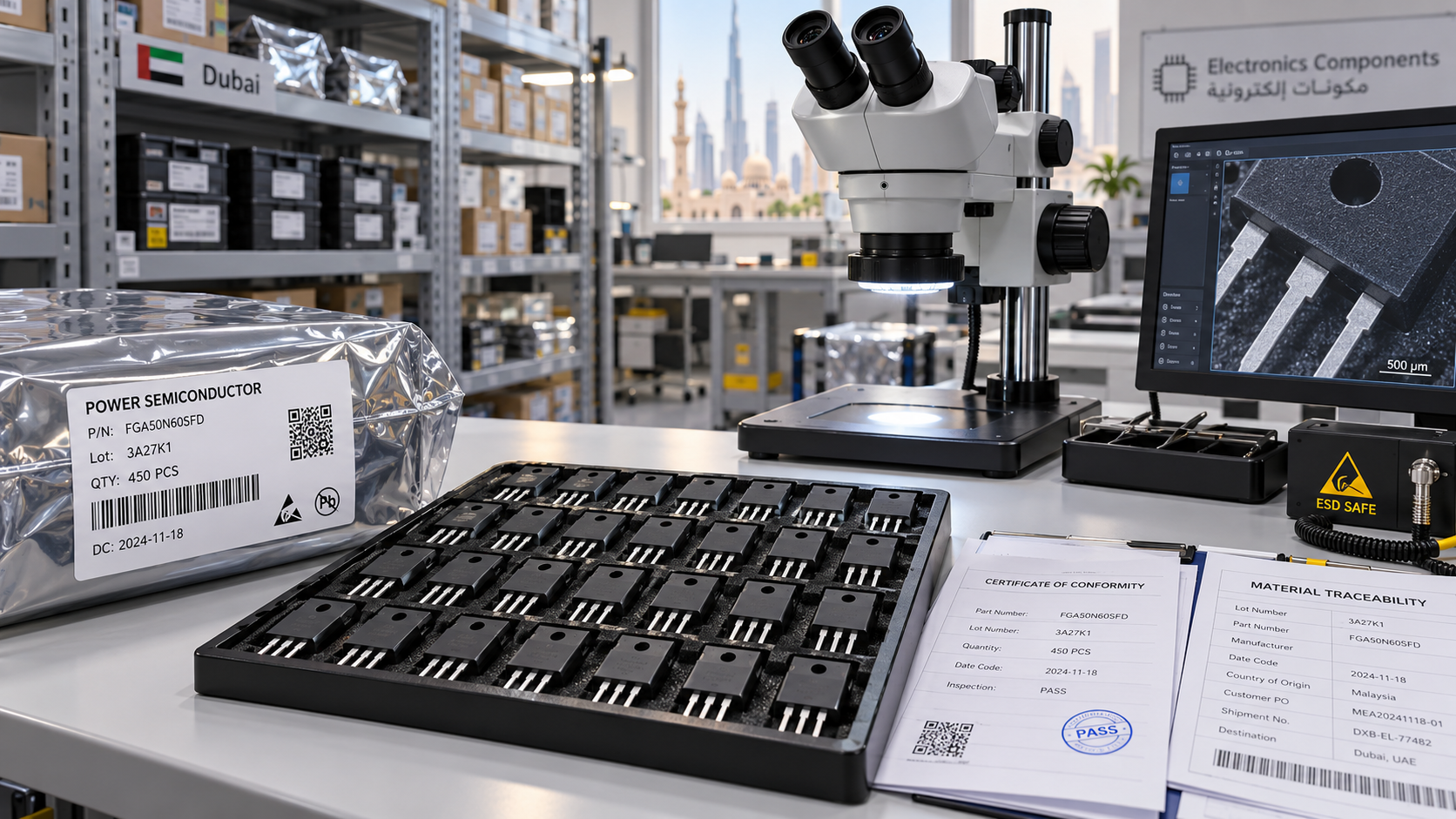
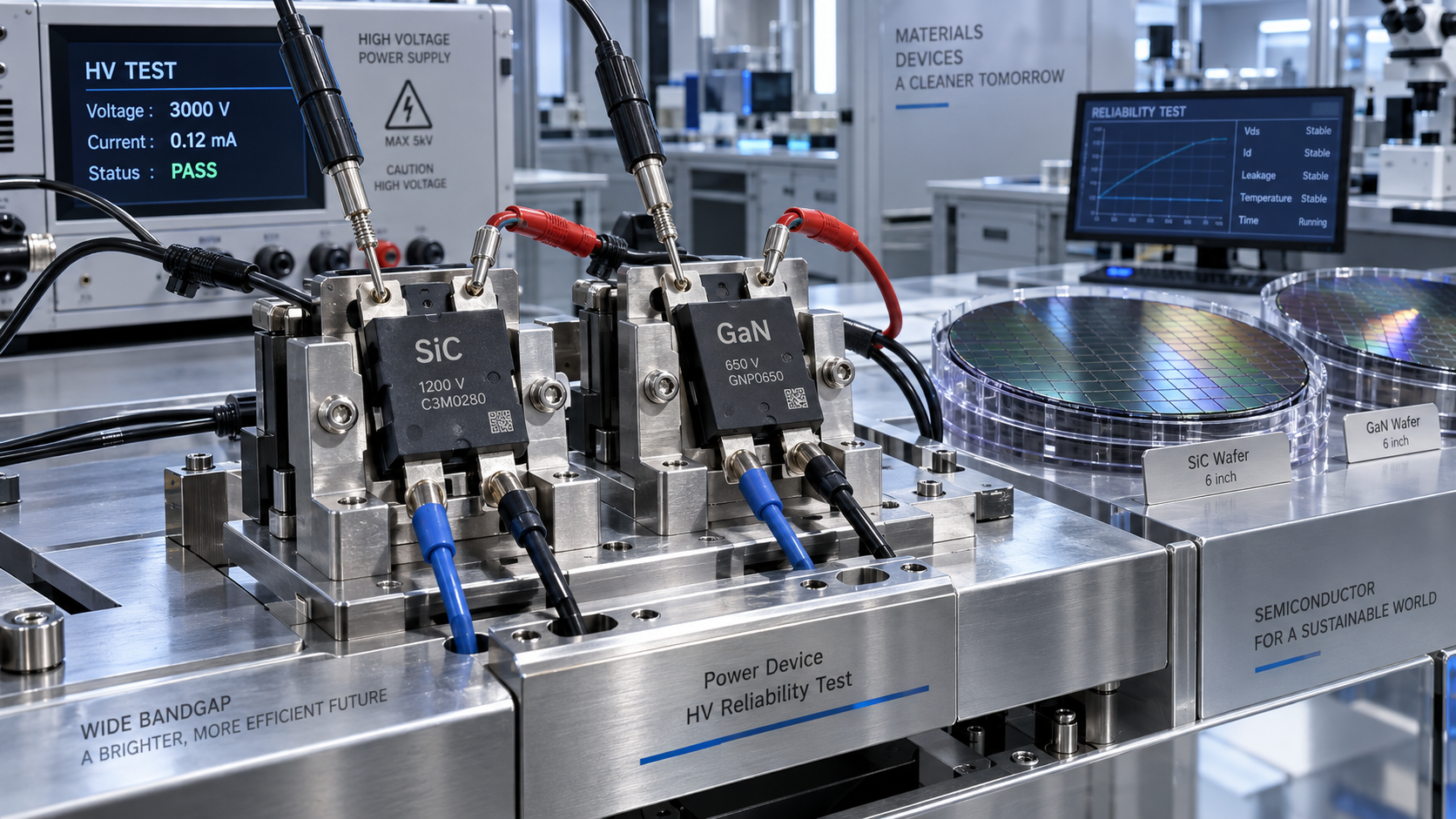
On May 30, 2026, Japan’s Ministry of Economy, Trade and Industry (METI) officially activated the Green Semiconductor Materials Export Promotion White List, with 1200V trench-gate silicon carbide (SiC) MOSFETs—including models such as Toshiba’s TW007D120E—as the first products included. This development is particularly relevant for power electronics manufacturers, EV supply chain participants, renewable energy system integrators, and export-oriented semiconductor distributors operating under EU carbon border adjustment mechanisms (CBAM).
Event Overview
On May 30, 2026, METI launched the Green Semiconductor Materials Export Promotion White List. The initial list includes 1200V SiC MOSFET products from Toshiba, ROHM, and Mitsubishi Electric—specifically trench-gate-type devices. Products on the list qualify for simplified export documentation, expedited customs inspection, and priority recommendation to overseas green procurement alliances.
Which Subsectors Are Affected
Direct Exporters & Trading Companies
These entities handle cross-border shipment of SiC power devices. Inclusion on the white list reduces administrative lead time and lowers compliance overhead for shipments to CBAM-affected markets—especially the EU. Impact manifests in faster clearance cycles and improved eligibility for green procurement tenders tied to decarbonization criteria.
Power Device Buyers & System Integrators
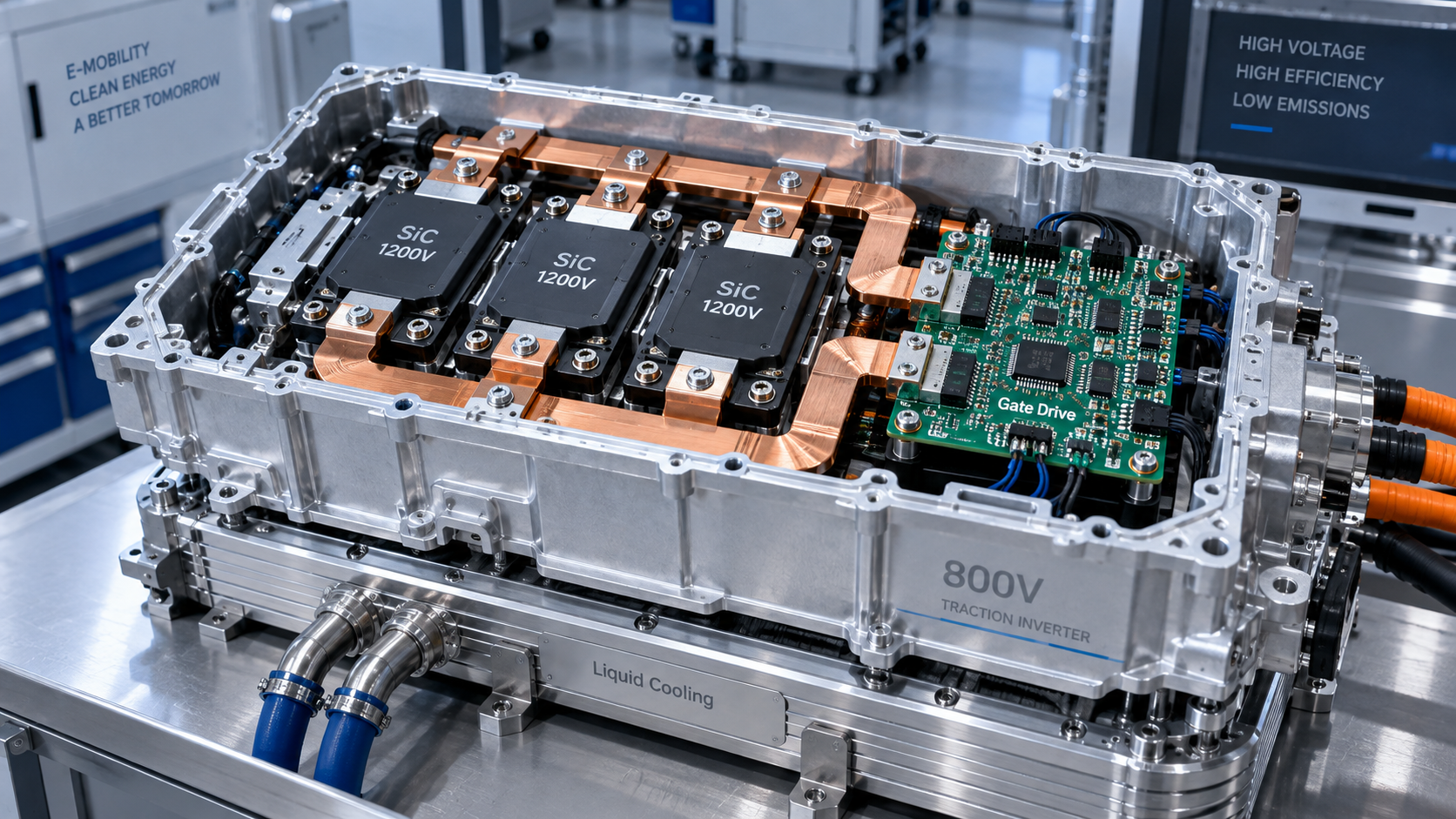
Companies sourcing SiC MOSFETs for EV inverters, industrial motor drives, or grid-scale energy storage systems may see enhanced supply assurance and traceability for METI-white-listed parts. The designation does not alter technical specifications but signals alignment with low-carbon value-chain expectations—potentially influencing procurement scoring in sustainability-driven RFPs.
Contract Manufacturers & Power Module Assemblers
Firms incorporating white-listed SiC dies or discrete components into modules or subsystems may benefit indirectly through stronger customer confidence in upstream material provenance. However, the white list applies only to the listed discrete devices—not assembled modules—so downstream integration does not automatically inherit status.
Supply Chain & Logistics Service Providers
Third-party logistics, customs brokers, and certification agents supporting Japanese semiconductor exports may observe increased demand for documentation support tailored to green export pathways. While no new regulatory obligations are imposed on service providers, familiarity with METI’s white list verification process becomes operationally relevant for clients targeting CBAM-aligned markets.
What Relevant Enterprises or Practitioners Should Focus On
Monitor official updates to the white list scope and eligibility criteria
METI has not yet published a public schedule for expansion beyond the initial 1200V SiC MOSFET entries. Stakeholders should track METI’s official notices for potential inclusion of additional voltage classes, wafer-level materials, or packaging formats—particularly those used in photovoltaic inverters or hydrogen electrolyzer controls.
Verify product-specific listing status before committing to EU-bound shipments
The white list applies only to explicitly named part numbers (e.g., TW007D120E) and their certified manufacturing lots. Generic references to ‘1200V SiC MOSFETs’ or unlisted variants do not qualify. Exporters must confirm current listing status via METI’s designated portal prior to finalizing shipping documentation.
Distinguish between policy signal and operational impact
The white list is an administrative facilitation mechanism—not a certification of carbon footprint or environmental performance. It does not replace CBAM reporting obligations or EU Eco-design requirements. Companies should avoid conflating METI’s export streamlining with full regulatory compliance for EU market access.
Assess readiness for green procurement alliance engagement
Priority recommendation to overseas green procurement alliances is conditional upon active participation by both METI and partner organizations. Firms intending to leverage this benefit should proactively register with relevant alliances (e.g., the EU-Japan Green Partnership Supply Chain Initiative) and ensure internal sustainability documentation—such as energy source disclosures for fabrication—is up to date.
Editorial Perspective / Industry Observation
Observably, this initiative functions primarily as a procedural enabler—not a technical or environmental standard. It reflects Japan’s strategic effort to align semiconductor trade infrastructure with global climate policy frameworks, particularly CBAM. Analysis shows that its immediate effect lies in reducing friction for specific high-efficiency power devices already deployed in decarbonization-critical applications. From an industry perspective, it is best understood as an early-stage coordination signal: one that indicates growing institutional attention to the intersection of semiconductor trade policy and climate regulation—but not yet a comprehensive green certification regime. Continued observation is warranted regarding whether METI extends the framework to upstream materials (e.g., SiC wafers, epitaxial layers) or expands eligibility to non-Japanese manufacturers operating under bilateral agreements.
This move underscores how national export policies are increasingly calibrated to interface with transnational climate instruments. Its significance lies less in immediate market shift and more in signaling a structural realignment: where semiconductor competitiveness is no longer assessed solely on performance or cost—but also on traceability, procedural transparency, and alignment with low-carbon procurement ecosystems. For now, it is more accurately interpreted as a targeted administrative upgrade than a broad-based market catalyst.
Information Source: Official announcement issued by Japan’s Ministry of Economy, Trade and Industry (METI), dated May 30, 2026. Further details remain subject to official METI publications; no third-party data or external policy documents were referenced. Ongoing developments—including potential list expansions or alliance participation protocols—require continued monitoring of METI’s public channels.
Get weekly intelligence in your inbox.
No noise. No sponsored content. Pure intelligence.
 Apr 28, 2026When do rapid prototyping 3D printing services save real costWhen do rapid prototyping 3D printing services save real cost
 Apr 28, 2026What Can Go Wrong in Fan-out Wafer Level Pkg?What Can Go Wrong in Fan-out Wafer Level Pkg?
 Apr 28, 2026What Makes Optical LiDAR Modules Better for Autonomy?What Makes Optical LiDAR Modules Better for Autonomy?
 Apr 28, 20262026 Market Trends in Supply Chain Resilience for Fabs2026 Market Trends in Supply Chain Resilience for Fabs
 Oct 26, 2026How do buying decisions in the B2B market differ from those in B2C?How do buying decisions in the B2B market differ from those in B2C?
 Oct 26, 2026JW Insights’ 2026 SiC Report: Substrate Price Rebound Signals Industry Turning PointJW Insights’ 2026 SiC Report: Substrate Price Rebound Signals Industry Turning Point
 Oct 25, 2026How SiC power semiconductors for motor drives reduce switching lossesHow SiC power semiconductors for motor drives reduce switching losses
 Oct 25, 2026AI Overcapacity Fears Rattle US Chip Stocks as October Losses Reach $2.2 TrillionAI Overcapacity Fears Rattle US Chip Stocks as October Losses Reach $2.2 Trillion
 Oct 24, 2026How post-CMP cleaning materials affect wafer particle removalHow post-CMP cleaning materials affect wafer particle removal
 Oct 24, 2026AI, GaN and Robotics: What Comes Next for Power SemiconductorsAI, GaN and Robotics: What Comes Next for Power Semiconductors
 Oct 23, 2026How noise affects MEMS accelerometers in wearable medical devicesHow noise affects MEMS accelerometers in wearable medical devices
 Oct 23, 2026U.S. Commerce Announces Up to $389 Million in CHIPS R&D FundingU.S. Commerce Announces Up to $389 Million in CHIPS R&D Funding
 Oct 22, 2026How to avoid counterfeit power conversion components in the Middle EastHow to avoid counterfeit power conversion components in the Middle East
 Oct 22, 2026Nvidia Partners Expand AI Supply Chain; Amkor Plans Over 300% Capacity IncreaseNvidia Partners Expand AI Supply Chain; Amkor Plans Over 300% Capacity Increase
 Oct 21, 2026When are portable solar panels cost-effective for remote worksites?When are portable solar panels cost-effective for remote worksites?
 Oct 21, 2026Infineon and Wolfspeed Sign Multiyear 8-Inch SiC Wafer Supply AgreementInfineon and Wolfspeed Sign Multiyear 8-Inch SiC Wafer Supply Agreement
 Oct 20, 2026Can FFU systems alone achieve ISO 14644-1 Class 1 cleanliness?Can FFU systems alone achieve ISO 14644-1 Class 1 cleanliness?
 Oct 20, 2026Aixtron Q3 Orders More Than Double as Orders and Profit Beat ExpectationsAixtron Q3 Orders More Than Double as Orders and Profit Beat Expectations
 Oct 19, 2026How to evaluate power semiconductor suppliers for supply continuityHow to evaluate power semiconductor suppliers for supply continuity
 Oct 18, 2026How system-in-package technology reduces PCB space in wearablesHow system-in-package technology reduces PCB space in wearables
 Oct 17, 2026How to size gate resistors in 1200 V SiC power semiconductor designsHow to size gate resistors in 1200 V SiC power semiconductor designs
 Oct 16, 2026How to select 1200 V SiC MOSFETs for 800 V EV traction invertersHow to select 1200 V SiC MOSFETs for 800 V EV traction inverters
 Oct 15, 2026What voltage rating do SiC power modules for railway traction need?What voltage rating do SiC power modules for railway traction need?
 Oct 14, 2026How third-generation semiconductors achieve high breakdown voltagesHow third-generation semiconductors achieve high breakdown voltages
 Oct 13, 2026When does parallel testing cut high-volume semiconductor testing costs?When does parallel testing cut high-volume semiconductor testing costs?
 Oct 12, 2026Industrial Accelerometer Specifications for Machine Vibration MonitoringIndustrial Accelerometer Specifications for Machine Vibration Monitoring
 Oct 12, 2026What Makes an Industrial Gas Sensor Supplier Reliable for Long-Term Supply?What Makes an Industrial Gas Sensor Supplier Reliable for Long-Term Supply?