Huawei, SMIC Detail Copper SiC MOSFET Reliability
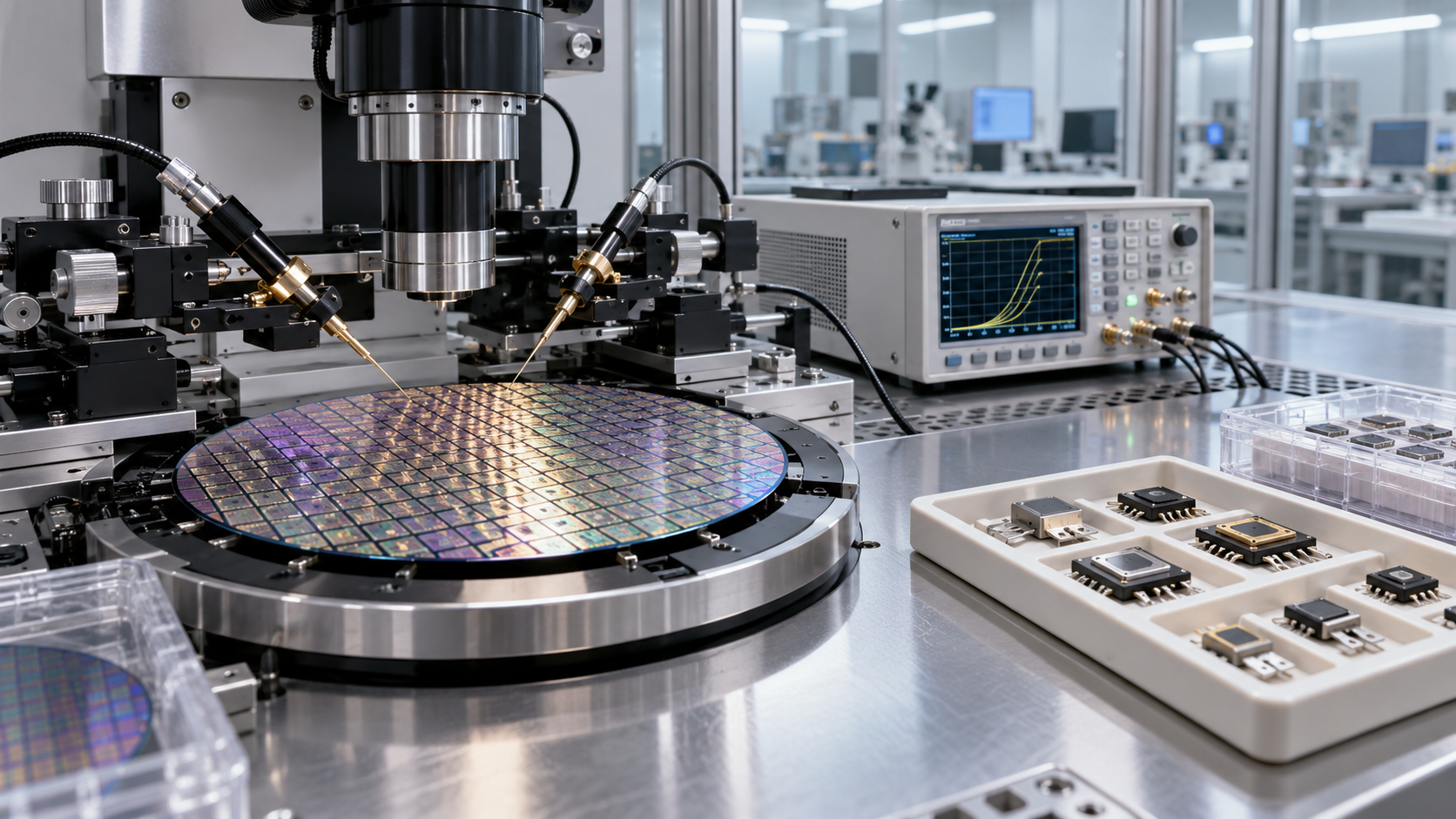
On May 28, 2026, Huawei and SMIC jointly released a reliability white paper on a front-side copper plating process for planar-gate 1200V SiC MOSFETs. The disclosed results are particularly relevant to power semiconductor design companies, wafer foundry customers, packaging partners, and downstream power electronics manufacturers because they point to measurable changes in short-circuit withstand capability, power cycling performance, and automotive-grade reliability verification.
Event Overview
On May 28, 2026, Huawei and SMIC jointly released the Reliability White Paper on Front-Side Copper Plating Process for Planar-Gate 1200V SiC MOSFETs.
According to the disclosed information, the white paper confirms that an electroplated copper source structure, compared with a traditional AlCu solution, can increase short-circuit withstand time to 2.5 microseconds, representing a 25% improvement. It also extends power cycling life to 500,000 cycles and has passed AEC-Q101 HTRB plus PC 2000-hour accelerated validation.
The disclosed information also states that the technology has entered SMIC's mature foundry platform and can support customized tape-out and volume packaging cooperation for overseas customers.
Which Industry Segments Are Affected
Power Semiconductor Design Companies
Power semiconductor design companies are directly affected because the released white paper concerns a planar-gate 1200V SiC MOSFET process and its reliability performance. For companies developing or evaluating SiC MOSFET products, the key impact lies in whether front-side copper plating can become a process option when balancing short-circuit withstand time, power cycling life, and qualification requirements.
Analysis shows that the disclosed 2.5-microsecond short-circuit withstand time and 500,000-cycle power cycling life may influence how design teams compare metallization schemes, reliability margins, and qualification plans. However, specific product adoption still depends on each company's device design, test conditions, and commercialization schedule.
Wafer Foundry and Process Integration Customers
Foundry customers are affected because the technology has entered SMIC's mature foundry platform. This indicates that the process is no longer only described as a laboratory concept in the disclosed information, but is connected with a foundry platform that supports customized tape-out.
From an industry perspective, companies planning SiC MOSFET tape-out projects may need to pay closer attention to process availability, design rules, reliability data packages, and the boundary between standard platform capability and customer-specific customization. The impact is likely to be most visible in early-stage product definition and foundry engagement.
Packaging and Reliability Validation Partners
Packaging and reliability validation partners may be affected because the disclosed technology involves both front-side copper plating and volume packaging cooperation. The reported AEC-Q101 HTRB plus PC 2000-hour accelerated validation also places reliability testing and packaging coordination at the center of subsequent implementation.
What deserves more attention now is whether packaging flows, interconnection choices, and reliability test plans can align with the characteristics of the electroplated copper source structure. The disclosed information does not provide detailed packaging specifications, so related companies should avoid assuming universal compatibility without project-level verification.
Downstream Power Electronics Manufacturers
Downstream manufacturers that evaluate 1200V SiC MOSFETs are affected because device-level reliability indicators can influence component selection, supplier qualification, and risk assessment. The reported improvement in short-circuit withstand time and power cycling life may become part of future technical discussions between device suppliers and system manufacturers.
It is better understood as a signal for closer technical review rather than an immediate change in procurement standards. Downstream companies should focus on whether future products based on this process can provide complete qualification documents, application-level test results, and stable supply arrangements.
Overseas Customers and Cross-Border Supply Chain Participants
Overseas customers are specifically mentioned in the disclosed information, as the platform supports customized tape-out and volume packaging cooperation for overseas clients. This makes the event relevant to companies seeking foundry and packaging collaboration for SiC MOSFET projects.
Observably, the impact may appear first in technical communication, project feasibility assessment, and sample planning. Companies should still distinguish between platform readiness, customer-specific tape-out progress, and actual mass production delivery for a given product.
Key Points to Watch and Practical Responses
Track Follow-Up Official Disclosures
Companies should continue monitoring official statements from Huawei and SMIC regarding the reliability white paper, the foundry platform, and the scope of customer cooperation. Since the current public information focuses on reliability indicators and platform entry, future disclosures may be important for understanding process boundaries, qualification conditions, and supported product categories.
Review Reliability Requirements Against Project Needs
Design and procurement teams should compare the disclosed short-circuit withstand time of 2.5 microseconds, the 25% improvement over the traditional AlCu scheme, the 500,000-cycle power cycling life, and the AEC-Q101 HTRB plus PC 2000-hour validation against their own product requirements. This review should be conducted as a technical assessment, not as a direct substitute for project-specific validation.
Separate Process Signals from Business Readiness
From an industry perspective, the entry of the technology into a mature foundry platform is an important process signal, but companies should not equate it automatically with immediate availability for every product or market. Before making sourcing or design decisions, firms should clarify tape-out timelines, qualification responsibilities, packaging options, and documentation requirements.
Prepare Early Communication Across Design, Foundry, and Packaging Teams
For companies considering customized tape-out or volume packaging cooperation, early technical communication is more practical than waiting until the procurement stage. Design teams should coordinate with foundry and packaging partners on layout constraints, metallization assumptions, reliability testing plans, and sample evaluation schedules tied to the front-side copper plating process.
Editor’s View / Industry Observation
Analysis shows that this white paper is significant because it links a specific 1200V SiC MOSFET process change with disclosed reliability indicators, including short-circuit withstand time, power cycling life, and accelerated validation under AEC-Q101-related conditions.
It is better understood as both a technical progress signal and a platform-readiness signal. The information indicates that the process has entered SMIC's mature foundry platform and can support overseas customer customization, but the broader market effect will depend on subsequent customer projects, product qualification, and packaging cooperation progress.
What deserves more attention now is not only the improvement over the traditional AlCu solution, but also how related companies verify the process within their own device architectures and commercial requirements. For the industry, the event highlights the growing importance of reliability engineering in SiC MOSFET development.
Conclusion
The joint release by Huawei and SMIC adds a notable reliability-focused development to the 1200V SiC MOSFET supply chain. The disclosed front-side copper plating process shows improved short-circuit withstand capability, longer power cycling life, and accelerated reliability validation results, while also being connected to a mature foundry platform.
From an industry perspective, the news should be viewed rationally as a process and reliability signal with potential implications for design, foundry, packaging, and downstream qualification work. The more suitable response for companies is to track official follow-up information, assess project-level applicability, and prepare technical verification before translating the signal into procurement or product decisions.
Information Sources
Main sources: Huawei and SMIC joint release information on the Reliability White Paper on Front-Side Copper Plating Process for Planar-Gate 1200V SiC MOSFETs, dated May 28, 2026.
Items for continued observation: subsequent official disclosures on platform availability, customer tape-out progress, packaging cooperation details, and product-level qualification outcomes.
Get weekly intelligence in your inbox.
No noise. No sponsored content. Pure intelligence.
 Apr 28, 2026When do rapid prototyping 3D printing services save real costWhen do rapid prototyping 3D printing services save real cost
 Apr 28, 2026What Can Go Wrong in Fan-out Wafer Level Pkg?What Can Go Wrong in Fan-out Wafer Level Pkg?
 Apr 28, 2026What Makes Optical LiDAR Modules Better for Autonomy?What Makes Optical LiDAR Modules Better for Autonomy?
 Apr 28, 20262026 Market Trends in Supply Chain Resilience for Fabs2026 Market Trends in Supply Chain Resilience for Fabs
 Oct 26, 2026How do buying decisions in the B2B market differ from those in B2C?How do buying decisions in the B2B market differ from those in B2C?
 Oct 26, 2026JW Insights’ 2026 SiC Report: Substrate Price Rebound Signals Industry Turning PointJW Insights’ 2026 SiC Report: Substrate Price Rebound Signals Industry Turning Point
 Oct 25, 2026How SiC power semiconductors for motor drives reduce switching lossesHow SiC power semiconductors for motor drives reduce switching losses
 Oct 25, 2026AI Overcapacity Fears Rattle US Chip Stocks as October Losses Reach $2.2 TrillionAI Overcapacity Fears Rattle US Chip Stocks as October Losses Reach $2.2 Trillion
 Oct 24, 2026How post-CMP cleaning materials affect wafer particle removalHow post-CMP cleaning materials affect wafer particle removal
 Oct 24, 2026AI, GaN and Robotics: What Comes Next for Power SemiconductorsAI, GaN and Robotics: What Comes Next for Power Semiconductors
 Oct 23, 2026How noise affects MEMS accelerometers in wearable medical devicesHow noise affects MEMS accelerometers in wearable medical devices
 Oct 23, 2026U.S. Commerce Announces Up to $389 Million in CHIPS R&D FundingU.S. Commerce Announces Up to $389 Million in CHIPS R&D Funding
 Oct 22, 2026How to avoid counterfeit power conversion components in the Middle EastHow to avoid counterfeit power conversion components in the Middle East
 Oct 22, 2026Nvidia Partners Expand AI Supply Chain; Amkor Plans Over 300% Capacity IncreaseNvidia Partners Expand AI Supply Chain; Amkor Plans Over 300% Capacity Increase
 Oct 21, 2026When are portable solar panels cost-effective for remote worksites?When are portable solar panels cost-effective for remote worksites?
 Oct 21, 2026Infineon and Wolfspeed Sign Multiyear 8-Inch SiC Wafer Supply AgreementInfineon and Wolfspeed Sign Multiyear 8-Inch SiC Wafer Supply Agreement
 Oct 20, 2026Can FFU systems alone achieve ISO 14644-1 Class 1 cleanliness?Can FFU systems alone achieve ISO 14644-1 Class 1 cleanliness?
 Oct 20, 2026Aixtron Q3 Orders More Than Double as Orders and Profit Beat ExpectationsAixtron Q3 Orders More Than Double as Orders and Profit Beat Expectations
 Oct 19, 2026How to evaluate power semiconductor suppliers for supply continuityHow to evaluate power semiconductor suppliers for supply continuity
 Oct 18, 2026How system-in-package technology reduces PCB space in wearablesHow system-in-package technology reduces PCB space in wearables
 Oct 17, 2026How to size gate resistors in 1200 V SiC power semiconductor designsHow to size gate resistors in 1200 V SiC power semiconductor designs
 Oct 16, 2026How to select 1200 V SiC MOSFETs for 800 V EV traction invertersHow to select 1200 V SiC MOSFETs for 800 V EV traction inverters
 Oct 15, 2026What voltage rating do SiC power modules for railway traction need?What voltage rating do SiC power modules for railway traction need?
 Oct 14, 2026How third-generation semiconductors achieve high breakdown voltagesHow third-generation semiconductors achieve high breakdown voltages
 Oct 13, 2026When does parallel testing cut high-volume semiconductor testing costs?When does parallel testing cut high-volume semiconductor testing costs?
 Oct 12, 2026Industrial Accelerometer Specifications for Machine Vibration MonitoringIndustrial Accelerometer Specifications for Machine Vibration Monitoring
 Oct 12, 2026What Makes an Industrial Gas Sensor Supplier Reliable for Long-Term Supply?What Makes an Industrial Gas Sensor Supplier Reliable for Long-Term Supply?