Aluminum Extrusions: Cost Drivers in Custom Projects
Aluminum Extrusions: Cost Drivers in Custom Projects
For sourcing decisions, understanding the true cost of custom aluminumextrusions is essential to balancing performance, lead time, and supplier reliability.
Beyond raw aluminum prices, alloy selection, die complexity, tolerance requirements, finishing, volume, and documentation can reshape total project cost.
In precision industries, aluminumextrusions often support thermal stability, structural consistency, enclosure integrity, and resilient supply chains.
A clear cost model helps avoid hidden charges, delayed validation, and unnecessary redesign during industrial, electronics, infrastructure, or semiconductor-related projects.
What makes custom aluminumextrusions different from standard profiles?
Standard profiles use existing dies, common alloys, and predictable production routes. Their pricing is easier to estimate and compare.
Custom aluminumextrusions start with a profile designed around a specific function, assembly method, or performance requirement.
That flexibility creates value, but it also introduces engineering, tooling, testing, and process-control costs.
A custom heat sink, sensor rail, machine frame, battery tray, or cleanroom support member may look simple externally.
Inside the quote, however, the supplier must consider metal flow, wall balance, dimensional stability, and production repeatability.
The main difference is not only shape. It is how the shape performs after extrusion, machining, finishing, inspection, and installation.
For high-reliability systems, aluminumextrusions may also require traceability, controlled packaging, and documented quality evidence.
How does alloy selection affect aluminumextrusions pricing?
Alloy choice is one of the earliest cost drivers because it affects material cost, extrusion speed, strength, corrosion resistance, and finish quality.
Common 6000-series alloys are popular because they balance extrudability, mechanical performance, and surface treatment compatibility.
6063 is often selected for architectural surfaces, light structures, and attractive anodized finishes.
6061 usually brings higher strength, better machinability, and broader industrial acceptance, but may extrude more slowly.
Special alloys can increase billet cost and reduce extrusion productivity, especially when narrow mechanical or thermal targets apply.
Temper also matters. T5, T6, and other conditions influence aging cycles, straightness, hardness, and dimensional behavior.
For aluminumextrusions used near electronics, sensors, or power modules, thermal conductivity and dimensional stability can outweigh simple material savings.
A lower-cost alloy may create higher downstream cost if it causes warping, poor finishing, excessive machining, or failed validation.
Why do die complexity and profile geometry change the quote?
The extrusion die is a major upfront cost in custom aluminumextrusions, especially for hollow, semi-hollow, or thin-wall designs.
Simple solid profiles usually require less complex tooling and are easier to run at stable production speeds.
Hollow sections need bridge or porthole dies, which must manage metal flow around internal features.
Unbalanced walls, deep channels, narrow fins, or sharp transitions can reduce yield and increase trial adjustments.
For heat sinks, fine fin density may improve thermal performance, but it can slow production and increase die stress.
For frames or rails, unnecessary cavities may add tooling risk without improving assembly value.
Good design-for-extrusion work simplifies geometry before quoting. It protects function while reducing scrap, rework, and tooling revisions.
When aluminumextrusions serve precision assemblies, early supplier feedback on radii, wall ratios, and tolerances is financially important.
Practical geometry checks before finalizing a profile
- Avoid extreme wall thickness variation unless performance requires it.
- Use generous radii where sharp corners are not functional.
- Confirm whether hollow sections are necessary for the load case.
- Limit fine fins when machining or bonded inserts can achieve the same result.
- Review assembly interfaces before locking the die design.
How do tolerances, machining, and inspection influence total cost?
Tight tolerances can be necessary, but they should be assigned only where the assembly truly depends on them.
Extrusion is not the same as precision CNC machining. Long profiles naturally experience twist, bow, and cross-sectional variation.
When every dimension is marked critical, aluminumextrusions become harder to produce and inspect economically.
Secondary machining adds value for holes, slots, flatness zones, sealing faces, or high-accuracy mounting points.
It also adds programming, fixtures, cycle time, deburring, inspection, and handling cost.
The most efficient approach combines extrusion-level tolerances with targeted machining only on functional surfaces.
Inspection level is another pricing factor. Basic dimensional checks differ greatly from first-article reports or statistical process records.
In semiconductor infrastructure, sensor systems, or power electronics, documented measurement may be essential for reliability and audit readiness.
For aluminumextrusions used in critical equipment, inspection cost should be planned, not treated as an afterthought.
What role do finishing and surface requirements play?
Surface finishing can be cosmetic, protective, electrical, thermal, or cleanliness-driven. Each purpose changes the process route.
Anodizing improves corrosion resistance and appearance, while powder coating supports color control and environmental durability.
Chemical conversion coatings may be preferred where electrical conductivity, grounding, or paint adhesion must be retained.
Brushing, polishing, blasting, and bright dipping add preparation steps before the final surface treatment.
For clean environments, residue control, particle limits, and packaging practices may become more important than visual appearance.
Long aluminumextrusions can be harder to finish uniformly, especially when racks, tanks, or coating lines have size constraints.
Color matching across batches can also create cost when strict aesthetic consistency is required.
Surface requirements should specify measurable outcomes, such as thickness, adhesion, gloss, conductivity, or corrosion performance.
Vague descriptions such as “premium finish” may cause disputes, rework, and delayed shipment.
How do volume, lead time, and supply chain terms affect aluminumextrusions cost?
Volume changes how tooling, setup, scrap, and administrative cost are distributed across each part.
Low-volume custom aluminumextrusions often carry higher unit prices because die trials and setups cannot be spread widely.
Higher volumes can improve pricing, but they may require stronger demand planning and inventory coordination.
Lead time pressure also matters. Expedited tooling, special billet sourcing, overtime production, or premium logistics can raise total cost.
Projects linked to factory expansion, equipment builds, or infrastructure schedules should define realistic milestones early.
Supplier location, billet availability, finishing capacity, and packaging method all influence delivery reliability.
For cross-border projects, duties, freight volatility, documentation, and customs classification should be included in landed cost analysis.
A lower unit price may be unattractive if it creates stockouts, quality disputes, or repeated engineering changes.
FAQ comparison: which cost driver deserves attention first?
What mistakes commonly make aluminumextrusions more expensive?
The first mistake is treating aluminumextrusions as commodity metal, rather than engineered components with process limits.
The second mistake is finalizing drawings before die feasibility and tolerance review.
The third mistake is separating extrusion, machining, finishing, and inspection decisions into disconnected purchases.
A small drawing change after die construction can create delay, rework, or a completely new tool.
Another common problem is comparing quotes without confirming what each supplier includes.
One quote may include die trials, first-article inspection, packaging, and finishing. Another may exclude them.
For aluminumextrusions in regulated or high-reliability environments, missing documentation can become a costly gap later.
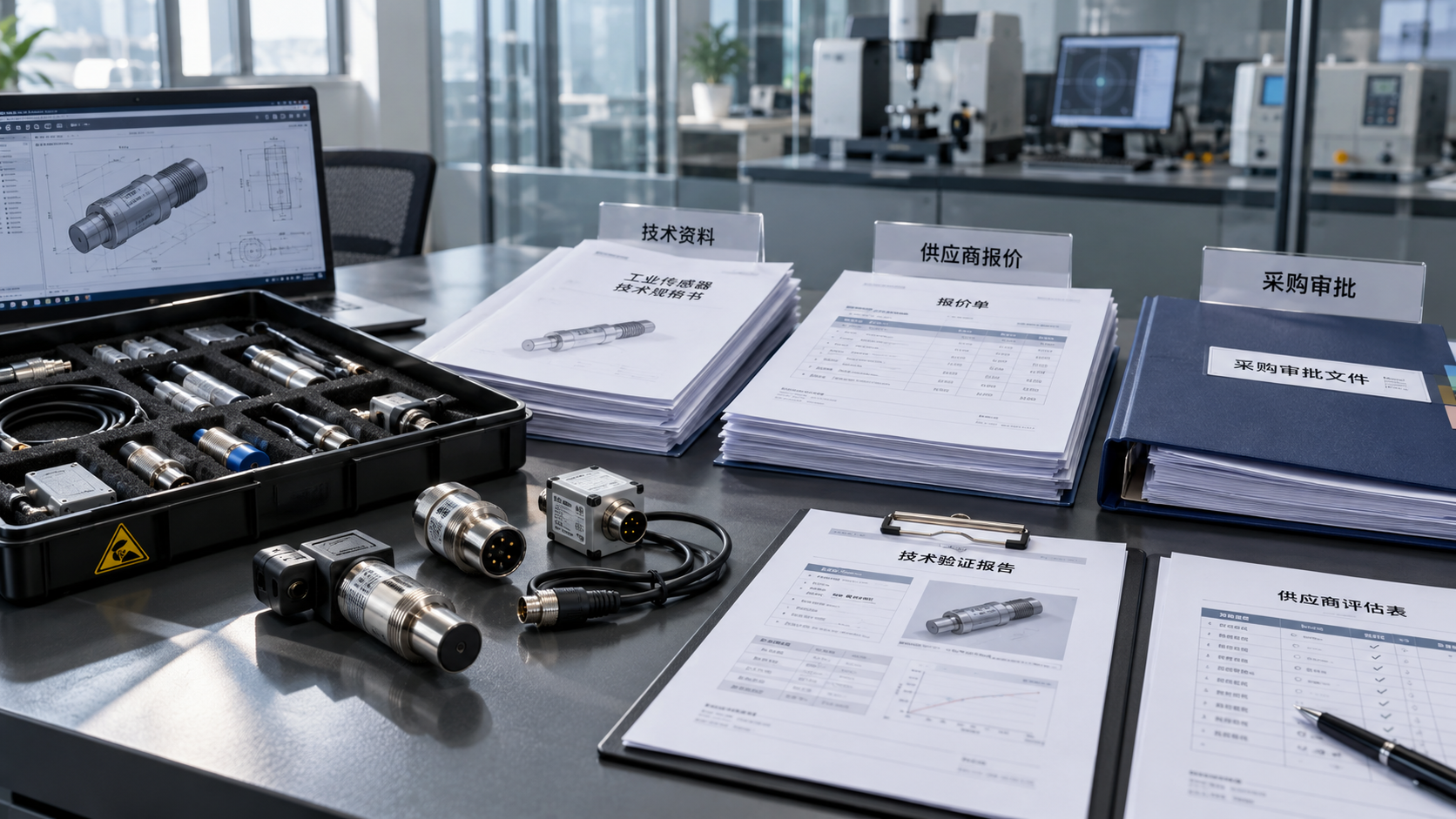
A useful quote request should include drawings, alloy preference, annual volume, finish specification, inspection needs, packaging requirements, and target timeline.
How should a reliable project estimate be built?
A reliable estimate separates one-time costs from recurring costs. This makes the financial structure easier to understand.
One-time costs may include die design, die manufacturing, samples, fixtures, first-article inspection, and qualification activities.
Recurring costs may include billet, extrusion, cutting, aging, machining, finishing, inspection, packaging, freight, and inventory management.
For custom aluminumextrusions, the best estimate also identifies technical assumptions and commercial risks.
These assumptions may include scrap rate, minimum order quantity, die life, surface yield, or expected inspection frequency.
Projects connected to electronics, automation, energy conversion, or sensory infrastructure should include reliability expectations early.
Thermal pathways, mechanical interfaces, grounding points, cleanliness, and dimensional control can all influence cost.
This is especially relevant where aluminumextrusions support semiconductor tools, industrial sensors, power modules, or precision enclosures.
Summary: how to control cost without weakening performance
The cost of aluminumextrusions is shaped by more than aluminum market pricing.
Alloy selection, die complexity, tolerance strategy, finishing, inspection, order volume, and lead time all interact.
The strongest cost-control approach starts before the quote. It aligns function, manufacturability, quality evidence, and supply conditions.
For custom aluminumextrusions, early technical review usually costs less than late redesign.
Before approving a supplier, compare landed cost, documentation scope, tolerance capability, finishing control, and delivery reliability.
A practical next step is to prepare a complete requirement package and request a design-for-extrusion review.
That review can reveal where aluminumextrusions can be simplified, strengthened, or qualified more efficiently.
With clear specifications and disciplined comparison, custom aluminumextrusions can deliver performance, repeatability, and cost predictability across demanding industrial projects.
Get weekly intelligence in your inbox.
No noise. No sponsored content. Pure intelligence.
 Apr 28, 2026When do rapid prototyping 3D printing services save real costWhen do rapid prototyping 3D printing services save real cost
 Apr 28, 2026What Can Go Wrong in Fan-out Wafer Level Pkg?What Can Go Wrong in Fan-out Wafer Level Pkg?
 Apr 28, 2026What Makes Optical LiDAR Modules Better for Autonomy?What Makes Optical LiDAR Modules Better for Autonomy?
 Apr 28, 20262026 Market Trends in Supply Chain Resilience for Fabs2026 Market Trends in Supply Chain Resilience for Fabs
 Oct 26, 2026How do buying decisions in the B2B market differ from those in B2C?How do buying decisions in the B2B market differ from those in B2C?
 Oct 26, 2026JW Insights’ 2026 SiC Report: Substrate Price Rebound Signals Industry Turning PointJW Insights’ 2026 SiC Report: Substrate Price Rebound Signals Industry Turning Point
 Oct 25, 2026How SiC power semiconductors for motor drives reduce switching lossesHow SiC power semiconductors for motor drives reduce switching losses
 Oct 25, 2026AI Overcapacity Fears Rattle US Chip Stocks as October Losses Reach $2.2 TrillionAI Overcapacity Fears Rattle US Chip Stocks as October Losses Reach $2.2 Trillion
 Oct 24, 2026How post-CMP cleaning materials affect wafer particle removalHow post-CMP cleaning materials affect wafer particle removal
 Oct 24, 2026AI, GaN and Robotics: What Comes Next for Power SemiconductorsAI, GaN and Robotics: What Comes Next for Power Semiconductors
 Oct 23, 2026How noise affects MEMS accelerometers in wearable medical devicesHow noise affects MEMS accelerometers in wearable medical devices
 Oct 23, 2026U.S. Commerce Announces Up to $389 Million in CHIPS R&D FundingU.S. Commerce Announces Up to $389 Million in CHIPS R&D Funding
 Oct 22, 2026How to avoid counterfeit power conversion components in the Middle EastHow to avoid counterfeit power conversion components in the Middle East
 Oct 22, 2026Nvidia Partners Expand AI Supply Chain; Amkor Plans Over 300% Capacity IncreaseNvidia Partners Expand AI Supply Chain; Amkor Plans Over 300% Capacity Increase
 Oct 21, 2026When are portable solar panels cost-effective for remote worksites?When are portable solar panels cost-effective for remote worksites?
 Oct 21, 2026Infineon and Wolfspeed Sign Multiyear 8-Inch SiC Wafer Supply AgreementInfineon and Wolfspeed Sign Multiyear 8-Inch SiC Wafer Supply Agreement
 Oct 20, 2026Can FFU systems alone achieve ISO 14644-1 Class 1 cleanliness?Can FFU systems alone achieve ISO 14644-1 Class 1 cleanliness?
 Oct 20, 2026Aixtron Q3 Orders More Than Double as Orders and Profit Beat ExpectationsAixtron Q3 Orders More Than Double as Orders and Profit Beat Expectations
 Oct 19, 2026How to evaluate power semiconductor suppliers for supply continuityHow to evaluate power semiconductor suppliers for supply continuity
 Oct 18, 2026How system-in-package technology reduces PCB space in wearablesHow system-in-package technology reduces PCB space in wearables
 Oct 17, 2026How to size gate resistors in 1200 V SiC power semiconductor designsHow to size gate resistors in 1200 V SiC power semiconductor designs
 Oct 16, 2026How to select 1200 V SiC MOSFETs for 800 V EV traction invertersHow to select 1200 V SiC MOSFETs for 800 V EV traction inverters
 Oct 15, 2026What voltage rating do SiC power modules for railway traction need?What voltage rating do SiC power modules for railway traction need?
 Oct 14, 2026How third-generation semiconductors achieve high breakdown voltagesHow third-generation semiconductors achieve high breakdown voltages
 Oct 13, 2026When does parallel testing cut high-volume semiconductor testing costs?When does parallel testing cut high-volume semiconductor testing costs?
 Oct 12, 2026Industrial Accelerometer Specifications for Machine Vibration MonitoringIndustrial Accelerometer Specifications for Machine Vibration Monitoring
 Oct 12, 2026What Makes an Industrial Gas Sensor Supplier Reliable for Long-Term Supply?What Makes an Industrial Gas Sensor Supplier Reliable for Long-Term Supply?