

Industrial IoT Certification Costs: What Drives the Budget
Industrial IoT certification costs can vary widely, but for finance approvers, the real budget drivers are clearer than they appear. From test scope and compliance standards to product complexity, lab selection, and rework risk, each factor directly affects total spend. Understanding what shapes Industrial IoT certification budgets helps decision-makers control costs while protecting reliability, market access, and long-term operational value.
Why does Industrial IoT certification cost more in some projects than others?
For financial approvers, the first challenge is separating essential certification spending from avoidable cost inflation. Industrial IoT certification is not a single fee. It is a budget stack that may include pre-compliance evaluation, documentation review, environmental and electrical testing, wireless validation, safety assessment, reliability checks, factory follow-up, and corrective actions after failures.
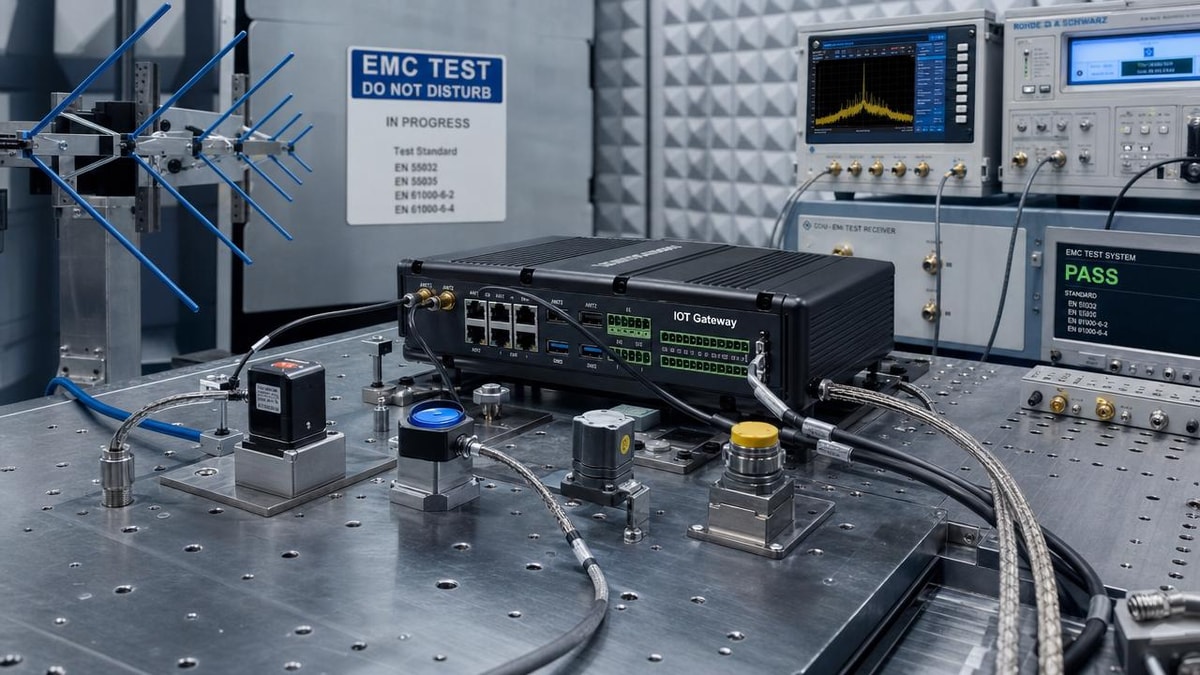
In industrial environments, certification costs tend to rise because devices operate under harsher conditions than consumer electronics. Sensors, gateways, power modules, embedded communication units, and control boards may need to demonstrate stable performance under heat, vibration, electromagnetic interference, voltage fluctuation, contamination exposure, or long duty cycles. Each added risk factor can expand test plans and increase lab time.
This is where disciplined technical benchmarking matters. G-SSI supports decision-makers by aligning component-level and system-level expectations with recognized industrial requirements. In semiconductor, sensor, and infrastructure-heavy deployments, cost control starts when teams define the right compliance target before booking test capacity.
- A simple wired sensor node with limited interfaces often has a narrower test scope and fewer budget surprises.
- A connected gateway with wireless radios, edge computing, power conversion, and multiple regional market targets can require significantly more certification work.
- A product built with immature documentation or weak design margins usually costs more to certify because rework and retesting become likely.
The budget question finance teams should ask first
Instead of asking only, “What is the lab quote?”, ask, “What technical and compliance assumptions are built into the quote?” A lower initial number may exclude failure analysis, redesign support, sample destruction, additional test cycles, or country-specific market access requirements. A complete budget view is more valuable than a low entry price.
What are the main cost drivers behind an Industrial IoT certification budget?
The table below gives finance approvers a practical way to evaluate Industrial IoT certification cost drivers before approving a project budget. These are the factors that most often change total spend across sensor, power, semiconductor-adjacent, and industrial control applications.
For most organizations, rework is the most underestimated portion of Industrial IoT certification cost. It is also the area where technical benchmarking creates the strongest financial return. When teams validate materials, package design, sensor accuracy limits, and thermal margins early, they reduce the chance of costly certification failure later.
How semiconductor and sensor design choices affect certification spend
In many industrial systems, certification performance is heavily influenced by upstream design choices. Power semiconductors, packaging architecture, MEMS sensor stability, electronic chemical purity, and fabrication environment control all affect final device behavior. A unit built around unstable thermal performance or inconsistent sensory output may pass internal engineering review yet fail formal compliance tests.
G-SSI’s value for procurement and finance lies in translating these engineering variables into budget predictability. Benchmarking against standards such as SEMI, AEC-Q100, and ISO/IEC 17025-aligned testing practices helps teams identify where technical risk can turn into certification cost escalation.
Which standards and test scopes usually shape Industrial IoT certification costs?
Not every Industrial IoT certification project follows the same route. Budget size depends on whether the product needs electrical safety, EMC, radio compliance, environmental reliability, calibration traceability, functional performance verification, or a combination of them. For finance approval, it is useful to map test scope to commercial objective rather than approving a generic compliance package.
- Industrial sensors may require accuracy verification, environmental endurance, EMC checks, and material stability assessment.
- Smart gateways can trigger wireless, EMC, safety, and cybersecurity-adjacent documentation work.
- Power electronics used in automation or energy systems may face thermal, insulation, surge, and reliability scrutiny.
The following comparison table helps finance stakeholders see how different certification scope decisions can alter cost, lead time, and internal resource demand.
A broad certification scope is not automatically wasteful. It can be a rational investment when the product supports cross-border supply chains, autonomous systems, or high-reliability infrastructure. The key is to match certification scope to revenue pathway, service environment, and replacement risk.
How should finance approvers evaluate quotes from labs and certification partners?
A common mistake in Industrial IoT certification budgeting is comparing quotes line by line without comparing assumptions. One lab may appear cheaper because it excludes engineering review, sample handling, debug time, or follow-up documentation. Another may include more complete support and deliver a lower total program cost despite a higher initial quote.
Quote evaluation checklist
- Confirm the exact standards, edition versions, and market regions included in the scope.
- Check whether pre-compliance assessment is included, especially for new sensor, power, or RF designs.
- Ask how many samples are required and whether destructive tests will increase build costs.
- Review turnaround assumptions, rescheduling fees, and retest charging rules.
- Clarify whether documentation support covers drawings, labels, risk analysis, declarations, and traceability records.
- Assess the lab’s familiarity with industrial-grade semiconductors, MEMS sensors, high-purity process materials, or thermal management issues relevant to your design.
For organizations working with advanced packaging, power conversion, or precision sensing, technical context matters. A generic lab workflow may not identify root causes efficiently when failures relate to chip package stress, gas purity sensitivity, enclosure contamination, or data fidelity drift. G-SSI adds value by connecting certification planning to deeper technical benchmarks across the silicon value chain.
Where do hidden Industrial IoT certification costs usually appear?
Finance teams often approve the visible certification fee but miss adjacent costs that can materially change ROI. In industrial projects, hidden costs often come from delays, redesign cycles, supply chain changes, and post-test engineering effort rather than the lab invoice alone.
Typical hidden cost areas
- Engineering rework after EMC, thermal, or mechanical failure.
- New tooling or enclosure updates required to meet compliance limits.
- Component substitution when original semiconductors or sensors cannot hold required performance stability.
- Extra sample builds for destructive testing or verification reruns.
- Revenue delay caused by failed launch timing in regulated or contract-driven sectors.
- Supplier management costs when documentation from multiple vendors is inconsistent.
These hidden costs are especially relevant in integrated industrial platforms where the device is only one part of a larger infrastructure rollout. If a certified gateway, power stage, or smart sensing node misses deployment timing, the cost can spread into commissioning delays, contractual penalties, or postponed procurement waves.
How can companies reduce certification spend without weakening compliance?
Cost reduction in Industrial IoT certification should focus on prevention, scope discipline, and technical readiness. Cutting the wrong test is risky. Cutting avoidable failure is smart. Finance approvers should look for programs that reduce total cost of compliance rather than simply compressing the quoted test fee.
Practical budget control strategies
- Start with a compliance map tied to target regions, product functions, and end-use environments.
- Run pre-compliance screening for EMC, thermal behavior, and critical sensing performance before formal lab booking.
- Use proven components with stable supply and documented performance under industrial conditions.
- Consolidate documentation early, including BOM traceability, material declarations, labels, and test plans.
- Select partners that understand semiconductor packaging, sensor reliability, and process environment effects, not just generic product testing.
- Budget explicitly for contingency, because zero-failure assumptions rarely hold in first-pass certification programs.
For many companies, the most effective savings come from early alignment between engineering, sourcing, and finance. G-SSI’s cross-disciplinary view is useful here because certification outcomes are often shaped upstream by material purity, packaging stress, thermal management, and sensor data integrity rather than downstream paperwork alone.
What should finance approvers ask before releasing budget?
Is the certification scope aligned with actual market goals?
A device intended for one industrial market should not automatically be funded like a global multi-region product. Over-scoping wastes cash, but under-scoping can block market entry later. The right question is whether the selected Industrial IoT certification path matches the launch roadmap and customer contract commitments.
Has the product been de-risked technically before formal testing?
If pre-compliance screening, environmental review, and core performance checks have not been done, the lab budget is incomplete. Formal certification should validate readiness, not discover basic design weaknesses. This is especially important for products using SiC/GaN power devices, advanced packaging, or sensitive MEMS architectures.
Are documentation and supply chain records audit-ready?
A technically sound device can still create delay costs if documentation is fragmented. Finance approvers should verify ownership of technical files, supplier declarations, revision control, and sample traceability. Missing records can extend approval time and create repeat work across teams.
What is the cost of failure versus the cost of preparation?
This is the most important approval question. In strategic industrial infrastructure, a failed certification cycle can cost far more than early engineering validation. The decision is not only about test price. It is about protecting launch timing, reliability reputation, and long-term field performance.
FAQ about Industrial IoT certification budgets
How early should Industrial IoT certification planning start?
It should start during architecture definition, not after the prototype is complete. Early planning helps teams choose suitable semiconductors, sensor packages, shielding concepts, power layouts, and materials that support certification success. Waiting too long usually increases redesign cost and compresses schedule.
Is the cheapest lab quote usually the best option?
Not necessarily. A lower quote may exclude problem-solving support, region-specific documentation, or retest planning. For finance approvers, total program cost matters more than the first invoice. Quote quality should be judged by scope clarity, technical fit, turnaround realism, and failure-handling transparency.
What kinds of products face the highest certification budget pressure?
Products combining wireless connectivity, precision sensing, industrial power conversion, and harsh-environment durability usually face the greatest pressure. Multi-function gateways, edge devices, high-reliability sensor nodes, and intelligent power modules often require broader testing and stronger technical evidence.
Can better component selection reduce Industrial IoT certification costs?
Yes. Stable components reduce failure probability and documentation gaps. In industrial-grade systems, the choice of power semiconductors, package technology, MEMS devices, specialty gases, and contamination control can affect thermal performance, EMC behavior, measurement drift, and long-term reliability. Better components do not always lower unit cost, but they often reduce total certification and lifecycle expense.
Why choose us for certification planning and technical benchmarking?
G-SSI helps finance approvers and technical teams make Industrial IoT certification budgets more predictable by linking compliance planning to the real technical drivers of risk. Our perspective spans power semiconductors and third-generation materials, advanced packaging and testing, industrial MEMS and smart sensors, high-purity electronic chemicals and specialty gases, and semiconductor fabrication environment control.
This matters because certification cost is rarely isolated from upstream design quality. Thermal margins, package integrity, sensory data fidelity, and process cleanliness all influence whether a product passes smoothly or returns for expensive rework. By benchmarking against internationally recognized frameworks such as SEMI, AEC-Q100, and ISO/IEC 17025-related practices, we help teams build stronger approval logic before major spending begins.
- Consult us for certification scope confirmation based on product architecture and target market.
- Discuss component and material selection when thermal, reliability, or sensing stability may affect compliance outcome.
- Request support for pre-compliance planning, documentation review, and risk prioritization before formal lab engagement.
- Ask about lead-time considerations, sample strategy, custom solution direction, and budget-impacting certification requirements.
- Open a quotation discussion when you need a more reliable basis for internal financial approval.
If your team is evaluating Industrial IoT certification for a sensor platform, gateway, power module, or semiconductor-linked industrial device, a focused technical and budget review can prevent expensive surprises. Bring your parameters, target standards, expected delivery window, and certification goals into the discussion so the budget reflects the real path to approval.
- Power Semiconductors
- MEMS Sensors
- Smart Sensors
- Electronic Chemicals
- Semiconductor Fabrication
- Thermal Management
- Data Fidelity
- Industrial IoT
- Autonomous Systems
- Power Conversion
- Silicon Value Chain
- Third-Generation Materials
- Environment Control
- Sensory Data
- GaN power devices
- Industrial IoT certification
- Industrial MEMS
- Specialty Gases
Get weekly intelligence in your inbox.
No noise. No sponsored content. Pure intelligence.
 Apr 28, 2026When do rapid prototyping 3D printing services save real costWhen do rapid prototyping 3D printing services save real cost
 Apr 28, 2026What Can Go Wrong in Fan-out Wafer Level Pkg?What Can Go Wrong in Fan-out Wafer Level Pkg?
 Apr 28, 2026What Makes Optical LiDAR Modules Better for Autonomy?What Makes Optical LiDAR Modules Better for Autonomy?
 Apr 28, 20262026 Market Trends in Supply Chain Resilience for Fabs2026 Market Trends in Supply Chain Resilience for Fabs
 May 05, 2026Supply Chain Resilience in Semiconductor Industry: Early Warning Signs to WatchSupply Chain Resilience in Semiconductor Industry: Early Warning Signs to Watch
 May 05, 2026How to Assess Supply Chain Resilience in Semiconductor Industry PartnersHow to Assess Supply Chain Resilience in Semiconductor Industry Partners
 May 05, 2026Supply Chain Resilience in Semiconductor Industry: What Actually WorksSupply Chain Resilience in Semiconductor Industry: What Actually Works
 May 05, 2026IC Testing Services: Common Gaps Between Quoted Scope and Real NeedsIC Testing Services: Common Gaps Between Quoted Scope and Real Needs
 May 05, 2026When IC Testing Services Become a Bottleneck in Product ReleaseWhen IC Testing Services Become a Bottleneck in Product Release
 May 05, 2026IC Testing Services: How to Compare Turnaround, Coverage, and Yield ImpactIC Testing Services: How to Compare Turnaround, Coverage, and Yield Impact
 May 05, 2026Industrial IoT Certification Costs: What Drives the BudgetIndustrial IoT Certification Costs: What Drives the Budget
 May 05, 2026Industrial IoT Certification Delays and How to Avoid ThemIndustrial IoT Certification Delays and How to Avoid Them
 May 05, 2026Industrial IoT Certification: What to Check Before Product LaunchIndustrial IoT Certification: What to Check Before Product Launch
 May 05, 2026Data Center Environment Control Upgrades That Improve Operating EfficiencyData Center Environment Control Upgrades That Improve Operating Efficiency
 May 05, 2026What to Fix First in Data Center Environment ControlWhat to Fix First in Data Center Environment Control
 May 05, 2026Environment Control in Data Centers: Practical Ways to Cut Downtime RiskEnvironment Control in Data Centers: Practical Ways to Cut Downtime Risk
 May 05, 2026Environment Control in Semiconductor Fabrication: Where Upgrades Pay Off FirstEnvironment Control in Semiconductor Fabrication: Where Upgrades Pay Off First
 May 05, 2026How Better Environment Control Reduces Defect Risk in Semiconductor FabricationHow Better Environment Control Reduces Defect Risk in Semiconductor Fabrication
 May 05, 2026Environment Control in Semiconductor Fabrication: The Hidden Cost of DriftEnvironment Control in Semiconductor Fabrication: The Hidden Cost of Drift
 May 05, 2026How to Judge Sensory Data Precision Before System IntegrationHow to Judge Sensory Data Precision Before System Integration
 May 05, 2026Sensory Data Precision Problems That Lead to Costly ReworkSensory Data Precision Problems That Lead to Costly Rework
 May 05, 2026Sensory Data Precision: How Much Accuracy Is Enough for AutomationSensory Data Precision: How Much Accuracy Is Enough for Automation
 May 05, 2026Smart Sensors for Autonomous Vehicles: Trends Shaping 2026 PlatformsSmart Sensors for Autonomous Vehicles: Trends Shaping 2026 Platforms
 May 05, 2026What to Compare Before Sourcing Smart Sensors for Autonomous VehiclesWhat to Compare Before Sourcing Smart Sensors for Autonomous Vehicles
 May 05, 2026Smart Sensors for Autonomous Vehicles: Accuracy Gaps That Matter on the RoadSmart Sensors for Autonomous Vehicles: Accuracy Gaps That Matter on the Road
 May 05, 2026Common Failure Points in MEMS Sensors for Medical DevicesCommon Failure Points in MEMS Sensors for Medical Devices
 May 05, 2026Choosing MEMS Sensors for Medical Devices Without OverengineeringChoosing MEMS Sensors for Medical Devices Without Overengineering