

Data Center Environment Control Upgrades That Improve Operating Efficiency
As power density rises and uptime expectations tighten, Environment Control in data centers has become a strategic lever for enterprise performance. For decision-makers focused on reliability, cost discipline, and scalable digital infrastructure, upgrading thermal management, airflow, humidity, and monitoring systems can unlock measurable efficiency gains while reducing operational risk. This article outlines the most practical upgrade paths and their business impact.
For enterprise leaders, the challenge is not deciding whether Environment Control in data centers matters. The real question is how to evaluate upgrades in a disciplined way. A checklist approach works better than a broad technical review because it connects engineering choices to business outcomes: uptime, energy cost, asset life, compliance readiness, and expansion capacity. In other words, before approving capital spending, decision-makers need a short list of critical checks, clear thresholds, and a practical sequence for action.
Start here: the key questions leaders should confirm first
Before comparing vendors or technologies, confirm whether your current facility has a control problem, a capacity problem, or a visibility problem. These are not the same. Many sites overspend on new cooling hardware when the larger issue is poor airflow management, weak sensor coverage, or control logic that reacts too slowly to fluctuating loads. In high-value environments supporting semiconductor design, industrial IoT, analytics, or digital manufacturing, poor environmental stability can undermine both equipment efficiency and data integrity.
- Is power density increasing faster than the cooling system was designed to handle?
- Do temperature and humidity vary significantly across racks, rooms, or shifts?
- Is the data center using excess energy to maintain safe conditions because controls are too conservative?
- Are alarms based on isolated devices rather than integrated environmental trends?
- Can the current system support future AI, edge, or high-density compute deployments without major redesign?
If the answer to two or more of these questions is yes, an upgrade program for Environment Control in data centers should move from discussion to formal assessment.
Core upgrade checklist: what to inspect before approving investment
1. Thermal management effectiveness
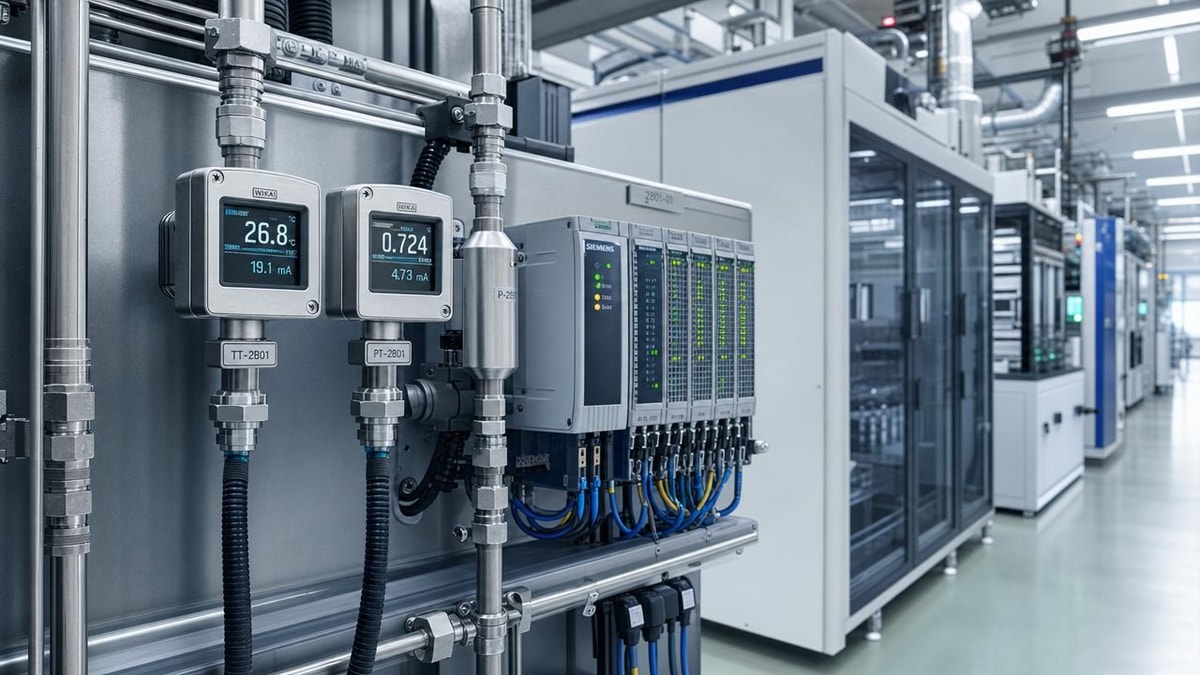
Check whether cooling capacity is reaching the actual heat sources efficiently. The priority is not total tonnage alone, but how precisely cooling matches rack-level demand. Look for recurring hotspots, overcooled zones, unstable inlet temperatures, and large gaps between supply and return conditions. These often indicate that existing assets are working hard but not working intelligently.
2. Airflow containment and pressure balance
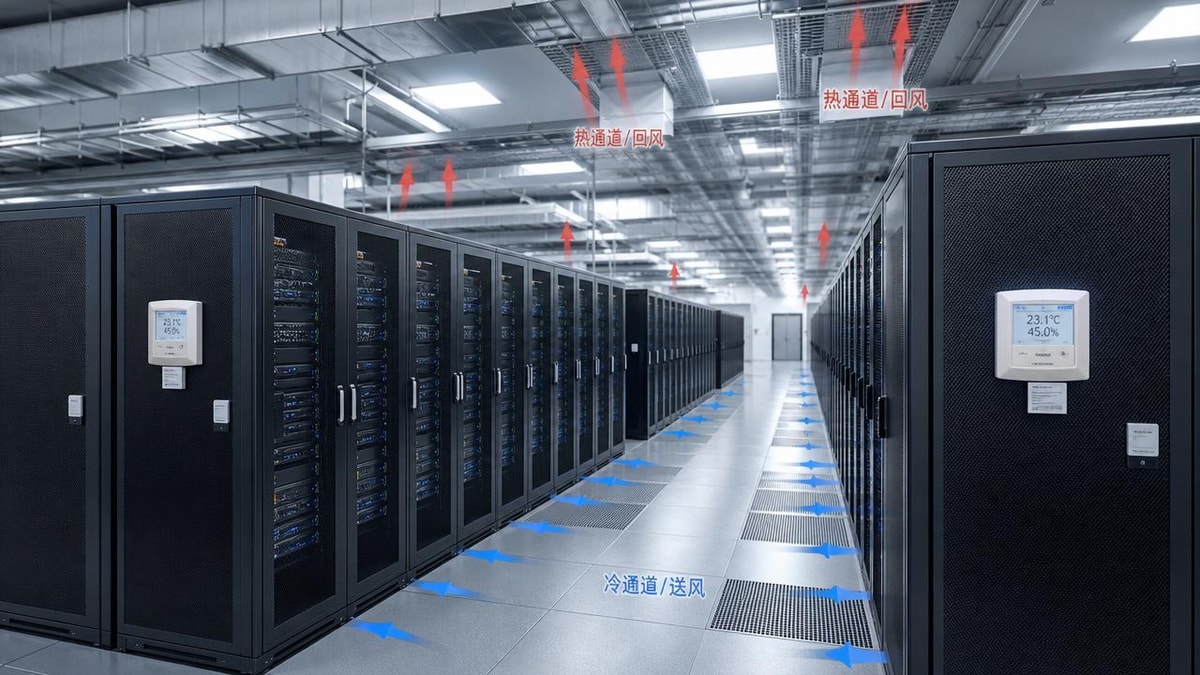
Airflow is one of the fastest-return improvement areas. Confirm whether hot and cold air are mixing, whether blanking panels and cable openings are unmanaged, and whether containment is partial or complete. Better airflow design can improve operating efficiency without immediately replacing core mechanical systems. For many enterprises, this is the most cost-effective first step in Environment Control in data centers.
3. Humidity control stability
Humidity drift creates hidden risk. Excess humidity can increase corrosion potential, while low humidity can elevate electrostatic discharge exposure. Decision-makers should ask whether humidity is being maintained within an operationally appropriate band across seasons, not just during ideal conditions. This matters especially in facilities supporting sensitive electronics, test environments, and long-life infrastructure.
4. Monitoring density and data quality
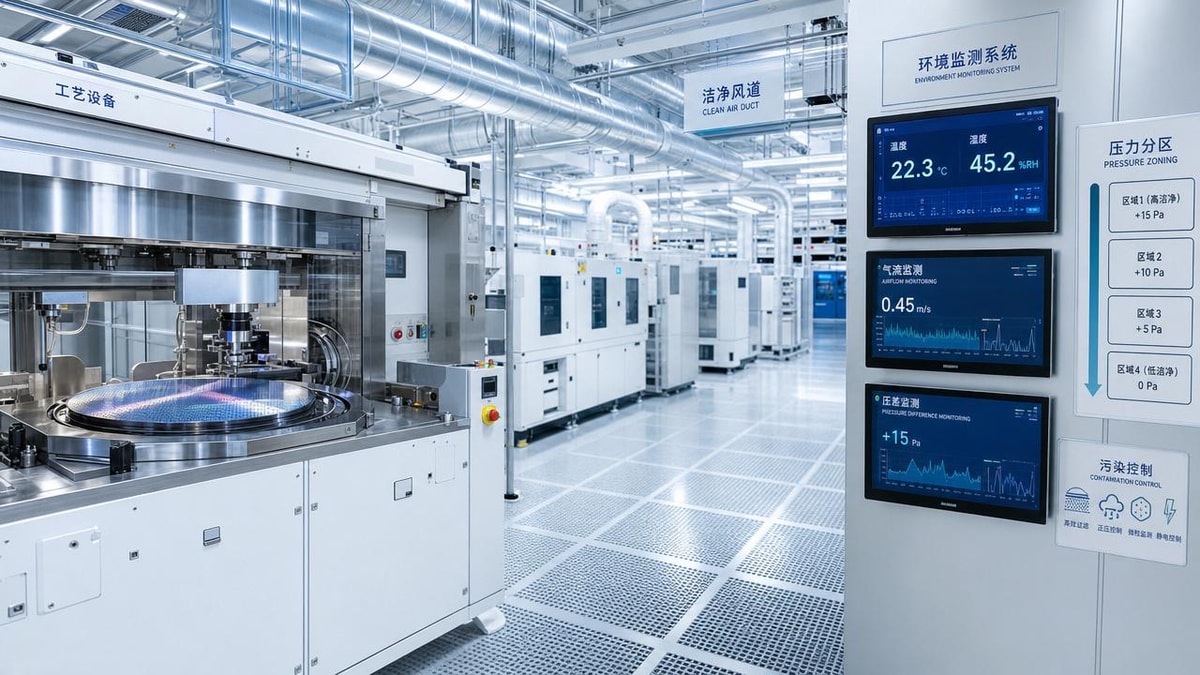
An upgrade is incomplete without reliable data. Review the number, placement, calibration status, and integration level of environmental sensors. If the site depends on a small number of room-level readings, you may be missing rack-level instability. Good Environment Control in data centers increasingly depends on continuous sensing, historical trend analysis, and alarm prioritization based on business impact.
5. Control automation and response logic
Ask whether cooling and humidity systems react dynamically to changing workloads or operate on static setpoints. Older control schemes often force unnecessary energy use because they are designed around worst-case assumptions. Modern automation can sequence units better, reduce simultaneous humidification and dehumidification, and align environmental output with actual IT demand.
6. Redundancy and maintenance resilience
Efficiency should not come at the cost of resilience. Confirm whether upgrades preserve maintenance access, failover capability, and spare capacity during peak conditions. A data center that performs efficiently only in normal conditions is not truly optimized for enterprise use.
A practical decision table for Environment Control in data centers
The table below helps leadership teams connect symptoms to likely upgrade priorities and business value.
Different scenarios require different upgrade priorities
Legacy enterprise facilities
Older sites usually benefit first from low-disruption upgrades: airflow corrections, containment, sensor expansion, and control tuning. These projects often deliver measurable efficiency gains without large construction work. The key judgment standard is whether existing infrastructure is fundamentally undersized or simply poorly coordinated.
High-density compute environments
Facilities supporting AI inference, engineering simulation, or advanced analytics should prioritize thermal concentration risk. Here, Environment Control in data centers must be evaluated at the rack and row level, not just room averages. Supplemental in-row, rear-door, or liquid-supported cooling may be necessary, but only after confirming airflow discipline and control quality.
Multi-site or distributed edge operations
In geographically dispersed environments, standardization becomes critical. Decision-makers should focus on remote monitoring consistency, alarm rationalization, and maintenance simplicity. The best upgrade may not be the most advanced system, but the one that can be deployed, monitored, and serviced reliably across many locations.
Commonly overlooked issues that reduce operating efficiency
Many upgrade plans underperform because they ignore small operational details. These issues rarely appear in board-level summaries, but they often determine whether Environment Control in data centers delivers the promised return.
- Sensor locations that measure room comfort rather than IT intake conditions.
- Control setpoints copied from legacy practice rather than current equipment tolerance and load profile.
- Containment installations that are incomplete around floor openings, overhead pathways, or rack gaps.
- Maintenance procedures that temporarily break airflow integrity and are never fully restored.
- Humidity systems that counteract cooling behavior, increasing energy waste without improving reliability.
- No clear ownership model between facilities, IT, and operations teams.
Execution checklist: how to move from assessment to results
- Establish a baseline using temperature maps, humidity trends, energy data, alarm history, and rack power density.
- Rank issues by business consequence: uptime risk first, energy waste second, expansion barriers third.
- Implement low-capex corrections before major equipment replacement.
- Define success metrics in advance, such as reduced hotspots, lower cooling energy, tighter environmental variance, or increased deployable capacity.
- Pilot upgrades in one room or zone when possible to validate assumptions.
- Integrate reporting so executives can track business outcomes, not just engineering readings.
This sequence reduces the risk of solving the wrong problem. It also helps organizations align facility spending with enterprise strategy, especially when digital infrastructure must support manufacturing intelligence, semiconductor workflows, or sensitive industrial data streams.
FAQ: quick answers decision-makers often need
How soon should upgrades pay back?
Low-complexity improvements such as airflow management, control tuning, and sensor optimization often show returns faster than major mechanical replacements. Timelines depend on energy cost, load profile, and current inefficiency levels.
Should companies replace cooling equipment first?
Not always. In many cases, the smarter first move for Environment Control in data centers is to improve distribution, measurement, and automation. Equipment replacement should follow a verified diagnosis, not assumptions.
What data should leadership request before approval?
Ask for current and projected rack density, thermal maps, humidity trends, energy use, incident history, maintenance constraints, expected savings, implementation phases, and resilience impact during failure or maintenance scenarios.
Final guidance: what to prepare before the next vendor or internal review
For organizations planning Environment Control in data centers upgrades, the most useful next step is preparation. Gather your current environmental performance data, identify the highest-risk zones, define future density requirements, and clarify whether the primary goal is reliability, cost reduction, scalability, or all three. Then require every proposed solution to show how it improves measurable operating efficiency without weakening resilience.
If you need to move the process forward, prioritize discussion around six items: actual thermal load profile, airflow constraints, humidity stability targets, monitoring architecture, implementation disruption, and total lifecycle cost. Those questions will reveal whether a proposal is merely technically interesting or genuinely aligned with enterprise performance. For decision-makers, that is the standard that should guide every environment control upgrade.
Get weekly intelligence in your inbox.
No noise. No sponsored content. Pure intelligence.
 Apr 28, 2026When do rapid prototyping 3D printing services save real costWhen do rapid prototyping 3D printing services save real cost
 Apr 28, 2026What Can Go Wrong in Fan-out Wafer Level Pkg?What Can Go Wrong in Fan-out Wafer Level Pkg?
 Apr 28, 2026What Makes Optical LiDAR Modules Better for Autonomy?What Makes Optical LiDAR Modules Better for Autonomy?
 Apr 28, 20262026 Market Trends in Supply Chain Resilience for Fabs2026 Market Trends in Supply Chain Resilience for Fabs
 May 05, 2026Supply Chain Resilience in Semiconductor Industry: Early Warning Signs to WatchSupply Chain Resilience in Semiconductor Industry: Early Warning Signs to Watch
 May 05, 2026How to Assess Supply Chain Resilience in Semiconductor Industry PartnersHow to Assess Supply Chain Resilience in Semiconductor Industry Partners
 May 05, 2026Supply Chain Resilience in Semiconductor Industry: What Actually WorksSupply Chain Resilience in Semiconductor Industry: What Actually Works
 May 05, 2026IC Testing Services: Common Gaps Between Quoted Scope and Real NeedsIC Testing Services: Common Gaps Between Quoted Scope and Real Needs
 May 05, 2026When IC Testing Services Become a Bottleneck in Product ReleaseWhen IC Testing Services Become a Bottleneck in Product Release
 May 05, 2026IC Testing Services: How to Compare Turnaround, Coverage, and Yield ImpactIC Testing Services: How to Compare Turnaround, Coverage, and Yield Impact
 May 05, 2026Industrial IoT Certification Costs: What Drives the BudgetIndustrial IoT Certification Costs: What Drives the Budget
 May 05, 2026Industrial IoT Certification Delays and How to Avoid ThemIndustrial IoT Certification Delays and How to Avoid Them
 May 05, 2026Industrial IoT Certification: What to Check Before Product LaunchIndustrial IoT Certification: What to Check Before Product Launch
 May 05, 2026Data Center Environment Control Upgrades That Improve Operating EfficiencyData Center Environment Control Upgrades That Improve Operating Efficiency
 May 05, 2026What to Fix First in Data Center Environment ControlWhat to Fix First in Data Center Environment Control
 May 05, 2026Environment Control in Data Centers: Practical Ways to Cut Downtime RiskEnvironment Control in Data Centers: Practical Ways to Cut Downtime Risk
 May 05, 2026Environment Control in Semiconductor Fabrication: Where Upgrades Pay Off FirstEnvironment Control in Semiconductor Fabrication: Where Upgrades Pay Off First
 May 05, 2026How Better Environment Control Reduces Defect Risk in Semiconductor FabricationHow Better Environment Control Reduces Defect Risk in Semiconductor Fabrication
 May 05, 2026Environment Control in Semiconductor Fabrication: The Hidden Cost of DriftEnvironment Control in Semiconductor Fabrication: The Hidden Cost of Drift
 May 05, 2026How to Judge Sensory Data Precision Before System IntegrationHow to Judge Sensory Data Precision Before System Integration
 May 05, 2026Sensory Data Precision Problems That Lead to Costly ReworkSensory Data Precision Problems That Lead to Costly Rework
 May 05, 2026Sensory Data Precision: How Much Accuracy Is Enough for AutomationSensory Data Precision: How Much Accuracy Is Enough for Automation
 May 05, 2026Smart Sensors for Autonomous Vehicles: Trends Shaping 2026 PlatformsSmart Sensors for Autonomous Vehicles: Trends Shaping 2026 Platforms
 May 05, 2026What to Compare Before Sourcing Smart Sensors for Autonomous VehiclesWhat to Compare Before Sourcing Smart Sensors for Autonomous Vehicles
 May 05, 2026Smart Sensors for Autonomous Vehicles: Accuracy Gaps That Matter on the RoadSmart Sensors for Autonomous Vehicles: Accuracy Gaps That Matter on the Road
 May 05, 2026Common Failure Points in MEMS Sensors for Medical DevicesCommon Failure Points in MEMS Sensors for Medical Devices
 May 05, 2026Choosing MEMS Sensors for Medical Devices Without OverengineeringChoosing MEMS Sensors for Medical Devices Without Overengineering