

How Smart Sensors Improve IoT Application Reliability
As industrial systems scale across autonomous operations, predictive maintenance, and power-critical environments, reliability becomes a board-level priority. Smart Sensors for IoT applications play a decisive role by improving data accuracy, real-time visibility, and fault detection across complex infrastructure. For enterprise decision-makers, understanding how these sensors strengthen uptime, safety, and operational confidence is essential to building resilient, future-ready digital ecosystems.
For most enterprise buyers, the central question is not whether IoT can generate more data. It is whether that data can be trusted enough to support operational decisions, automation, and risk control. Smart sensors improve IoT application reliability by combining sensing, onboard processing, self-diagnostics, and communication capabilities in a way that reduces noise, identifies faults earlier, and supports more stable system performance across demanding environments.
The business value is clear: better reliability means less unplanned downtime, fewer false alarms, safer operations, stronger regulatory alignment, and a more credible return on digital infrastructure investments. In sectors ranging from manufacturing and energy to logistics and smart facilities, smart sensors are becoming a practical reliability layer rather than a simple hardware upgrade.
Why reliability is the real KPI in enterprise IoT
Many IoT programs begin with visibility goals, but they scale only when reliability is proven. If sensor data is inconsistent, delayed, distorted by environmental conditions, or vulnerable to device failure, every downstream system is affected. Analytics models become less accurate, predictive maintenance loses credibility, and operators start bypassing digital recommendations. For executive teams, this quickly turns an innovation initiative into an operational liability.
Reliability in IoT is broader than device uptime alone. It includes data integrity, measurement consistency, communication stability, resilience under temperature or vibration stress, and the ability to detect abnormal conditions before they escalate. In industrial and infrastructure settings, a single unreliable sensing point can create a chain reaction across controls, maintenance schedules, compliance reporting, and customer-facing service levels.
This is where Smart Sensors for IoT applications matter strategically. Unlike conventional sensors that simply capture and transmit raw signals, smart sensors can filter local data, compensate for drift, perform self-checks, and communicate richer context about device health. That additional intelligence helps enterprises build IoT systems that are more dependable at scale, especially when operations depend on continuous monitoring and automated responses.
What makes a sensor “smart” in practical business terms
From a technical perspective, a smart sensor typically integrates the sensing element with embedded processing, memory, and communication functions. From a business perspective, the definition is simpler: it is a sensor that improves decision quality while lowering operational uncertainty. The value comes not just from collecting measurements, but from improving the trustworthiness and usability of those measurements across the enterprise stack.
Key capabilities usually include signal conditioning, calibration support, onboard diagnostics, threshold-based event detection, and support for digital communication protocols. Some smart sensors also include edge analytics functions, allowing them to identify anomalies or summarize local patterns before sending data upstream. This reduces bandwidth use and enables faster reaction times in environments where milliseconds or minutes make a material difference.
For enterprise decision-makers, the most important distinction is that smart sensors do not simply add complexity. When properly selected, they remove complexity from the broader system by reducing the need for manual calibration, limiting noisy data ingestion, and simplifying maintenance workflows. In high-value industrial deployments, that can directly improve asset utilization, engineering efficiency, and the long-term economics of the IoT rollout.
How smart sensors improve IoT application reliability in the field
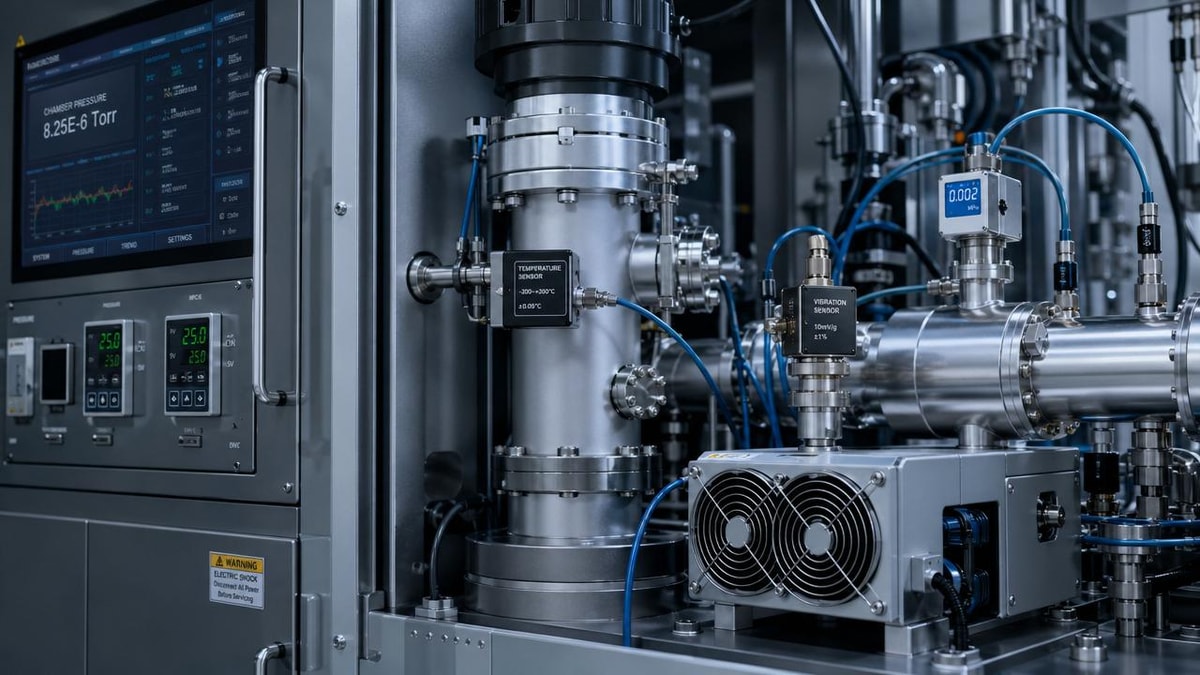
The first reliability gain comes from better data quality at the source. Smart sensors can compensate for environmental effects such as temperature fluctuation, vibration, humidity, or electrical interference that would otherwise distort readings. This matters because poor source data cannot be fully corrected later by software. When measurements begin with greater precision and stability, monitoring systems, control platforms, and predictive models all perform more reliably.
The second gain is earlier fault detection. Smart sensors can continuously monitor their own condition and identify issues such as drift, signal degradation, abnormal operating ranges, or communication irregularities. This self-awareness helps teams distinguish between an actual process problem and a sensor problem. That distinction is critical because false alarms waste labor, while undetected failures increase the probability of downtime, safety incidents, or damaged equipment.
The third gain is faster local response. In many industrial environments, reliability depends on timely action, not just historical visibility. Smart sensors with edge processing can trigger immediate alerts or local logic when predefined conditions are met, even if cloud connectivity is unstable or central platforms are temporarily unavailable. This distributed intelligence improves resilience and supports safer operations in remote, mobile, or harsh settings.
A fourth advantage is more consistent operation across large fleets of assets. Enterprises often struggle when IoT programs move from pilot to multi-site deployment. Variations in installation quality, environmental conditions, and maintenance discipline can erode system performance. Smart sensors help standardize data acquisition and health reporting, making it easier to benchmark sites, compare performance, and maintain reliability across geographically distributed operations.
Where decision-makers see the strongest business impact
Unplanned downtime is usually the most visible area of impact. In production lines, energy systems, and critical infrastructure, equipment failures rarely happen without signals. The issue is that conventional sensing setups may miss those signals, misread them, or surface them too late. Smart sensors improve the reliability of condition monitoring, allowing maintenance teams to act before wear, overheating, pressure instability, contamination, or vibration anomalies become expensive shutdown events.
Safety and compliance are another major area. In sectors where environmental conditions, electrical systems, gas exposure, thermal load, or machine behavior must be continuously monitored, reliability is not optional. Smart sensors support more dependable alarm functions, better event traceability, and stronger documentation for audits or incident reviews. For executive stakeholders, that reduces legal, operational, and reputational exposure.
There is also a financial governance benefit. IoT projects are often evaluated on ambitious transformation language, but approved on practical outcomes. Smart Sensors for IoT applications help make those outcomes measurable: reduced maintenance costs, lower scrap rates, fewer truck rolls, improved energy efficiency, longer asset life, and better service continuity. These are metrics business leaders can use to justify investment and compare vendors with greater confidence.
What enterprise buyers should evaluate before investing
Not every smart sensor delivers the same reliability value. Buyers should begin with operating conditions. A sensor that performs well in a clean lab or commercial building may not hold up in a power electronics environment, a high-vibration assembly line, or a high-humidity outdoor deployment. Reliability claims must be matched against actual field conditions, including temperature range, ingress protection, electromagnetic compatibility, shock tolerance, and expected service life.
Standards and qualification matter as well. For industrial and high-consequence applications, enterprise teams should examine alignment with relevant reliability and quality frameworks, such as AEC-Q100 where applicable, ISO-related testing practices, or sector-specific validation requirements. The more critical the application, the more important it becomes to verify calibration processes, test methodology, traceability, and long-term drift behavior rather than relying on brochure-level specifications.
Integration should be treated as a reliability issue, not just an IT issue. Buyers should assess protocol compatibility, cybersecurity support, edge-to-cloud architecture fit, firmware update pathways, and how sensor diagnostics will feed maintenance or supervisory systems. A technically excellent sensor can still underperform if its health signals are not visible to the teams responsible for uptime, process control, and site operations.
Total cost of ownership is equally important. Smart sensors may cost more upfront than basic devices, but the relevant comparison is lifecycle cost. Enterprises should model installation effort, calibration frequency, maintenance labor, replacement intervals, failure rates, and the cost of false alarms or undetected faults. In many cases, the premium paid for smarter sensing is recovered through fewer disruptions and lower operational overhead.
Common implementation mistakes that weaken reliability
One common mistake is over-prioritizing data volume instead of data value. Some organizations assume that collecting more signals from more endpoints automatically improves reliability. In reality, large volumes of low-quality or poorly contextualized data can create confusion, overload analytics systems, and slow decision-making. Smart sensors should be deployed where they strengthen critical measurements, not simply where they add more telemetry.
Another mistake is treating sensors as isolated components rather than part of a reliability architecture. The sensing layer must align with edge processing, connectivity, power design, maintenance workflows, and cybersecurity controls. If one layer is weak, overall reliability suffers. For example, a highly accurate sensor adds limited value if power instability, unsecured firmware, or poor gateway design causes intermittent data loss.
A third mistake is failing to define business-level success metrics before deployment. Teams often track installation counts or dashboard activity, but those do not prove reliability improvement. Enterprises should establish baseline measures such as mean time between failures, false alarm rate, maintenance response time, asset availability, or process deviation frequency. This allows smart sensor investments to be evaluated against real operational outcomes.
High-value use cases across modern industrial environments
In predictive maintenance programs, smart vibration, temperature, pressure, and current sensors help detect subtle shifts in equipment behavior before catastrophic failure occurs. The reliability advantage is not only in capturing the change, but in distinguishing meaningful anomalies from normal operational variation. This leads to more confident maintenance scheduling and less wasted intervention on healthy assets.
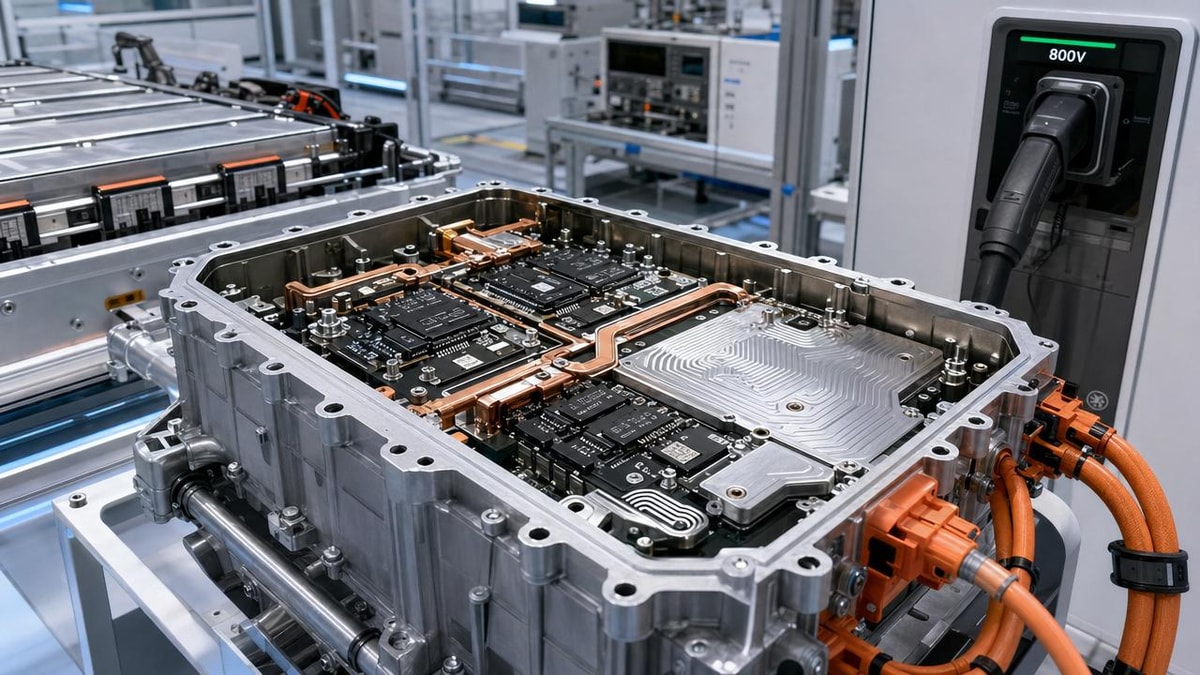
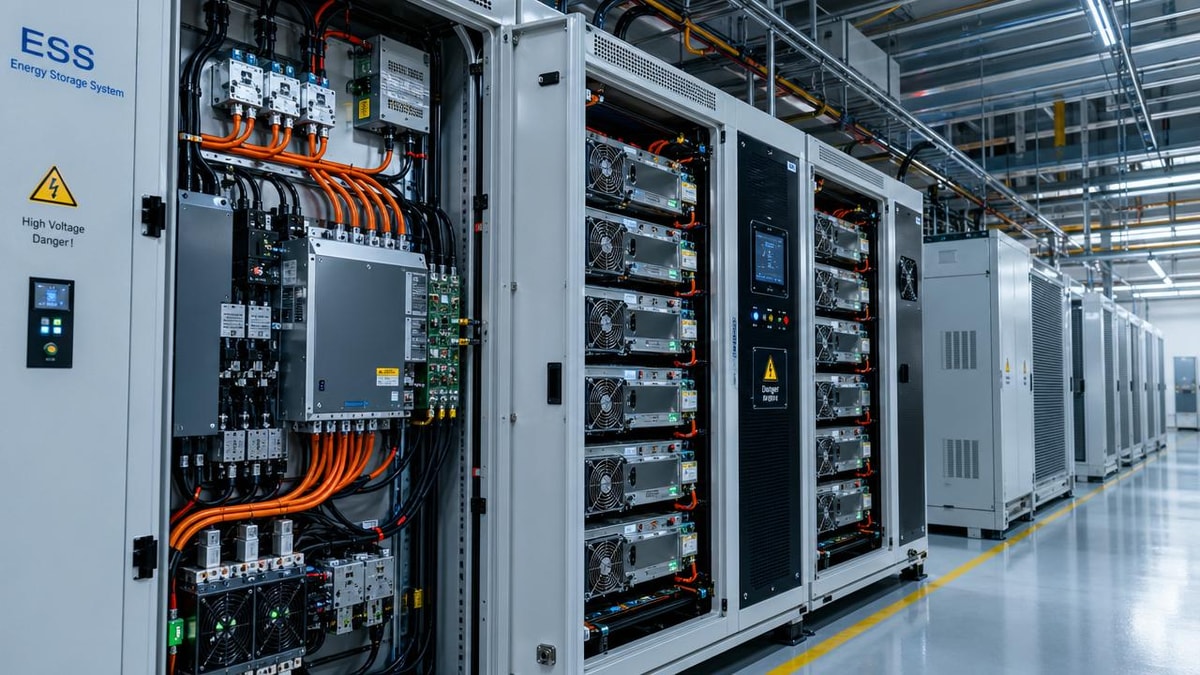
In power conversion and energy infrastructure, reliability depends on thermal management, load monitoring, and fast detection of abnormal conditions. Smart sensors can support stable operation in systems involving converters, inverters, battery storage, motor drives, and power semiconductors. In these environments, accurate sensing contributes directly to protection strategies, equipment longevity, and energy efficiency.
In smart manufacturing, smart sensors support quality consistency and process control by monitoring environmental conditions, machine states, and material handling with greater precision. This is especially relevant where yield loss, rework, or contamination risk has material financial consequences. Better sensing reduces process variability and helps operations teams intervene before minor deviations become systemic production issues.
In logistics, buildings, and distributed infrastructure, smart sensors strengthen visibility across remote assets where manual inspection is costly or infrequent. Whether monitoring cold-chain conditions, occupancy, air quality, equipment status, or utility performance, reliable sensing makes service operations more proactive. For large enterprises, that translates into better continuity, lower field service costs, and improved customer experience.
How to build a stronger business case for smart sensor adoption
The strongest business case starts with a critical process, not a generic technology initiative. Decision-makers should identify where unreliable sensing currently creates measurable cost or risk: recurring downtime, maintenance inefficiency, poor energy control, compliance exposure, or service disruption. Starting with a narrow but high-value pain point makes it easier to demonstrate reliability gains and secure broader organizational support.
Next, quantify both direct and indirect value. Direct value may include reduced failures, fewer manual inspections, lower spare-part consumption, and lower troubleshooting time. Indirect value may include higher trust in automation, faster incident response, stronger reporting quality, and better long-term planning. When presented together, these factors often show that Smart Sensors for IoT applications are not merely component upgrades but strategic enablers of more resilient operations.
Finally, use a phased adoption model. Pilot in a reliability-critical environment, validate against baseline metrics, and document lessons on integration, maintenance, and cybersecurity. Then scale using standardized device criteria and governance rules. This reduces deployment risk while helping leadership understand where smart sensors deliver the highest return across the enterprise portfolio.
Conclusion: reliable sensing is the foundation of reliable IoT
Enterprise IoT succeeds when decision-makers can trust the data, the devices, and the actions those systems trigger. Smart sensors improve IoT application reliability by making measurements more accurate, systems more responsive, and failures more detectable before they become operational problems. They strengthen the entire digital chain, from the physical environment to analytics, automation, and executive reporting.
For business leaders, the strategic takeaway is straightforward: reliable sensing is no longer a technical detail to leave entirely to engineering teams. It is a core factor in uptime, safety, capital efficiency, and transformation credibility. Organizations that evaluate smart sensors through the lens of reliability, lifecycle economics, and operational fit will be in a stronger position to build scalable, resilient IoT infrastructure.
As industrial ecosystems become more autonomous and data-driven, the question is not whether enterprises need more connected devices. It is whether they can depend on those devices in real operating conditions. That is precisely where Smart Sensors for IoT applications create lasting value.
Get weekly intelligence in your inbox.
No noise. No sponsored content. Pure intelligence.
 Apr 28, 2026When do rapid prototyping 3D printing services save real costWhen do rapid prototyping 3D printing services save real cost
 Apr 28, 2026What Can Go Wrong in Fan-out Wafer Level Pkg?What Can Go Wrong in Fan-out Wafer Level Pkg?
 Apr 28, 2026What Makes Optical LiDAR Modules Better for Autonomy?What Makes Optical LiDAR Modules Better for Autonomy?
 Apr 28, 20262026 Market Trends in Supply Chain Resilience for Fabs2026 Market Trends in Supply Chain Resilience for Fabs
 Apr 30, 2026SiC MOSFET for Electric Vehicles: How to Balance Efficiency and Thermal RiskSiC MOSFET for Electric Vehicles: How to Balance Efficiency and Thermal Risk
 Apr 30, 2026Intelligent Industrial Era: Technologies Worth Tracking in 2026Intelligent Industrial Era: Technologies Worth Tracking in 2026
 Apr 30, 2026Sensory Data Precision: Why Small Errors Lead to Bigger System FailuresSensory Data Precision: Why Small Errors Lead to Bigger System Failures
 Apr 30, 2026Steel Forging High Strength Components: When Forging Outperforms Other OptionsSteel Forging High Strength Components: When Forging Outperforms Other Options
 Apr 30, 2026Aluminum Extrusions for Construction Industry: Choosing Profiles That Save Time On SiteAluminum Extrusions for Construction Industry: Choosing Profiles That Save Time On Site
 Apr 30, 2026Lathe Turning Precision Machining: How to Reduce Rework on Tight TolerancesLathe Turning Precision Machining: How to Reduce Rework on Tight Tolerances
 Apr 30, 2026Photovoltaic Modules for Residential Use: What A Better Warranty Really MeansPhotovoltaic Modules for Residential Use: What A Better Warranty Really Means
 Apr 30, 2026Solar Panels Wholesale USA: What A Good Supply Partner Should OfferSolar Panels Wholesale USA: What A Good Supply Partner Should Offer
 Apr 30, 2026Lithium Ion Batteries Manufacturer in China: How to Vet Quality and CapacityLithium Ion Batteries Manufacturer in China: How to Vet Quality and Capacity
 Apr 30, 2026EV Charging Stations Quick Installation Guide for Small Commercial SitesEV Charging Stations Quick Installation Guide for Small Commercial Sites
 Apr 30, 2026ESS Energy Storage Lithium Ion Batteries: Safety Checks Before DeploymentESS Energy Storage Lithium Ion Batteries: Safety Checks Before Deployment
 Apr 30, 2026ESS Energy Storage for Renewable Energy: What A Reliable System NeedsESS Energy Storage for Renewable Energy: What A Reliable System Needs
 Apr 30, 2026Hybrid Inverters Cost-Effective Solutions: Where Savings Are RealHybrid Inverters Cost-Effective Solutions: Where Savings Are Real
 Apr 30, 2026Hybrid Inverters for Solar Energy Systems: Which Setup Fits BestHybrid Inverters for Solar Energy Systems: Which Setup Fits Best
 Apr 30, 2026IC Testing Services: How to Compare Turnaround, Yield, and TraceabilityIC Testing Services: How to Compare Turnaround, Yield, and Traceability
 Apr 30, 2026Digital Infrastructure for Smart Cities: Priorities That Shape Long-Term ValueDigital Infrastructure for Smart Cities: Priorities That Shape Long-Term Value
 Apr 30, 2026Digital Infrastructure Standards: What to Verify Before Project ApprovalDigital Infrastructure Standards: What to Verify Before Project Approval
 Apr 30, 2026Semiconductor Standards Explained for New Capacity PlanningSemiconductor Standards Explained for New Capacity Planning
 Apr 30, 2026Best Environment Control Solutions for Cleanrooms with Tight Process DemandsBest Environment Control Solutions for Cleanrooms with Tight Process Demands
 Apr 30, 2026Environment Control in Semiconductor Fabrication: Mistakes That Raise Contamination RiskEnvironment Control in Semiconductor Fabrication: Mistakes That Raise Contamination Risk
 Apr 30, 2026Supply Chain Resilience in Semiconductor Industry: Practical Moves That WorkSupply Chain Resilience in Semiconductor Industry: Practical Moves That Work
 Apr 30, 2026Autonomous Systems for Industrial Automation: Start with These Use CasesAutonomous Systems for Industrial Automation: Start with These Use Cases
 Apr 30, 2026Autonomous Systems OEM Selection: Common Risks and Red FlagsAutonomous Systems OEM Selection: Common Risks and Red Flags