

Hybrid Inverters Cost-Effective Solutions: Where Savings Are Real
For finance decision-makers evaluating energy infrastructure, hybrid inverters cost-effective solutions are only valuable when savings are measurable, risks are controlled, and long-term performance is proven. In a market shaped by efficiency demands, power reliability, and technology standards, understanding where hybrid inverters truly reduce operating costs can support smarter capital allocation and stronger return-on-investment decisions.
Search intent behind the keyword hybrid inverters cost-effective solutions is not simply informational. It is commercial and evaluative. Readers want to know whether hybrid inverters create real financial upside compared with conventional inverters, separate battery systems, or grid-only configurations. They are looking for practical evidence: where savings come from, how fast payback can happen, what technical conditions make the economics work, and what risks can erode projected returns.
For financial approvers, the main concern is not the elegance of the technology. It is whether the investment reduces electricity spend, protects operations from outages, improves energy flexibility, and avoids costly misallocation of capital. They also need confidence that performance claims are supported by reliable components, sound thermal management, and compliance with recognized industry standards rather than marketing language.
That means the most useful article is one that focuses on business value, measurable cost drivers, scenario-based decision logic, and risk screening criteria. General descriptions of how hybrid inverters work should remain brief. The real priority is understanding when hybrid inverter systems are truly cost-effective, when they are not, and how to evaluate proposals with enough rigor to support investment approval.
Where Hybrid Inverters Actually Deliver Measurable Savings
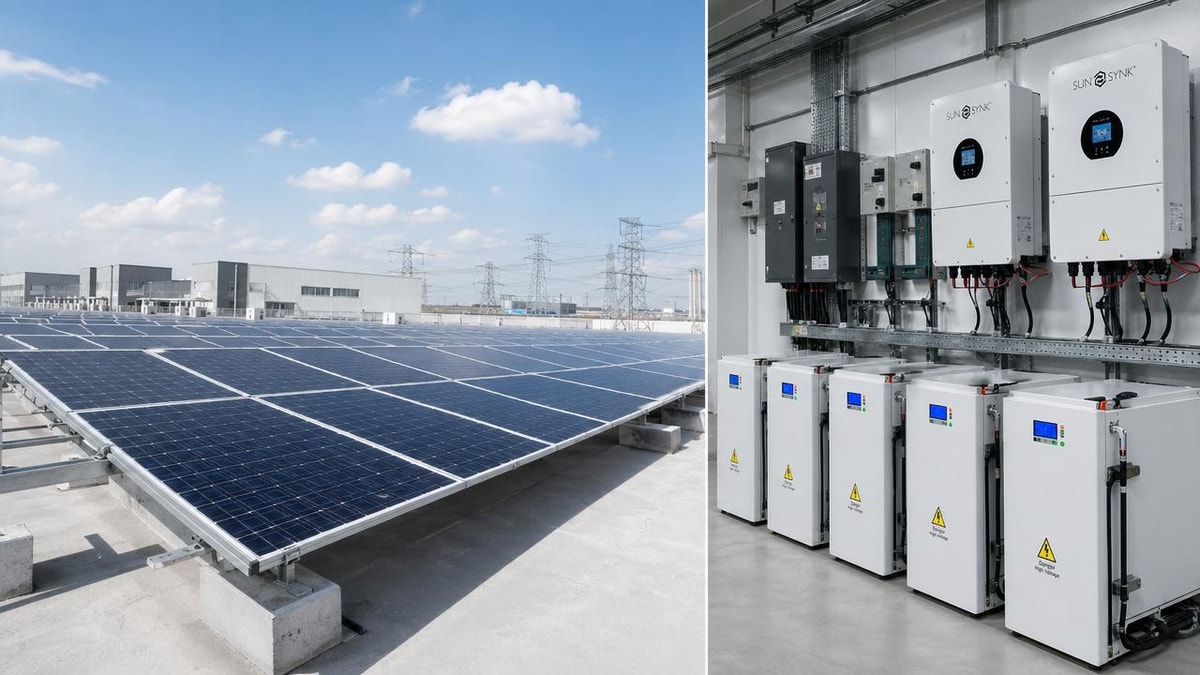
The strongest case for hybrid inverter adoption comes from projects where savings are tied to several cash-flow levers at once. A hybrid inverter can combine solar generation management, battery charging and discharging, and grid interaction in one architecture. The financial benefit becomes meaningful when that integration reduces purchased electricity, limits peak demand exposure, improves onsite energy utilization, and lowers the need for separate control hardware.
In practice, the first area of real savings is self-consumption optimization. If a facility generates solar power during the day but cannot consume all of it instantly, excess energy may be exported at a low tariff or curtailed. A hybrid inverter paired with storage can shift that energy into higher-value evening or peak-rate periods. For finance teams, this matters because the same kilowatt-hour becomes more economically productive without increasing energy generation capacity.
The second area is demand charge management. In many commercial and industrial markets, a significant share of the electricity bill comes from short-duration peak demand rather than total energy volume. Hybrid systems can discharge batteries during those peaks, reducing the maximum imported load seen by the utility. Where tariff structures are demand-heavy, this single benefit can become a major contributor to project payback.
A third source of savings is resilience-related cost avoidance. This is often underestimated because it does not appear directly on a utility bill. If an interruption causes production delays, spoilage, equipment restart losses, or data disruption, then backup continuity has economic value. Hybrid inverters can support critical loads more intelligently than simple grid-tied systems, especially in operations where even short outages create disproportionate financial consequences.
Why “Cost-Effective” Depends on the Operating Profile, Not Just Equipment Price
One of the most common approval mistakes is treating cost-effectiveness as a simple hardware price comparison. Hybrid inverters may cost more upfront than standard grid-tied inverters, but capital cost alone does not determine value. What matters is the relationship between operating profile and system capabilities. If the facility has flat energy pricing, no meaningful demand charge, minimal outage exposure, and low mismatch between solar generation and consumption timing, the economic case may be weak.
By contrast, facilities with high daytime loads, expensive evening tariffs, unstable grid conditions, or critical continuity requirements often see a much stronger result. The same inverter class can look marginal in one site and highly attractive in another. This is why finance decision-makers should insist on site-specific load analysis rather than generic return claims based on broad market averages.
It is also important to distinguish between residential-style marketing logic and industrial or commercial economic logic. Many vendor presentations focus on energy independence or sustainability language. Those themes may support corporate strategy, but they do not replace financial scrutiny. For business approvals, the core question is whether the system captures enough tariff arbitrage, demand reduction, and reliability value to justify total installed cost over its expected service life.
Another factor is future operating flexibility. A hybrid platform may support staged deployment, allowing an organization to install solar first and add storage later, or expand storage as tariffs change. That optionality can have financial value because it lowers the risk of stranded infrastructure. In rapidly evolving energy markets, flexibility itself can improve long-term capital efficiency.
The Cost Components Finance Teams Should Evaluate Before Approval
To evaluate hybrid inverters as cost-effective solutions, finance teams need a full cost stack rather than a narrow equipment quote. The starting point is capital expenditure: inverter, battery integration, balance-of-system components, switchgear, controls, installation, commissioning, and interconnection. But that is only the visible layer. Soft costs such as engineering, permitting, downtime during installation, and compliance validation can materially affect project economics.
Operating costs are equally important. These include maintenance, monitoring software, thermal management, battery replacement assumptions, and possible efficiency degradation over time. In projects built around high-cycling storage, battery lifecycle economics must be modeled carefully. An attractive first-year savings estimate can become misleading if replacement timing or depth-of-discharge assumptions are unrealistic.
Finance teams should also examine the efficiency pathway from generation to use. Every conversion stage introduces losses. A high-quality hybrid inverter architecture can improve system efficiency by consolidating functions and optimizing charging logic, but actual savings still depend on conversion performance under real operating conditions, not only laboratory peak ratings. Ask for weighted efficiency data, partial-load behavior, and thermal derating performance in the expected climate range.
Warranty structure deserves close review as well. The economic value of a lower-cost system can disappear if warranty terms are narrow, service response is weak, or replacement lead times are long. For institutional buyers, supplier credibility, component traceability, and support capability are part of total cost of ownership. In sectors influenced by semiconductor quality, packaging reliability, and thermal stress management, these points are far from secondary.
How to Identify the Strongest ROI Scenarios
The most compelling hybrid inverter business cases typically share a few characteristics. First, electricity tariffs must provide a spread large enough to reward energy shifting or peak shaving. If the difference between low-cost and high-cost periods is minimal, the battery-enabled value proposition weakens. Time-of-use rates, demand charges, and export compensation policies should therefore be modeled together, not in isolation.
Second, the load profile should align with controllable battery dispatch. Facilities with predictable peaks are easier to optimize than sites with highly erratic consumption. Manufacturing lines, cold storage, telecom infrastructure, logistics hubs, and process facilities often produce load patterns that can be analyzed and actively managed. The more predictable the peak events, the easier it is to monetize storage-integrated inverter capability.
Third, the cost of downtime must be explicit. In many sectors, backup value is real but poorly quantified. Finance teams should work with operations leaders to estimate the financial impact of outages: lost output, labor inefficiency, quality losses, contractual penalties, restart delays, and reputational damage. Once that number is visible, hybrid inverters may shift from being viewed as energy devices to resilience assets with measurable economic protection.
Fourth, future energy expansion plans matter. If the business expects EV charging growth, electrification of process loads, or greater exposure to grid instability, then hybrid infrastructure may support future needs more efficiently than a narrowly designed conventional system. A cost-effective solution is not only one with a decent current payback, but one that remains strategically useful as the operating environment changes.
Where Savings Claims Often Break Down
Not every hybrid inverter proposal deserves approval. Savings claims often break down when models rely on unrealistic battery cycling assumptions. If projected dispatch requires more frequent cycling than the battery warranty comfortably supports, replacement cost can erase expected gains. Decision-makers should compare financial models against warranted throughput, expected degradation, and conservative operating assumptions.
Another common weakness is overestimating export value or underestimating interconnection constraints. Some projects assume excess solar can always be monetized or that the system can operate with full flexibility from day one. In reality, utility rules, export caps, and permitting timelines can limit performance. A model that ignores these constraints may look attractive on paper but disappoint in practice.
Underspecified component quality is another risk area. Inverters operate under thermal, electrical, and switching stress. Long-term reliability depends on semiconductor quality, packaging robustness, control design, and environmental tolerance. In mission-critical applications, procurement teams should evaluate whether the hardware is benchmarked against relevant standards and whether the supplier can document quality assurance processes. This is especially important where power electronics reliability affects not only savings but continuity of operations.
Finally, there is the problem of treating “hybrid” as a universal upgrade. If the facility lacks meaningful solar generation, has little tariff volatility, or does not need continuity support, a conventional inverter architecture may be more financially rational. The right conclusion is not that hybrid systems are always cost-effective, but that they are cost-effective under the right technical and commercial conditions.
What Financial Approvers Should Ask Vendors Before Signing Off
To move from interest to approval, finance leaders need a disciplined question set. Start with the savings model. Ask the vendor to separate value streams clearly: self-consumption improvement, demand reduction, resilience benefit, avoided equipment duplication, and any incentive revenue. Each assumption should be visible, traceable, and stress-tested under conservative cases.
Next, request interval load data analysis, not monthly averages. Hybrid economics depend on timing, not just totals. A proposal based on annual consumption alone is usually too weak for high-confidence approval. Insist on simulations that reflect actual load curves, tariff structures, expected battery dispatch, and seasonal variation. Sensitivity analysis should show best case, base case, and downside case outcomes.
Ask about component architecture and reliability design. What power semiconductors are used? How is thermal management handled? What are the derating thresholds? What certifications apply? How are communication failures, grid disturbances, and battery faults managed? For institutions influenced by technical benchmarking culture, these questions matter because electronic reliability directly affects financial predictability.
Finally, ask for a serviceability plan. Who monitors the system, who responds to faults, what spare parts are held, and what is the expected mean time to repair? Finance teams approve returns, but returns depend on uptime. A technically efficient inverter with poor support infrastructure can become a hidden liability.
A Practical Decision Framework for Smarter Capital Allocation
A useful approval framework begins with four tests. First, does the site have enough tariff complexity or demand exposure to create meaningful controllable savings? Second, is the load profile compatible with battery-integrated dispatch? Third, is the operational value of backup continuity large enough to matter financially? Fourth, does the supplier provide credible reliability evidence and lifecycle support?
If the answer to all four is yes, hybrid inverters are often strong candidates for cost-effective deployment. If only one or two tests are met, the project may still be viable, but the margin of safety is smaller and the investment case should be treated more cautiously. This framework helps finance leaders avoid both unnecessary rejection of good projects and approval of technically impressive but economically weak ones.
It is also wise to evaluate hybrid systems as part of broader infrastructure strategy rather than as isolated purchases. When aligned with onsite generation, storage policy, electrification plans, and reliability objectives, they can create compound value. When procured tactically without operational alignment, they risk underperformance. Capital efficiency improves when the system is linked to a defined energy management roadmap.
In sectors where power quality, digital continuity, and supply chain resilience are strategic concerns, the conversation should extend beyond simple utility savings. Hybrid inverter economics are strongest when they support operational sovereignty, energy flexibility, and risk control in one platform. That broader lens is increasingly relevant in a world shaped by tighter performance expectations and more complex infrastructure decisions.
Conclusion: Hybrid Inverters Are Cost-Effective When the Business Case Is Specific, Not Generic
The phrase hybrid inverters cost-effective solutions is accurate only when tied to measurable operational realities. Real savings usually come from better self-consumption, reduced demand charges, improved outage resilience, and smarter infrastructure integration. But those benefits are highly dependent on tariff design, load profile, battery usage patterns, and hardware reliability.
For financial approvers, the right approach is neither blanket enthusiasm nor blanket skepticism. It is disciplined evaluation. Look past the equipment label and test the full lifecycle economics, technical assumptions, and service support model. Demand scenario-based ROI analysis and credible reliability evidence. When those elements are strong, hybrid inverters can justify investment with both cost savings and strategic value.
In short, hybrid inverters are not automatically the lowest-cost option upfront, but in the right commercial and technical context, they can be the most financially intelligent one over time. That is where the savings are real, and where approval decisions become defensible.
Get weekly intelligence in your inbox.
No noise. No sponsored content. Pure intelligence.
 Apr 28, 2026When do rapid prototyping 3D printing services save real costWhen do rapid prototyping 3D printing services save real cost
 Apr 28, 2026What Can Go Wrong in Fan-out Wafer Level Pkg?What Can Go Wrong in Fan-out Wafer Level Pkg?
 Apr 28, 2026What Makes Optical LiDAR Modules Better for Autonomy?What Makes Optical LiDAR Modules Better for Autonomy?
 Apr 28, 20262026 Market Trends in Supply Chain Resilience for Fabs2026 Market Trends in Supply Chain Resilience for Fabs
 Apr 30, 2026SiC MOSFET for Electric Vehicles: How to Balance Efficiency and Thermal RiskSiC MOSFET for Electric Vehicles: How to Balance Efficiency and Thermal Risk
 Apr 30, 2026Intelligent Industrial Era: Technologies Worth Tracking in 2026Intelligent Industrial Era: Technologies Worth Tracking in 2026
 Apr 30, 2026Sensory Data Precision: Why Small Errors Lead to Bigger System FailuresSensory Data Precision: Why Small Errors Lead to Bigger System Failures
 Apr 30, 2026Steel Forging High Strength Components: When Forging Outperforms Other OptionsSteel Forging High Strength Components: When Forging Outperforms Other Options
 Apr 30, 2026Aluminum Extrusions for Construction Industry: Choosing Profiles That Save Time On SiteAluminum Extrusions for Construction Industry: Choosing Profiles That Save Time On Site
 Apr 30, 2026Lathe Turning Precision Machining: How to Reduce Rework on Tight TolerancesLathe Turning Precision Machining: How to Reduce Rework on Tight Tolerances
 Apr 30, 2026Photovoltaic Modules for Residential Use: What A Better Warranty Really MeansPhotovoltaic Modules for Residential Use: What A Better Warranty Really Means
 Apr 30, 2026Solar Panels Wholesale USA: What A Good Supply Partner Should OfferSolar Panels Wholesale USA: What A Good Supply Partner Should Offer
 Apr 30, 2026Lithium Ion Batteries Manufacturer in China: How to Vet Quality and CapacityLithium Ion Batteries Manufacturer in China: How to Vet Quality and Capacity
 Apr 30, 2026EV Charging Stations Quick Installation Guide for Small Commercial SitesEV Charging Stations Quick Installation Guide for Small Commercial Sites
 Apr 30, 2026ESS Energy Storage Lithium Ion Batteries: Safety Checks Before DeploymentESS Energy Storage Lithium Ion Batteries: Safety Checks Before Deployment
 Apr 30, 2026ESS Energy Storage for Renewable Energy: What A Reliable System NeedsESS Energy Storage for Renewable Energy: What A Reliable System Needs
 Apr 30, 2026Hybrid Inverters Cost-Effective Solutions: Where Savings Are RealHybrid Inverters Cost-Effective Solutions: Where Savings Are Real
 Apr 30, 2026Hybrid Inverters for Solar Energy Systems: Which Setup Fits BestHybrid Inverters for Solar Energy Systems: Which Setup Fits Best
 Apr 30, 2026IC Testing Services: How to Compare Turnaround, Yield, and TraceabilityIC Testing Services: How to Compare Turnaround, Yield, and Traceability
 Apr 30, 2026Digital Infrastructure for Smart Cities: Priorities That Shape Long-Term ValueDigital Infrastructure for Smart Cities: Priorities That Shape Long-Term Value
 Apr 30, 2026Digital Infrastructure Standards: What to Verify Before Project ApprovalDigital Infrastructure Standards: What to Verify Before Project Approval
 Apr 30, 2026Semiconductor Standards Explained for New Capacity PlanningSemiconductor Standards Explained for New Capacity Planning
 Apr 30, 2026Best Environment Control Solutions for Cleanrooms with Tight Process DemandsBest Environment Control Solutions for Cleanrooms with Tight Process Demands
 Apr 30, 2026Environment Control in Semiconductor Fabrication: Mistakes That Raise Contamination RiskEnvironment Control in Semiconductor Fabrication: Mistakes That Raise Contamination Risk
 Apr 30, 2026Supply Chain Resilience in Semiconductor Industry: Practical Moves That WorkSupply Chain Resilience in Semiconductor Industry: Practical Moves That Work
 Apr 30, 2026Autonomous Systems for Industrial Automation: Start with These Use CasesAutonomous Systems for Industrial Automation: Start with These Use Cases
 Apr 30, 2026Autonomous Systems OEM Selection: Common Risks and Red FlagsAutonomous Systems OEM Selection: Common Risks and Red Flags