SiC MOSFET Benefits in 1200V+ Power Designs
For technical evaluators building 1200V+ power systems, understanding SiC MOSFET benefits is essential to balancing efficiency, thermal performance, switching speed, and long-term reliability. As high-voltage designs move into EVs, industrial drives, and autonomous infrastructure, SiC devices offer a compelling path to lower losses, higher power density, and stronger system resilience under demanding operating conditions.
Why are SiC MOSFET benefits receiving so much attention in 1200V+ designs?
The short answer is that conventional silicon devices are increasingly stressed in high-voltage, high-frequency, and thermally constrained systems. At 1200V and above, designers are often asked to improve efficiency, reduce cooling requirements, shrink magnetics, and maintain reliability at the same time. That combination is difficult to achieve with legacy switching devices alone.
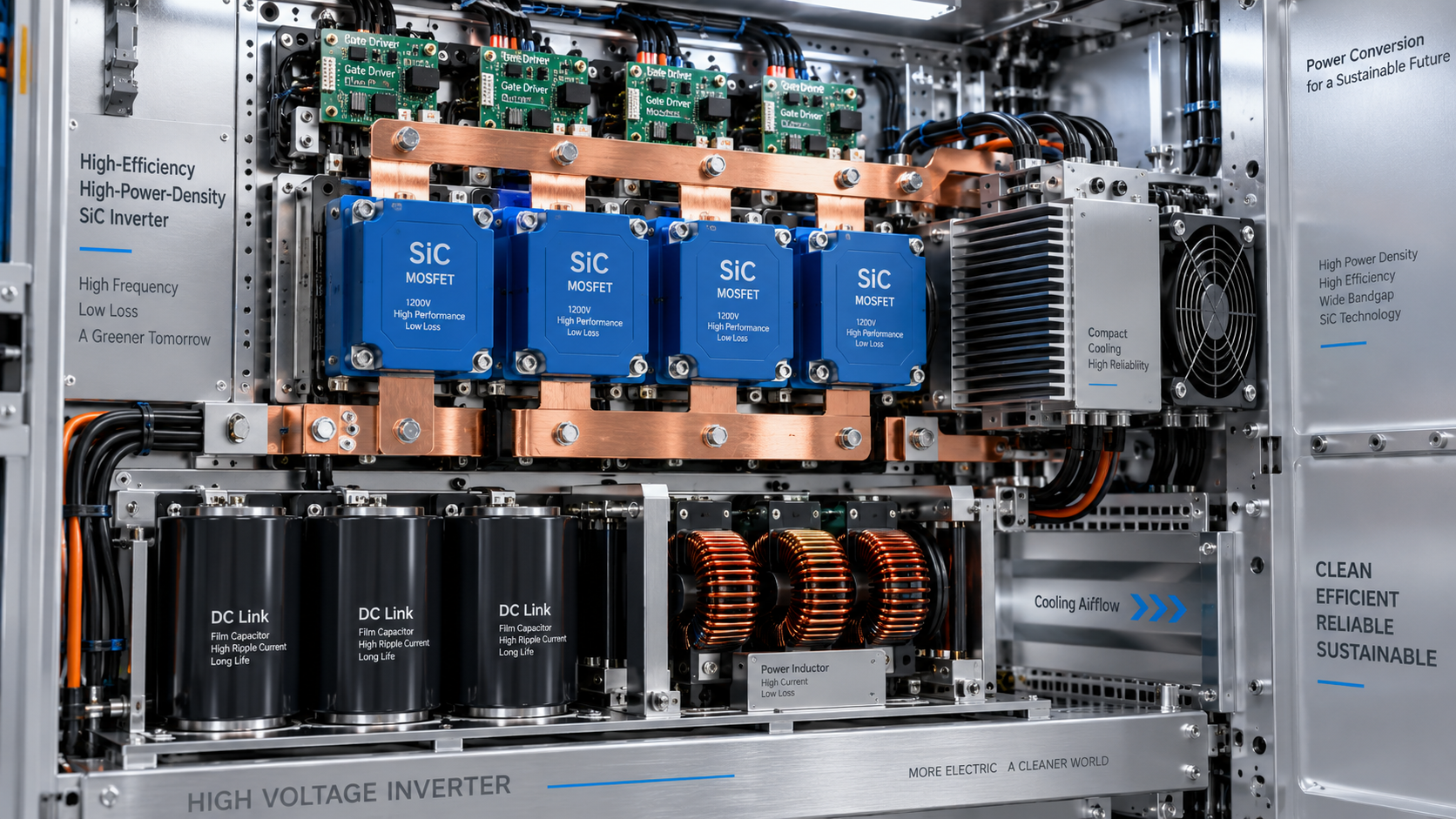
This is where SiC MOSFET benefits become strategically important. Silicon carbide has a wider bandgap, higher critical electric field, and better thermal capability than traditional silicon. In practice, this means lower switching losses, higher usable junction temperatures, faster switching transitions, and lower on-resistance for a given voltage class. For technical evaluators, these are not abstract material properties; they directly affect inverter efficiency, DC bus design, heatsink size, EMI control strategy, and total cost of ownership.
In sectors monitored by advanced institutions such as G-SSI, the value is even broader. High-efficiency power conversion is tied to sovereign-grade infrastructure, industrial automation uptime, and supply chain resilience. When a 1200V+ platform is expected to operate in EV traction systems, charging modules, energy storage converters, robotics, or industrial power supplies, the choice of switching technology becomes a system-level decision rather than a component-level substitution.
What specific SiC MOSFET benefits matter most to technical evaluators?
Technical evaluators usually need more than a generic claim of “better efficiency.” They need to know which benefits actually move project metrics. In 1200V+ architectures, the most important SiC MOSFET benefits usually fall into five categories.
1. Lower switching losses
Compared with many silicon IGBTs, SiC MOSFETs can switch much faster with lower turn-on and turn-off energy. This becomes especially valuable in high-frequency converters, where switching loss is a dominant factor. Lower switching loss translates into less wasted energy, reduced thermal burden, and improved full-load and partial-load efficiency.
2. Higher power density
Because SiC devices support higher switching frequencies, designers can often reduce the size of inductors, transformers, and filters. This enables more compact converters and inverters, which is a major advantage in EVs, aerospace-adjacent platforms, fast chargers, and space-constrained industrial cabinets.
3. Better thermal performance
Another of the key SiC MOSFET benefits is strong operation under elevated temperatures. While good thermal design is still essential, SiC devices generally offer more headroom than silicon alternatives. That allows engineers to simplify cooling architecture or increase output capability without overdesigning the thermal path.
4. Improved efficiency across operating profiles
In real systems, efficiency must hold not only at peak load but also during part-load, transient, and variable-speed operation. SiC MOSFET benefits are often visible across a wider operating envelope, which matters for motor drives, energy storage systems, and autonomous equipment with dynamic duty cycles.
5. Potential reduction in system-level cost
The unit cost of SiC devices is often higher, but component price alone does not reflect project economics. Smaller magnetics, reduced cooling, lighter enclosures, lower energy loss, and better efficiency compliance may offset the semiconductor premium. For evaluators, the right comparison is total system value, not just device cost.
Where do SiC MOSFET benefits create the strongest advantage in real applications?
Not every design gains equally from silicon carbide. The strongest advantage appears when voltage is high, switching frequency matters, thermal budgets are tight, or energy efficiency is heavily scrutinized.
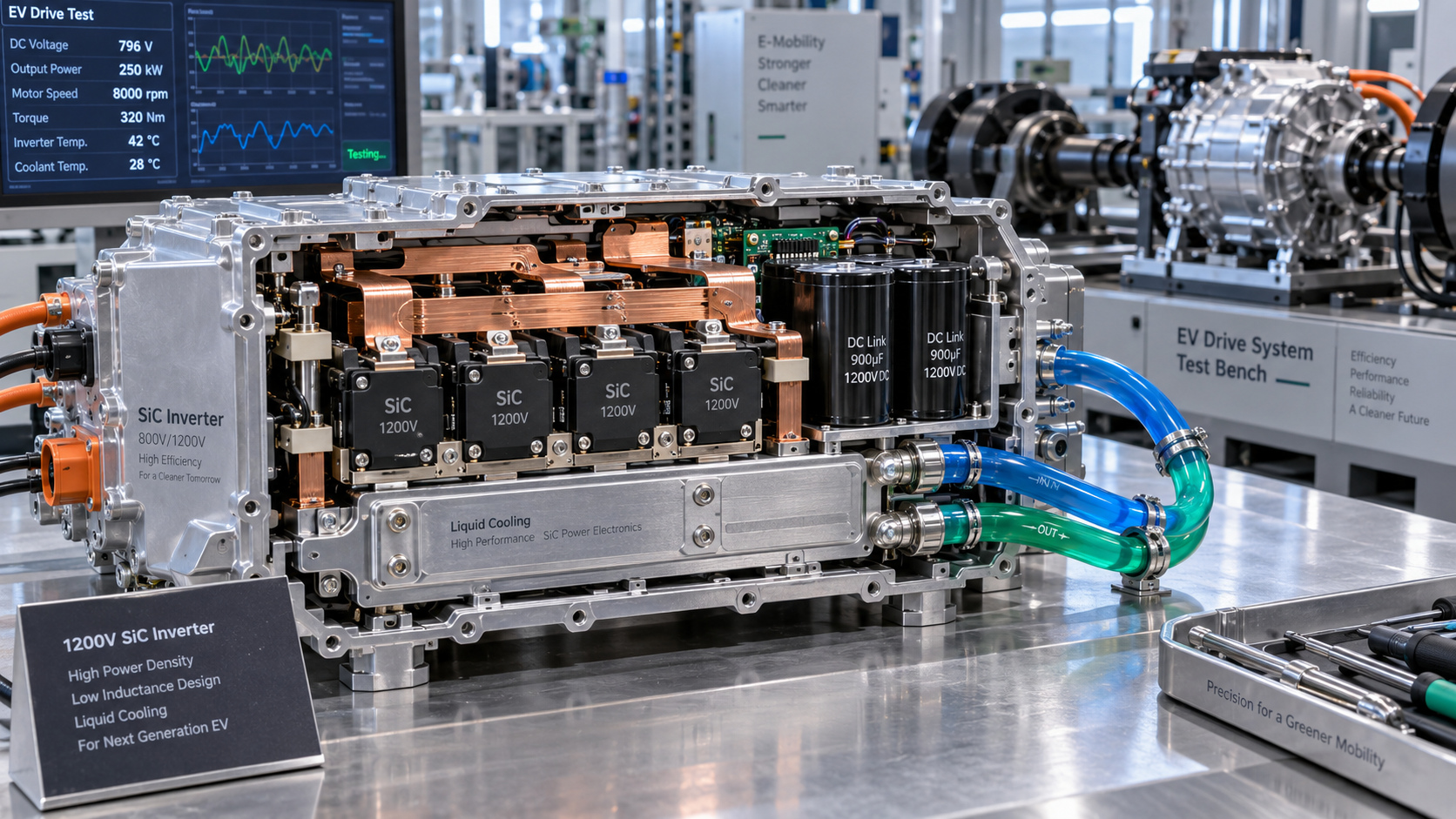
In electric mobility, SiC MOSFET benefits support traction inverters, onboard chargers, and DC-DC converters by improving range, reducing heat, and enabling lighter power electronics. In industrial motor drives, they help raise efficiency while supporting higher-frequency control and more compact cabinet layouts. In solar and energy storage inverters, they contribute to conversion efficiency, easier thermal management, and better lifetime energy yield. In charging infrastructure, they support faster power conversion with improved density, which is critical where footprint and uptime are commercial priorities.
Autonomous infrastructure is another fast-growing area. Robotics, machine vision platforms, distributed control cabinets, and high-reliability industrial IoT nodes increasingly rely on stable and efficient power subsystems. In these environments, SiC MOSFET benefits align well with the priorities emphasized by G-SSI: reliability, thermal discipline, and resilient operation under demanding electrical conditions.
How do SiC MOSFETs compare with IGBTs in 1200V+ decision-making?
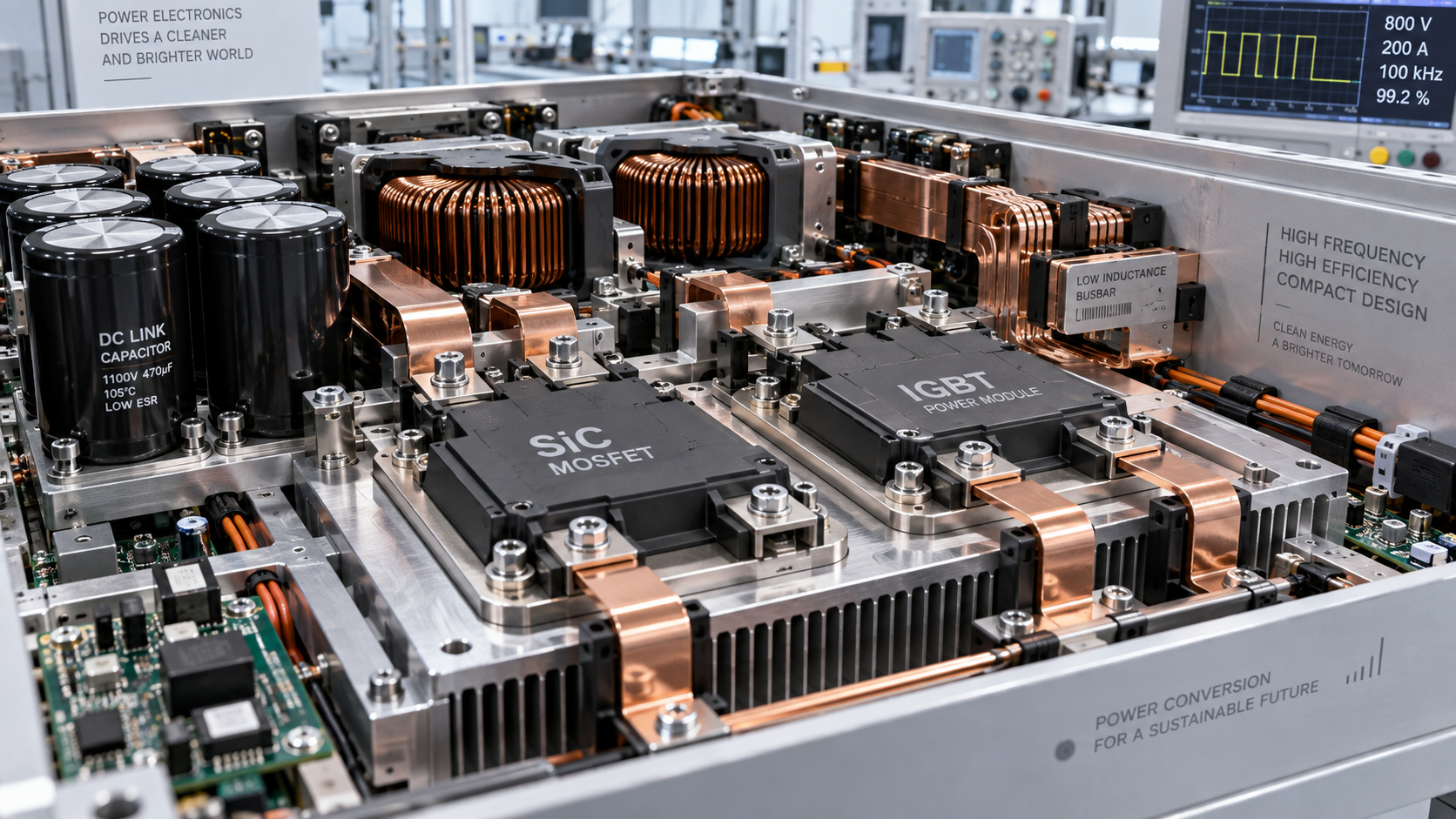
This is one of the most common evaluation questions. IGBTs remain relevant in many cost-sensitive or lower-frequency applications, but SiC MOSFETs usually offer a stronger performance profile when efficiency and switching speed are critical. The choice depends on design goals, operating profile, and integration maturity.
The comparison should not be reduced to “SiC replaces IGBT everywhere.” A better question is whether SiC MOSFET benefits produce measurable system gains in the intended application. If the answer is yes, especially in 1200V+ platforms, the business case can become very strong.
What should evaluators check before selecting a 1200V+ SiC MOSFET?
A good evaluation process goes beyond voltage and current ratings. The practical success of SiC adoption depends on how the device behaves in the actual system.
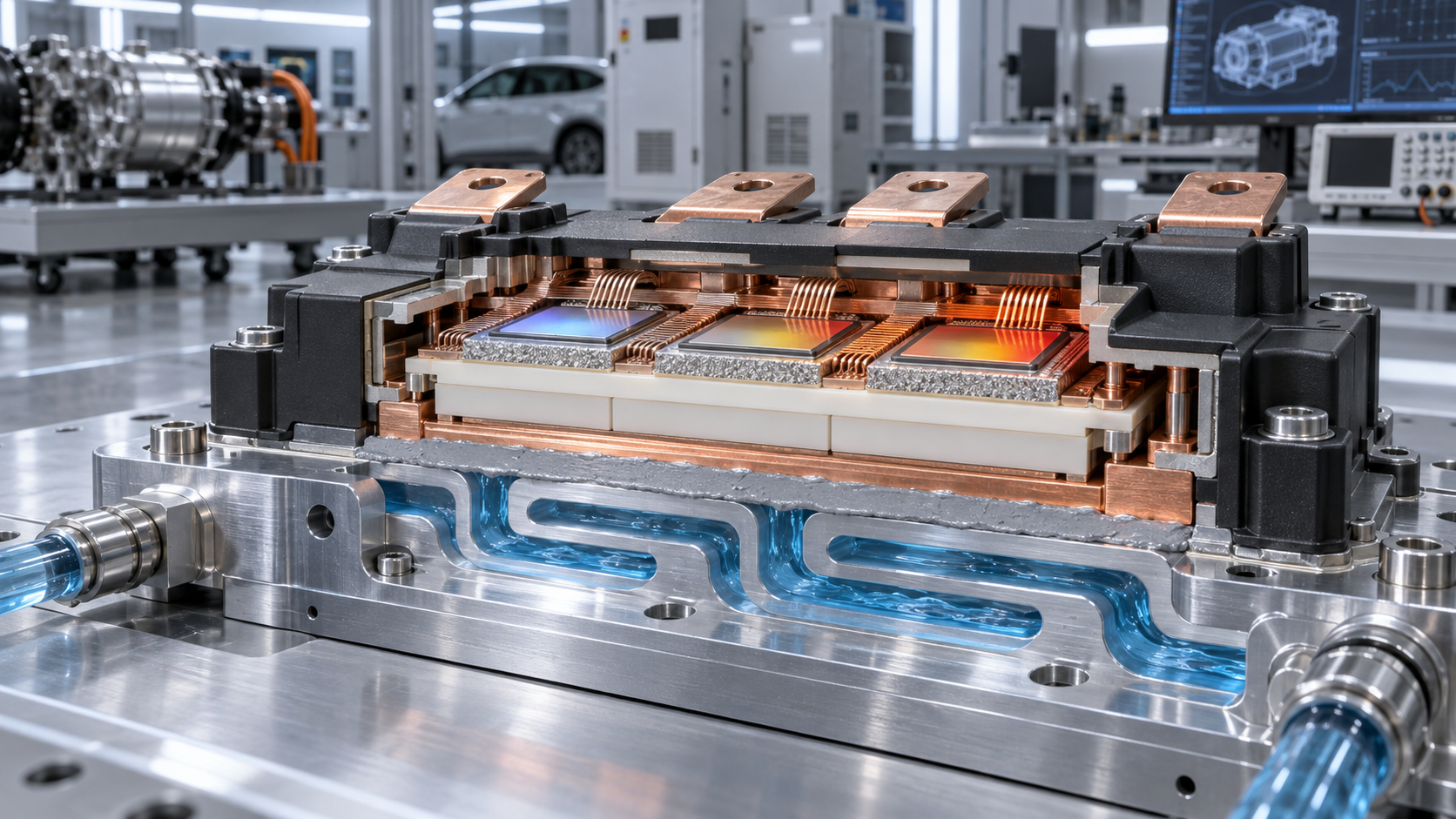
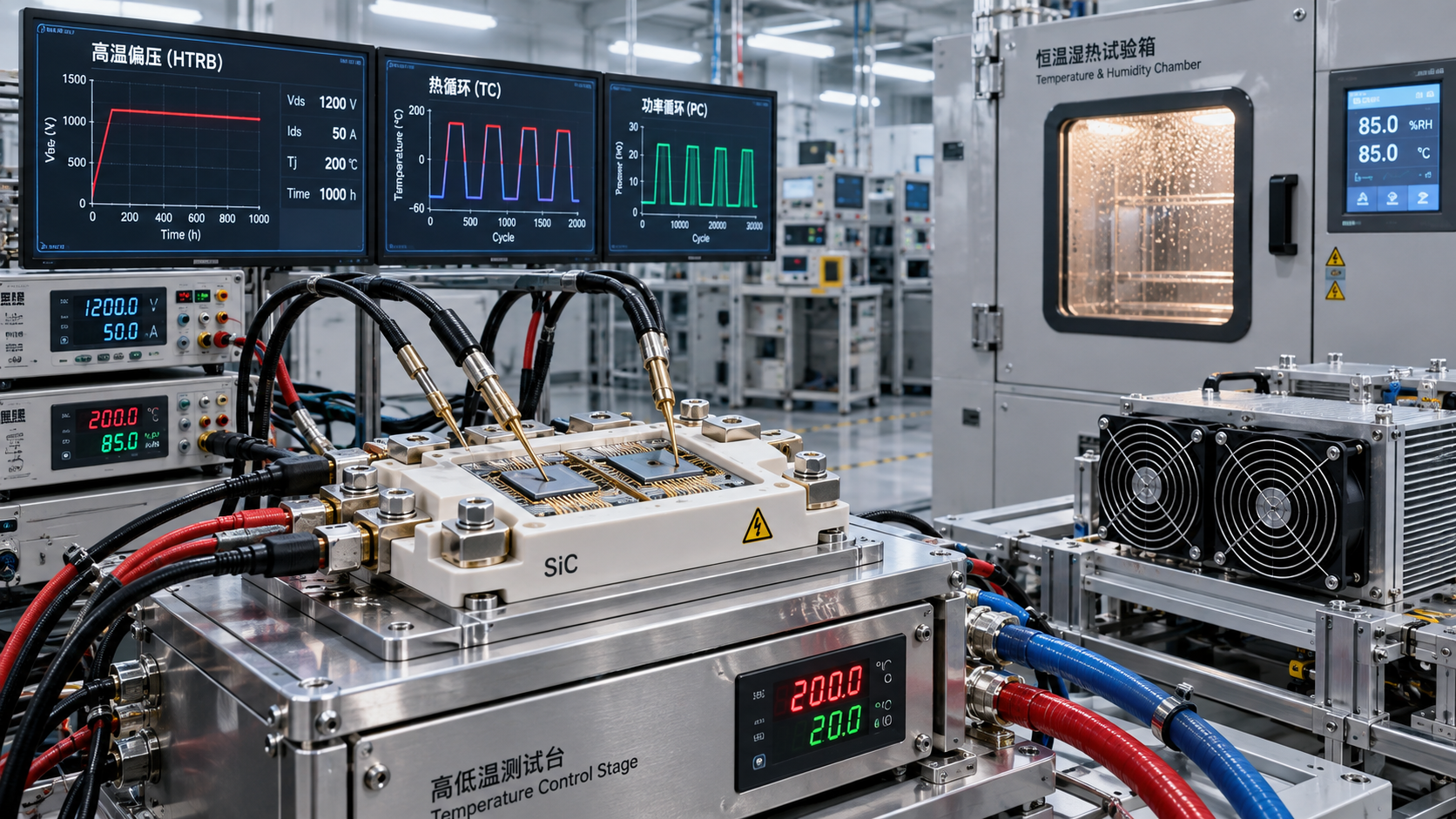
First, review switching performance under realistic bus voltage, temperature, and gate-drive conditions. Datasheet values can look excellent, but double-pulse testing and application-specific validation are more reliable indicators. Second, examine thermal resistance, package design, and module integration quality. Strong SiC MOSFET benefits can be weakened by poor packaging, weak thermal interfaces, or uncontrolled parasitics.
Third, verify gate driver compatibility. SiC devices often need more careful gate design, short loop layout, and protection tuning than silicon alternatives. Fourth, assess short-circuit withstand capability and fault handling strategy. Fifth, confirm qualification and consistency against relevant standards such as AEC-Q100 where applicable, along with lab validation methods aligned to ISO/IEC 17025 discipline and broader manufacturing expectations associated with SEMI-oriented quality culture.
Finally, consider supplier maturity. Technical evaluators should ask about wafer quality, lot consistency, packaging robustness, field data, and roadmap stability. In high-value infrastructure, supply reliability matters almost as much as electrical performance.
What common mistakes weaken the expected SiC MOSFET benefits?
Many disappointing results come not from the device itself but from integration mistakes. One common error is assuming that a SiC MOSFET can simply replace an IGBT in the same layout with no redesign. Faster switching means higher sensitivity to stray inductance, ringing, EMI, and gate loop quality. Without layout refinement, the expected efficiency and reliability gains may not fully appear.
Another mistake is evaluating only peak efficiency. SiC MOSFET benefits should be checked across the full operating map, including low-load efficiency, transient behavior, thermal cycling, and mission-profile stress. It is also risky to focus only on semiconductor cost while ignoring cooling hardware, passive component size, and lifetime energy savings.
A third mistake is underestimating EMI engineering. Faster edges are valuable, but they require disciplined filtering, shielding, grounding, and control of common-mode effects. In industrial and autonomous systems, electromagnetic compatibility can influence certification, sensor fidelity, and control stability. For organizations working at the intersection of semiconductors and sensory infrastructure, this point is especially important.
How can teams judge whether the higher initial cost is justified?
The best method is a total-value assessment. Instead of comparing device price alone, compare the entire power stage before and after SiC adoption. Include switching losses, conduction losses, heatsink reduction, cooling power, magnetic downsizing, enclosure volume, efficiency compliance margin, field reliability expectations, and maintenance implications.
In many 1200V+ designs, the payoff from SiC MOSFET benefits becomes clearer when systems run at high utilization, operate in hot environments, or require compact packaging. The value also rises when downtime is expensive, energy costs are significant, or power density affects product competitiveness. For technical evaluators, the economic decision should connect electrical metrics to business outcomes such as yield, uptime, operating expenditure, and platform differentiation.
What are the most practical FAQ-style conclusions for a 1200V+ evaluation?
If your team is assessing SiC MOSFET benefits for a new or upgraded high-voltage design, a simple decision framework can help:
In summary, SiC MOSFET benefits are most compelling when a 1200V+ design demands high efficiency, compact architecture, strong thermal behavior, and durable performance under real industrial stress. For technical evaluators, the right question is not whether SiC is fashionable, but whether it delivers measurable system advantage within your application, validation process, and supply strategy.
If you need to confirm a specific roadmap, it is worth first discussing operating voltage range, switching frequency target, thermal envelope, qualification expectations, package preference, gate-drive constraints, EMI concerns, lifetime model, and supplier consistency. Those answers will clarify whether SiC MOSFET benefits justify immediate adoption, phased integration, or a mixed-technology approach for your next high-voltage platform.
Get weekly intelligence in your inbox.
No noise. No sponsored content. Pure intelligence.
 Apr 28, 2026When do rapid prototyping 3D printing services save real costWhen do rapid prototyping 3D printing services save real cost
 Apr 28, 2026What Can Go Wrong in Fan-out Wafer Level Pkg?What Can Go Wrong in Fan-out Wafer Level Pkg?
 Apr 28, 2026What Makes Optical LiDAR Modules Better for Autonomy?What Makes Optical LiDAR Modules Better for Autonomy?
 Apr 28, 20262026 Market Trends in Supply Chain Resilience for Fabs2026 Market Trends in Supply Chain Resilience for Fabs
 Oct 10, 2026When do integrated sensor systems reduce commissioning risks?When do integrated sensor systems reduce commissioning risks?
 Oct 09, 2026How North American semiconductor fabs control airborne molecular contaminationHow North American semiconductor fabs control airborne molecular contamination
 Oct 08, 2026When do custom aluminum extrusions reduce fabrication costs?When do custom aluminum extrusions reduce fabrication costs?
 Oct 07, 2026How semiconductor packaging affects thermal reliability in EV power electronicsHow semiconductor packaging affects thermal reliability in EV power electronics
 Oct 06, 2026When do corrugated plastic boxes make sense for returnable shipping?When do corrugated plastic boxes make sense for returnable shipping?
 Oct 05, 2026What to verify before choosing semiconductor distributors in North AmericaWhat to verify before choosing semiconductor distributors in North America
 Oct 04, 2026How to assess a high purity materials manufacturer’s traceabilityHow to assess a high purity materials manufacturer’s traceability
 Oct 03, 2026How SiC power conversion solutions improve high-voltage invertersHow SiC power conversion solutions improve high-voltage inverters
 Oct 02, 2026When do SiC MOSFET benefits justify the higher device cost?When do SiC MOSFET benefits justify the higher device cost?
 Oct 01, 2026Which semiconductor reliability testing standards apply to power devices?Which semiconductor reliability testing standards apply to power devices?
 Sep 30, 2026How to qualify a semiconductor photoresist supplier for KrF/ArF productionHow to qualify a semiconductor photoresist supplier for KrF/ArF production
 Sep 29, 2026What image quality should portable ultrasound scanners deliver for triage?What image quality should portable ultrasound scanners deliver for triage?
 Sep 28, 2026How sub-ppb impurity control gases protect process consistencyHow sub-ppb impurity control gases protect process consistency
 Sep 27, 2026How chemical purity affects defect rates in semiconductor depositionHow chemical purity affects defect rates in semiconductor deposition
 Sep 26, 2026When do high voltage power semiconductor devices need SiC over IGBTs?When do high voltage power semiconductor devices need SiC over IGBTs?
 Sep 25, 2026How to verify quality controls at a die casting parts supplier in ChinaHow to verify quality controls at a die casting parts supplier in China
 Sep 24, 2026How to verify electronic gas purity for sub-ppb semiconductor processesHow to verify electronic gas purity for sub-ppb semiconductor processes
 Sep 23, 2026When sensory data integration improves industrial motion monitoringWhen sensory data integration improves industrial motion monitoring
 Sep 22, 2026How supply chain resilience reduces the cost of production disruptionsHow supply chain resilience reduces the cost of production disruptions
 Sep 21, 2026What autonomous systems OEMs should verify before sourcing LiDAR modulesWhat autonomous systems OEMs should verify before sourcing LiDAR modules
 Sep 20, 2026How gas purity affects defect density in epitaxial wafer growthHow gas purity affects defect density in epitaxial wafer growth
 Sep 19, 2026How substrate defects affect third-generation material device yieldHow substrate defects affect third-generation material device yield
 Sep 18, 2026How trace impurities in specialty process gases affect wafer yieldHow trace impurities in specialty process gases affect wafer yield