

IC Testing Standards: Where Compliance Failures Usually Start
IC Testing standards often fail long before a device reaches final validation—typically at the interface between design intent, process control, and test execution. For quality control and safety managers, that means the most expensive compliance failures rarely begin in the lab report itself. They start upstream, when specifications are incomplete, test methods are misaligned with real application risks, data integrity is weak, or production changes outpace qualification controls. The practical takeaway is clear: if you want to reduce audit exposure, field returns, and latent reliability issues, you must monitor the early points where testing discipline disconnects from product reality.
For organizations working across power semiconductors, advanced packaging, MEMS sensors, and industrial electronics, IC Testing standards are not just a technical requirement. They are a control framework linking design, manufacturing, qualification, traceability, and customer confidence. This is especially important for quality and safety teams responsible for compliance under standards such as AEC-Q100, JEDEC, SEMI references, ISO-based quality systems, and laboratory competence practices aligned with ISO/IEC 17025.
The question is not whether a company performs testing. Most do. The real question is where compliance failures usually start, why they remain hidden until late-stage review or field use, and what quality leaders can do to detect them earlier. This article focuses on those practical fault lines.
What Users Searching “IC Testing Standards” Usually Need to Know
When someone searches for IC Testing standards in a professional context, they are rarely looking for a simple definition. They usually want to know which standards matter, where noncompliance typically begins, and how to build a testing system that can survive customer audits, regulatory review, and long-term reliability demands.
For quality control personnel and safety managers, the most urgent concerns are concrete: Are current test methods truly mapped to product risk? Are qualification results defensible? Can the team prove repeatability, calibration control, and data integrity? If a customer failure occurs, will records show that testing was adequate, relevant, and properly governed?
The most useful content, therefore, is not a broad overview of semiconductor testing theory. It is guidance on early warning points, common compliance gaps, and practical decision criteria. That includes specification control, test coverage alignment, sample strategy, change management, traceability, outsourced lab governance, and the relationship between reliability evidence and real operating conditions.
Compliance Failures Usually Start Before Formal Testing Begins
One of the most common misconceptions is that compliance breakdown begins when a test is executed incorrectly. In reality, failures often begin earlier, at the planning stage. If design intent is not translated into measurable acceptance criteria, even perfectly executed testing may produce noncompliant or misleading outcomes.
In IC environments, this happens when teams rely on generic qualification templates without checking whether those templates reflect the actual product structure, package type, voltage class, thermal profile, or application environment. A power device for industrial conversion, a MEMS sensor for harsh vibration, and a packaged logic IC for automotive electronics should not be governed by the same practical assumptions, even if some reference standards overlap.
Quality and safety managers should pay close attention to three early planning errors. First, the wrong standard is selected, or the right standard is interpreted too loosely. Second, internal specifications do not clearly define pass-fail thresholds, sample conditions, stress duration, or failure criteria. Third, teams treat test completion as proof of compliance, even when test design itself was incomplete.
That is why strong IC Testing standards implementation begins with requirement interpretation, not with equipment setup. If the compliance basis is weak, downstream results are difficult to defend.
Where Design Intent and Test Intent Fall Out of Sync
A major source of compliance failure is the gap between what the product is supposed to do and what the test program actually verifies. In semiconductor organizations, design teams, reliability teams, and production test teams often work from different assumptions. The result is partial coverage that looks acceptable on paper but misses important failure mechanisms.
For example, a device may pass electrical tests at room temperature while remaining vulnerable to thermal cycling, moisture sensitivity, latch-up risk, electrostatic discharge exposure, or package-induced mechanical stress. In sensor products, calibration drift, noise behavior, and environmental cross-sensitivity may be more important than basic functional continuity. In advanced packaging, interconnect fatigue, warpage, and die-to-die interaction may dominate field reliability concerns.
When test intent is not explicitly tied to use-case risk, organizations create blind spots. These blind spots often appear in new product introduction, derivative designs, package changes, die shrinks, foundry transfers, and material substitutions. From a compliance standpoint, the danger is not only technical failure. It is the inability to show that the chosen test plan was appropriate for the actual product risk profile.
Quality leaders can reduce this gap by requiring a formal linkage between design FMEA, process FMEA, application conditions, and qualification test selection. If those documents do not align, compliance exposure has likely already started.
Weak Control of Specifications Is an Early and Recurring Failure Point
Many IC Testing standards failures trace back to poorly governed specifications. This includes outdated test limits, conflicting document revisions, ambiguous units, undefined guard bands, and acceptance criteria that vary across departments or suppliers. When specifications are unstable, even competent labs produce results that are difficult to compare, trend, or audit.
This problem becomes more serious in global supply chains where fabrication, assembly, and testing may occur at different sites. A release specification in one system may not match the limits embedded in tester programs, control plans, or subcontractor instructions. If a quality team discovers the mismatch only during a customer complaint or external audit, the issue has already matured into a compliance event.
Strong governance requires version control, approval discipline, and clear ownership of specification changes. More importantly, quality teams should verify that every critical parameter flows consistently through the entire chain: product definition, test method, equipment program, data collection, disposition rules, and final certificate or report. Without that consistency, compliance becomes procedural rather than real.
Test Execution Fails When Process Control Is Treated as Secondary
Even when standards and specifications are correctly chosen, compliance can fail at the execution layer. The most frequent causes include uncontrolled test environments, inadequate calibration, fixture variation, operator inconsistency, incomplete training records, and poor handling of deviations. In high-volume semiconductor operations, small execution errors can scale into systemic risk quickly.
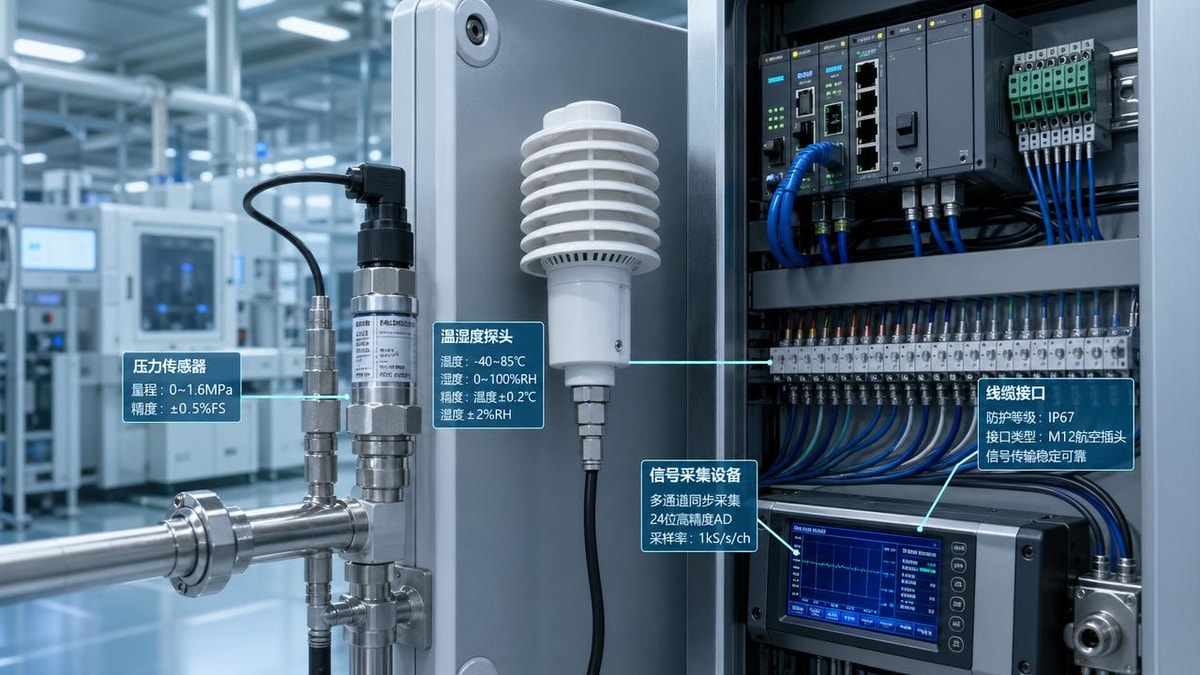
Environmental factors matter more than many organizations admit. Temperature stability, humidity control, contamination, electrostatic protection, and sample handling can all influence electrical and reliability results. In sensory devices and precision analog products, subtle setup drift may alter measured performance enough to create false passes or false failures.
Quality and safety managers should be especially cautious when production pressure encourages the team to bypass hold times, shorten stress duration, reduce sample counts, or treat abnormal data as noise without formal investigation. These shortcuts may improve schedule metrics in the short term, but they directly undermine the credibility of IC Testing standards compliance.
Execution discipline is also where ISO/IEC 17025-style thinking becomes valuable, even outside accredited labs. Method validation, measurement uncertainty awareness, equipment traceability, competency records, and controlled reporting all strengthen the defensibility of semiconductor test data.
Outsourced Testing and Multi-Site Operations Create Hidden Compliance Gaps
Many companies depend on external labs, OSAT partners, or geographically distributed internal sites for portions of qualification and verification. This arrangement is common and often necessary, but it introduces a serious compliance risk: organizations assume that outsourced testing is equivalent to controlled testing.
It is not enough for a partner to claim experience with JEDEC, AEC-Q100, or other IC Testing standards. The real questions are more specific. Is the method exactly aligned with your product configuration? Are fixtures and load conditions equivalent? Are calibration records current and traceable? Is raw data retained? Are deviations documented? Can the supplier prove competence for this particular test, not just for similar work?
Multi-site operations add another challenge: apparent consistency may hide local variation. Different sites may use different lots, screening assumptions, sample preparation steps, software versions, or failure analysis thresholds. When data from those sites is combined into one qualification conclusion, the compliance basis becomes fragile unless comparability is actively verified.
For quality managers, supplier and site governance should include technical audits, round-robin correlation, method harmonization, witness testing for critical programs, and clear escalation paths for any deviation from the agreed test flow.
Data Integrity Problems Often Surface Too Late
Another place where compliance failures usually start is data handling. Semiconductor organizations generate large volumes of test data, but volume is not the same as control. If raw data, metadata, sample identity, test conditions, and disposition records are not linked reliably, the organization may be unable to prove what was tested, under which conditions, and with what result.
This becomes especially dangerous when engineering teams manually consolidate spreadsheets, rename files informally, or rely on screenshots instead of system-traceable records. Such practices may seem harmless until a customer requests objective evidence, a regulator examines traceability, or a field failure investigation requires reconstruction of the qualification path.
Quality and safety teams should therefore treat data integrity as a compliance control, not merely an IT issue. Each dataset should be attributable, legible, contemporaneous, original, and accurate. Sample genealogy must connect wafer lot, assembly lot, package variant, test sequence, operator or system identity, and final decision. Without that chain, compliance claims remain vulnerable.
Trend analysis also matters. Repeated near-limit results, unexplained variance between lots, or unusually high data exclusions may signal a developing reliability problem before formal failure occurs. Organizations that only review pass-fail summaries often miss these early indicators.
Change Management Is One of the Most Underestimated Triggers of Noncompliance
In semiconductor manufacturing, change is constant. Foundry moves, material substitutions, test program updates, package modifications, equipment replacement, software revision, and even handler changes can affect product behavior or test validity. Yet many compliance failures begin because a change is treated as operational rather than qualification-relevant.
This is where quality managers need strong trigger logic. Not every change requires full requalification, but every significant change should be assessed for potential impact on electrical behavior, reliability, thermal performance, mechanical integrity, and measurement comparability. If that assessment is informal or inconsistent, latent noncompliance can enter production unnoticed.
Well-managed organizations use documented change review boards, risk-based qualification matrices, and predefined thresholds for partial or full revalidation. They also preserve the rationale for why a given change did or did not require additional testing. That rationale is essential during customer review and incident investigation.
In practice, one of the clearest signs of a weak IC Testing standards system is when a team can produce test reports but cannot clearly explain how changes since qualification were evaluated and controlled.
How Quality and Safety Managers Can Detect Problems Earlier
The best prevention strategy is to move from reactive test review to proactive compliance surveillance. Instead of asking only whether testing was completed, ask whether the compliance system is still valid under current product, process, and supplier conditions.
A practical early-warning checklist includes the following questions: Are product requirements linked to the correct standards and customer expectations? Are test plans risk-based and application-specific? Are specifications controlled across all sites and suppliers? Are methods validated and repeatable? Are deviations formally approved? Is data traceable to raw evidence? Are changes screened for requalification impact? Are external labs audited beyond paperwork review?
Internal audit should also go deeper than document presence. Review actual records, compare programmed limits to released specifications, verify calibration status on the dates of testing, inspect sample traceability, and challenge unexplained data edits or exclusions. In many cases, the first sign of compliance weakness is not a failed device but an incomplete story.
Cross-functional governance is equally important. Quality teams cannot solve these problems alone. The strongest results come when design, product engineering, reliability, manufacturing, procurement, and laboratory functions share a common view of what compliance means and how evidence must be built.
What Good IC Testing Standards Implementation Looks Like
Mature implementation is not defined by how many tests are run. It is defined by whether the testing system produces trustworthy, relevant, reproducible evidence tied to actual product risk. In a strong system, standards selection is deliberate, specifications are unambiguous, methods are controlled, suppliers are governed, data is traceable, and changes trigger disciplined reassessment.
For organizations in power devices, advanced packaging, MEMS sensors, and broader industrial semiconductor applications, this maturity has direct business value. It reduces audit findings, speeds customer approvals, supports faster root-cause analysis, lowers the risk of field failure, and strengthens confidence in high-consequence applications where safety and uptime matter.
It also protects credibility. In strategic sectors, customers increasingly evaluate not just product performance but the robustness of the evidence behind that performance. Companies that can demonstrate rigorous control over IC Testing standards gain an advantage in qualification trust, supplier ranking, and long-term account resilience.
Conclusion: Compliance Fails First at the Boundaries Between Functions
The most important lesson for quality control and safety managers is that compliance failures rarely begin with a single dramatic test mistake. They usually begin at the boundaries: between design and quality, between specification and execution, between internal teams and external labs, between test completion and data integrity, and between approved product status and unmanaged change.
If you want to strengthen IC Testing standards in a practical way, focus first on those boundaries. Clarify requirements, align tests to real risk, tighten specification control, verify execution discipline, govern outsourced work, protect data integrity, and build change management into qualification logic. That is where latent defects, audit exposure, and preventable reliability failures are most often stopped before they become expensive.
In semiconductor quality management, the goal is not merely to pass testing. It is to ensure that passing results truly mean the product is compliant, reliable, and fit for the environment in which it will operate. That distinction is where real compliance begins.
Get weekly intelligence in your inbox.
No noise. No sponsored content. Pure intelligence.
 Apr 28, 2026When do rapid prototyping 3D printing services save real costWhen do rapid prototyping 3D printing services save real cost
 Apr 28, 2026What Can Go Wrong in Fan-out Wafer Level Pkg?What Can Go Wrong in Fan-out Wafer Level Pkg?
 Apr 28, 2026What Makes Optical LiDAR Modules Better for Autonomy?What Makes Optical LiDAR Modules Better for Autonomy?
 Apr 28, 20262026 Market Trends in Supply Chain Resilience for Fabs2026 Market Trends in Supply Chain Resilience for Fabs
 May 01, 2026Power Semiconductors Price Signals to Watch Before Your Next Sourcing CyclePower Semiconductors Price Signals to Watch Before Your Next Sourcing Cycle
 May 01, 2026Supply Chain Resilience in Electronics Manufacturing After 2026: What ChangesSupply Chain Resilience in Electronics Manufacturing After 2026: What Changes
 May 01, 2026Sensory Data for Industrial IoT: Turning Raw Signals Into Useful ActionsSensory Data for Industrial IoT: Turning Raw Signals Into Useful Actions
 May 01, 2026Industrial IoT Certification: What to Prepare Before System RolloutIndustrial IoT Certification: What to Prepare Before System Rollout
 May 01, 2026Reliability Standards for Semiconductor Manufacturing: What Gets Audited FirstReliability Standards for Semiconductor Manufacturing: What Gets Audited First
 May 01, 2026How Data Fidelity for Semiconductor Shapes Better Process DecisionsHow Data Fidelity for Semiconductor Shapes Better Process Decisions
 May 01, 2026Data Fidelity Standards: A Practical Baseline for Semiconductor TraceabilityData Fidelity Standards: A Practical Baseline for Semiconductor Traceability
 May 01, 2026IC Testing Standards: Where Compliance Failures Usually StartIC Testing Standards: Where Compliance Failures Usually Start
 May 01, 2026Semiconductor Fabrication Standards That Directly Affect Supplier QualificationSemiconductor Fabrication Standards That Directly Affect Supplier Qualification
 May 01, 2026Ultra-pure Water Skids: Avoiding Startup Delays in Semiconductor FacilitiesUltra-pure Water Skids: Avoiding Startup Delays in Semiconductor Facilities
 May 01, 2026AMC Filtration Units and the Hidden Cost of Airborne Molecular ContaminationAMC Filtration Units and the Hidden Cost of Airborne Molecular Contamination
 May 01, 2026ISO Class 1 FFU Systems: Key Checks Before Cleanroom ExpansionISO Class 1 FFU Systems: Key Checks Before Cleanroom Expansion
 May 01, 2026IC Cleaning Solvents: How Purity Levels Affect Defect ReductionIC Cleaning Solvents: How Purity Levels Affect Defect Reduction
 May 01, 2026KrF vs ArF Photoresist: Which Process Window Matters MoreKrF vs ArF Photoresist: Which Process Window Matters More
 May 01, 2026High-Purity Chemicals for Semiconductor: What to Verify Before ApprovalHigh-Purity Chemicals for Semiconductor: What to Verify Before Approval
 May 01, 2026How Electronic Chemicals for Semiconductor Impact Yield at Advanced NodesHow Electronic Chemicals for Semiconductor Impact Yield at Advanced Nodes
 May 01, 2026Sub-ppb Ultra-pure Gases: What Really Affects Process StabilitySub-ppb Ultra-pure Gases: What Really Affects Process Stability
 May 01, 2026Special Gases Supplier Selection for Sub-ppb Purity ApplicationsSpecial Gases Supplier Selection for Sub-ppb Purity Applications
 May 01, 2026Choosing Optical LiDAR Modules for Autonomous System ReliabilityChoosing Optical LiDAR Modules for Autonomous System Reliability
 May 01, 2026How High-Precision Gas Sensors Improve Trace Contamination ControlHow High-Precision Gas Sensors Improve Trace Contamination Control
 May 01, 2026Sensory Data Accuracy: Common Gaps Between Specs and Field ResultsSensory Data Accuracy: Common Gaps Between Specs and Field Results
 May 01, 2026How Smart Sensors Suppliers Support Stable Industrial MonitoringHow Smart Sensors Suppliers Support Stable Industrial Monitoring
 May 01, 2026MEMS Sensors for Medical Devices: Accuracy Risks You Should Check EarlyMEMS Sensors for Medical Devices: Accuracy Risks You Should Check Early