Power Conversion Technology Shifts in GaN Modules
Power Conversion Technology Shifts in GaN Modules
As autonomous systems and high-efficiency electronics reshape industrial priorities, Power Conversion technology is undergoing a major shift through GaN modules. For researchers evaluating next-generation semiconductor infrastructure, this transition signals more than higher switching speed—it reflects new benchmarks for thermal control, reliability, and system-level efficiency across global power applications. In sectors ranging from industrial automation and energy storage to EV charging and data infrastructure, GaN modules are moving from experimental upgrades to strategic building blocks in modern power architectures.
This shift matters because Power Conversion technology now sits at the intersection of energy efficiency, digital sovereignty, and long-term system reliability. GaN-based designs can reduce losses, shrink passive components, and support higher-frequency operation, but they also introduce new decisions around packaging, gate driving, insulation, qualification, and electromagnetic behavior. A structured evaluation helps separate real performance gains from overstated claims and ensures that module selection aligns with international reliability and compliance expectations.
Why a Structured Evaluation Is Essential
The market discussion around GaN often focuses on headline advantages such as fast switching and compact size. Yet in practical Power Conversion technology deployment, system outcomes depend on many linked variables: topology, thermal path, load profile, switching frequency, control strategy, and environmental stress. Without a checklist-based review, it is easy to optimize one parameter while creating hidden risks in EMI, transient overshoot, lifetime degradation, or assembly complexity.
A disciplined framework is particularly useful in the broader semiconductor environment described by G-SSI, where benchmarking against standards such as SEMI, AEC-Q100, and ISO/IEC 17025 is part of technical decision-making. For Power Conversion technology, the right question is not simply whether GaN is faster than silicon, but whether a specific GaN module improves efficiency, robustness, manufacturability, and supply resilience across the intended application lifecycle.
Core Evaluation Points for GaN Module Adoption
- Verify the target voltage, current, and transient headroom so the GaN module matches real operating stress, not only nominal design values in Power Conversion technology simulations.
- Check switching frequency goals against system efficiency curves, because higher frequency in Power Conversion technology improves density only when losses remain thermally manageable.
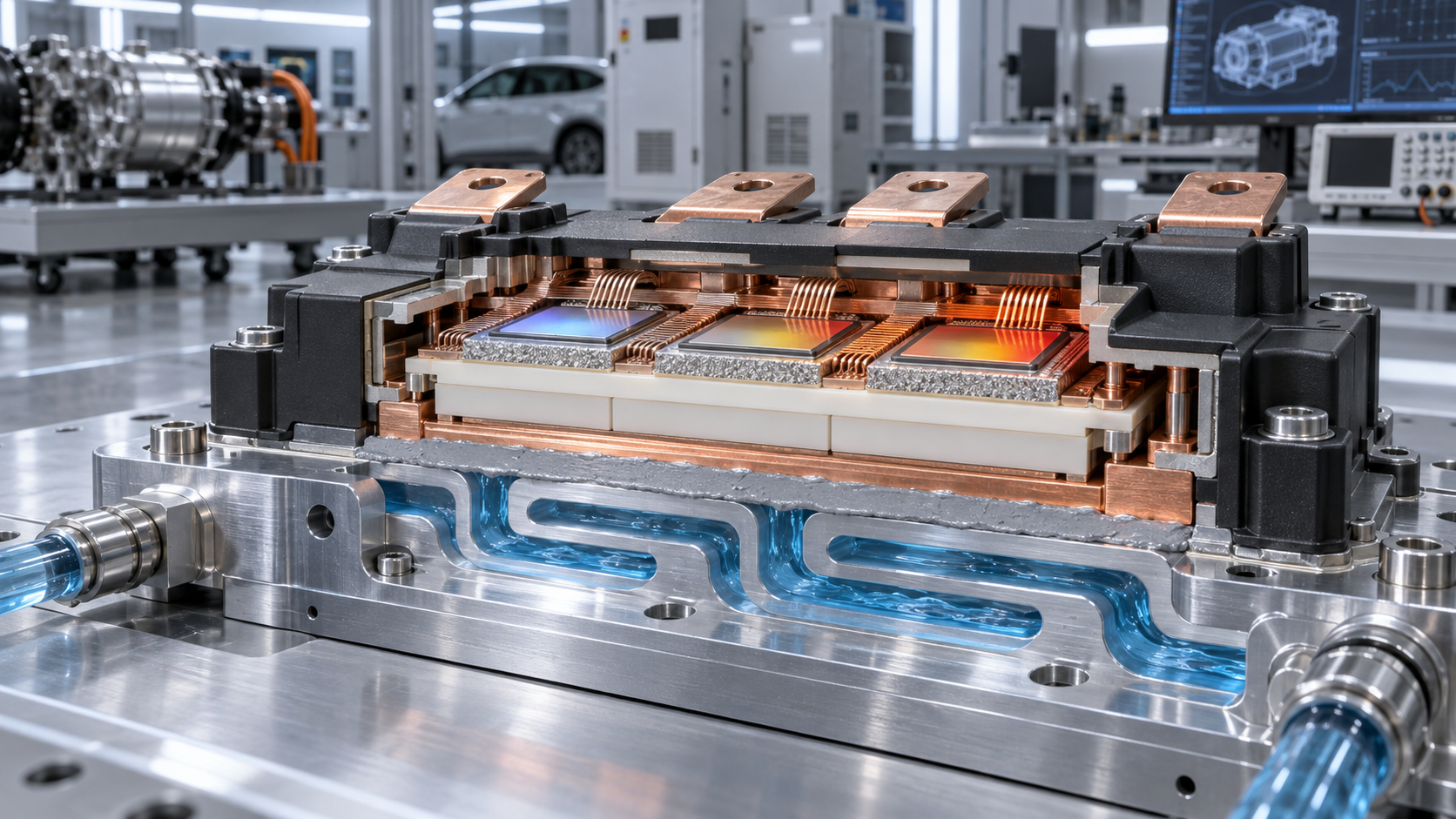
- Review thermal resistance, baseplate design, and cooling interface quality to confirm that compact GaN modules can sustain continuous operation without hotspot-driven reliability decline.
- Assess gate driver compatibility, isolation strategy, and layout sensitivity, since GaN-based Power Conversion technology often requires tighter control of parasitics than silicon platforms.
- Examine package inductance and commutation loop design to reduce overshoot, ringing, and switching instability that can undermine the expected efficiency of GaN modules.
- Confirm short-circuit behavior, fault response, and protection timing, because advanced Power Conversion technology must survive abnormal conditions as well as steady-state operation.
- Benchmark EMI performance early, including conducted and radiated noise, to avoid late-stage redesign when fast GaN edges interact with enclosure and filter limitations.
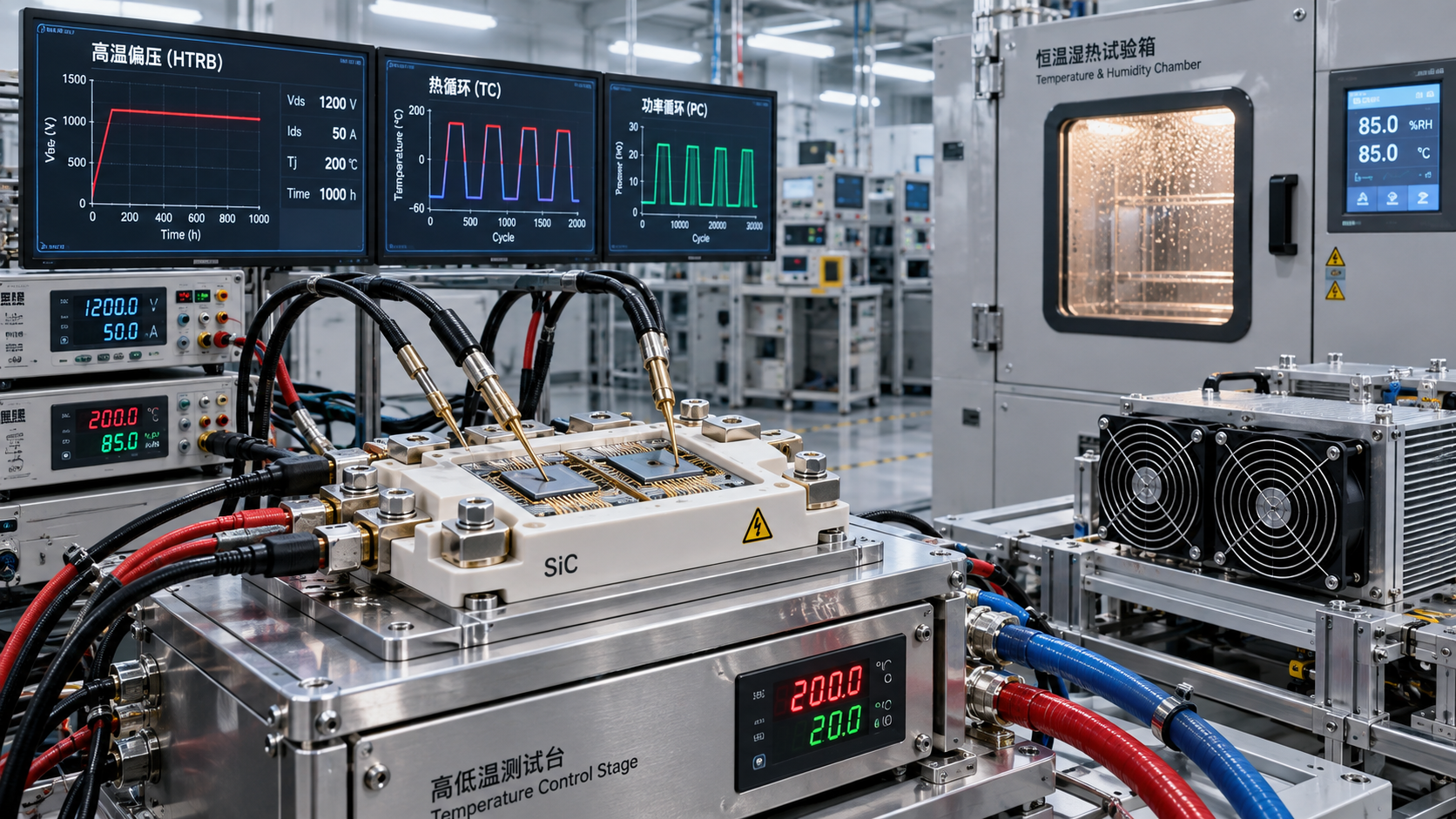
- Review qualification data, including thermal cycling, humidity stress, and power cycling, to ensure Power Conversion technology performance translates into dependable field life.
- Evaluate manufacturing repeatability, assembly tolerances, and test coverage so GaN module integration supports scalable production rather than one-off engineering success.
- Compare supply chain maturity, second-source options, and materials traceability, since resilient Power Conversion technology programs depend on continuity as much as peak performance.
What Changes Most in Power Conversion Technology with GaN
Higher Switching Speed Alters System Priorities
GaN modules enable significantly faster switching transitions than many conventional silicon devices. In Power Conversion technology, this can reduce switching loss, support higher-frequency topologies, and cut the size of magnetics and filters. However, speed changes the entire system design balance. Layout discipline, gate loop optimization, and dv/dt control become central design tasks rather than secondary refinements.
The practical implication is that efficiency improvements are earned at the platform level. A high-performance GaN die inside a poorly managed package or PCB environment will not deliver the expected gains. Strong system-level integration is therefore one of the most important shifts in modern Power Conversion technology.
Thermal Design Moves from Bulk Cooling to Precision Control
Although GaN modules can operate efficiently, they often concentrate heat in smaller physical volumes. That means thermal management in Power Conversion technology becomes more localized and more sensitive to interface quality. Heat spreaders, TIM selection, substrate design, and mounting flatness all matter more than they did in larger, slower silicon-based assemblies.
For benchmarking purposes, peak junction temperature alone is not enough. Engineers should examine temperature gradients, cycling amplitude, and dynamic thermal behavior across realistic duty cycles. This is especially relevant in infrastructure systems that operate continuously or under fluctuating loads.
Application-Specific Considerations
Data Centers and AI Power Infrastructure
In data centers, Power Conversion technology is judged by efficiency at scale, thermal density, and reliability under 24/7 operation. GaN modules can improve AC-DC and DC-DC stages by reducing conversion losses and enabling smaller magnetic components. The key checks are partial-load efficiency, cooling integration, and EMI behavior near dense digital subsystems.
Another critical point is maintainability. A compact, high-frequency design should not complicate service access or fault isolation. In this environment, module-level performance must support rack-level uptime and predictable field replacement strategies.
Industrial Automation and Motor Systems
Industrial automation uses Power Conversion technology in drives, robotics, servo control, and machine power supplies. Here, GaN modules can enable compact converters and faster control response, but ruggedness remains essential. Evaluation should focus on transient immunity, thermal cycling, insulation coordination, and compatibility with noisy factory electrical environments.
Long cable runs and mixed-load systems may also amplify reflected wave effects and EMI complexity. As a result, application validation should include real installation conditions rather than only lab-bench measurements.
EV Charging and Energy Storage
For EV charging and battery energy storage, Power Conversion technology must balance high efficiency, bidirectional capability, and thermal endurance. GaN modules are attractive in high-frequency converter stages, especially where power density and reduced cooling burden create lifecycle value. Important checks include surge robustness, grid-side harmonics, outdoor thermal conditions, and long-duration power cycling.
Because these systems often connect to public or distributed infrastructure, standards alignment and traceable performance data are especially important. Claims of superior efficiency should be verified under full environmental and load variation, not only at a single operating point.
Commonly Overlooked Risks
Parasitics Are Still a First-Order Problem
One frequent mistake in Power Conversion technology projects is underestimating package and layout parasitics. GaN’s fast transitions expose inductive and capacitive weaknesses quickly, leading to ringing, overshoot, false triggering, or unexpected efficiency losses. Early electromagnetic modeling and prototype measurement are not optional.
Qualification Data May Not Match the Use Case
A second risk is assuming that generic reliability data automatically applies to every operating profile. Power Conversion technology in telecom, industrial motion, and energy systems imposes different thermal and electrical stress patterns. Qualification reports should be interpreted in the context of actual mission profiles, cooling conditions, and maintenance expectations.
Control and Protection Need Re-Tuning
GaN adoption is not always a drop-in component substitution. Fast devices may require revised dead-time settings, gate resistance choices, sensing methods, and fault thresholds. If protection architecture remains calibrated for slower silicon behavior, the full Power Conversion technology platform may operate below its safe or optimal range.
Practical Steps for Execution
- Start with the system mission profile, including load variation, ambient range, and service life, before comparing GaN module specifications in isolation.
- Build a loss, thermal, and EMI model together so Power Conversion technology trade-offs are visible across electrical and mechanical domains.
- Use prototype layouts that reflect final interconnect and cooling realities, because idealized test boards often overstate GaN performance benefits.
- Request traceable reliability evidence, test conditions, and standards references to benchmark module claims against accepted industrial qualification frameworks.
- Validate under abnormal events such as surge, short-circuit, thermal shock, and partial-load cycling before approving production-level Power Conversion technology deployment.
FAQ on Power Conversion Technology and GaN Modules
Does GaN always outperform silicon in Power Conversion technology?
No. GaN often delivers major benefits in switching speed, efficiency, and power density, but actual value depends on voltage class, topology, thermal design, and cost targets. In some conditions, silicon or SiC may still be the better fit.
What is the biggest integration challenge?
For many systems, the biggest challenge is not the device itself but the interaction between fast switching behavior, layout parasitics, gate driving, and EMI control. These factors define whether Power Conversion technology gains are realized in production hardware.
How should reliability be verified?
Reliability should be verified through mission-profile-based testing, thermal and power cycling review, standards-aligned qualification data, and application-level stress validation. Lab efficiency numbers alone are not enough for infrastructure-grade decisions.
Conclusion and Next Actions
The shift in Power Conversion technology toward GaN modules is real, but its value is unlocked through disciplined engineering rather than assumption. Faster switching, lower losses, and smaller form factors create meaningful advantages only when supported by careful thermal design, EMI control, robust packaging, and application-specific validation. Across modern semiconductor infrastructure, this is where strategic differentiation increasingly appears.
The most effective next step is to evaluate GaN modules through a structured matrix: electrical fit, thermal path, packaging parasitics, qualification depth, and supply continuity. For organizations benchmarking future-ready power architectures, that method provides a practical path to stronger Power Conversion technology decisions, better reliability outcomes, and more resilient high-efficiency systems.
Get weekly intelligence in your inbox.
No noise. No sponsored content. Pure intelligence.
 Apr 28, 2026When do rapid prototyping 3D printing services save real costWhen do rapid prototyping 3D printing services save real cost
 Apr 28, 2026What Can Go Wrong in Fan-out Wafer Level Pkg?What Can Go Wrong in Fan-out Wafer Level Pkg?
 Apr 28, 2026What Makes Optical LiDAR Modules Better for Autonomy?What Makes Optical LiDAR Modules Better for Autonomy?
 Apr 28, 20262026 Market Trends in Supply Chain Resilience for Fabs2026 Market Trends in Supply Chain Resilience for Fabs
 Oct 10, 2026When do integrated sensor systems reduce commissioning risks?When do integrated sensor systems reduce commissioning risks?
 Oct 09, 2026How North American semiconductor fabs control airborne molecular contaminationHow North American semiconductor fabs control airborne molecular contamination
 Oct 08, 2026When do custom aluminum extrusions reduce fabrication costs?When do custom aluminum extrusions reduce fabrication costs?
 Oct 07, 2026How semiconductor packaging affects thermal reliability in EV power electronicsHow semiconductor packaging affects thermal reliability in EV power electronics
 Oct 06, 2026When do corrugated plastic boxes make sense for returnable shipping?When do corrugated plastic boxes make sense for returnable shipping?
 Oct 05, 2026What to verify before choosing semiconductor distributors in North AmericaWhat to verify before choosing semiconductor distributors in North America
 Oct 04, 2026How to assess a high purity materials manufacturer’s traceabilityHow to assess a high purity materials manufacturer’s traceability
 Oct 03, 2026How SiC power conversion solutions improve high-voltage invertersHow SiC power conversion solutions improve high-voltage inverters
 Oct 02, 2026When do SiC MOSFET benefits justify the higher device cost?When do SiC MOSFET benefits justify the higher device cost?
 Oct 01, 2026Which semiconductor reliability testing standards apply to power devices?Which semiconductor reliability testing standards apply to power devices?
 Sep 30, 2026How to qualify a semiconductor photoresist supplier for KrF/ArF productionHow to qualify a semiconductor photoresist supplier for KrF/ArF production
 Sep 29, 2026What image quality should portable ultrasound scanners deliver for triage?What image quality should portable ultrasound scanners deliver for triage?
 Sep 28, 2026How sub-ppb impurity control gases protect process consistencyHow sub-ppb impurity control gases protect process consistency
 Sep 27, 2026How chemical purity affects defect rates in semiconductor depositionHow chemical purity affects defect rates in semiconductor deposition
 Sep 26, 2026When do high voltage power semiconductor devices need SiC over IGBTs?When do high voltage power semiconductor devices need SiC over IGBTs?
 Sep 25, 2026How to verify quality controls at a die casting parts supplier in ChinaHow to verify quality controls at a die casting parts supplier in China
 Sep 24, 2026How to verify electronic gas purity for sub-ppb semiconductor processesHow to verify electronic gas purity for sub-ppb semiconductor processes
 Sep 23, 2026When sensory data integration improves industrial motion monitoringWhen sensory data integration improves industrial motion monitoring
 Sep 22, 2026How supply chain resilience reduces the cost of production disruptionsHow supply chain resilience reduces the cost of production disruptions
 Sep 21, 2026What autonomous systems OEMs should verify before sourcing LiDAR modulesWhat autonomous systems OEMs should verify before sourcing LiDAR modules
 Sep 20, 2026How gas purity affects defect density in epitaxial wafer growthHow gas purity affects defect density in epitaxial wafer growth
 Sep 19, 2026How substrate defects affect third-generation material device yieldHow substrate defects affect third-generation material device yield
 Sep 18, 2026How trace impurities in specialty process gases affect wafer yieldHow trace impurities in specialty process gases affect wafer yield