Advanced IC Packaging Manufacturer Evaluation Points
Choosing the right Advanced IC Packaging Manufacturer is rarely a simple vendor comparison. For business evaluators, the real question is whether a supplier can deliver stable packaging performance at scale, pass customer qualification, support roadmap evolution, and reduce supply chain risk over multiple product cycles. In practice, the best manufacturer is not always the one with the broadest technology list, but the one whose packaging capabilities, quality systems, engineering discipline, and operational resilience match your product and business model.
For buyers evaluating advanced packaging partners, the core search intent behind this topic is clear: how to assess manufacturers in a structured way before committing sourcing, qualification time, and capital. Decision-makers want to know which evaluation points truly predict delivery success, where hidden risks usually appear, and how to distinguish a technically capable supplier from a commercially reliable one.
That means the most useful evaluation framework should go beyond process names such as flip chip, wafer-level packaging, fan-out, 2.5D, or 3D integration. It should examine manufacturability, yield, reliability, thermal behavior, materials control, test coverage, engineering responsiveness, and business continuity. This article focuses on those factors so commercial teams can make better sourcing decisions with fewer surprises later.
What business evaluators should assess first
Before reviewing equipment lists or marketing claims, start with fit. An Advanced IC Packaging Manufacturer should be evaluated against your actual device profile: power density, I/O count, substrate complexity, package size limits, thermal budget, reliability targets, end-market certifications, and expected annual volume. A supplier can be technically sophisticated yet still be a poor match if its process window, capacity model, or cost structure does not align with your program.
For commercial and sourcing teams, the first screening questions are practical. Can the manufacturer support your package architecture today, or only in pilot runs? Has it shipped similar packages in production, or is it still in technology demonstration mode? Can it meet qualification expectations for automotive, industrial, telecom, AI infrastructure, or high-reliability applications? These answers quickly separate strategic candidates from those that only look strong on paper.
A useful early-stage approach is to score suppliers across five high-level dimensions: packaging capability, quality and reliability discipline, scale and delivery stability, engineering support, and total commercial risk. This prevents overemphasis on unit price while underestimating qualification delays, yield loss, or field-return exposure.
Technology capability is more than a packaging process label
Many buyers begin with packaging terminology, but labels alone can be misleading. A manufacturer offering flip chip, fan-out wafer-level packaging, system-in-package, 2.5D interposer integration, or chiplet assembly still needs to prove repeatable execution. What matters is not whether the process exists in a brochure, but whether it operates within a mature production environment with known yield performance and qualified materials.
Ask for evidence of technology depth. For example, in advanced package assembly, important indicators include bump pitch capability, warpage control, underfill expertise, substrate handling accuracy, die placement precision, TSV or interposer integration competence where relevant, and thermal interface design experience. If your product roadmap includes heterogeneous integration, ensure the supplier can support future packaging complexity rather than only current generation requirements.
It is also important to examine design-for-manufacturing support. Strong suppliers do not simply receive package drawings and execute them. They help customers optimize substrate stack-up, bump layout, thermal paths, stress distribution, test access, and assembly tolerances before tape-out or pilot build. This upstream engineering support can improve yield and reduce expensive redesign cycles.
For business evaluators, a capable manufacturer should be able to explain process limits clearly, show case history with comparable packages, and provide realistic guidance on what can be scaled efficiently. Vague answers about “advanced platform flexibility” should be treated cautiously unless backed by process data and production references.
Reliability and quality systems often matter more than headline technology
In advanced packaging, a package failure can destroy the value of a good die. That is why quality management and reliability engineering deserve more weight than many buyers initially give them. A manufacturer should demonstrate not only standard certifications, but also a disciplined system for process control, failure analysis, change management, and customer notification.
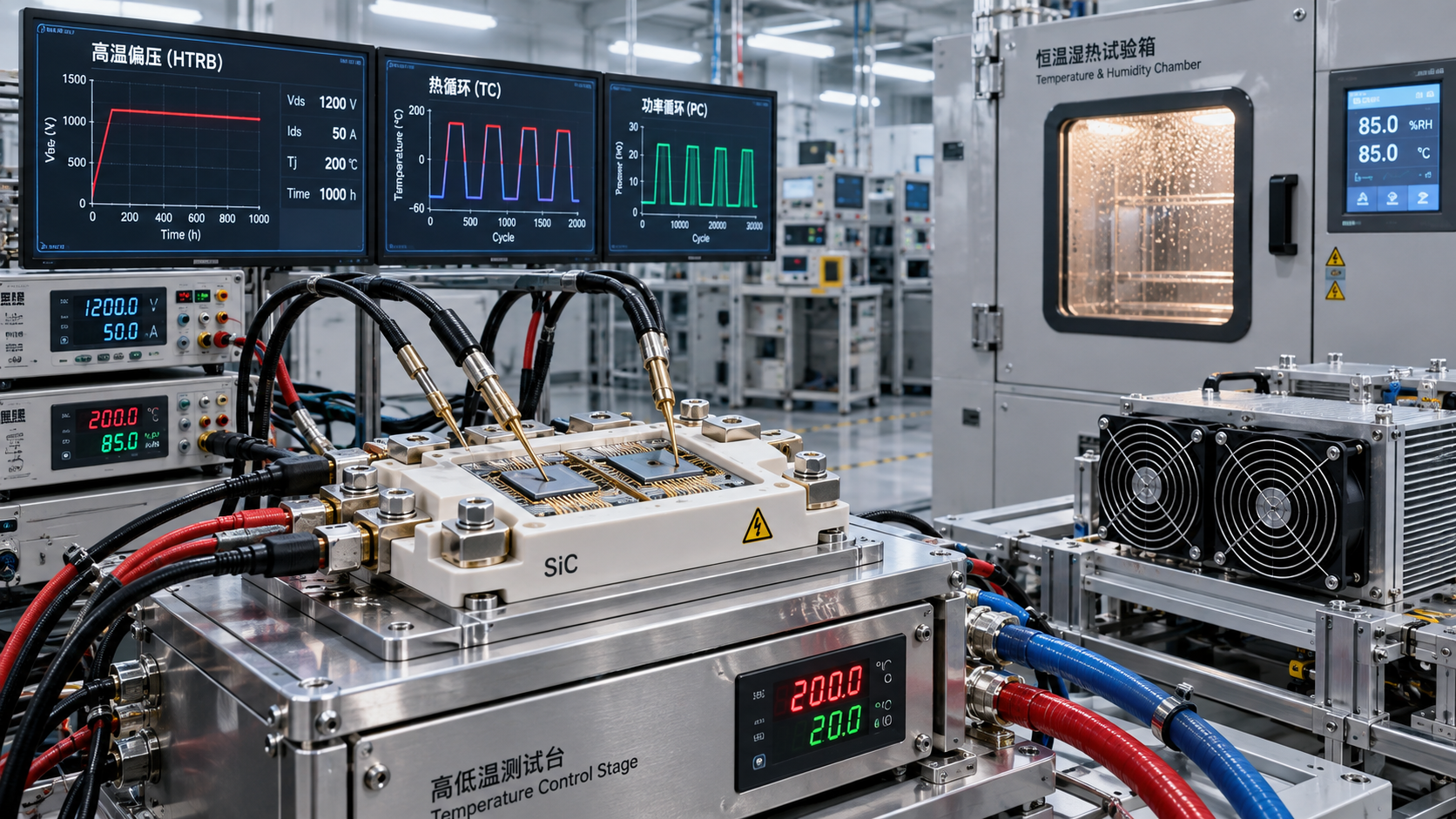
Business evaluators should review whether the supplier operates under relevant standards and customer expectations, such as ISO systems, SEMI-aligned controls, AEC-oriented reliability practices for automotive programs, and robust traceability. Depending on the application, ask how the manufacturer handles preconditioning, thermal cycling, temperature-humidity-bias, high-temperature operating life, drop or mechanical stress, solder joint integrity, and moisture sensitivity level management.
Do not stop at qualification reports. Ask whether reliability data is generated from engineering samples, pilot lots, or mass production. Review lot-to-lot consistency, not just best-case results. A mature Advanced IC Packaging Manufacturer should be able to present structured failure analysis methods, corrective action records, and evidence that process excursions are tracked to closure.
Another critical area is change control. Advanced packaging performance can shift due to subtle changes in mold compounds, underfill materials, substrates, leadframes, plating chemistry, or assembly parameters. Buyers should understand how engineering change notices are issued, how requalification is triggered, and how customer approval is managed before any process or materials change reaches production.
Yield, process control, and cost predictability are key commercial indicators
From a sourcing perspective, the commercial outcome of advanced packaging depends heavily on yield. A supplier may quote an attractive assembly price, but if yield instability increases scrap, retest, or rework, total cost rises quickly. This is especially true for high-value dies, chiplet assemblies, and large substrates where a single process loss can be expensive.
Ask suppliers to discuss yield by package family, process maturity, and production phase. Early engineering builds naturally differ from high-volume manufacturing, but the manufacturer should show a clear path to yield ramp. Important questions include where defects most commonly occur, what the baseline first-pass yield is, how quickly excursions are detected, and what statistical process control methods are in place.
Process capability should also be linked to cost predictability. For example, substrate availability, assembly cycle time, test insertion, known-good-die requirements, and rework limitations all influence the true landed cost of the package. A strong manufacturer will be transparent about these factors rather than focusing only on nominal unit pricing.
Business evaluators should pay close attention to cost drivers that often appear later in the project: low-volume NPI overhead, tooling charges, material minimum order quantities, yield learning curves, reliability qualification lots, and engineering support fees. The most reliable supplier comparison includes total lifecycle cost, not just initial quote comparisons.
Thermal management and electrical performance should be verified early
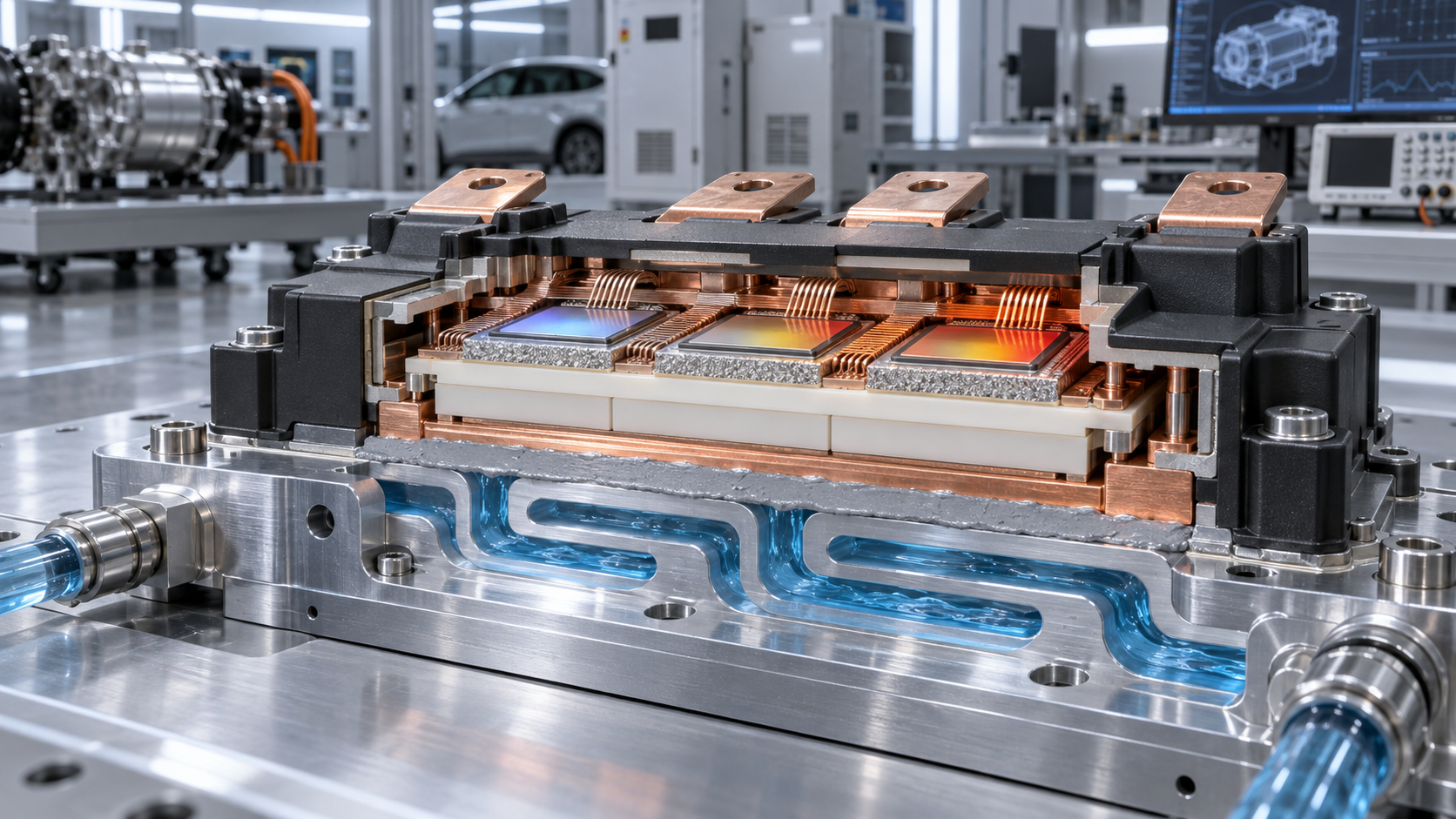
As package density rises, thermal behavior becomes a major selection criterion. This is particularly important for AI accelerators, networking devices, high-power ICs, SiP modules, and industrial control electronics. If a package cannot remove heat effectively, the result may be lower performance, reduced lifetime, or the need for costly system-level mitigation.
When evaluating an Advanced IC Packaging Manufacturer, ask how thermal design is modeled, validated, and optimized. Review capabilities in heat spreaders, lid attach, TIM selection, substrate design, cavity structures, and package-level thermal simulation. If your application includes power devices or thermally sensitive sensor integration, verify the manufacturer’s understanding of both steady-state and transient thermal conditions.
Electrical performance matters as well. Advanced packages influence signal integrity, power integrity, parasitics, EMI behavior, and high-speed interconnect loss. For chiplet or high-bandwidth architectures, package design is part of the system performance equation. Manufacturers should be able to support co-design collaboration with IC design, substrate, and test teams rather than treating packaging as a downstream assembly task.
For commercial evaluators, the takeaway is straightforward: thermal and electrical limitations often create hidden redesign costs. A supplier that can identify package-level risks early may save more value than a lower-cost source that simply agrees to build to print.
Supply chain resilience is now a core evaluation point
In advanced packaging, operational risk does not come only from the assembly line. It also comes from substrates, specialty materials, equipment uptime, test interfaces, and logistics dependencies. Business evaluators increasingly need to judge whether a manufacturer can maintain continuity under market volatility, geopolitical pressure, and sudden demand changes.
Review the supplier’s sourcing strategy for key materials such as ABF substrates, leadframes, mold compounds, underfills, plating chemicals, solder materials, and thermal interface components. Ask whether critical inputs are single-sourced, dual-sourced, or regionally concentrated. A packaging partner with strong internal capability but weak upstream resilience can still become a bottleneck.
Capacity transparency is equally important. Determine whether the manufacturer’s capacity is committed to long-term strategic accounts, how much flexible capacity exists for your program, and how quickly the site can ramp. It is also wise to ask about preventive maintenance discipline, spare parts planning, utility stability, and contingency procedures for critical tools.
Geographic footprint deserves attention too. Some buyers prioritize regional diversification or sovereign supply alignment, especially for industrial, infrastructure, and government-linked programs. In those cases, the right supplier may be one that offers acceptable technical capability with stronger location resilience, export-compliance clarity, or multi-site support.
Engineering collaboration often determines project success
Many packaging projects fail not because the supplier lacks equipment, but because communication between design, process, reliability, and sourcing teams is weak. Strong engineering collaboration is one of the clearest differentiators among manufacturers, especially during new product introduction and package migration.
Evaluate how the manufacturer manages technical engagement. Do they provide dedicated package engineers, NPI managers, quality contacts, and escalation paths? Are response times fast enough for design iteration cycles? Can they participate in failure review, substrate optimization, and qualification planning in a disciplined way? These factors directly affect project speed and execution quality.
A high-performing Advanced IC Packaging Manufacturer should also demonstrate competence in cross-functional coordination with fabless companies, OSAT workflows, substrate vendors, test houses, and end customers. If your organization has a complex approval chain, select a supplier that can document decisions clearly and support structured program management rather than relying on ad hoc communication.
Reference checks can be especially valuable here. Existing customers often reveal whether the manufacturer is proactive, transparent under pressure, and willing to solve problems jointly. This practical reputation can be more revealing than formal presentations.
How to build a practical manufacturer evaluation scorecard
To compare candidates fairly, business evaluators should use a weighted scorecard rather than informal impressions. A practical model may assign the highest weight to package-technology fit, reliability and quality systems, and capacity stability. Secondary weights can then be given to engineering support, cost competitiveness, location strategy, and roadmap compatibility.
For example, an industrial or automotive-oriented buyer might weight reliability, traceability, and change control more heavily than pure cost. By contrast, a consumer electronics buyer may place greater emphasis on scale, time-to-ramp, and package cost efficiency. The scorecard should reflect your end-market risk, qualification burden, and revenue exposure.
Useful assessment inputs include technical questionnaires, onsite audits, sample build data, reliability reports, SPC records, FA turnaround metrics, customer references, and business continuity plans. Where possible, verify claims through evidence rather than presentations. A structured scorecard improves internal alignment among sourcing, engineering, quality, and management teams.
It is also wise to classify findings into three categories: acceptable, concern, and disqualifier. This helps teams avoid selecting a supplier with one critical weakness hidden behind strong average scores. For advanced packaging, disqualifiers often include poor traceability, weak change control, insufficient reliability evidence, unstable yield, or heavy dependence on a single constrained material source.
Common mistakes when selecting an advanced packaging partner
The most common mistake is choosing based mainly on quoted price. In advanced packaging, low upfront pricing can be offset by poor yield, qualification delays, engineering rework, or field reliability issues. Another common error is accepting technology claims without checking production maturity and customer history in similar applications.
Some buyers also underestimate the importance of package-specific reliability. A manufacturer may perform well in one package family but struggle in another with tighter warpage, finer pitch, or more demanding thermal conditions. That is why comparable product experience matters more than generic capability statements.
A further mistake is failing to align internal teams before evaluation. Sourcing may focus on cost, while design teams care about package performance and quality teams care about qualification risk. Without a shared framework, supplier selection becomes inconsistent. A cross-functional review process is essential for high-value packaging programs.
Finally, do not ignore future-state fit. If your roadmap is moving toward chiplet integration, higher bandwidth, smaller form factors, or more rigorous reliability requirements, a supplier selected only for current needs may become a limitation within one or two product generations.
Conclusion: choose the manufacturer that lowers risk across the full program lifecycle
The best Advanced IC Packaging Manufacturer is not simply the supplier with the most advanced process vocabulary or the lowest quote. For business evaluators, the right choice is the manufacturer that combines proven package capability, stable yield, disciplined quality systems, reliable thermal and electrical performance, responsive engineering support, and resilient supply chain execution.
If you evaluate manufacturers through that broader lens, you will make better sourcing decisions and reduce downstream risk in qualification, production, and customer delivery. In advanced packaging, commercial success depends on technical precision and operational consistency working together. A structured evaluation process is the best way to confirm that your chosen partner can deliver both.
Get weekly intelligence in your inbox.
No noise. No sponsored content. Pure intelligence.
 Apr 28, 2026When do rapid prototyping 3D printing services save real costWhen do rapid prototyping 3D printing services save real cost
 Apr 28, 2026What Can Go Wrong in Fan-out Wafer Level Pkg?What Can Go Wrong in Fan-out Wafer Level Pkg?
 Apr 28, 2026What Makes Optical LiDAR Modules Better for Autonomy?What Makes Optical LiDAR Modules Better for Autonomy?
 Apr 28, 20262026 Market Trends in Supply Chain Resilience for Fabs2026 Market Trends in Supply Chain Resilience for Fabs
 Oct 10, 2026When do integrated sensor systems reduce commissioning risks?When do integrated sensor systems reduce commissioning risks?
 Oct 09, 2026How North American semiconductor fabs control airborne molecular contaminationHow North American semiconductor fabs control airborne molecular contamination
 Oct 08, 2026When do custom aluminum extrusions reduce fabrication costs?When do custom aluminum extrusions reduce fabrication costs?
 Oct 07, 2026How semiconductor packaging affects thermal reliability in EV power electronicsHow semiconductor packaging affects thermal reliability in EV power electronics
 Oct 06, 2026When do corrugated plastic boxes make sense for returnable shipping?When do corrugated plastic boxes make sense for returnable shipping?
 Oct 05, 2026What to verify before choosing semiconductor distributors in North AmericaWhat to verify before choosing semiconductor distributors in North America
 Oct 04, 2026How to assess a high purity materials manufacturer’s traceabilityHow to assess a high purity materials manufacturer’s traceability
 Oct 03, 2026How SiC power conversion solutions improve high-voltage invertersHow SiC power conversion solutions improve high-voltage inverters
 Oct 02, 2026When do SiC MOSFET benefits justify the higher device cost?When do SiC MOSFET benefits justify the higher device cost?
 Oct 01, 2026Which semiconductor reliability testing standards apply to power devices?Which semiconductor reliability testing standards apply to power devices?
 Sep 30, 2026How to qualify a semiconductor photoresist supplier for KrF/ArF productionHow to qualify a semiconductor photoresist supplier for KrF/ArF production
 Sep 29, 2026What image quality should portable ultrasound scanners deliver for triage?What image quality should portable ultrasound scanners deliver for triage?
 Sep 28, 2026How sub-ppb impurity control gases protect process consistencyHow sub-ppb impurity control gases protect process consistency
 Sep 27, 2026How chemical purity affects defect rates in semiconductor depositionHow chemical purity affects defect rates in semiconductor deposition
 Sep 26, 2026When do high voltage power semiconductor devices need SiC over IGBTs?When do high voltage power semiconductor devices need SiC over IGBTs?
 Sep 25, 2026How to verify quality controls at a die casting parts supplier in ChinaHow to verify quality controls at a die casting parts supplier in China
 Sep 24, 2026How to verify electronic gas purity for sub-ppb semiconductor processesHow to verify electronic gas purity for sub-ppb semiconductor processes
 Sep 23, 2026When sensory data integration improves industrial motion monitoringWhen sensory data integration improves industrial motion monitoring
 Sep 22, 2026How supply chain resilience reduces the cost of production disruptionsHow supply chain resilience reduces the cost of production disruptions
 Sep 21, 2026What autonomous systems OEMs should verify before sourcing LiDAR modulesWhat autonomous systems OEMs should verify before sourcing LiDAR modules
 Sep 20, 2026How gas purity affects defect density in epitaxial wafer growthHow gas purity affects defect density in epitaxial wafer growth
 Sep 19, 2026How substrate defects affect third-generation material device yieldHow substrate defects affect third-generation material device yield
 Sep 18, 2026How trace impurities in specialty process gases affect wafer yieldHow trace impurities in specialty process gases affect wafer yield