What Defines a Strong Power Semiconductors Manufacturer Today
What defines a strong Power Semiconductors manufacturer today is no longer just output capacity, but the ability to deliver proven reliability, thermal efficiency, and supply chain resilience at scale. For enterprise decision-makers navigating autonomous systems, electrification, and industrial digitalization, choosing the right partner means aligning performance with global standards, long-term risk control, and next-generation power conversion demands.
Why Scenario Differences Matter More Than Generic Specifications
For many buyers, the search for a capable Power Semiconductors manufacturer begins with voltage ratings, package types, current handling, and price. Those metrics matter, but they do not explain whether a supplier is truly right for an EV traction inverter, an industrial motor drive, a fast-charging station, a photovoltaic inverter, or a high-availability data center power system. In real purchasing decisions, the strongest manufacturer is the one whose technology, quality system, and delivery model fit the operating environment of the application.
This is especially important in a market shaped by Si, SiC, and GaN transitions, stricter efficiency regulations, and more complex sourcing strategies. Enterprise decision-makers are no longer evaluating components in isolation. They are assessing field life, thermal cycling behavior, packaging robustness, qualification discipline, traceability, and resilience against supply interruption. A Power Semiconductors manufacturer that performs well in one market may still be a poor fit in another if its validation depth, packaging control, or support capabilities do not match the scenario.
For organizations influenced by global standards such as SEMI, AEC-Q100, and ISO/IEC 17025-aligned testing practices, scenario-based assessment becomes even more critical. It allows CTOs, sourcing leaders, and engineering teams to compare suppliers by practical business impact rather than by headline claims.
Where a Strong Power Semiconductors Manufacturer Creates the Most Value
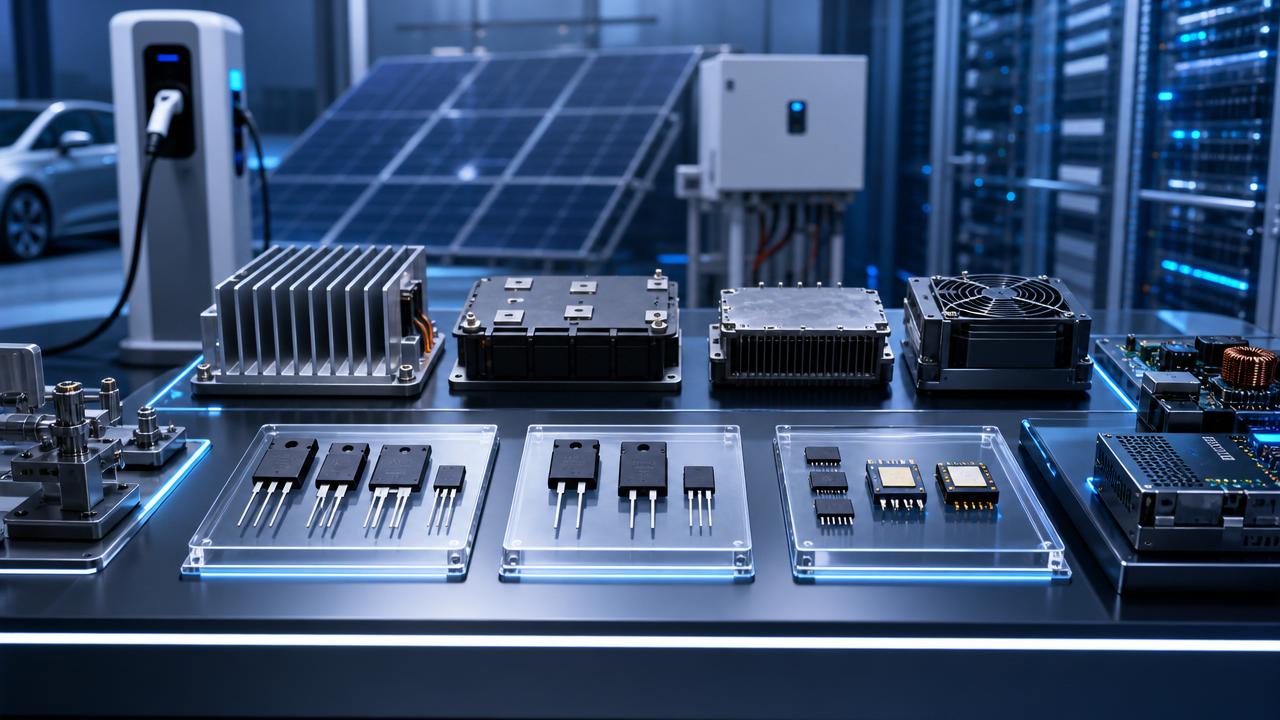
The term Power Semiconductors manufacturer covers a broad landscape. Different applications place very different demands on switching speed, conduction loss, thermal management, packaging reliability, and quality assurance. The table below helps frame the discussion for common enterprise use cases.
Scenario 1: Automotive and Autonomous Mobility Demand the Highest Discipline
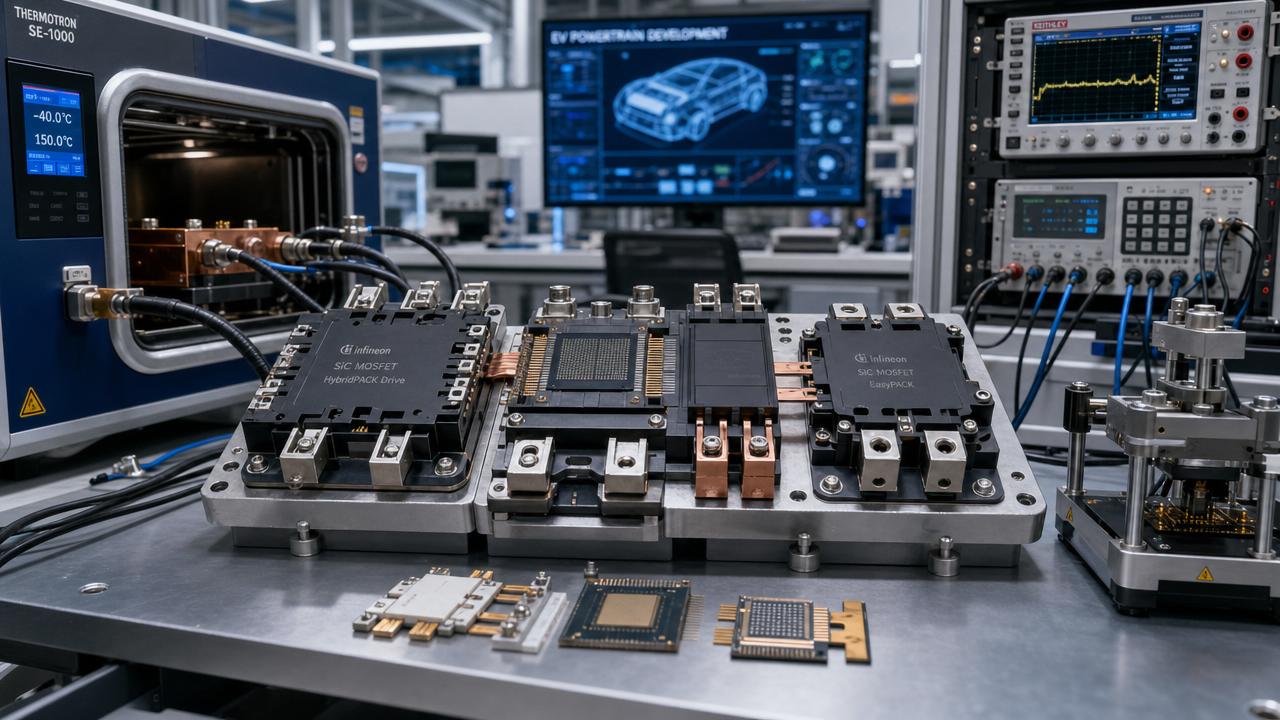
In e-mobility and autonomous transport systems, a strong Power Semiconductors manufacturer is judged less by promotional performance and more by qualification discipline, process control, and sustained reliability under harsh operating conditions. Traction inverters, onboard chargers, DC-DC converters, and auxiliary power units all operate under vibration, heat, rapid load changes, and strict safety expectations.
Here, enterprise buyers should examine whether the manufacturer can provide validated thermal resistance data, gate reliability performance, power cycling endurance, and lot-to-lot consistency. SiC MOSFET suppliers, for example, may appear similar on datasheets, yet differ substantially in wafer quality, defect density management, package parasitics, and ruggedness margins. These differences directly affect efficiency, lifetime, and warranty risk.
For this scenario, the best partner is usually a Power Semiconductors manufacturer with mature automotive workflows, transparent traceability, and long-horizon product support. Decision-makers should also ask whether engineering teams can collaborate on inverter optimization, thermal stack-up, and failure analysis. In automotive, support quality is part of product quality.
Scenario 2: Industrial Automation Prioritizes Ruggedness and Continuity
Factories, robotics cells, servo systems, and industrial drives present a different challenge. The environment may be less regulated than automotive, but uptime expectations are relentless. A shutdown caused by a power stage failure can interrupt production schedules, damage equipment, and create downstream quality losses. In these cases, a reliable Power Semiconductors manufacturer should demonstrate robust electrical overstress tolerance, stable packaging, and responsive field support.
Industrial customers often value continuity of supply as much as electrical performance. A technically advanced supplier that cannot commit to lead-time stability or second-source planning may introduce more risk than value. This is where manufacturer strength includes manufacturing footprint strategy, mature-node stability, and disciplined backend packaging and testing operations.
For buyers in this segment, useful questions include: Can the manufacturer support legacy designs while enabling future efficiency upgrades? Can it provide application notes for motor control, gate driver matching, and EMC optimization? Does it maintain a product roadmap that supports long equipment lifecycles? A Power Semiconductors manufacturer that understands these operational realities is more likely to be a strategic partner than a simple component vendor.
Scenario 3: Renewable Energy and Storage Reward Thermal Efficiency Over Time
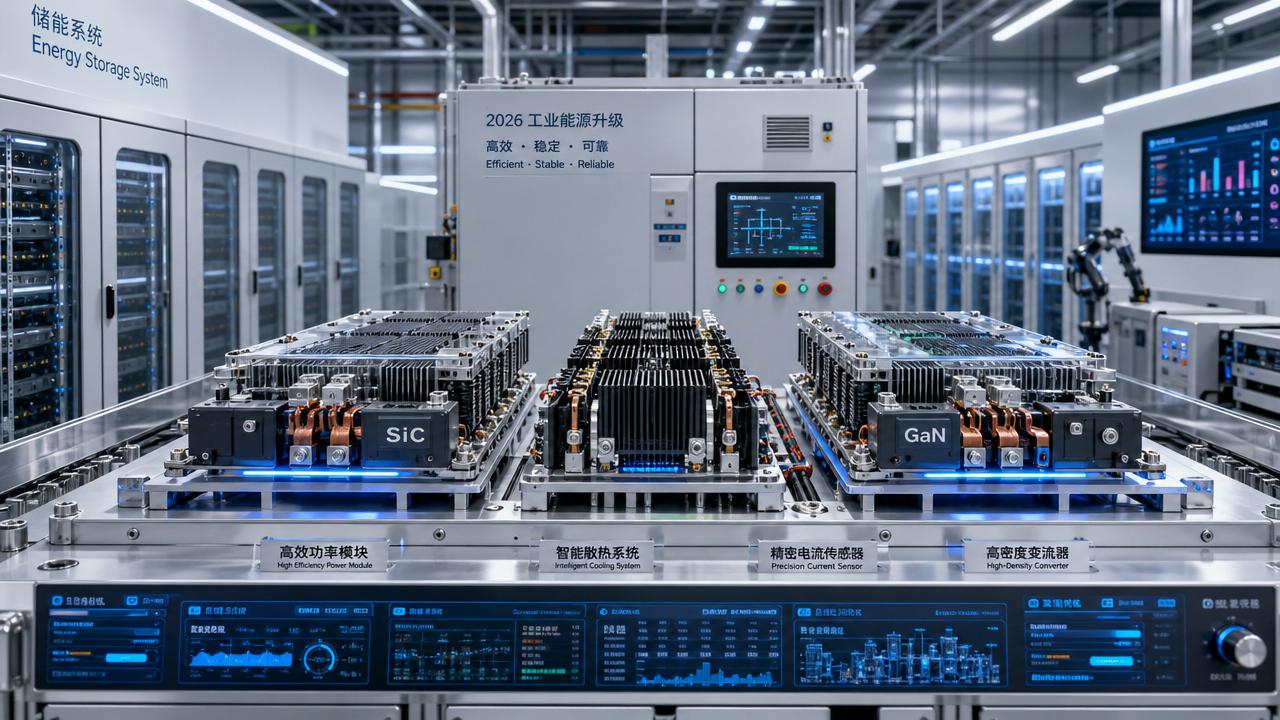
Solar inverters, wind conversion systems, and battery energy storage installations require strong efficiency, but the real business question is whether efficiency can be maintained across years of thermal stress and environmental variation. In this scenario, a strong Power Semiconductors manufacturer should prove that its devices are not only efficient in laboratory conditions, but resilient across long operating cycles, outdoor thermal swings, and demanding load profiles.
SiC devices are increasingly attractive here because they improve switching efficiency and reduce cooling requirements, yet not every supplier delivers equal maturity. Buyers should verify package reliability, insulation performance, surge handling, and degradation behavior at high temperature. They should also look at backend quality, because package integrity often becomes a hidden source of field failure in renewable infrastructure.
For utility-scale and commercial energy projects, another practical factor is documentation depth. A Power Semiconductors manufacturer serving this space should provide comprehensive reliability reports, qualification summaries, and data that support compliance reviews. The stronger the documentation, the easier it is for procurement, engineering, and investors to align on risk.
Scenario 4: Charging Infrastructure and High-Density Power Need Fast, Scalable Execution
In DC fast charging, telecom power, and compact high-density conversion systems, speed and thermal efficiency are essential, but so is scalable execution. A Power Semiconductors manufacturer may offer excellent GaN or SiC performance, yet still fail the scenario if yield stability, packaging consistency, or application support are weak.
These buyers should pay close attention to switching behavior under real layouts, EMI performance, package inductance, and thermal interface practicality. They should also test how quickly the manufacturer can support design-in, debug, and qualification. In fast-moving infrastructure programs, engineering responsiveness can affect time to revenue almost as much as device performance.
A strong manufacturer in this scenario is not just a producer of dies or discrete devices. It acts as a solution enabler, helping customers optimize topology choices, cooling design, and reliability trade-offs. That is particularly important for organizations planning regional charging networks or industrial electrification platforms where deployment scale magnifies every design weakness.
How to Judge Fit: A Practical Decision Framework for Enterprise Buyers
When selecting a Power Semiconductors manufacturer, decision-makers should map supplier strengths against business context instead of relying on generic rankings. A practical review usually includes five checkpoints.
First, technology-to-application alignment. Does the supplier’s Si, SiC, or GaN portfolio match the voltage, switching, and efficiency profile of your product roadmap?
Second, reliability evidence. Are there clear results for thermal cycling, power cycling, humidity resistance, and package integrity under conditions relevant to your field use?
Third, manufacturing resilience. Can the manufacturer explain fab capacity, backend control, quality gates, and contingency measures for supply disruption?
Fourth, standards and validation discipline. Is testing structured around recognized frameworks, and can reports withstand internal audit or customer review?
Fifth, engineering partnership value. Will the supplier support design optimization, root-cause analysis, and future migration plans, or only ship parts?
Common Misjudgments When Comparing a Power Semiconductors Manufacturer
One common error is assuming that the lowest RDS(on) or fastest switching figure automatically identifies the best supplier. In many systems, package behavior, thermal path quality, and gate drive compatibility have equal influence on real-world efficiency. Another mistake is treating qualification labels as complete proof of suitability. Certifications matter, but decision-makers should still review how those tests relate to the actual operating mission profile.
A third misjudgment is underestimating backend packaging and test discipline. In power devices, packaging is not a minor finishing step. It is central to thermal performance, parasitic control, and lifetime stability. A Power Semiconductors manufacturer with strong wafer technology but weak packaging execution may create hidden reliability risks.
Finally, buyers sometimes evaluate price without quantifying downtime, redesign effort, warranty exposure, and delayed market entry. For enterprise programs, the total cost of an unreliable supplier usually far exceeds a modest unit-price difference.
What Strong Manufacturers Tend to Have in Common
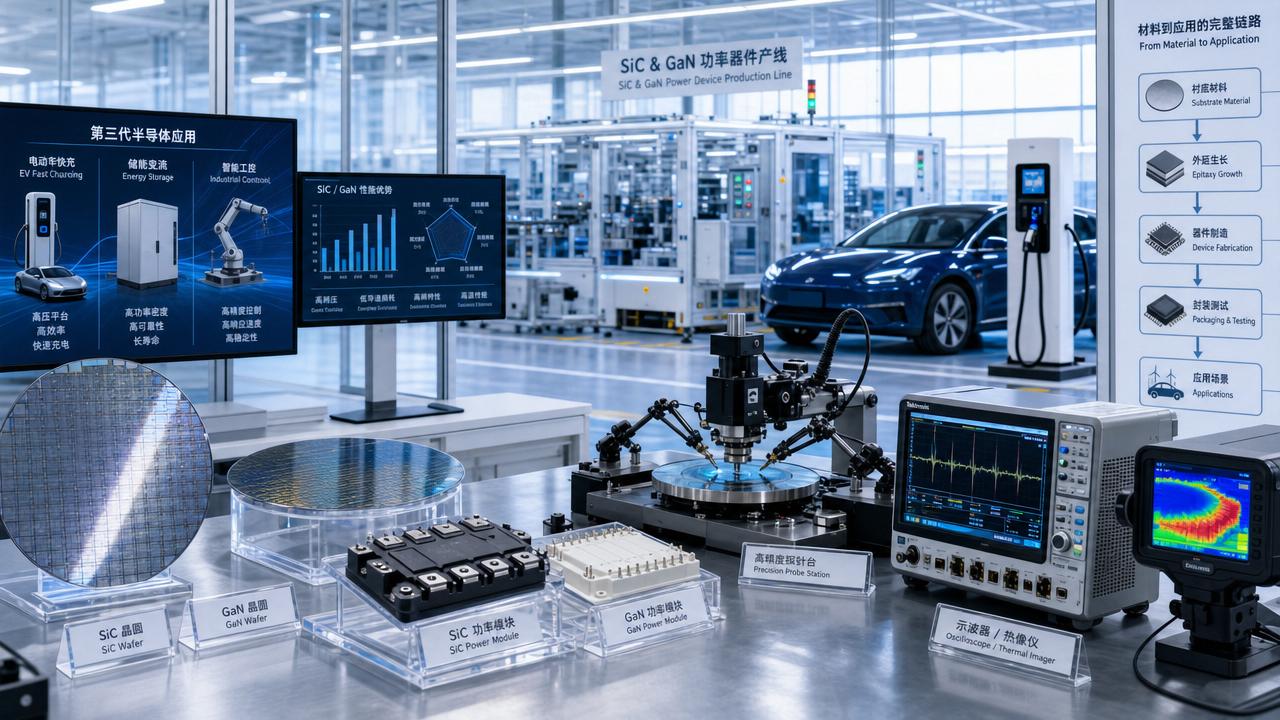
Across all scenarios, a strong Power Semiconductors manufacturer usually shares several traits: deep process knowledge, disciplined reliability validation, robust packaging and testing, transparent quality documentation, and a credible supply continuity strategy. Just as important, it understands that modern customers are buying system confidence, not only silicon.
For organizations evaluating global suppliers in the context of electrification, industrial intelligence, and sovereign-grade infrastructure, this broader view is essential. The best manufacturer is not simply the one with the largest output or the newest material platform. It is the one that can translate technical capability into predictable field performance, audit-ready quality assurance, and long-term procurement confidence.
FAQ for Decision-Makers Assessing a Power Semiconductors Manufacturer
Is a specialist always better than a broad portfolio supplier?
Not always. Specialists may lead in SiC or GaN performance, while broader suppliers may offer stronger supply resilience, qualification infrastructure, and lifecycle support. The right choice depends on the application scenario and your risk tolerance.
How important is packaging when choosing a Power Semiconductors manufacturer?
It is critical. Packaging affects heat dissipation, parasitic inductance, power cycling life, and field reliability. For many applications, package quality is just as important as die performance.
What should enterprise buyers request first?
Request reliability reports, qualification data, package details, traceability approach, and application support scope. Then compare those materials against the mission profile of your target system.
Next Step: Match the Manufacturer to Your Operating Scenario
The most effective way to identify the right Power Semiconductors manufacturer is to begin with your own scenario: mobility, automation, renewable energy, charging, or high-density power infrastructure. From there, define the mission profile, reliability target, thermal constraints, qualification burden, and supply continuity needs. A supplier that fits those conditions will create far more value than one chosen on specifications alone.
For enterprise leaders, this approach supports better technical decisions, stronger procurement outcomes, and more resilient digital-industrial infrastructure. In a market where performance, compliance, and supply assurance now move together, the strongest manufacturer is the one prepared to prove all three in the context of your real application.
Get weekly intelligence in your inbox.
No noise. No sponsored content. Pure intelligence.
 Apr 28, 2026When do rapid prototyping 3D printing services save real costWhen do rapid prototyping 3D printing services save real cost
 Apr 28, 2026What Can Go Wrong in Fan-out Wafer Level Pkg?What Can Go Wrong in Fan-out Wafer Level Pkg?
 Apr 28, 2026What Makes Optical LiDAR Modules Better for Autonomy?What Makes Optical LiDAR Modules Better for Autonomy?
 Apr 28, 20262026 Market Trends in Supply Chain Resilience for Fabs2026 Market Trends in Supply Chain Resilience for Fabs
 May 09, 2026World's First 2.5D Chiplet Production Line Goes Live in SuzhouWorld's First 2.5D Chiplet Production Line Goes Live in Suzhou
 May 09, 2026Japan METI Expands KrF Photoresist Import Quota, Grants Fast-Track Clearance to Top Chinese SuppliersJapan METI Expands KrF Photoresist Import Quota, Grants Fast-Track Clearance to Top Chinese Suppliers
 May 09, 2026SEMI Updates AMC Filtration Standard F72-0526 with New Dynamic Adsorption Decay Rate RequirementSEMI Updates AMC Filtration Standard F72-0526 with New Dynamic Adsorption Decay Rate Requirement
 May 09, 2026EU Launches SiC MOSFET Carbon Footprint Verification PilotEU Launches SiC MOSFET Carbon Footprint Verification Pilot
 May 09, 2026US EPA Enacts Sub-ppb VOC Limits for Ultra-High-Purity GasesUS EPA Enacts Sub-ppb VOC Limits for Ultra-High-Purity Gases
 May 08, 2026Digital Infrastructure Standards: What to Track Before New System RolloutsDigital Infrastructure Standards: What to Track Before New System Rollouts
 May 08, 2026Sovereign Digital Infrastructure Development: Why It Matters for Industrial InvestmentSovereign Digital Infrastructure Development: Why It Matters for Industrial Investment
 May 08, 2026Supply Chain Resilience in Electronics Manufacturing Starts With Better Sourcing ChoicesSupply Chain Resilience in Electronics Manufacturing Starts With Better Sourcing Choices
 May 08, 2026Power Conversion Technology Trends to Watch in 2026Power Conversion Technology Trends to Watch in 2026
 May 08, 2026Third-Generation Materials for Power Semiconductors: Performance Trade-Offs to KnowThird-Generation Materials for Power Semiconductors: Performance Trade-Offs to Know
 May 08, 2026Third-Generation Semiconductors: Where the Market Is Moving NextThird-Generation Semiconductors: Where the Market Is Moving Next
 May 08, 2026Semiconductor Standards for Automotive: What Changes for Power ModulesSemiconductor Standards for Automotive: What Changes for Power Modules
 May 08, 2026Semiconductor Fabrication Standards That Influence Supplier ApprovalSemiconductor Fabrication Standards That Influence Supplier Approval
 May 08, 2026Reliability Standards Certification: A Practical Filter for Vendor ShortlistsReliability Standards Certification: A Practical Filter for Vendor Shortlists
 May 08, 2026Ultra-Pure Water Skids: Hidden Costs in System Sizing and MaintenanceUltra-Pure Water Skids: Hidden Costs in System Sizing and Maintenance
 May 08, 2026How AMC Filtration Supports Cleaner Process Conditions in Advanced FabsHow AMC Filtration Supports Cleaner Process Conditions in Advanced Fabs
 May 08, 2026Environment Control Solutions for Cleanrooms: What Impacts Air Stability MostEnvironment Control Solutions for Cleanrooms: What Impacts Air Stability Most
![]() May 08, 2026Why IC Cleaning Standards Matter More as Node Complexity IncreasesWhy IC Cleaning Standards Matter More as Node Complexity Increases
May 08, 2026Why IC Cleaning Standards Matter More as Node Complexity IncreasesWhy IC Cleaning Standards Matter More as Node Complexity Increases May 08, 2026Photoresist for KrF and ArF: What Changes in Process ControlPhotoresist for KrF and ArF: What Changes in Process Control
![]() May 08, 2026Electronic Chemicals for Semiconductor: How Contamination Impacts YieldElectronic Chemicals for Semiconductor: How Contamination Impacts Yield
May 08, 2026Electronic Chemicals for Semiconductor: How Contamination Impacts YieldElectronic Chemicals for Semiconductor: How Contamination Impacts Yield May 08, 2026High-Purity Chemicals Supplier: Key Questions Before You CommitHigh-Purity Chemicals Supplier: Key Questions Before You Commit
 May 08, 2026How to Evaluate a Special Gases Supplier for Long-Term Fab StabilityHow to Evaluate a Special Gases Supplier for Long-Term Fab Stability
![]() May 08, 2026Special Gases for Semiconductor Fabrication: Purity Risks You Should Not IgnoreSpecial Gases for Semiconductor Fabrication: Purity Risks You Should Not Ignore
May 08, 2026Special Gases for Semiconductor Fabrication: Purity Risks You Should Not IgnoreSpecial Gases for Semiconductor Fabrication: Purity Risks You Should Not Ignore