

Silicon Value Chain Optimization Without Disrupting Supply Stability
Silicon Value Chain Optimization is no longer just a cost-efficiency goal—it is a strategic requirement for project leaders balancing performance, compliance, and supply continuity. As semiconductor ecosystems grow more complex, optimizing materials, packaging, sensing, and fabrication environments without disrupting supply stability becomes essential to delivering resilient, high-precision industrial outcomes.
Why the optimization agenda is changing now
For project managers and engineering leads, the conversation around Silicon Value Chain Optimization has shifted from isolated sourcing decisions to coordinated system planning. The reason is simple: the semiconductor landscape is no longer defined only by advanced-node competition. Mature-node capacity, power devices, industrial sensors, specialty gases, advanced packaging, and process-environment stability now shape delivery schedules just as much as chip design itself.
Several visible signals explain this change. Autonomous systems are increasing demand for reliable sensing and power conversion. Industrial digitalization is pushing procurement teams toward longer qualification cycles and stricter traceability. At the same time, organizations are under pressure to localize parts of supply without sacrificing international compliance benchmarks such as SEMI, AEC-Q100, and ISO/IEC 17025. As a result, Silicon Value Chain Optimization is becoming a cross-functional discipline involving engineering, sourcing, quality, EHS, and executive planning.
This matters especially in environments where one unstable link can interrupt the entire program. A shortage of high-purity gases, an underqualified packaging partner, inconsistent MEMS calibration, or poor fab environment control can delay output even when wafer supply appears secure. Optimization therefore no longer means simply reducing vendors or negotiating cost. It means improving throughput, qualification confidence, and resilience at the same time.
The strongest trend signals across the silicon value chain
The most important shift is that value is moving toward reliability-critical layers of the chain. In earlier planning cycles, many organizations focused primarily on chip availability and unit price. Today, project success depends more heavily on whether upstream and downstream processes remain stable under real operating conditions. This is particularly true in industrial, automotive-adjacent, energy, and infrastructure deployments where failure costs are far higher than component costs.
Together, these signals show why Silicon Value Chain Optimization must be treated as a strategic coordination task rather than a narrow supply-chain exercise. The organizations that adapt fastest are those that understand hidden dependencies between material purity, package architecture, sensing accuracy, and manufacturing environment control.
What is driving this shift beyond cost pressure
Cost remains important, but it is no longer the sole organizing force. The first driver is application risk. Power electronics, machine vision, autonomous systems, industrial robotics, and smart infrastructure all rely on semiconductors that must perform consistently in harsh or variable conditions. This raises the value of long-term reliability over short-term pricing wins.
The second driver is standards pressure. As buyers ask for clearer proof of performance, supply partners need stronger testing discipline, process records, and metrology credibility. Qualification is becoming less tolerant of vague specifications. For project leaders, this means that vendor selection increasingly depends on evidence quality, not only on commercial flexibility.
The third driver is supply sovereignty strategy. Many companies want diversified or regionally balanced sourcing to reduce geopolitical and logistics exposure. Yet diversification itself can introduce process variation if technical benchmarking is weak. Silicon Value Chain Optimization therefore must connect multi-source planning with specification harmonization, cross-site validation, and realistic ramp assumptions.
A fourth driver is the expansion of mature-node relevance. Not every industrial breakthrough depends on the newest node. Mature-node fabrication remains essential for analog, power, control, sensing, and mixed-signal functions. This creates a broader optimization challenge: organizations must protect continuity in categories that are often overlooked because they lack the visibility of frontier logic manufacturing.
Where project leaders are feeling the impact first
The impact is not uniform. Some roles face the consequences of value-chain instability much earlier than others. Program owners typically see the first signal in milestone slippage. Procurement teams see it in qualification bottlenecks. Engineering teams see it in redesign cycles caused by package, thermal, or sensing inconsistencies. Quality teams see it in incoming variation and field-risk concerns.
This is where Silicon Value Chain Optimization becomes practical. It helps teams identify which constraints are genuinely strategic and which are only operational noise. In many cases, the biggest gains come not from changing everything, but from securing a few weak interfaces: package-test coordination, gas purity assurance, environmental stability, and sensor validation under real use conditions.
Why stability is becoming the real measure of optimization
Many organizations still define optimization through lower inventory, fewer suppliers, or shorter procurement cycles. Those goals are useful, but they can be misleading in semiconductor programs where technical volatility is expensive. The more accurate measure is whether the value chain can absorb change without disrupting delivery, qualification, or field performance.
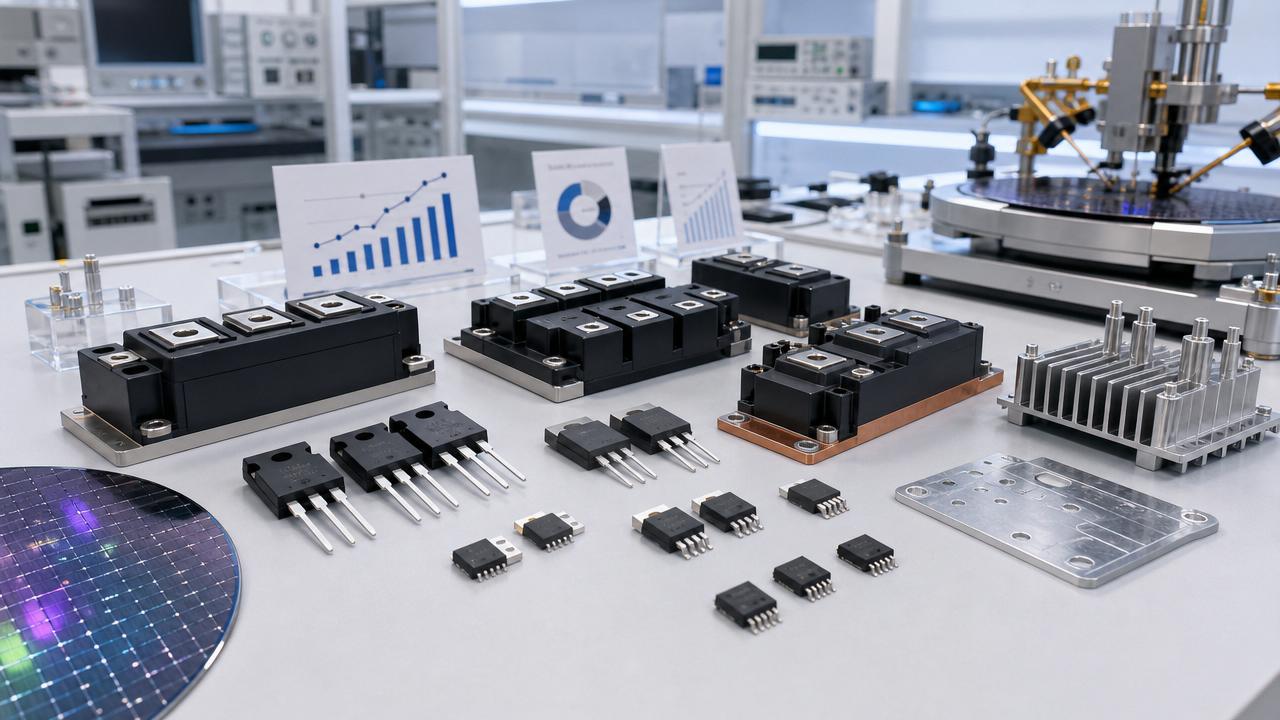
In power semiconductors, for example, the issue is not only access to SiC devices but also the consistency of die attach, thermal pathways, and test screening. In advanced packaging, output quality depends on substrate capability, interconnect precision, and backend process control. In sensor systems, the challenge is often less about component availability than about maintaining signal integrity and calibration stability across environmental variation. In all these areas, Silicon Value Chain Optimization must protect stability before it pursues aggressive efficiency gains.
This is also where institutions such as G-SSI become relevant to decision-makers. Benchmarking across power devices, packaging, sensors, chemicals, gases, and fabrication environments helps teams compare suppliers beyond marketing claims. For engineering projects, this kind of benchmark discipline reduces the risk of choosing a lower-cost option that later creates qualification delays or long-tail reliability problems.
The next-stage priorities smart organizations are adopting
A clear pattern is emerging among resilient organizations. They are not waiting for disruption to reveal weak points. Instead, they are shifting toward earlier technical-commercial alignment. This means procurement is brought into engineering discussions sooner, and engineering teams are more involved in supplier capability evaluation before late-stage ramp decisions are made.
They are also redefining what counts as a qualified alternative. A substitute supplier is not truly interchangeable unless material purity, thermal behavior, process stability, packaging compatibility, and test evidence all support equivalent performance. This is one of the most misunderstood parts of Silicon Value Chain Optimization. Alternate sourcing only improves resilience when the alternates are validated against the real failure modes of the application.
Another emerging priority is environmental control as a board-level reliability topic. Fab air quality, contamination pathways, vibration exposure, and utility stability are becoming more visible because they shape output consistency across the entire chain. For project owners, this means supplier assessments must increasingly include environment-control maturity, not only product datasheets and capacity declarations.
How to judge whether your optimization plan is future-ready
For teams responsible for multi-quarter delivery, the right question is not whether the current supply plan looks efficient on paper. The better question is whether it remains workable when one node of the ecosystem experiences delay, contamination, qualification drift, or policy pressure. A future-ready Silicon Value Chain Optimization plan usually includes the following judgment criteria:
- Critical materials and components are ranked by substitution difficulty, not only by annual spend.
- Packaging, testing, and sensor calibration dependencies are documented as project risks, not treated as background operations.
- Supplier comparisons rely on measurable standards evidence and process maturity, not just lead time promises.
- Environmental control and purity management are reviewed as production enablers.
- Cross-functional teams share a common view of what stability means for the target application.
If these elements are missing, optimization efforts may still lower cost in the short term, but they will struggle to protect delivery when external conditions change.
Action guidance for project managers and engineering owners
In the current market, the most effective response is disciplined prioritization. Start by identifying which parts of the silicon value chain create the highest consequence if they fail: power device reliability, package-test coordination, high-purity inputs, sensor fidelity, or fabrication environment control. Then align sourcing, validation, and contingency plans around those points first.
Next, tighten the link between trend monitoring and project execution. Silicon Value Chain Optimization should not sit only in strategy documents. It should appear in gate reviews, supplier scorecards, engineering change assessments, and ramp-readiness decisions. This is how organizations convert industry insight into operational resilience.
Finally, treat every optimization proposal as a stability test. If a sourcing change, packaging adjustment, or material substitution saves cost but increases qualification ambiguity, hidden contamination risk, or thermal uncertainty, the business case is incomplete. In the coming cycle, the winners will be the teams that optimize with precision, benchmark with discipline, and diversify without weakening control.
Final perspective: what to confirm before making the next move
The direction of travel is clear: Silicon Value Chain Optimization is becoming a resilience strategy anchored in technical evidence. For companies navigating industrial automation, energy systems, smart sensing, and digital infrastructure, the key decision is no longer whether to optimize. It is how to optimize without creating new fragility.
If your organization wants to judge the impact of these trends on current or upcoming programs, focus on a few practical questions: Which supply layers are most difficult to replace? Where does compliance evidence remain too shallow? Which packaging, sensing, or purity-related assumptions have not been stress-tested? And which suppliers can support both continuity and internationally credible performance standards? Those answers will reveal whether your next step is routine procurement improvement or a more strategic Silicon Value Chain Optimization initiative.
Get weekly intelligence in your inbox.
No noise. No sponsored content. Pure intelligence.
 Apr 28, 2026When do rapid prototyping 3D printing services save real costWhen do rapid prototyping 3D printing services save real cost
 Apr 28, 2026What Can Go Wrong in Fan-out Wafer Level Pkg?What Can Go Wrong in Fan-out Wafer Level Pkg?
 Apr 28, 2026What Makes Optical LiDAR Modules Better for Autonomy?What Makes Optical LiDAR Modules Better for Autonomy?
 Apr 28, 20262026 Market Trends in Supply Chain Resilience for Fabs2026 Market Trends in Supply Chain Resilience for Fabs
 May 07, 2026EV Charging Stations Commercial Installation: Hidden Costs Before Break GroundEV Charging Stations Commercial Installation: Hidden Costs Before Break Ground
 May 07, 2026ESS Energy Storage Lithium Ion Batteries: Safety Points That Cannot Be MissedESS Energy Storage Lithium Ion Batteries: Safety Points That Cannot Be Missed
 May 07, 2026Lithium Ion Batteries Manufacturer in China: What to Check Before ShortlistingLithium Ion Batteries Manufacturer in China: What to Check Before Shortlisting
 May 07, 2026Photovoltaic Modules for Residential Use: Better Payback Starts with SizingPhotovoltaic Modules for Residential Use: Better Payback Starts with Sizing
 May 07, 2026Solar Panels Wholesale USA: What Impacts Bulk Pricing MostSolar Panels Wholesale USA: What Impacts Bulk Pricing Most
 May 07, 2026Steel Forging High Strength Components: How to Compare Lifecycle ValueSteel Forging High Strength Components: How to Compare Lifecycle Value
 May 07, 2026Hybrid Inverters Cost-Effective Solutions: Where Savings Are Often OverstatedHybrid Inverters Cost-Effective Solutions: Where Savings Are Often Overstated
 May 07, 2026EV Charging Stations Quick Installation Guide for Low-Downtime RolloutsEV Charging Stations Quick Installation Guide for Low-Downtime Rollouts
 May 07, 2026Sensory Data for Industrial IoT: When More Data Stops Adding ValueSensory Data for Industrial IoT: When More Data Stops Adding Value
 May 07, 2026High-Purity Chemicals for Semiconductor: How Contamination Risk Is ReducedHigh-Purity Chemicals for Semiconductor: How Contamination Risk Is Reduced
 May 07, 2026Hybrid Inverters for Solar Energy Systems: Which Features Pay Off FirstHybrid Inverters for Solar Energy Systems: Which Features Pay Off First
 May 07, 2026Power Semiconductors Price in 2026: What Buyers Should Watch NowPower Semiconductors Price in 2026: What Buyers Should Watch Now
 May 07, 2026Smart Sensors Supplier Selection: What Affects Long-Term Field ReliabilitySmart Sensors Supplier Selection: What Affects Long-Term Field Reliability
 May 07, 20263D Chiplet Design Guide for Teams Balancing Bandwidth and Yield3D Chiplet Design Guide for Teams Balancing Bandwidth and Yield
 May 07, 2026Smart Sensors for IoT Applications: Choosing for Accuracy vs Battery LifeSmart Sensors for IoT Applications: Choosing for Accuracy vs Battery Life
 May 07, 2026Electronic Chemicals Standards: What to Verify Before ApprovalElectronic Chemicals Standards: What to Verify Before Approval
 May 07, 2026Semiconductor Standards Compliance Mistakes That Delay Market AccessSemiconductor Standards Compliance Mistakes That Delay Market Access
 May 07, 2026Digital Infrastructure for 5G Networks: Build Now or Phase DeploymentDigital Infrastructure for 5G Networks: Build Now or Phase Deployment
 May 07, 2026Sovereign Digital Infrastructure Solutions and the Real Cost of ControlSovereign Digital Infrastructure Solutions and the Real Cost of Control
 May 07, 2026Data Fidelity for Semiconductor: Common Gaps Between Tools and ReportsData Fidelity for Semiconductor: Common Gaps Between Tools and Reports
 May 07, 2026Reliability Standards for Semiconductor Manufacturing That Matter in AuditsReliability Standards for Semiconductor Manufacturing That Matter in Audits
 May 07, 2026Digital Infrastructure for Smart Cities: What Makes Projects ScalableDigital Infrastructure for Smart Cities: What Makes Projects Scalable
 May 07, 2026How to Evaluate a Semiconductor Fabrication Supplier Beyond CapacityHow to Evaluate a Semiconductor Fabrication Supplier Beyond Capacity