

Lathe Turning Precision Machining: Tolerance Issues to Catch Early
In lathe turning precision machining, small tolerance deviations can trigger scrap, rework, safety risks, and costly downstream failures—especially in semiconductor and sensor-related applications where dimensional stability is critical. For quality control and safety teams, catching tolerance issues early is essential to protecting process reliability, compliance, and overall production efficiency.
Why tolerance risk looks different from one production scenario to another
For quality and safety professionals, lathe turning precision machining is not a single, uniform activity. The same dimensional deviation can be a minor cosmetic issue in one product family and a serious functional defect in another. A shaft shoulder that is 8 microns oversized may still assemble in a low-load industrial fitting, yet the same error can compromise thermal contact, sealing force, vibration behavior, or electrical positioning in semiconductor tooling, MEMS sensor housings, gas control parts, and high-purity process infrastructure.
That is why early tolerance control should be judged by application context rather than by drawing limits alone. In G-SSI-aligned industrial environments, the real question is not simply whether a turned part is “in tolerance,” but whether it remains safe, repeatable, and fit for its downstream operating conditions. Quality teams need to evaluate machining variation against assembly sensitivity, cleanliness demands, thermal cycling, leak integrity, and process traceability. Safety teams, meanwhile, must determine whether dimensional drift could create hidden risks such as pressure leakage, loose retention, rotating imbalance, particle generation, or sensor misalignment.
Where lathe turning precision machining tolerance issues most often appear
In a broad industrial setting, tolerance concerns in lathe turning precision machining commonly emerge in five application groups that matter to semiconductor and sensory-infrastructure supply chains. Each group has different failure triggers, inspection priorities, and escalation thresholds.
1. Semiconductor equipment fluid and gas handling parts
Examples include valve bodies, tube connectors, ferrule seats, nozzle retainers, and precision threaded fittings. Here, roundness, surface finish, concentricity, and sealing land dimensions are often more important than gross external size. A small turning deviation can affect leak rate, dead volume, contamination exposure, or pressure stability. Quality teams should look beyond caliper checks and verify how tolerances interact with seals, threads, and mating faces.
2. Sensor housings and alignment-critical components
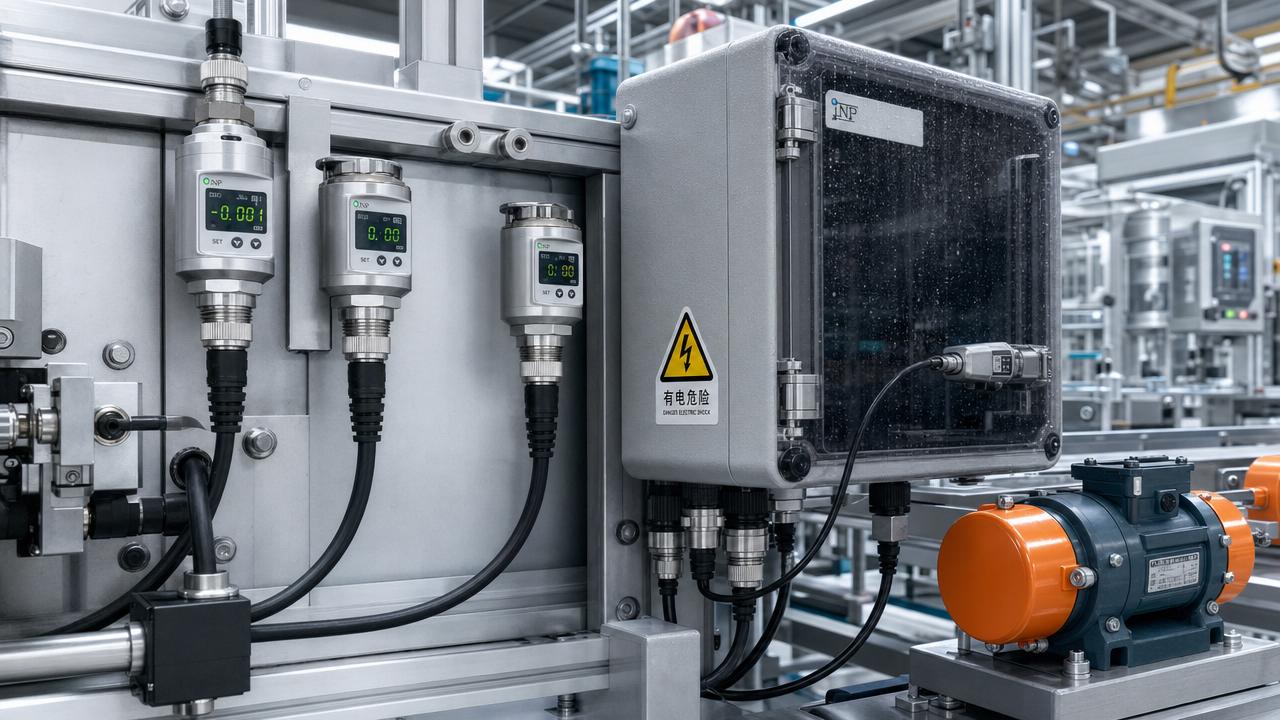
Industrial-grade MEMS and smart sensor assemblies often depend on precise internal diameters, reference faces, and coaxiality. In these scenarios, tolerance errors may not cause immediate assembly rejection, but they can shift sensing position, alter resonance behavior, or introduce long-term calibration drift. Safety managers should treat these parts as performance-critical even when they are small and seemingly simple.
3. Power electronics thermal interface hardware
Turned spacers, sleeves, threaded standoffs, and contact elements used with SiC or GaN systems must support thermal stability and reliable mechanical loading. Tolerance issues here may change clamping force, contact pressure, or stack height. The result can be poor heat dissipation, premature fatigue, or insulation gap nonconformity. Early detection protects both quality yield and operational safety.
4. Rotating or vibration-sensitive industrial assemblies
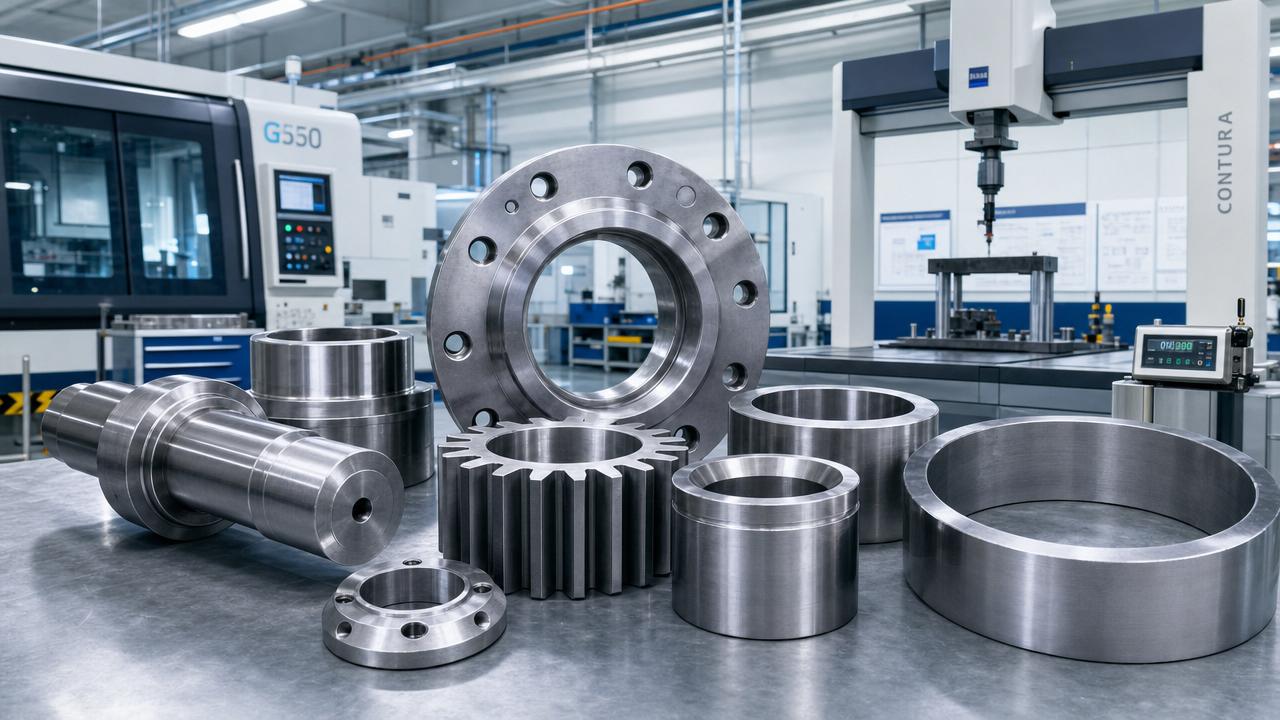
Bushings, shafts, balance collars, and coupling interfaces require close attention to runout, concentricity, and cylindrical accuracy. In these applications, even acceptable nominal dimensions may hide dynamic imbalance if geometric tolerances are weak. This is where lathe turning precision machining must be assessed in relation to actual speed, load, and duty cycle.
5. Clean-environment supports and handling fixtures
Wafer handling accessories, fixture pins, guide posts, and support rollers are often judged not only by size but also by burr control, edge integrity, and particulate behavior. A tolerance issue that leaves sharp transitions or unstable seating can become a contamination problem. In clean manufacturing environments, dimensional variation and surface condition are inseparable quality concerns.
Scenario comparison: what QC and safety teams should prioritize
The table below helps translate lathe turning precision machining risk into application-specific control priorities.
Different facilities need different tolerance-warning methods
A common mistake in lathe turning precision machining control is applying the same alert thresholds to all product lines. In practice, different factories and supplier tiers require different detection methods.
High-mix, low-volume machining cells
These operations often struggle with setup-to-setup variation, operator interpretation, and first-piece inconsistency. Here, early tolerance issues are most likely to come from tool offsets, fixture repeatability, and incomplete transfer of critical dimensions from customer drawings to shop-floor inspection plans. QC teams should emphasize first-article verification, setup checklists, and characteristic-based control plans instead of relying only on final inspection.
Medium-volume production lines serving regulated industries
When parts go into semiconductor, industrial automation, or high-reliability electronics applications, tolerance drift usually appears as a trend rather than a one-time failure. Statistical process control, machine capability studies, and gage repeatability become more important than isolated pass/fail judgments. Safety teams should ask whether the process can hold tolerance under normal wear, shift changes, and material lot changes.
Critical suppliers for sovereign or infrastructure-grade systems
In these environments, the requirement is not merely producing a conforming turned part but documenting evidence of stable conformity. Lathe turning precision machining data should support traceability, root-cause response, calibration integrity, and supplier accountability. This aligns with international expectations around reliability benchmarking and controlled production systems.
Early signs that a tolerance issue is forming before defects become visible
Experienced quality personnel rarely wait for outright nonconformance. In lathe turning precision machining, several early signals often appear first:
- Measured values remain in tolerance but trend toward one limit across consecutive batches.
- Assembly force, torque feel, or seal engagement becomes less consistent even though dimensions still pass.
- Surface finish or burr condition worsens near critical diameters.
- Tool life shortens unexpectedly, indicating unstable cutting conditions.
- Operators make frequent offset corrections to keep one dimension centered.
- Customer complaints mention fit variation, leakage, vibration, or sensor instability rather than simple size failure.
Get weekly intelligence in your inbox.
No noise. No sponsored content. Pure intelligence.
 Apr 28, 2026When do rapid prototyping 3D printing services save real costWhen do rapid prototyping 3D printing services save real cost
 Apr 28, 2026What Can Go Wrong in Fan-out Wafer Level Pkg?What Can Go Wrong in Fan-out Wafer Level Pkg?
 Apr 28, 2026What Makes Optical LiDAR Modules Better for Autonomy?What Makes Optical LiDAR Modules Better for Autonomy?
 Apr 28, 20262026 Market Trends in Supply Chain Resilience for Fabs2026 Market Trends in Supply Chain Resilience for Fabs
 May 07, 2026EV Charging Stations Commercial Installation: Hidden Costs Before Break GroundEV Charging Stations Commercial Installation: Hidden Costs Before Break Ground
 May 07, 2026ESS Energy Storage Lithium Ion Batteries: Safety Points That Cannot Be MissedESS Energy Storage Lithium Ion Batteries: Safety Points That Cannot Be Missed
 May 07, 2026Lithium Ion Batteries Manufacturer in China: What to Check Before ShortlistingLithium Ion Batteries Manufacturer in China: What to Check Before Shortlisting
 May 07, 2026Photovoltaic Modules for Residential Use: Better Payback Starts with SizingPhotovoltaic Modules for Residential Use: Better Payback Starts with Sizing
 May 07, 2026Solar Panels Wholesale USA: What Impacts Bulk Pricing MostSolar Panels Wholesale USA: What Impacts Bulk Pricing Most
 May 07, 2026Steel Forging High Strength Components: How to Compare Lifecycle ValueSteel Forging High Strength Components: How to Compare Lifecycle Value
 May 07, 2026Hybrid Inverters Cost-Effective Solutions: Where Savings Are Often OverstatedHybrid Inverters Cost-Effective Solutions: Where Savings Are Often Overstated
 May 07, 2026EV Charging Stations Quick Installation Guide for Low-Downtime RolloutsEV Charging Stations Quick Installation Guide for Low-Downtime Rollouts
 May 07, 2026Sensory Data for Industrial IoT: When More Data Stops Adding ValueSensory Data for Industrial IoT: When More Data Stops Adding Value
 May 07, 2026High-Purity Chemicals for Semiconductor: How Contamination Risk Is ReducedHigh-Purity Chemicals for Semiconductor: How Contamination Risk Is Reduced
 May 07, 2026Hybrid Inverters for Solar Energy Systems: Which Features Pay Off FirstHybrid Inverters for Solar Energy Systems: Which Features Pay Off First
 May 07, 2026Power Semiconductors Price in 2026: What Buyers Should Watch NowPower Semiconductors Price in 2026: What Buyers Should Watch Now
 May 07, 2026Smart Sensors Supplier Selection: What Affects Long-Term Field ReliabilitySmart Sensors Supplier Selection: What Affects Long-Term Field Reliability
 May 07, 20263D Chiplet Design Guide for Teams Balancing Bandwidth and Yield3D Chiplet Design Guide for Teams Balancing Bandwidth and Yield
 May 07, 2026Smart Sensors for IoT Applications: Choosing for Accuracy vs Battery LifeSmart Sensors for IoT Applications: Choosing for Accuracy vs Battery Life
 May 07, 2026Electronic Chemicals Standards: What to Verify Before ApprovalElectronic Chemicals Standards: What to Verify Before Approval
 May 07, 2026Semiconductor Standards Compliance Mistakes That Delay Market AccessSemiconductor Standards Compliance Mistakes That Delay Market Access
 May 07, 2026Digital Infrastructure for 5G Networks: Build Now or Phase DeploymentDigital Infrastructure for 5G Networks: Build Now or Phase Deployment
 May 07, 2026Sovereign Digital Infrastructure Solutions and the Real Cost of ControlSovereign Digital Infrastructure Solutions and the Real Cost of Control
 May 07, 2026Data Fidelity for Semiconductor: Common Gaps Between Tools and ReportsData Fidelity for Semiconductor: Common Gaps Between Tools and Reports
 May 07, 2026Reliability Standards for Semiconductor Manufacturing That Matter in AuditsReliability Standards for Semiconductor Manufacturing That Matter in Audits
 May 07, 2026Digital Infrastructure for Smart Cities: What Makes Projects ScalableDigital Infrastructure for Smart Cities: What Makes Projects Scalable
 May 07, 2026How to Evaluate a Semiconductor Fabrication Supplier Beyond CapacityHow to Evaluate a Semiconductor Fabrication Supplier Beyond Capacity