Smartgridsolutions: 2026 Adoption Risks to Watch
As enterprises accelerate grid modernization in 2026, smartgridsolutions are becoming a strategic priority—but adoption brings new risks in semiconductor reliability, sensor data integrity, interoperability, cybersecurity, and supply chain resilience. For decision makers, the challenge is no longer whether intelligent energy infrastructure is necessary, but how to deploy it without compromising operational continuity, compliance, or long-term scalability. This article highlights the critical adoption risks leaders must watch as smart grid investments intersect with advanced power semiconductors, industrial IoT architectures, and sovereign-grade digital infrastructure.
For enterprise boards, CTOs, IC design leaders, and Industrial IoT architects, smartgridsolutions are no longer limited to utility automation. They now influence plant uptime, distributed energy assets, data centers, semiconductor fabs, logistics hubs, and sovereign infrastructure programs.
The 2026 adoption cycle will reward organizations that treat intelligent grid investment as a technical governance program, not a conventional equipment purchase. The risk profile spans silicon, sensors, software, compliance, and supplier resilience.
Why 2026 Raises the Stakes for Smart Grid Adoption
Smartgridsolutions are moving from pilot deployments to mission-critical infrastructure. A typical enterprise project may connect 500 to 50,000 sensing points across substations, factories, microgrids, and distributed storage assets.
This scale changes the decision model. A 1% error in sensor interpretation or a 20-millisecond latency gap can affect load balancing, power quality, equipment protection, and demand-response performance.
From Energy Automation to Digital Infrastructure
In 2026, smartgridsolutions increasingly depend on high-efficiency power conversion, industrial-grade MEMS sensors, edge gateways, digital twins, and secure data pipelines. Each component introduces measurable operational exposure.
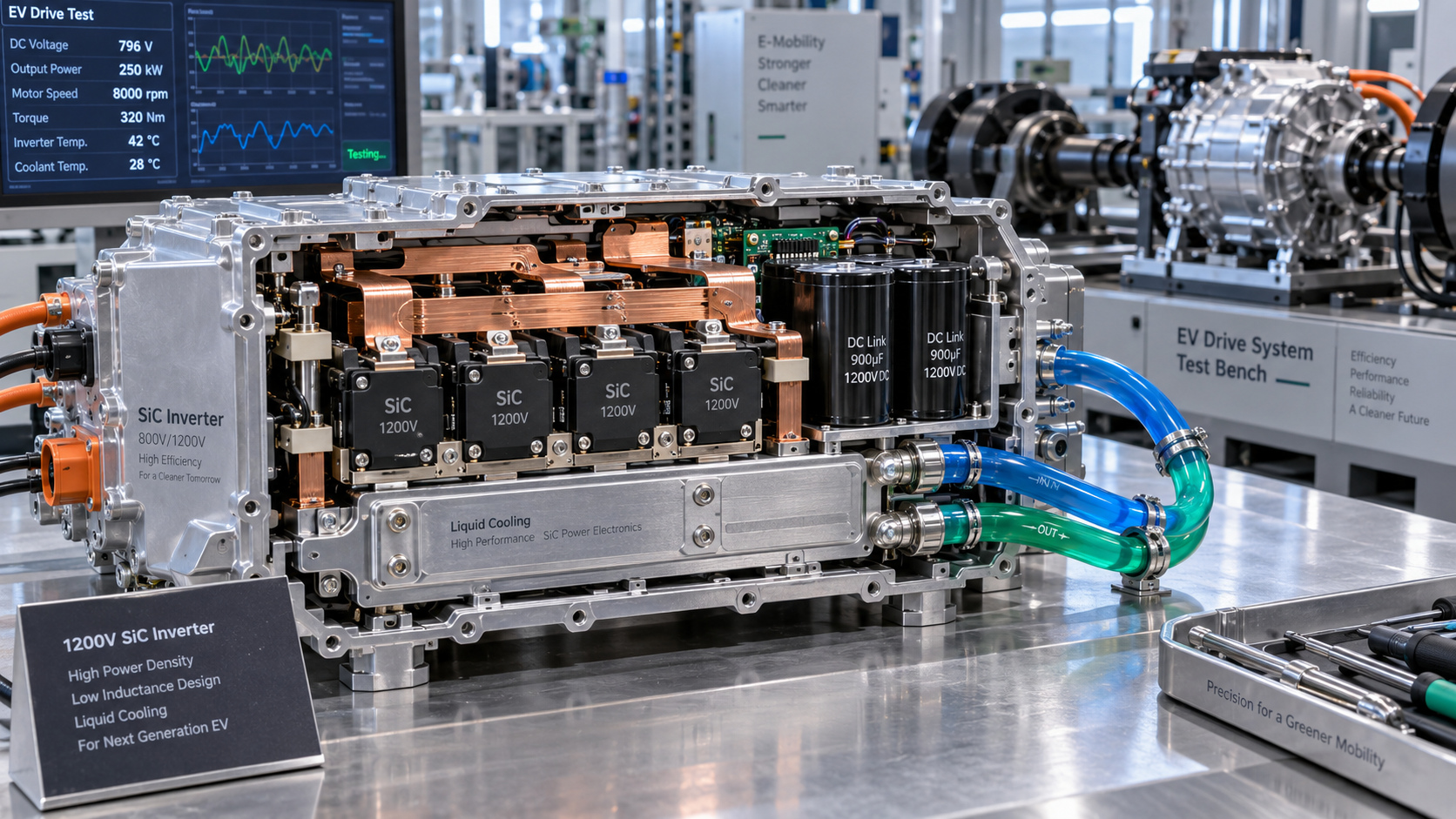
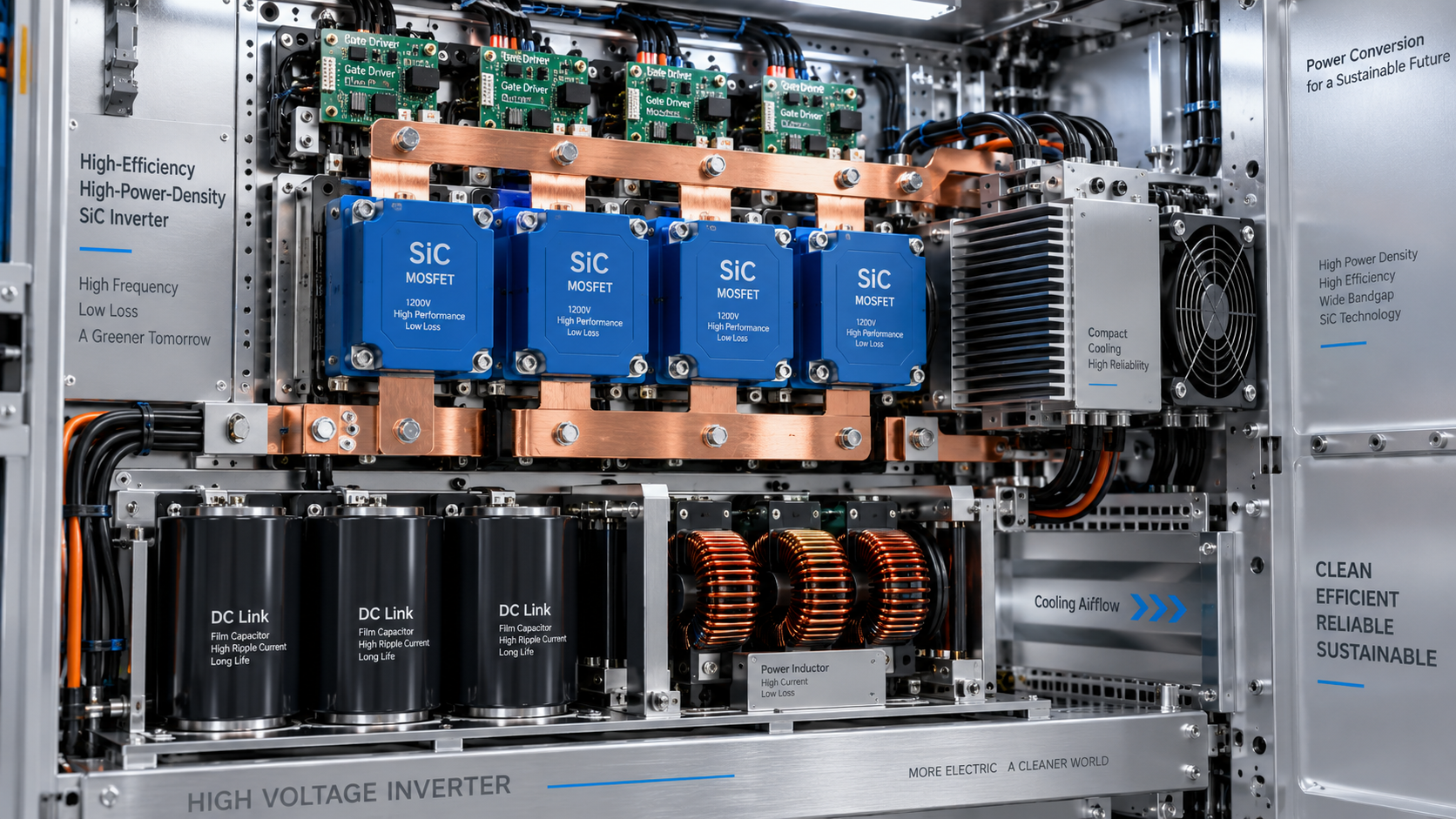
For example, 1200V SiC MOSFETs may improve switching efficiency in conversion systems, but they also require disciplined thermal design, gate-drive validation, and lifecycle qualification under industrial load cycles.
Key Adoption Pressures for Decision Makers
- Higher power density requirements in converters, charging networks, industrial microgrids, and energy storage interfaces.
- Greater dependence on accurate sensory data for predictive maintenance, fault localization, and autonomous grid response.
- More complex supplier ecosystems spanning semiconductors, packaging, electronic gases, firmware, and cloud platforms.
- Stricter compliance expectations involving SEMI, AEC-Q100, ISO/IEC 17025, IEC 61850, and cybersecurity controls.
Enterprises evaluating smartgridsolutions should therefore assess both immediate project ROI and 10-year infrastructure resilience. Shortlist decisions made in 8 to 12 weeks can shape operating risk for a decade.
Risk 1: Semiconductor Reliability Under Grid Stress
Power semiconductors sit at the center of modern smartgridsolutions. They control conversion, isolation, switching, and protection functions across energy storage, renewable interfaces, EV charging, and industrial substations.
The shift toward SiC and GaN devices offers efficiency gains, yet adoption risk rises when qualification, packaging, and thermal management are treated as secondary engineering details.
Where Reliability Failures Usually Begin
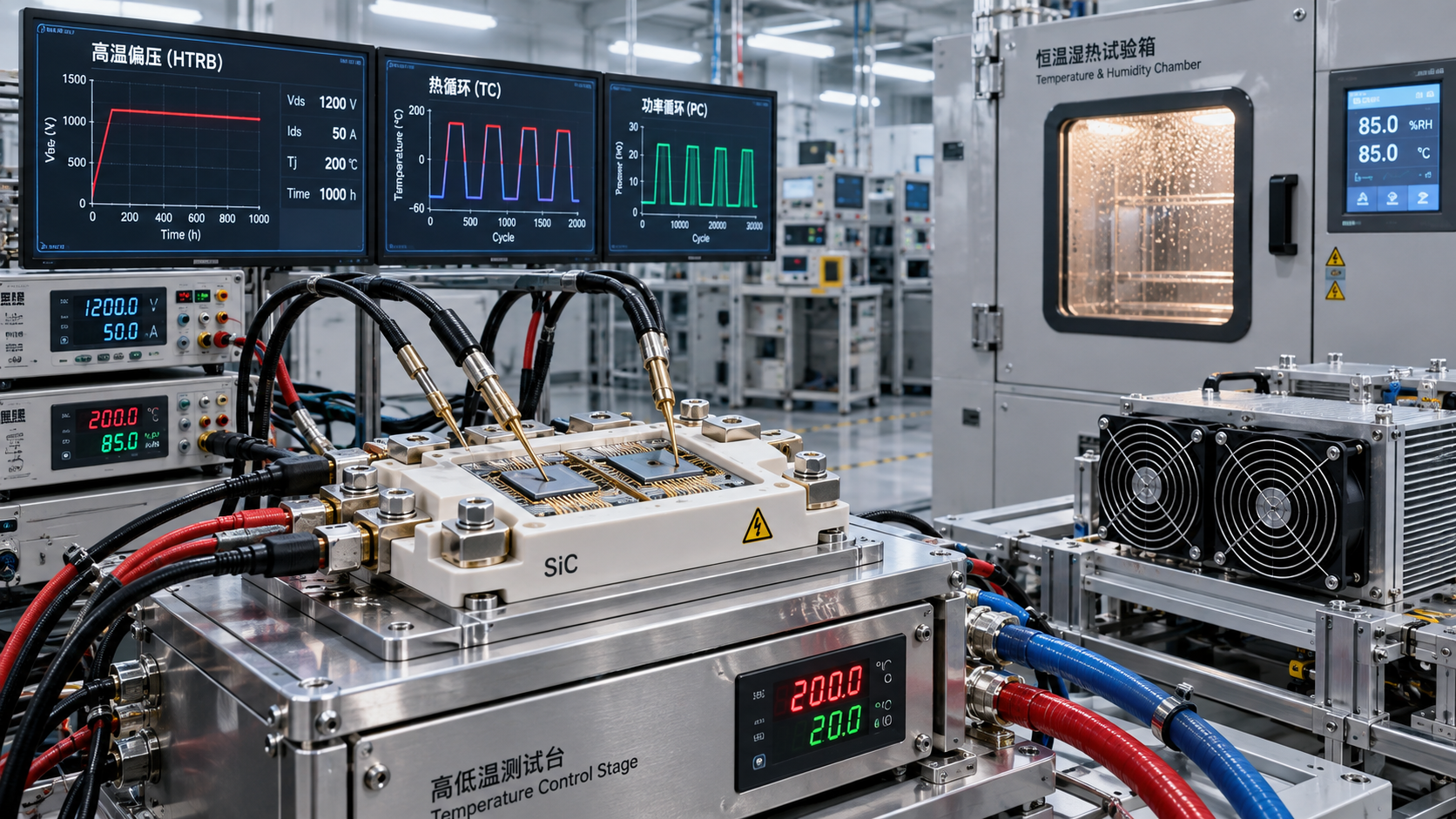
Common failure triggers include insufficient derating, unstable junction temperature, gate oxide stress, contamination during fabrication, and inadequate accelerated-life testing. These issues rarely appear during short demonstrations.
A converter running at 85% to 95% loading for 6,000 operating hours per year will expose weaknesses that a 72-hour acceptance test cannot detect.
The following table outlines semiconductor-related checkpoints for enterprise buyers comparing smartgridsolutions vendors, system integrators, and component supply chains.
The key conclusion is simple: semiconductor reliability must be audited before deployment, not after failure. Smartgridsolutions built on weak component validation can transfer cost from procurement to operations.
Risk 2: Sensor Data Integrity and Decision Accuracy
Smartgridsolutions depend on trusted field data. Voltage, current, temperature, vibration, pressure, humidity, gas, and power-quality readings all influence automated control decisions.
When sensor drift exceeds acceptable thresholds, decisions become less reliable. In many industrial environments, calibration intervals of 6 to 12 months are necessary for critical sensing points.
Why MEMS and Smart Sensors Need Governance
Industrial-grade MEMS sensors can provide compact, responsive, and cost-effective monitoring. However, their output may be affected by temperature cycling, electromagnetic interference, packaging stress, and installation quality.
For enterprise smartgridsolutions, data integrity should be managed through three layers: device qualification, field calibration, and analytics validation. Missing one layer weakens the entire control chain.
A Practical 5-Step Data Assurance Model
- Define critical measurements and acceptable error bands, such as ±0.5% for key power measurements.
- Classify sensors by operational criticality, environment, replacement difficulty, and calibration burden.
- Require traceable laboratory validation where appropriate, using ISO/IEC 17025-aligned processes.
- Implement cross-checking logic between edge devices, meters, and supervisory systems.
- Review anomaly reports monthly during the first 180 days after commissioning.
This approach prevents smartgridsolutions from making automated decisions based on attractive dashboards but unreliable measurements. For high-value assets, sensor trust is a financial control issue.
Risk 3: Interoperability Gaps Across Industrial Ecosystems
Interoperability is one of the most underestimated adoption risks in smartgridsolutions. A large enterprise may operate 3 to 7 generations of controllers, meters, relays, and SCADA interfaces.
The challenge intensifies when grid systems connect with ERP platforms, building management systems, battery management systems, EV charging networks, and production-line automation.
Protocol Alignment Is Not Enough
IEC 61850, Modbus, OPC UA, MQTT, and DNP3 can support integration, but protocol compatibility does not guarantee semantic consistency or operational readiness.
For example, two devices may report temperature in different sampling intervals, naming conventions, or alarm priorities. Smartgridsolutions must normalize context, not only transmit data.
Interoperability Questions Before Procurement
- Can the platform ingest legacy assets without replacing all field equipment in phase 1?
- Does the vendor provide data models for meters, relays, inverters, storage, and sensor gateways?
- Are API limits, latency expectations, and failover behaviors documented before contract signing?
- Can the architecture support expansion from 1 site to 20 sites without redesign?
A staged interoperability test should run for 4 to 8 weeks before full rollout. This reduces the risk of discovering integration defects after procurement commitments are locked.
Risk 4: Cybersecurity Exposure in Connected Power Assets
As smartgridsolutions connect operational technology with enterprise IT, cybersecurity becomes a board-level risk. Energy systems cannot be secured only through perimeter defenses.
A single unsecured gateway, outdated firmware package, or over-privileged maintenance account can expose load management, switching schedules, and sensitive operational data.
Security Controls That Should Be Non-Negotiable
Enterprise buyers should require segmented networks, secure boot, signed firmware, role-based access, encrypted telemetry, vulnerability disclosure processes, and audit logs retained for at least 12 months.
Cybersecurity evaluation should occur during architecture design, not after commissioning. Retrofitting controls into deployed smartgridsolutions typically costs more and creates downtime windows.
Operational Security Priorities
- Separate control networks from corporate traffic using zones, conduits, and monitored access points.
- Patch edge gateways under a defined 30-day, 60-day, or risk-based remediation schedule.
- Use multi-factor authentication for remote maintenance, vendor access, and privileged configuration changes.
- Run incident-response exercises at least twice per year for critical energy infrastructure teams.
The strongest smartgridsolutions combine protection, detection, and recovery. Decision makers should evaluate how fast operations can isolate a compromised node while maintaining essential service.
Risk 5: Supply Chain Resilience and Component Traceability
Grid modernization depends on a supply chain that includes semiconductors, substrates, passive components, advanced packaging, MEMS sensors, electronic chemicals, special gases, and tested modules.
Lead times for specialized components can range from 12 to 36 weeks. In multi-site smartgridsolutions programs, this affects commissioning schedules, spare-parts planning, and lifecycle cost.
Traceability Is a Strategic Control
Traceability should cover wafer source, packaging batch, test records, firmware version, sensor calibration history, and field replacement logs. Partial traceability creates blind spots during failure analysis.
G-SSI’s benchmarking perspective emphasizes sovereign-grade resilience: organizations must understand not only whether components are available, but whether their quality remains consistent across production lots.
The next table summarizes procurement controls that help enterprises reduce supply-chain risk when selecting smartgridsolutions for regulated or high-uptime environments.
Procurement teams should treat smartgridsolutions as long-life infrastructure platforms. A lower upfront bid may become expensive if component provenance, test discipline, or support continuity is weak.
How Enterprises Should Select and Deploy Smartgridsolutions
A successful adoption program requires cross-functional governance. Engineering, procurement, cybersecurity, finance, operations, and compliance teams should define decision criteria before vendor engagement begins.
For most enterprise projects, a 3-phase approach works better than a single “big bang” rollout: architecture validation, controlled pilot, and scaled deployment.
Phase 1: Architecture and Risk Baseline
During the first 2 to 4 weeks, define site topology, asset criticality, communication requirements, cybersecurity boundaries, power-conversion needs, and sensor accuracy expectations.
This phase should also map regulatory obligations and internal uptime targets. A data center, semiconductor fab, and logistics park will not share the same risk tolerance.
Phase 2: Pilot with Measurable Acceptance Criteria
A pilot should run for 60 to 120 days. It must test control latency, data accuracy, failover, cybersecurity logging, alarm quality, maintenance workflows, and operator training.
The best smartgridsolutions pilots include stress scenarios, not only normal operation. Decision makers should ask vendors to demonstrate graceful degradation when sensors, networks, or gateways fail.
Phase 3: Scaling with Governance
Once acceptance is complete, scaling should follow standard templates for site surveys, cabinet layouts, cybersecurity controls, spare parts, training, and change management.
Organizations deploying smartgridsolutions across 5 or more sites should establish a technical authority board to approve design exceptions and supplier substitutions.
Common Mistakes to Avoid
- Selecting vendors only by software interface quality while ignoring semiconductor and sensor validation.
- Underestimating commissioning time for legacy equipment, which can add 2 to 6 weeks per complex site.
- Accepting cybersecurity claims without reviewing patch processes, access controls, and incident logs.
- Failing to define ownership for calibration, firmware updates, and lifecycle replacement decisions.
The strongest deployment strategy balances innovation with verification. Smartgridsolutions should improve resilience, efficiency, and visibility without creating uncontrolled technical debt.
Decision Checklist for 2026 Investment Planning
Before approving capital expenditure, enterprise leaders should compare each proposed platform against technical, financial, and operational criteria. The review should include at least 6 formal checkpoints.
Six Questions Executives Should Ask
- Which power semiconductor technologies are used, and what qualification evidence supports their deployment?
- How are sensor accuracy, calibration, drift detection, and data lineage governed over the asset lifecycle?
- Can the system integrate legacy and new assets without excessive custom engineering?
- What cybersecurity controls protect remote access, firmware updates, and operational telemetry?
- What components have long lead times, single-source exposure, or end-of-life risk?
- How will performance be measured after 90 days, 12 months, and 36 months?
These questions convert smartgridsolutions procurement from a feature comparison into a resilience assessment. They also reveal whether a vendor understands industrial reliability or only digital presentation.
Where G-SSI Adds Strategic Value
G-SSI supports decision makers by benchmarking the silicon, sensory, fabrication, and environmental-control foundations behind intelligent infrastructure. This perspective is critical when grid modernization intersects with semiconductor sovereignty.
By evaluating assets against standards such as SEMI, AEC-Q100, and ISO/IEC 17025, G-SSI helps organizations identify technical gaps before they become operational constraints.
For CTOs and Industrial IoT architects, this means smartgridsolutions can be assessed with the same rigor applied to advanced packaging, MEMS validation, SiC/GaN reliability, and high-purity process controls.
Turning Adoption Risk into Competitive Advantage
The enterprises that succeed in 2026 will not be those that deploy the most devices fastest. They will be those that control risk across silicon, sensing, software, and supply continuity.
Smartgridsolutions can reduce energy waste, improve uptime, strengthen demand-response capability, and support autonomous industrial operations. Yet these gains depend on disciplined engineering and transparent supplier evaluation.
A resilient adoption program should include semiconductor qualification, sensor governance, interoperability testing, cybersecurity architecture, and lifecycle procurement planning from day 1.
For enterprise decision makers, the path forward is clear: select smartgridsolutions that are technically verifiable, operationally scalable, and aligned with sovereign-grade digital infrastructure requirements.
If your organization is evaluating intelligent grid investments for 2026, G-SSI can support technical benchmarking, risk review, and procurement strategy. Contact us to get a customized assessment or learn more solutions for your infrastructure roadmap.
Get weekly intelligence in your inbox.
No noise. No sponsored content. Pure intelligence.
 Apr 28, 2026When do rapid prototyping 3D printing services save real costWhen do rapid prototyping 3D printing services save real cost
 Apr 28, 2026What Can Go Wrong in Fan-out Wafer Level Pkg?What Can Go Wrong in Fan-out Wafer Level Pkg?
 Apr 28, 2026What Makes Optical LiDAR Modules Better for Autonomy?What Makes Optical LiDAR Modules Better for Autonomy?
 Apr 28, 20262026 Market Trends in Supply Chain Resilience for Fabs2026 Market Trends in Supply Chain Resilience for Fabs
 Oct 13, 2026When does parallel testing cut high-volume semiconductor testing costs?When does parallel testing cut high-volume semiconductor testing costs?
 Oct 12, 2026When does fan-out wafer level packaging outperform flip-chip packaging?When does fan-out wafer level packaging outperform flip-chip packaging?
 Oct 11, 2026How energy management can reduce peak demand chargesHow energy management can reduce peak demand charges
 Oct 10, 2026When do integrated sensor systems reduce commissioning risks?When do integrated sensor systems reduce commissioning risks?
 Oct 09, 2026How North American semiconductor fabs control airborne molecular contaminationHow North American semiconductor fabs control airborne molecular contamination
 Oct 08, 2026When do custom aluminum extrusions reduce fabrication costs?When do custom aluminum extrusions reduce fabrication costs?
 Oct 07, 2026How semiconductor packaging affects thermal reliability in EV power electronicsHow semiconductor packaging affects thermal reliability in EV power electronics
 Oct 06, 2026When do corrugated plastic boxes make sense for returnable shipping?When do corrugated plastic boxes make sense for returnable shipping?
 Oct 05, 2026What to verify before choosing semiconductor distributors in North AmericaWhat to verify before choosing semiconductor distributors in North America
 Oct 04, 2026How to assess a high purity materials manufacturer’s traceabilityHow to assess a high purity materials manufacturer’s traceability
 Oct 03, 2026How SiC power conversion solutions improve high-voltage invertersHow SiC power conversion solutions improve high-voltage inverters
 Oct 02, 2026When do SiC MOSFET benefits justify the higher device cost?When do SiC MOSFET benefits justify the higher device cost?
 Oct 01, 2026Which semiconductor reliability testing standards apply to power devices?Which semiconductor reliability testing standards apply to power devices?
 Sep 30, 2026How to qualify a semiconductor photoresist supplier for KrF/ArF productionHow to qualify a semiconductor photoresist supplier for KrF/ArF production
 Sep 29, 2026What image quality should portable ultrasound scanners deliver for triage?What image quality should portable ultrasound scanners deliver for triage?
 Sep 28, 2026How sub-ppb impurity control gases protect process consistencyHow sub-ppb impurity control gases protect process consistency
 Sep 27, 2026How chemical purity affects defect rates in semiconductor depositionHow chemical purity affects defect rates in semiconductor deposition
 Sep 26, 2026When do high voltage power semiconductor devices need SiC over IGBTs?When do high voltage power semiconductor devices need SiC over IGBTs?
 Sep 25, 2026How to verify quality controls at a die casting parts supplier in ChinaHow to verify quality controls at a die casting parts supplier in China
 Sep 24, 2026How to verify electronic gas purity for sub-ppb semiconductor processesHow to verify electronic gas purity for sub-ppb semiconductor processes
 Sep 23, 2026When sensory data integration improves industrial motion monitoringWhen sensory data integration improves industrial motion monitoring
 Sep 22, 2026How supply chain resilience reduces the cost of production disruptionsHow supply chain resilience reduces the cost of production disruptions
 Sep 21, 2026What autonomous systems OEMs should verify before sourcing LiDAR modulesWhat autonomous systems OEMs should verify before sourcing LiDAR modules