What ceramic power electronics materials handle thermal cycling best?
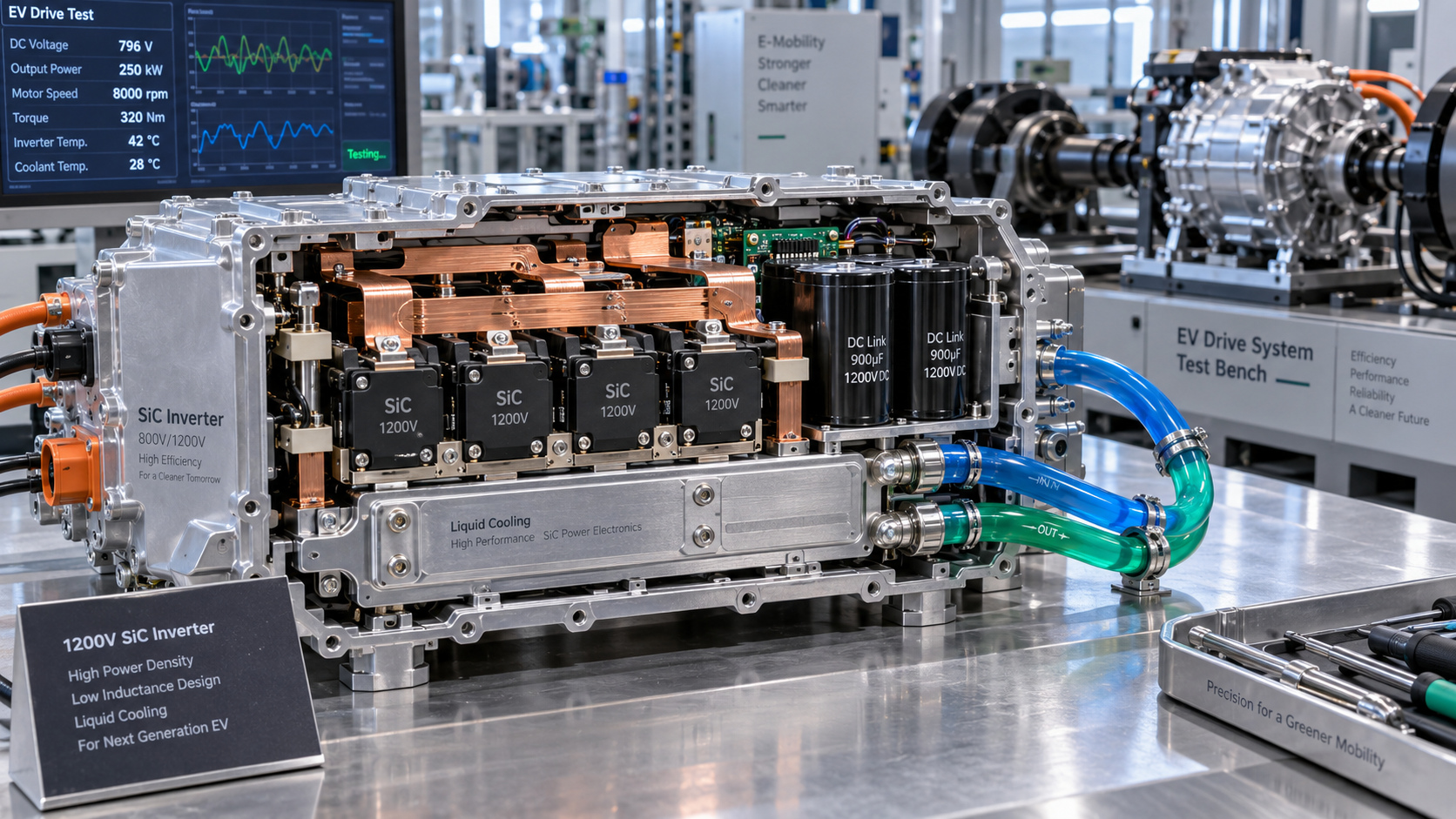
In power electronics, thermal cycling is rarely a laboratory abstraction. It is what happens when a traction inverter wakes up on a winter morning, when a fast charger repeatedly ramps under peak demand, or when a SiC-based converter moves between standby and full load hundreds of thousands of times over its service life. Under those conditions, the question is not simply which substrate insulates well or conducts heat efficiently. The harder question is which ceramic power electronics materials keep doing both after repeated expansion and contraction begin to fatigue the stack.
For technical evaluators, this is where material selection stops being a datasheet comparison and becomes a reliability decision. Thermal cycling performance depends on more than one number. Coefficient of thermal expansion (CTE), thermal conductivity, fracture toughness, metallization compatibility, substrate architecture, solder system, and die size all influence whether a ceramic survives gracefully or becomes the starting point of delamination, cracking, or bond degradation. That is especially true in SiC and GaN designs, where higher junction temperatures and steeper thermal gradients expose every weak interface in the package.
The short answer is that no single ceramic is “best” in every design. But if the selection criterion is specifically resistance to thermal cycling stress, silicon nitride generally leads for mechanically demanding power modules, while aluminum nitride and alumina remain relevant where thermal performance, cost, manufacturability, and voltage class must be balanced differently. Understanding why matters more than memorizing a ranking.
Why thermal cycling breaks ceramic substrate systems
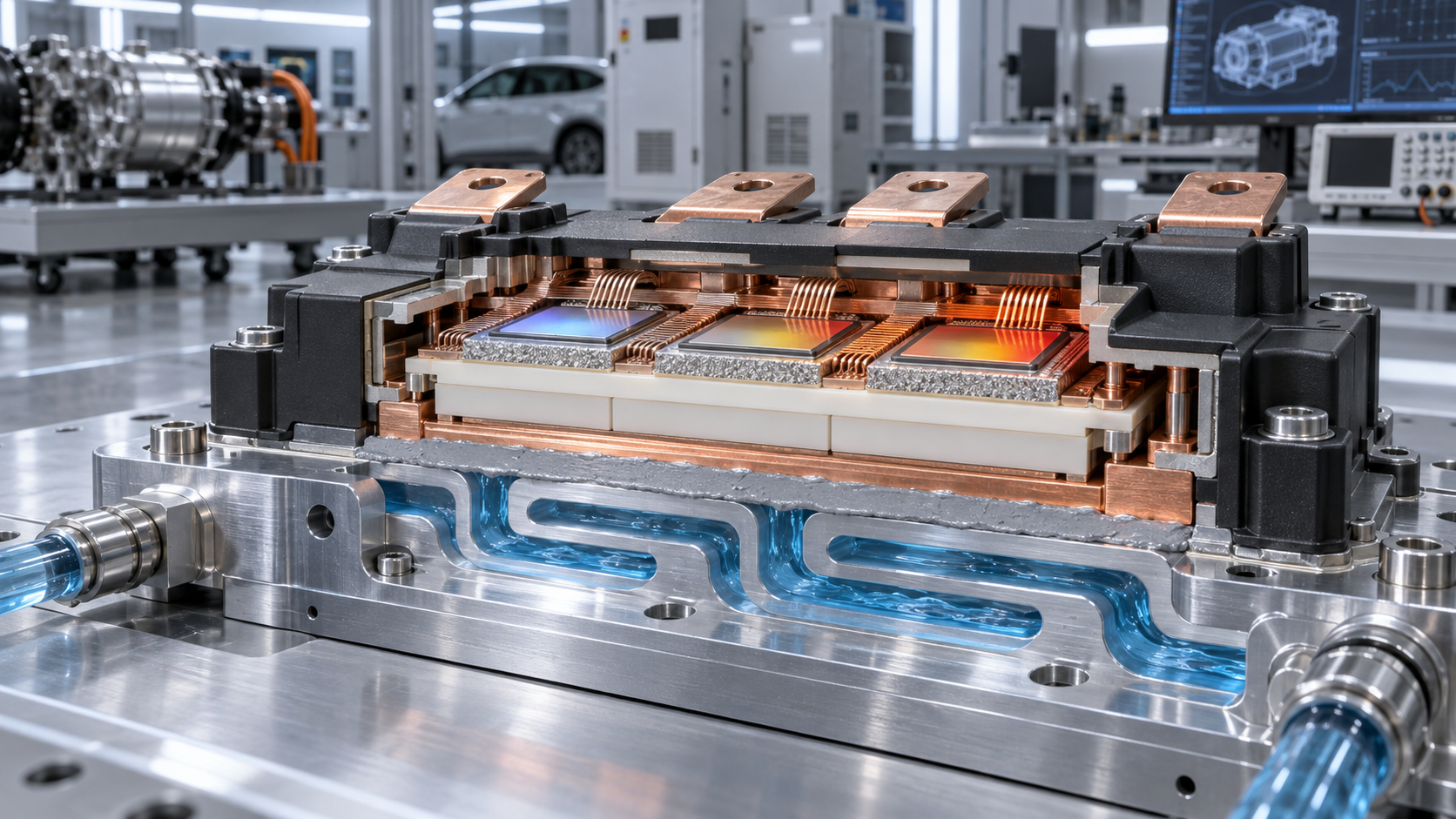
A ceramic substrate does not fail in isolation. It sits inside a layered structure: semiconductor die, die attach, metallization, ceramic, copper, baseplate or direct cooling interface, and encapsulation. Every layer expands at a different rate as temperature changes. Over time, those mismatches generate cyclic mechanical stress. If the substrate is too brittle, too stiff in the wrong way, or poorly matched to the rest of the stack, cracks can initiate at corners, metallization edges, vias, or solder joints.
Technical teams often focus first on thermal conductivity, and understandably so. Lower thermal resistance helps reduce junction temperature and improve efficiency. Yet a ceramic that moves heat well is not automatically the one that handles cycling best. In fact, some materials with attractive thermal conductivity can still underperform in reliability if their fracture toughness or resistance to crack propagation is weaker under repeated stress.
This is why power module qualification increasingly demands a system view aligned with reliability frameworks familiar to evaluators working against AEC, SEMI, or internal lifetime models. The substrate material must be judged not only by steady-state heat dissipation, but by how it behaves across thousands or millions of temperature excursions in the intended assembly process.
The three ceramic power electronics materials most often compared
For substrate selection in power modules, the conversation usually centers on three established ceramics: alumina (Al2O3), aluminum nitride (AlN), and silicon nitride (Si3N4). Each occupies a distinct position in the trade space.
Alumina: mature, economical, and still widely used
Alumina remains common because it is proven, available, and cost-effective. It offers good electrical insulation and acceptable mechanical properties for many industrial applications. For designs with moderate thermal loads or less aggressive cycling profiles, alumina may still be the right answer.
Its limitation is not that it is unusable in power electronics, but that it tends to be less forgiving as power density climbs. Thermal conductivity is substantially lower than AlN or Si3N4, which can push the module toward higher operating temperatures. Those higher temperatures then increase thermo-mechanical stress elsewhere in the package. In demanding SiC inverter environments, that becomes a serious drawback.
Aluminum nitride: strong thermal performance, but not always the cycling winner
AlN is attractive because it combines electrical insulation with high thermal conductivity, making it an obvious candidate for high-power density modules. When designers need to move heat quickly away from the die, AlN often enters the shortlist early.
However, thermal cycling is not governed by conductivity alone. AlN can be more vulnerable than silicon nitride in mechanically severe cycling conditions because fracture toughness and crack resistance are not as favorable. In practice, that means AlN may be excellent in applications where thermal management is the dominant concern and the mechanical loading profile is manageable, but not always ideal where extreme cycling endurance is the first priority.
Silicon nitride: the reliability-first choice for harsh cycling
If the evaluation is centered on repeated thermal cycling durability, silicon nitride is often the strongest candidate. Its key advantage is mechanical robustness. Compared with alumina and AlN, Si3N4 offers notably higher fracture toughness and better resistance to crack propagation. That resilience matters when the module is repeatedly pulled between hot and cold states and stress accumulates at the copper-ceramic interface.
Silicon nitride is therefore widely associated with applications where failure is expensive and downtime is intolerable: traction, e-mobility, renewable conversion, aerospace-adjacent electronics, and industrial systems with long service life expectations. It may not always have the highest thermal conductivity on paper, but it often wins where lifetime under cycling is what ultimately determines field performance.
So which material handles thermal cycling best?
For most high-reliability power module scenarios, silicon nitride handles thermal cycling best. That conclusion is especially defensible when evaluators are comparing ceramic substrates for high-power, high-frequency, or high-junction-temperature applications using SiC devices.
The reason is straightforward: thermal cycling failure is usually a mechanical reliability problem expressed through a thermal trigger. Si3N4 is better equipped to absorb and resist the resulting stress without catastrophic crack growth. In many module architectures, that makes it the safer long-life choice even if another ceramic offers a more appealing conductivity figure in isolation.
That said, “best” should always be filtered through the actual use case:
- Choose silicon nitride when cycling reliability, vibration tolerance, and lifetime confidence outweigh pure material cost considerations.
- Choose aluminum nitride when thermal conductivity is critical and the package design can control mechanical stress effectively.
- Choose alumina when budgets are tighter, thermal loads are lower, and the application does not justify premium substrate performance.
Where evaluators often go wrong
One common mistake is to compare ceramics as if they were interchangeable blocks with only two variables: cost and thermal conductivity. That can lead to poor decisions, especially when migrating from silicon-based power stages to SiC or GaN. Wide-bandgap devices switch faster, run hotter, and can produce more concentrated thermal stress. A substrate that was adequate in legacy IGBT platforms may become the weak point in a newer architecture.
Another mistake is evaluating the ceramic without enough attention to substrate type. Direct bonded copper (DBC) and active metal brazed (AMB) constructions behave differently. Silicon nitride is frequently used in AMB substrates because the architecture supports its mechanical advantages well. If an evaluator compares one ceramic in DBC form against another in AMB form without normalizing the assembly context, conclusions can become misleading.
A third issue is assuming that a lower CTE automatically means better cycling life. CTE matching certainly matters, especially relative to silicon or SiC die, but thermal cycling endurance is a combined result of expansion mismatch, elastic modulus, copper thickness, interface quality, and ceramic toughness. There is no single-property shortcut.
How to assess ceramic power electronics materials in a real sourcing decision
For technical assessment teams, the most useful approach is to build the evaluation around failure risk rather than material reputation. Start by defining the actual mission profile. How wide is the temperature swing? How quickly does the module heat and cool? How many cycles are expected over life? Is the design baseplate-free, double-sided cooled, or integrated into a high-vibration environment? A substrate choice that looks conservative in one context may be underbuilt in another.
Then examine the stack as a whole. Ask not only which ceramic is proposed, but how it is metallized, what copper thickness is used, what die attach process is planned, and whether the supplier has qualification evidence tied to similar operating conditions. In institutions and benchmarking environments such as G-SSI, this system-level discipline is essential because reliability claims only become meaningful when matched to process control and recognized standards frameworks.
It is also worth separating prototype success from production confidence. A module may pass initial thermal testing and still show degradation later in power cycling or environmental qualification. Technical evaluators should look for consistency in material quality, substrate flatness, bond integrity, and process repeatability across lots—not just nominal material identity.
Material selection by application pressure, not by trend
In automotive traction, onboard charging, and grid-tied conversion, the push toward higher efficiency has increased interest in SiC and advanced packaging. That trend naturally elevates silicon nitride because long-term durability becomes central once devices operate at higher temperatures and switching stress. In those environments, the incremental cost of a more robust ceramic may be easier to justify than the downstream cost of module failure.
In industrial drives, servo systems, UPS platforms, or telecom power, the answer can be more nuanced. Some programs need the thermal headroom of AlN. Others gain more value from the cost-performance balance of alumina, especially where thermal excursions are moderate and the packaging architecture is well understood. Good evaluation is rarely about selecting the most advanced material by default. It is about choosing the one whose failure modes are best aligned with the application’s tolerance.
A practical decision framework
If your core question is, “Which ceramic power electronics materials should we trust in severe thermal cycling?” the decision can be simplified into a few practical checks:
- Is the module for high-power density, high-junction-temperature, or safety-critical service? If yes, Si3N4 deserves priority review.
- Is heat spreading the main bottleneck while mechanical loading is relatively controlled? AlN may be a stronger candidate.
- Is the application cost-sensitive with moderate thermal stress and established field history? Alumina may remain entirely appropriate.
- Does the supplier provide qualification evidence relevant to your package structure, not just raw material properties?
- Have you evaluated substrate performance under realistic thermal cycling or power cycling conditions instead of relying solely on catalog comparisons?
Those questions tend to surface the real answer faster than broad material rankings.
Final perspective for technical evaluators
Among mainstream ceramic power electronics materials, silicon nitride generally offers the best resistance to thermal cycling because it brings the mechanical toughness needed to survive repeated stress without turning the substrate into the module’s reliability liability. Aluminum nitride remains highly valuable where thermal conductivity is the primary design pressure, while alumina continues to serve cost-conscious and less demanding applications well.
For decision-makers comparing substrates for SiC, GaN, and advanced power modules, the safest conclusion is not that one ceramic always wins. It is that thermal cycling performance should be judged in the context of the complete package, the actual mission profile, and the qualification discipline behind the supply chain. That is the level of scrutiny modern power electronics now demands—and the level at which material choices become defensible, durable, and aligned with real-world reliability expectations.
Get weekly intelligence in your inbox.
No noise. No sponsored content. Pure intelligence.
 Apr 28, 2026When do rapid prototyping 3D printing services save real costWhen do rapid prototyping 3D printing services save real cost
 Apr 28, 2026What Can Go Wrong in Fan-out Wafer Level Pkg?What Can Go Wrong in Fan-out Wafer Level Pkg?
 Apr 28, 2026What Makes Optical LiDAR Modules Better for Autonomy?What Makes Optical LiDAR Modules Better for Autonomy?
 Apr 28, 20262026 Market Trends in Supply Chain Resilience for Fabs2026 Market Trends in Supply Chain Resilience for Fabs
 Oct 10, 2026When do integrated sensor systems reduce commissioning risks?When do integrated sensor systems reduce commissioning risks?
 Oct 09, 2026How North American semiconductor fabs control airborne molecular contaminationHow North American semiconductor fabs control airborne molecular contamination
 Oct 08, 2026When do custom aluminum extrusions reduce fabrication costs?When do custom aluminum extrusions reduce fabrication costs?
 Oct 07, 2026How semiconductor packaging affects thermal reliability in EV power electronicsHow semiconductor packaging affects thermal reliability in EV power electronics
 Oct 06, 2026When do corrugated plastic boxes make sense for returnable shipping?When do corrugated plastic boxes make sense for returnable shipping?
 Oct 05, 2026What to verify before choosing semiconductor distributors in North AmericaWhat to verify before choosing semiconductor distributors in North America
 Oct 04, 2026How to assess a high purity materials manufacturer’s traceabilityHow to assess a high purity materials manufacturer’s traceability
 Oct 03, 2026How SiC power conversion solutions improve high-voltage invertersHow SiC power conversion solutions improve high-voltage inverters
 Oct 02, 2026When do SiC MOSFET benefits justify the higher device cost?When do SiC MOSFET benefits justify the higher device cost?
 Oct 01, 2026Which semiconductor reliability testing standards apply to power devices?Which semiconductor reliability testing standards apply to power devices?
 Sep 30, 2026How to qualify a semiconductor photoresist supplier for KrF/ArF productionHow to qualify a semiconductor photoresist supplier for KrF/ArF production
 Sep 29, 2026What image quality should portable ultrasound scanners deliver for triage?What image quality should portable ultrasound scanners deliver for triage?
 Sep 28, 2026How sub-ppb impurity control gases protect process consistencyHow sub-ppb impurity control gases protect process consistency
 Sep 27, 2026How chemical purity affects defect rates in semiconductor depositionHow chemical purity affects defect rates in semiconductor deposition
 Sep 26, 2026When do high voltage power semiconductor devices need SiC over IGBTs?When do high voltage power semiconductor devices need SiC over IGBTs?
 Sep 25, 2026How to verify quality controls at a die casting parts supplier in ChinaHow to verify quality controls at a die casting parts supplier in China
 Sep 24, 2026How to verify electronic gas purity for sub-ppb semiconductor processesHow to verify electronic gas purity for sub-ppb semiconductor processes
 Sep 23, 2026When sensory data integration improves industrial motion monitoringWhen sensory data integration improves industrial motion monitoring
 Sep 22, 2026How supply chain resilience reduces the cost of production disruptionsHow supply chain resilience reduces the cost of production disruptions
 Sep 21, 2026What autonomous systems OEMs should verify before sourcing LiDAR modulesWhat autonomous systems OEMs should verify before sourcing LiDAR modules
 Sep 20, 2026How gas purity affects defect density in epitaxial wafer growthHow gas purity affects defect density in epitaxial wafer growth
 Sep 19, 2026How substrate defects affect third-generation material device yieldHow substrate defects affect third-generation material device yield
 Sep 18, 2026How trace impurities in specialty process gases affect wafer yieldHow trace impurities in specialty process gases affect wafer yield