Case Studies: Reducing Downtime With Thermal Interface Materials
Why Case Studies Matter When Downtime Starts With Heat
Case Studies around thermal interface materials become valuable when failures look electrical, mechanical, or software-related at first glance.
In semiconductor and sensory-infrastructure systems, heat rarely stays a local issue. It changes signal stability, package stress, cycle time, and service intervals.
That is especially relevant in the G-SSI context, where reliability, thermal control, and data fidelity are tied to sovereign-grade digital infrastructure.
The practical lesson from many Case Studies is simple: the correct thermal interface material reduces unplanned downtime only when it matches the real operating condition.
A pad that works in a lab validation rack may underperform inside a SiC inverter, a MEMS sensing node, or a contamination-sensitive packaging tool.
So the useful question is not which material has the highest published conductivity. The useful question is where thermal transfer actually breaks down.
The First Judgement Is Always the Operating Scene
Different scenes create different failure patterns because heat path geometry, pressure, contamination risk, vibration, and maintenance frequency are never identical.
In actual field work, thermal interface materials succeed or fail through contact quality more often than through headline conductivity values.
A thin bond line may improve heat transfer in one assembly, yet become unstable after repeated thermal cycling in another.
That is why Case Studies from integrated circuits, power modules, smart sensors, and fab environment equipment should not be treated as interchangeable evidence.
More often, the sound approach is to classify the scene by stress profile, access difficulty, cleanliness requirement, and acceptable downtime window.
Where the differences usually appear
Power Conversion Lines Need Stability More Than Peak Numbers
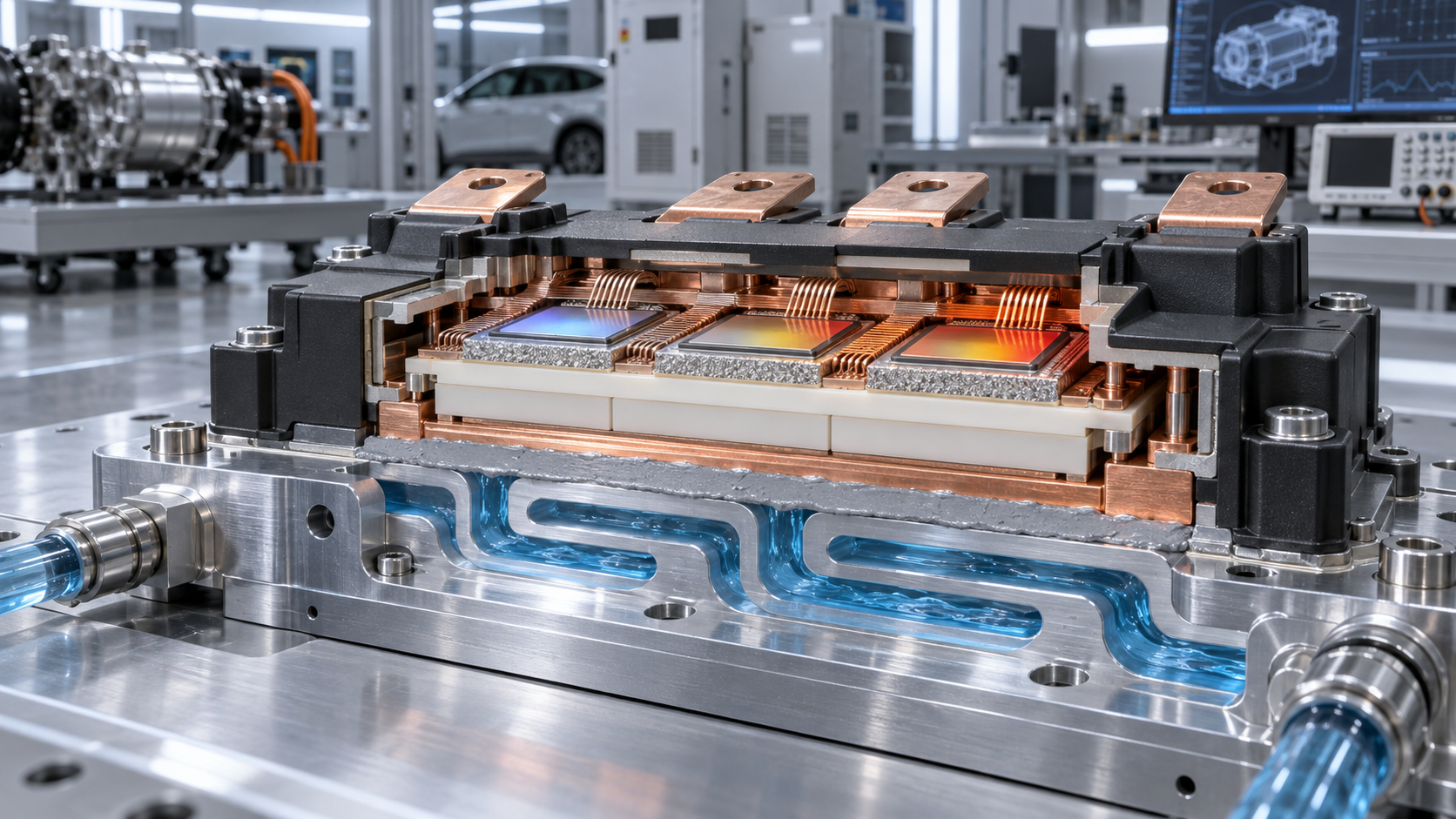
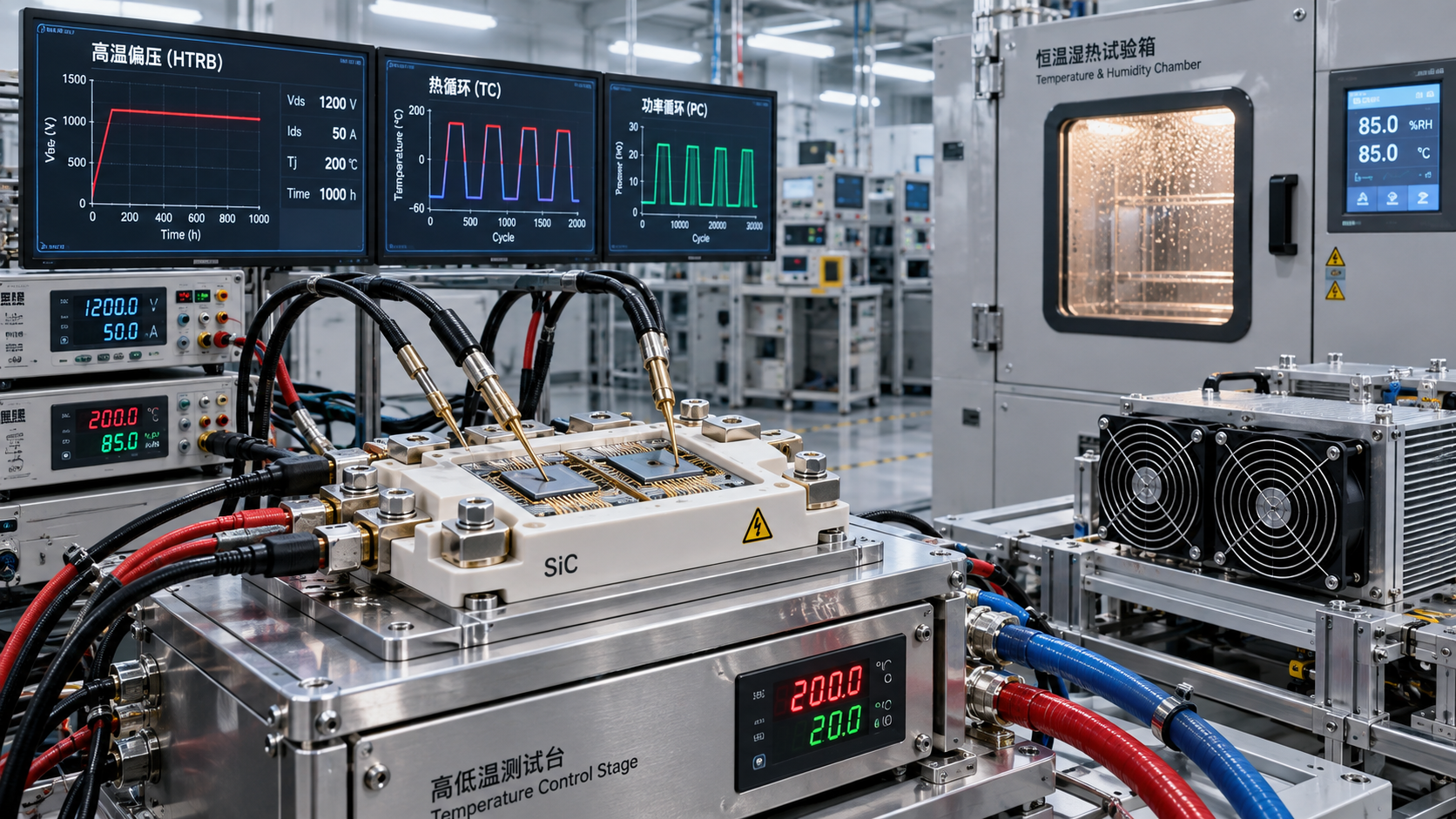
One recurring pattern in Case Studies involves SiC power modules used in high-efficiency conversion cabinets and industrial drive platforms.
Initial commissioning often looks clean. Thermal resistance appears acceptable, and electrical performance stays within target.
Problems emerge later, after cycling. The material migrates, loses conformity, or cannot absorb surface unevenness under changing pressure.
The result is not always immediate failure. More often, there is rising junction temperature, intermittent derating, and maintenance events that seem random.
In this scene, the better choice is frequently a material with balanced thermal conductivity, mechanical compliance, and durable interface contact.
Case Studies from these assets show that reducing downtime depends on life-cycle behavior, not brochure performance measured under ideal pressure.
What usually improves the outcome
- Map heat density by module position, not by cabinet average.
- Confirm mounting force consistency across service cycles.
- Check whether rework practice changes bond line thickness.
- Review cycling data before assuming a higher conductivity grade is enough.
Packaging and Test Equipment Often Fail Through Contamination Limits
A very different picture appears in advanced packaging, burn-in fixtures, and precision test benches.
Here, downtime is not driven only by overheating. It is often caused by thermal non-uniformity, residue, particle concerns, or unstable contact during repeated handling.
Several Case Studies show that a grease or gel with strong thermal performance can still create hidden process losses if outgassing affects clean assemblies.
That matters in G-SSI benchmark environments tied to SEMI discipline and high-yield packaging lines, where reliability includes cleanliness and repeatability.
In this scene, thermal interface materials must be judged alongside contamination behavior, residue control, and replacement consistency.
A lower-maintenance interface can reduce downtime more effectively than an aggressive thermal compound that complicates cleaning and tool recovery.
Sensor Infrastructure Has a Narrower Margin for Thermal Drift
MEMS devices and smart sensor assemblies create another category where the thermal question is closely linked to data integrity.
When the interface material changes heat spread near sensing elements, it can alter calibration stability, response timing, and long-term measurement confidence.
That is why Case Studies in sensory-infrastructure systems should examine thermal transfer and signal behavior together.
A material that protects nearby processors may still impose mechanical stress on fragile sensor packaging if hardness, expansion mismatch, or assembly pressure is ignored.
In practice, the winning choice is often the one that preserves stable sensing conditions over time, even if it is not the most thermally aggressive option.
This is particularly relevant for industrial perception layers supporting autonomous control, where bad data can be as disruptive as equipment stoppage.
Environmental Control Equipment Brings a Longer Service Horizon
Fab air handling units, control cabinets, gas monitoring electronics, and thermal regulation modules usually run under continuous duty.
Here, downtime often arrives slowly. Temperatures climb over months, fan loads increase, and control boards age faster than expected.
Case Studies in these environments repeatedly show the cost of choosing thermal interface materials only by purchase price.
Once access is difficult, the true cost comes from technician time, production interruption, contamination protocols, and validation after replacement.
This scene usually rewards materials with dependable compression set, predictable aging, and easy installation under field constraints.
A practical comparison across common scenes
Where Case Studies Often Reveal Misjudgment
One common mistake is treating similar thermal loads as identical applications. A 1200V SiC assembly and a sensor gateway may reject heat differently.
Another is focusing on material datasheets without checking flatness, clamp variation, surface finish, and reassembly discipline.
Case Studies also expose a recurring gap between qualification tests and field conditions.
Lab evaluation may skip dust exposure, service delays, vibration, or mixed thermal loads from nearby electronics.
There is also the cost mistake. Low material price can look efficient until recurring shutdowns make replacement labor the dominant expense.
In regulated or benchmarked environments, ignoring compatibility with SEMI, AEC-Q100 logic, or traceability expectations can create secondary downtime during audits and validation.
A Better Way to Match Thermal Interface Materials to Real Use
Useful Case Studies do more than report temperature reduction. They connect thermal behavior to uptime, maintenance effort, and asset life.
Before making changes, it helps to document the actual failure mode in each scene.
- Define whether the downtime event begins with heat, contamination, stress, or unstable readings.
- Measure interface aging across realistic cycles, not only initial thermal resistance.
- Compare installation difficulty with the allowed recovery window on site.
- Check alignment with cleanliness, qualification, and traceability requirements.
- Build separate selection criteria for power, packaging, sensing, and environment-control assets.
That approach fits the G-SSI view of technical benchmarking: reliability decisions should be grounded in operational evidence, not generic assumptions.
The next step is to sort current downtime records by application scene, compare thermal symptoms against service history, and define material selection rules around real constraints.
When Case Studies are used that way, thermal interface materials stop being a minor consumable and become a direct control point for continuity.
Get weekly intelligence in your inbox.
No noise. No sponsored content. Pure intelligence.
 Apr 28, 2026When do rapid prototyping 3D printing services save real costWhen do rapid prototyping 3D printing services save real cost
 Apr 28, 2026What Can Go Wrong in Fan-out Wafer Level Pkg?What Can Go Wrong in Fan-out Wafer Level Pkg?
 Apr 28, 2026What Makes Optical LiDAR Modules Better for Autonomy?What Makes Optical LiDAR Modules Better for Autonomy?
 Apr 28, 20262026 Market Trends in Supply Chain Resilience for Fabs2026 Market Trends in Supply Chain Resilience for Fabs
 Oct 10, 2026When do integrated sensor systems reduce commissioning risks?When do integrated sensor systems reduce commissioning risks?
 Oct 09, 2026How North American semiconductor fabs control airborne molecular contaminationHow North American semiconductor fabs control airborne molecular contamination
 Oct 08, 2026When do custom aluminum extrusions reduce fabrication costs?When do custom aluminum extrusions reduce fabrication costs?
 Oct 07, 2026How semiconductor packaging affects thermal reliability in EV power electronicsHow semiconductor packaging affects thermal reliability in EV power electronics
 Oct 06, 2026When do corrugated plastic boxes make sense for returnable shipping?When do corrugated plastic boxes make sense for returnable shipping?
 Oct 05, 2026What to verify before choosing semiconductor distributors in North AmericaWhat to verify before choosing semiconductor distributors in North America
 Oct 04, 2026How to assess a high purity materials manufacturer’s traceabilityHow to assess a high purity materials manufacturer’s traceability
 Oct 03, 2026How SiC power conversion solutions improve high-voltage invertersHow SiC power conversion solutions improve high-voltage inverters
 Oct 02, 2026When do SiC MOSFET benefits justify the higher device cost?When do SiC MOSFET benefits justify the higher device cost?
 Oct 01, 2026Which semiconductor reliability testing standards apply to power devices?Which semiconductor reliability testing standards apply to power devices?
 Sep 30, 2026How to qualify a semiconductor photoresist supplier for KrF/ArF productionHow to qualify a semiconductor photoresist supplier for KrF/ArF production
 Sep 29, 2026What image quality should portable ultrasound scanners deliver for triage?What image quality should portable ultrasound scanners deliver for triage?
 Sep 28, 2026How sub-ppb impurity control gases protect process consistencyHow sub-ppb impurity control gases protect process consistency
 Sep 27, 2026How chemical purity affects defect rates in semiconductor depositionHow chemical purity affects defect rates in semiconductor deposition
 Sep 26, 2026When do high voltage power semiconductor devices need SiC over IGBTs?When do high voltage power semiconductor devices need SiC over IGBTs?
 Sep 25, 2026How to verify quality controls at a die casting parts supplier in ChinaHow to verify quality controls at a die casting parts supplier in China
 Sep 24, 2026How to verify electronic gas purity for sub-ppb semiconductor processesHow to verify electronic gas purity for sub-ppb semiconductor processes
 Sep 23, 2026When sensory data integration improves industrial motion monitoringWhen sensory data integration improves industrial motion monitoring
 Sep 22, 2026How supply chain resilience reduces the cost of production disruptionsHow supply chain resilience reduces the cost of production disruptions
 Sep 21, 2026What autonomous systems OEMs should verify before sourcing LiDAR modulesWhat autonomous systems OEMs should verify before sourcing LiDAR modules
 Sep 20, 2026How gas purity affects defect density in epitaxial wafer growthHow gas purity affects defect density in epitaxial wafer growth
 Sep 19, 2026How substrate defects affect third-generation material device yieldHow substrate defects affect third-generation material device yield
 Sep 18, 2026How trace impurities in specialty process gases affect wafer yieldHow trace impurities in specialty process gases affect wafer yield