Aluminum Extrusions for Automotive Lightweighting Costs
For financial decision-makers, lightweighting is no longer a design preference—it is a capital allocation question tied to efficiency, compliance, and long-term platform value. As OEMs and suppliers evaluate aluminum extrusions for automotive industry applications, the real cost picture extends beyond material pricing to tooling, joining, crash performance, thermal behavior, and scalable supply. This article examines the cost drivers behind aluminum extrusion adoption, helping finance teams assess ROI, risk, and lifecycle value in modern vehicle architectures.
In electric, hybrid, and sensor-rich vehicles, extrusion programs now intersect with battery enclosures, crash rails, roof structures, power electronics housings, and ADAS mounting systems. For finance teams, the relevant question is not whether aluminum is lighter than steel, but where its total economic contribution exceeds its premium.
G-SSI views this decision through a broader industrial lens: high-efficiency power conversion, thermal reliability, semiconductor-grade sensing, and scalable manufacturing discipline. Those same priorities shape how aluminum extrusions for automotive industry platforms should be costed, qualified, and approved.
Why Extrusion Costs Matter in Modern Vehicle Platforms
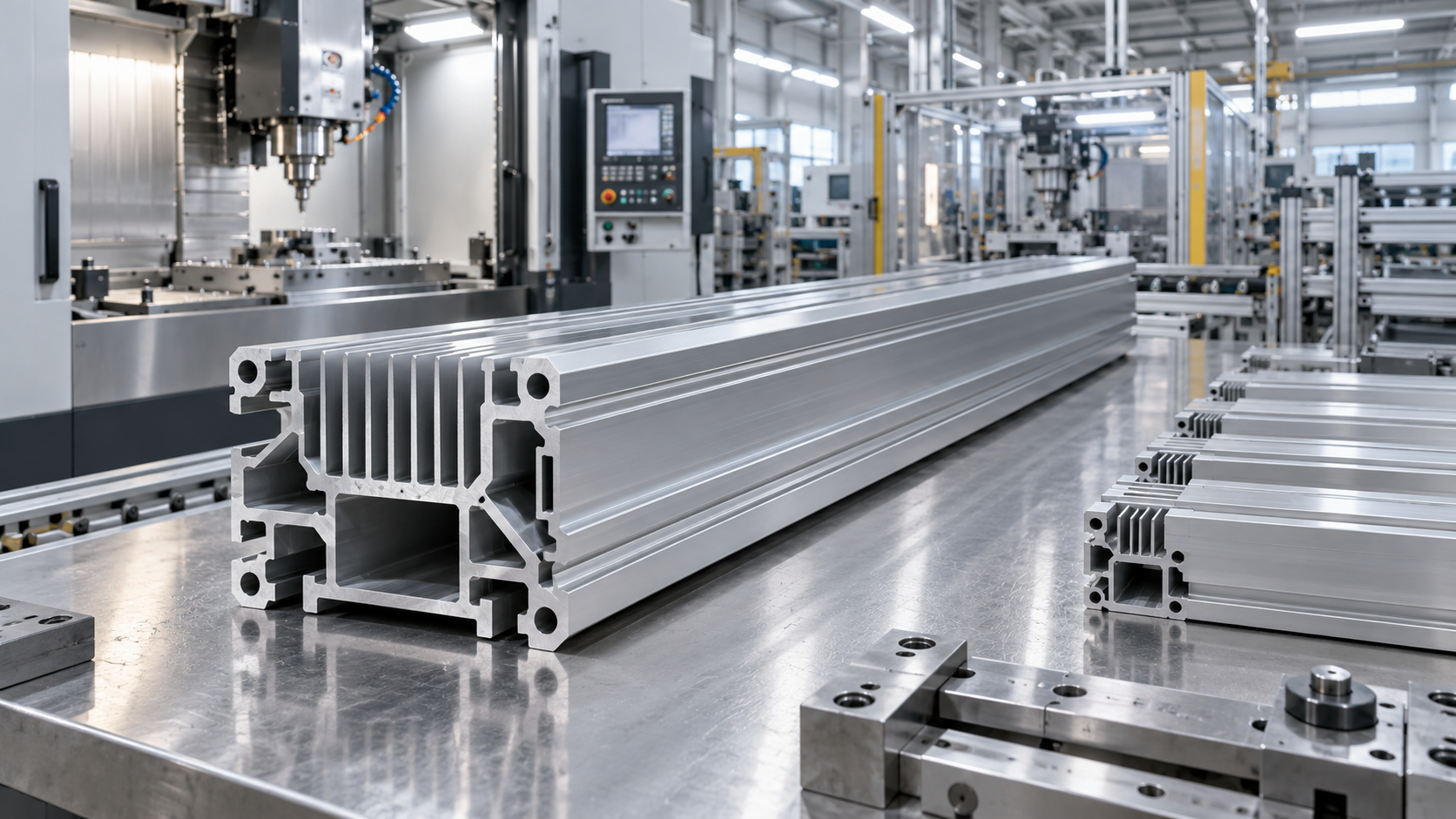
Aluminum extrusion converts heated billets into engineered profiles, allowing designers to integrate ribs, hollows, channels, and fastening features into one continuous section. This can reduce part count by 2–6 components in selected assemblies.
For aluminum extrusions for automotive industry programs, the strongest financial cases often appear in repeatable, platform-level parts. Battery trays, rocker reinforcements, bumper beams, and thermal management structures can run across 3–7 model years.
From Material Price to System Economics
Finance teams should avoid evaluating extrusions only by price per kilogram. A more complete view includes weight reduction, tooling amortization, scrap recovery, joining labor, dimensional repeatability, and downstream warranty exposure.
A 10 kg reduction in a battery electric vehicle may influence range, payload, braking load, or battery sizing assumptions. The financial value depends on the architecture, annual volume, and regulatory environment.
- Direct cost: billet alloy, extrusion conversion, heat treatment, machining, surface treatment, and logistics.
- Program cost: die design, validation builds, crash testing, process capability studies, and PPAP documentation.
- Lifecycle cost: corrosion durability, repair strategy, scrap value, warranty risk, and platform reuse.
Cost Drivers Finance Teams Should Isolate
The table below outlines major cost drivers that typically affect aluminum extrusions for automotive industry sourcing decisions. It helps approval teams separate unavoidable engineering cost from negotiable commercial cost.
The key conclusion is simple: the cheapest profile is rarely the lowest-cost system. A slightly more expensive extrusion may remove welding fixtures, reduce machining minutes, or improve first-pass yield.
Financial Evaluation Framework for Automotive Lightweighting
A rigorous business case should compare aluminum extrusion against stamped steel, cast aluminum, roll-formed steel, and composite alternatives. Each option carries different capex, cycle time, weight, repairability, and supply risk.
For aluminum extrusions for automotive industry programs, cost approval should include at least 5 financial checkpoints: baseline part cost, tooling investment, assembly impact, lifecycle risk, and exit strategy.
A 5-Step ROI Model
- Define the baseline architecture, including weight, number of parts, joining steps, and inspection frequency.
- Quantify extrusion investment, including die cost, prototype loops, machining fixtures, and validation testing.
- Model operational savings over 3–7 years, not only during the sourcing year.
- Stress-test commodity sensitivity using aluminum price bands and scrap recovery assumptions.
- Assign risk reserves for launch delay, joining rework, crash redesign, or supplier capacity constraints.
The model should not assume uniform savings across every vehicle line. A high-volume SUV, a commercial van, and a premium EV may produce different payback periods.
Where the Business Case Is Strongest
Aluminum extrusions are most financially attractive when structural efficiency, thermal function, and packaging flexibility are required at the same time. This is common in EV and autonomous platforms.
For example, an extruded battery enclosure side rail can combine crash load paths, coolant channel support, sealing surfaces, and mounting features. That integration can reduce assembly operations by 20–40 percent in selected designs.
Applications Relevant to Sensor-Rich Vehicles
As vehicles rely on radar, LiDAR, cameras, MEMS sensors, and power modules, mechanical structures must control vibration, heat, and dimensional stability. This aligns with G-SSI’s focus on perception integrity.
- ADAS brackets and rails requiring stable geometry across temperature swings.
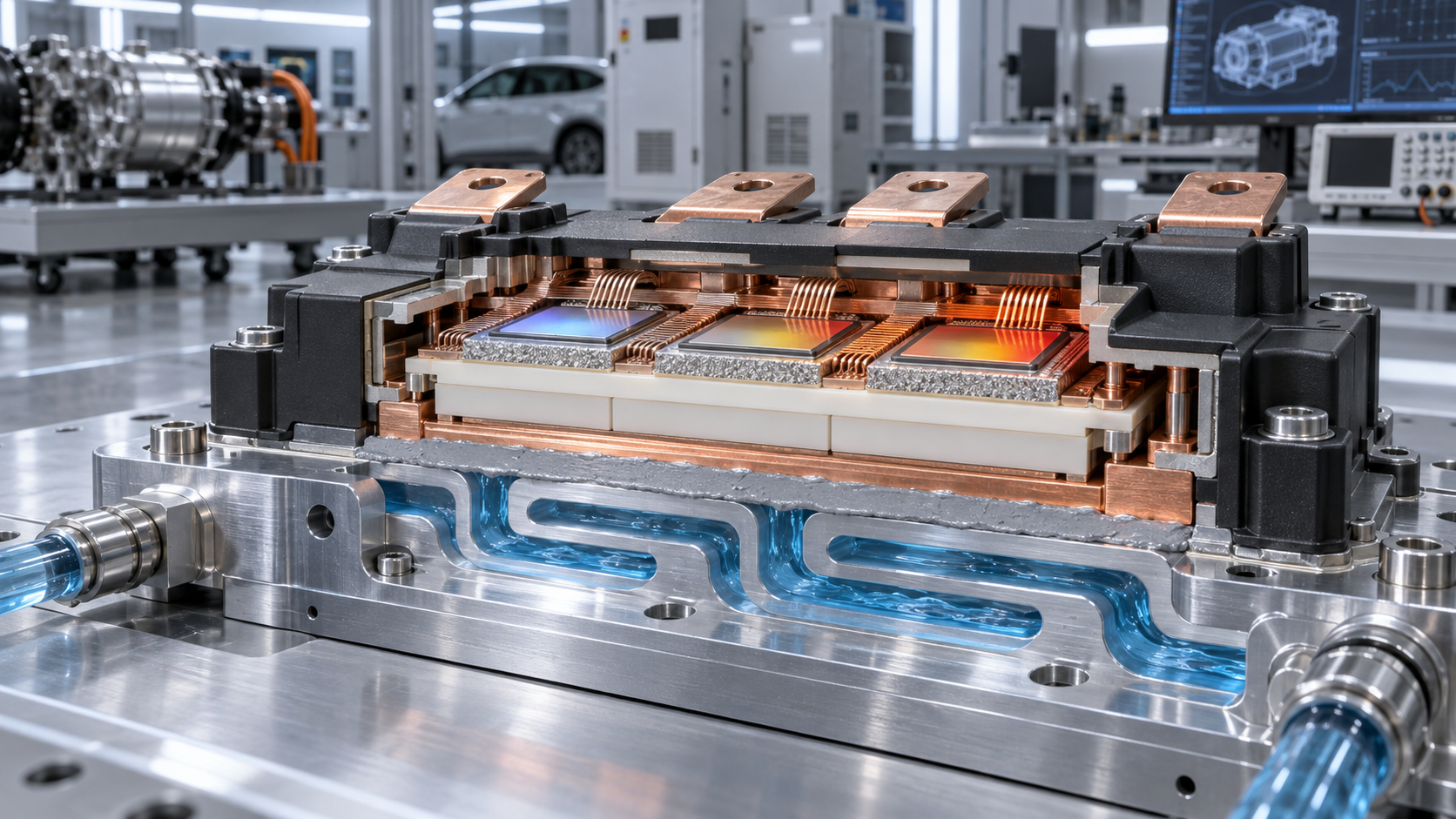
- Power electronics housings supporting heat dissipation near SiC or GaN-based systems.
- Battery pack structures requiring crash energy management and repeatable sealing interfaces.
- Autonomous shuttle frames needing modularity for sensors, wiring, and service access.
Technical Risks That Can Become Financial Liabilities
Financial approval should never treat lightweighting as an isolated engineering upgrade. If crash, corrosion, thermal expansion, or joining behavior is misjudged, savings can disappear during validation.
Aluminum extrusions for automotive industry programs require early coordination between product engineering, purchasing, manufacturing, quality, and finance. A late profile change can add 4–10 weeks to launch timing.
Crash Performance and Energy Absorption
Extrusions are widely used in crash rails and bumper beams because hollow sections can be tuned for progressive collapse. However, wall thickness and temper control are critical.
A profile optimized only for weight may fail to meet crush-force targets. Finance teams should require evidence from simulation, prototype testing, and process capability before approving aggressive gauge reduction.
Joining, Galvanic Corrosion, and Repair Cost
Joining aluminum to steel, fasteners, or battery enclosure components introduces corrosion and service questions. Adhesive bonding, self-piercing rivets, friction stir welding, and mechanical fastening each affect cost.
The following table connects technical risk to approval controls. It is especially useful when reviewing supplier quotations for aluminum extrusions for automotive industry contracts.
The strongest quotations make risk visible. A lower unit price without process controls may shift cost into launch delay, quality containment, or warranty reserves.
Procurement Benchmarks and Supplier Qualification
Sourcing aluminum extrusions for automotive industry applications requires more than checking press size and price. Finance teams should ask whether the supplier can operate under automotive documentation discipline.
Typical approval packages may include material traceability, dimensional reports, process flow diagrams, control plans, failure mode analysis, and production part approval documentation. These items protect margin during scale-up.
Commercial Terms That Affect Real Cost
Quotation comparisons should normalize billet index mechanisms, scrap credit, tooling ownership, die maintenance, engineering change fees, and minimum order quantities. Otherwise, a 5 percent price gap may be misleading.
- Tooling ownership: confirm whether the buyer can transfer dies if supply risk increases.
- Scrap accounting: clarify whether offcuts, machining chips, and rejected profiles generate credit.
- Index adjustment: define metal surcharge frequency, often monthly or quarterly.
- Change control: price engineering changes before design freeze, not during launch crisis.
- Logistics model: compare local machining, regional stocking, and direct-to-line delivery.
Quality Standards and Documentation Expectations
Automotive qualification should align with recognized quality systems and customer-specific requirements. While each OEM differs, finance teams can request comparable evidence across all bidders.
For sensor and power electronics structures, G-SSI recommends additional attention to thermal paths, contamination control, and dimensional repeatability. Small deviations can affect cooling efficiency or sensing accuracy.
Practical Qualification Checklist
- Review 3 years of relevant extrusion experience in structural or thermal automotive components.
- Verify process capability targets for critical dimensions, often expressed through Cp and Cpk metrics.
- Confirm heat treatment controls, including temperature windows, aging time, and lot traceability.
- Assess secondary operation capacity for cutting, bending, CNC machining, coating, and assembly.
- Require a launch plan with milestones at 30, 60, 90, and 120 days before start of production.
- Evaluate financial stability, backup tooling policy, and dual-source feasibility for strategic parts.
How G-SSI Frames Lightweighting Within Digital Infrastructure
The automotive industry is becoming a mobile semiconductor, sensing, and power conversion platform. Structural materials now support the reliability of electronics, perception systems, and high-voltage architectures.
G-SSI’s benchmarking perspective helps connect aluminum extrusions for automotive industry decision-making with semiconductor-grade thinking: thermal management, data fidelity, environmental control, and resilient supply chains.
Thermal Management as a Financial Variable
EV inverters, onboard chargers, battery systems, and sensor modules operate within defined thermal windows. Extruded aluminum can contribute heat spreading and packaging efficiency when designed correctly.
A structure that improves thermal stability may reduce derating, protect power semiconductor life, or simplify cooling hardware. These benefits should be quantified during 2–4 early design review cycles.
Supply Chain Resilience and Sovereign Manufacturing
Lightweighting programs can fail financially when commodity exposure and geographic concentration are ignored. Aluminum supply, billet availability, energy pricing, and extrusion press capacity all influence continuity.
Finance leaders should require sourcing scenarios for normal demand, peak demand, and disruption periods. A 2-supplier strategy may be more expensive upfront but safer for platform-critical components.
Questions for the Approval Meeting
- Does the extrusion reduce total assembled cost, or only vehicle mass?
- Are crash, thermal, corrosion, and service tests funded before sourcing freeze?
- Can the supplier support expected volume within 6–12 month ramp requirements?
- Are tooling ownership and die maintenance terms clear enough for long programs?
- Is there a measurable link to range, compliance, payload, or electronics reliability?
Practical Guidance for Cost Approval and Next Steps
Finance teams should treat aluminum extrusions as engineered systems, not commodity shapes. The right approval package balances unit price, validation cost, operating savings, and risk reserves.
For aluminum extrusions for automotive industry platforms, the strongest commercial decisions emerge when procurement, engineering, and finance align before final geometry. Early collaboration prevents costly redesign after tooling release.
Recommended Decision Path
- Screen candidate applications by annual volume, mass-reduction value, and integration potential.
- Build a total cost model covering material, tooling, joining, testing, logistics, and scrap recovery.
- Request supplier responses using the same assumptions for alloy, tolerance, volume, and delivery terms.
- Validate manufacturability through prototype lots, measurement reports, and assembly trials.
- Approve the program only after risk owners and financial reserves are clearly assigned.
Lightweighting delivers the best return when it improves the platform, not just the bill of materials. Aluminum extrusion can be a high-value choice when its structural, thermal, and manufacturing advantages are measured correctly.
G-SSI supports decision-makers evaluating advanced manufacturing, power electronics, sensing infrastructure, and resilient supply chains. For tailored benchmarking on aluminum extrusions for automotive industry programs, contact us to discuss your cost model, technical risks, and qualification roadmap.
If your team is preparing a lightweighting investment review, get a customized assessment, consult product details, or learn more solutions that connect vehicle architecture with long-term financial performance.
Get weekly intelligence in your inbox.
No noise. No sponsored content. Pure intelligence.
 Apr 28, 2026When do rapid prototyping 3D printing services save real costWhen do rapid prototyping 3D printing services save real cost
 Apr 28, 2026What Can Go Wrong in Fan-out Wafer Level Pkg?What Can Go Wrong in Fan-out Wafer Level Pkg?
 Apr 28, 2026What Makes Optical LiDAR Modules Better for Autonomy?What Makes Optical LiDAR Modules Better for Autonomy?
 Apr 28, 20262026 Market Trends in Supply Chain Resilience for Fabs2026 Market Trends in Supply Chain Resilience for Fabs
 Oct 13, 2026When does parallel testing cut high-volume semiconductor testing costs?When does parallel testing cut high-volume semiconductor testing costs?
 Oct 12, 2026Electronics Supply Chain Resilience: When to Dual-Source or Hold Safety StockElectronics Supply Chain Resilience: When to Dual-Source or Hold Safety Stock
 Oct 12, 2026What Should You Check Before Switching KrF/ArF Photoresist Suppliers?What Should You Check Before Switching KrF/ArF Photoresist Suppliers?
 Oct 12, 2026When does fan-out wafer level packaging outperform flip-chip packaging?When does fan-out wafer level packaging outperform flip-chip packaging?
 Oct 11, 2026How energy management can reduce peak demand chargesHow energy management can reduce peak demand charges
 Oct 10, 2026When do integrated sensor systems reduce commissioning risks?When do integrated sensor systems reduce commissioning risks?
 Oct 09, 2026How North American semiconductor fabs control airborne molecular contaminationHow North American semiconductor fabs control airborne molecular contamination
 Oct 08, 2026When do custom aluminum extrusions reduce fabrication costs?When do custom aluminum extrusions reduce fabrication costs?
 Oct 07, 2026How semiconductor packaging affects thermal reliability in EV power electronicsHow semiconductor packaging affects thermal reliability in EV power electronics
 Oct 06, 2026When do corrugated plastic boxes make sense for returnable shipping?When do corrugated plastic boxes make sense for returnable shipping?
 Oct 05, 2026What to verify before choosing semiconductor distributors in North AmericaWhat to verify before choosing semiconductor distributors in North America
 Oct 04, 2026How to assess a high purity materials manufacturer’s traceabilityHow to assess a high purity materials manufacturer’s traceability
 Oct 03, 2026How SiC power conversion solutions improve high-voltage invertersHow SiC power conversion solutions improve high-voltage inverters
 Oct 02, 2026When do SiC MOSFET benefits justify the higher device cost?When do SiC MOSFET benefits justify the higher device cost?
 Oct 01, 2026Which semiconductor reliability testing standards apply to power devices?Which semiconductor reliability testing standards apply to power devices?
 Sep 30, 2026How to qualify a semiconductor photoresist supplier for KrF/ArF productionHow to qualify a semiconductor photoresist supplier for KrF/ArF production
 Sep 29, 2026What image quality should portable ultrasound scanners deliver for triage?What image quality should portable ultrasound scanners deliver for triage?
 Sep 28, 2026How sub-ppb impurity control gases protect process consistencyHow sub-ppb impurity control gases protect process consistency
 Sep 27, 2026How chemical purity affects defect rates in semiconductor depositionHow chemical purity affects defect rates in semiconductor deposition
 Sep 26, 2026When do high voltage power semiconductor devices need SiC over IGBTs?When do high voltage power semiconductor devices need SiC over IGBTs?
 Sep 25, 2026How to verify quality controls at a die casting parts supplier in ChinaHow to verify quality controls at a die casting parts supplier in China
 Sep 24, 2026How to verify electronic gas purity for sub-ppb semiconductor processesHow to verify electronic gas purity for sub-ppb semiconductor processes
 Sep 23, 2026When sensory data integration improves industrial motion monitoringWhen sensory data integration improves industrial motion monitoring