Toshiba SiC MOSFET Samples Target HVDC Compliance
Image distribution plan
No image placeholders are required for this article. The article is structured as a text-based industry update focused on certification readiness, standards alignment, and supply chain implications.
While the exact event date was not specified, the provided information states that Toshiba has opened global sample availability for the 1200V trench-gate SiC MOSFET TW007D120E, a move relevant to HVDC power systems, photovoltaic inverters, and electric vehicle charging stations because it connects device selection with EN 62368-3:2026 hot-state EMI pre-compliance preparation and import certification readiness.
Confirmed Details on the TW007D120E Sample Release
According to the provided summary, Toshiba formally began shipping test samples of the 1200V trench-gate SiC MOSFET TW007D120E to global customers on May 21, 2026.
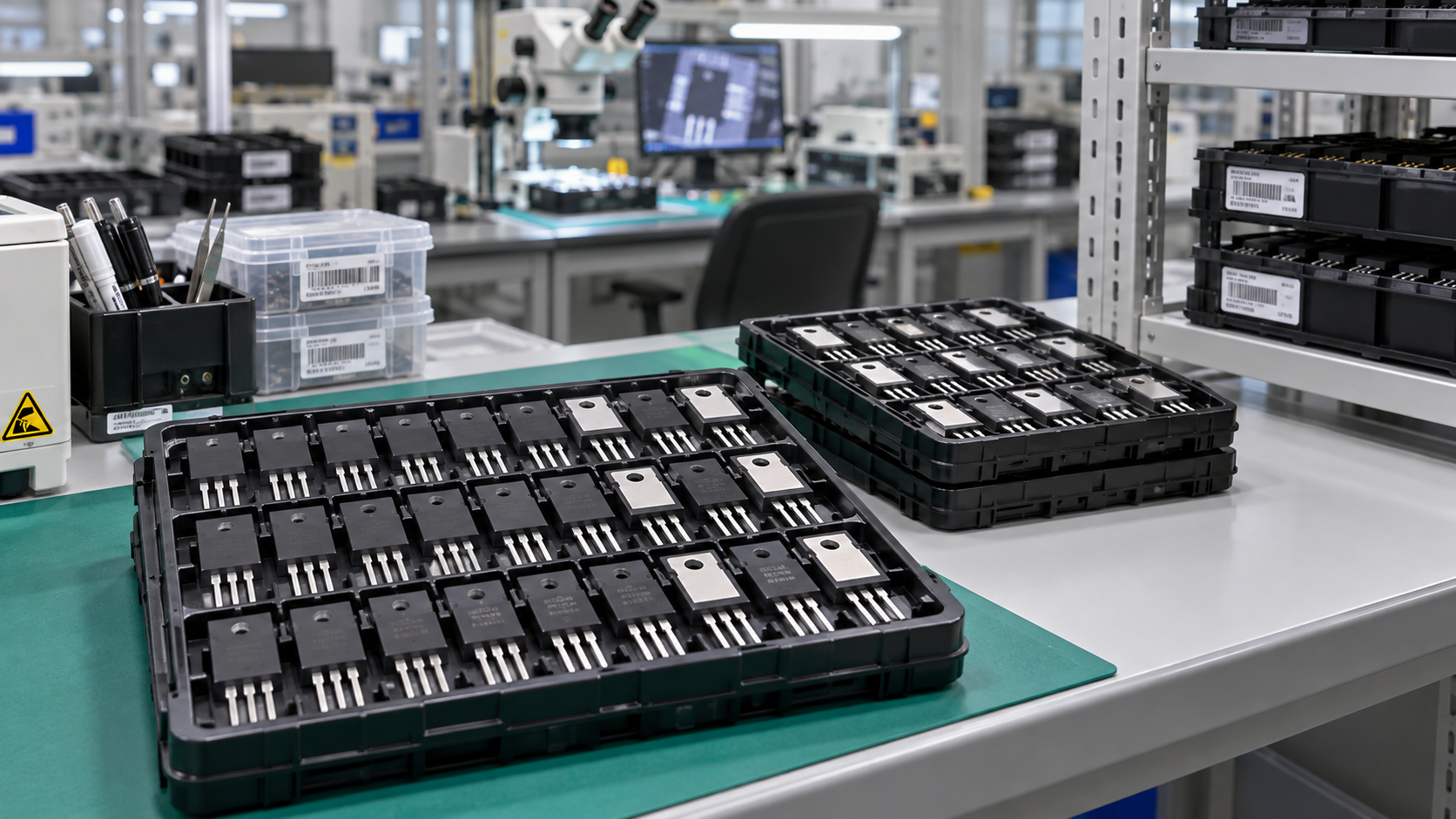
The device uses a high-thermal-performance QDPAK package and supports 15–18V gate drive operation. The summary also states that its RDS(on)A has been reduced by 58%.
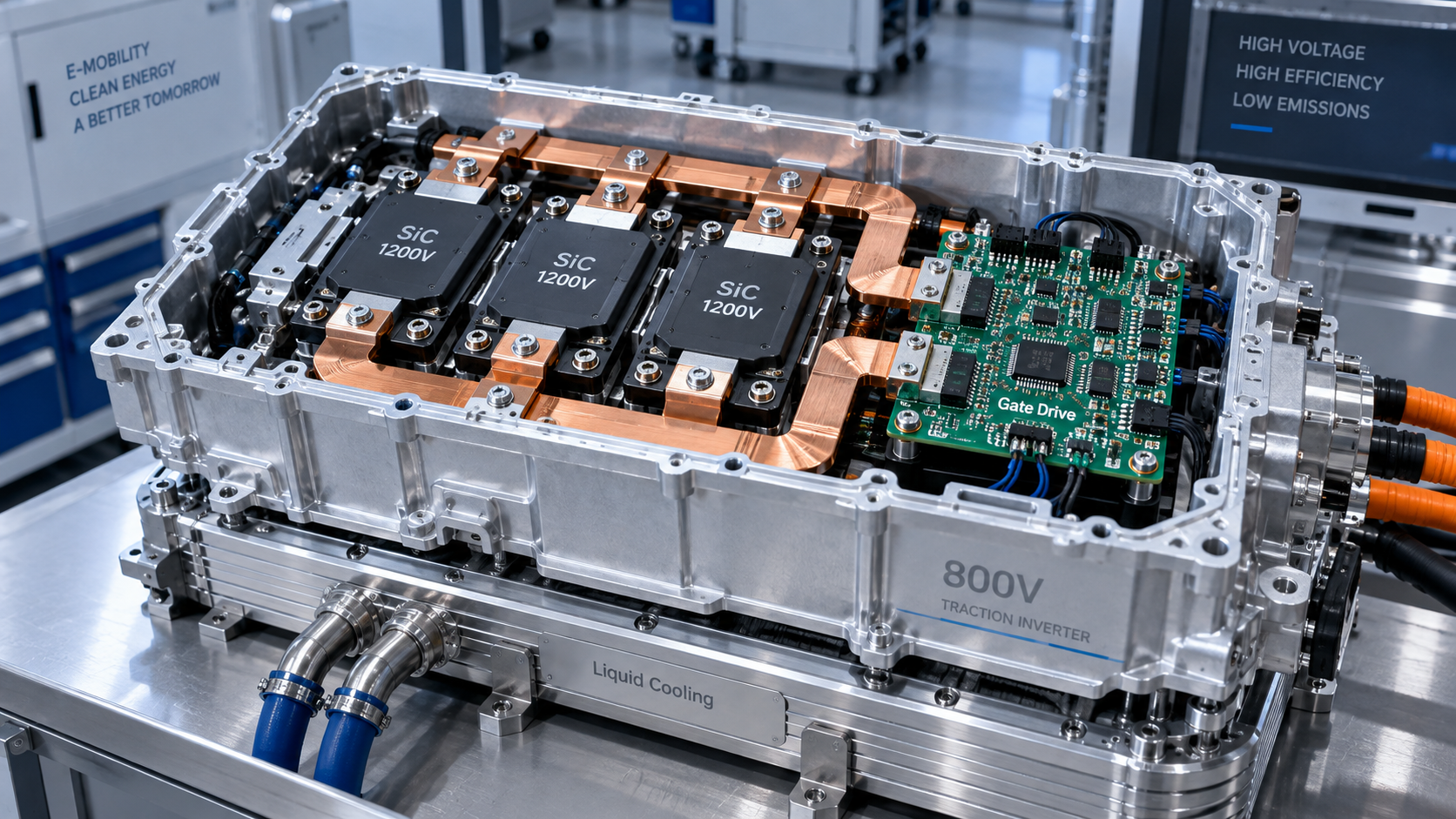
The device has been verified through a NEDO project. Its stated target applications include AI data center HVDC power supplies, photovoltaic inverters, and electric vehicle charging stations.
The provided information further states that overseas channel distributors may immediately apply for samples and begin EN 62368-3:2026 hot-state EMI pre-compliance testing.
Where the Compliance Signal May Affect Industry Participants
Direct trading companies handling power semiconductor imports
Direct trading companies may be affected because the sample release is linked with import certification readiness and EN 62368-3:2026 hot-state EMI pre-compliance testing. From an operational perspective, the impact may appear in product qualification, customs documentation preparation, customer technical communication, and the timing of sample allocation.
They may need to monitor whether downstream buyers request evidence of pre-compliance testing before accepting samples for AI data center HVDC power supplies, photovoltaic inverters, or charging station programs.
Raw material and component procurement teams
Procurement teams may be affected because a QDPAK-based SiC MOSFET design can influence the selection of compatible boards, thermal interfaces, gate driver components, and test equipment. The provided information does not list material requirements, but the 15–18V gate drive range and high-thermal-performance package indicate that purchasing teams should align component sourcing with the intended operating environment.
Key business links to watch include sample request timing, component compatibility checks, supplier qualification files, and the availability of parts needed for hot-state EMI pre-compliance testing.
Processing and manufacturing enterprises integrating power modules
Manufacturers using SiC MOSFETs in HVDC power supplies, photovoltaic inverters, or charging stations may be affected at the design verification and production preparation stages. The device characteristics cited in the summary, including 1200V rating, trench-gate structure, QDPAK packaging, and lower RDS(on)A, may require careful validation against existing PCB layouts, thermal designs, drive circuits, and EMI control plans.
Manufacturing teams should pay attention to whether technical specifications, test procedures, and internal approval documents need revision before the sample can move from evaluation to design-in consideration.
Supply chain service providers supporting testing and logistics
Supply chain service providers may be affected because overseas distributors can apply for samples and start EN 62368-3:2026 hot-state EMI pre-compliance testing. This may increase the need for coordinated sample logistics, documentation tracking, laboratory scheduling, and traceability records.
Relevant service links include sample custody management, test report collection, technical document archiving, and communication between distributors, manufacturers, and end users.
Practical Priorities for Companies Reviewing the Device
Align EN 62368-3:2026 preparation with sample evaluation
Companies considering the TW007D120E should connect sample evaluation with EN 62368-3:2026 hot-state EMI pre-compliance planning from the beginning. This does not mean final certification is already completed for every end product; rather, the sample stage should be used to identify whether the target system can meet relevant test expectations under thermal operating conditions.
Check gate-drive and thermal design assumptions early
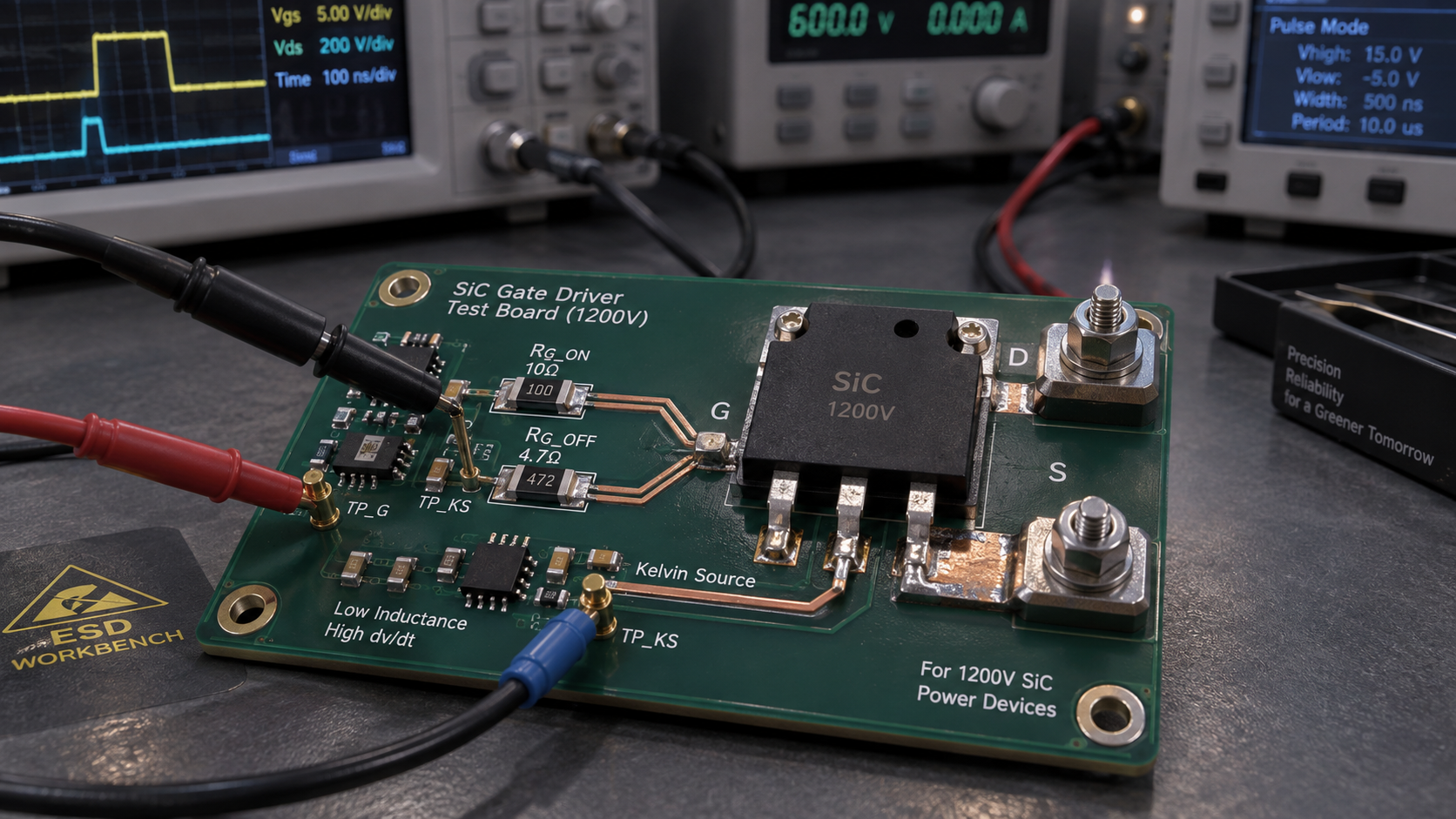
The stated 15–18V gate drive support and QDPAK package make early technical alignment important. Engineering teams should confirm whether existing gate driver circuits, thermal paths, board footprints, and measurement methods are suitable before committing to further design work.
Update technical specifications for HVDC and inverter projects
For AI data center HVDC power supplies, photovoltaic inverters, and electric vehicle charging stations, technical specifications may need to reflect the 1200V rating, trench-gate SiC MOSFET architecture, package requirements, and verification evidence mentioned in the provided summary. This is especially relevant where tender documents or supplier approval files require component-level traceability.
Build traceability into distributor sample requests
Overseas channel distributors applying for samples should maintain clear records on sample source, test purpose, customer project linkage, pre-compliance test status, and technical documentation. Such records may support later supplier qualification, quality review, and after-sales traceability if the device enters formal project evaluation.
Industry Reading: Standards Are Moving Closer to Design-In Decisions
From an industry perspective, the significance of this sample release is not limited to a new SiC MOSFET becoming available for evaluation. It is more appropriate to understand this as a sign that power semiconductor selection, thermal design, EMI behavior, and certification preparation are becoming more closely connected in high-power applications.
Analysis shows that AI data center HVDC power supplies, photovoltaic inverters, and electric vehicle charging stations can place stronger emphasis on efficiency, thermal performance, and compliance documentation. The provided summary does not quantify market impact, but it indicates that pre-compliance work may increasingly begin at the sample evaluation stage rather than after full system design completion.
What deserves closer attention is the role of EN 62368-3:2026 hot-state EMI pre-compliance testing. Observably, if buyers and system integrators treat such testing as an early qualification reference, distributors and manufacturers may face longer preparation cycles for documentation, test scheduling, and design verification.
A Measured View on the Market Significance
The global availability of Toshiba TW007D120E test samples gives industry participants a concrete device option for evaluating 1200V trench-gate SiC MOSFET performance in HVDC power, inverter, and charging station applications. Its QDPAK package, 15–18V gate drive support, reduced RDS(on)A, NEDO project verification, and stated connection to EN 62368-3:2026 pre-compliance testing make it relevant to both engineering and compliance teams.
However, the practical impact will depend on downstream evaluation results, certification execution requirements, procurement decisions, and project-specific design conditions. Companies should avoid treating sample availability as equivalent to completed end-product approval, while still using the window to prepare documentation and testing plans.
Source Note and Items to Watch
This article is based on the user-provided news title, event timing information, and event summary. Specific official source links were not provided in the input and should be verified continuously.
For events of this type, companies typically monitor official manufacturer announcements, product documentation, recognized standards information, certification guidance, distributor notices, and laboratory testing requirements. No specific source links are cited here because none were included in the input.
Further attention should be paid to detailed policy interpretation, certification execution practices, tender document changes, technical acceptance criteria, distributor feedback, test report requirements, and industry responses to EN 62368-3:2026 hot-state EMI pre-compliance testing.
Get weekly intelligence in your inbox.
No noise. No sponsored content. Pure intelligence.
 Apr 28, 2026When do rapid prototyping 3D printing services save real costWhen do rapid prototyping 3D printing services save real cost
 Apr 28, 2026What Can Go Wrong in Fan-out Wafer Level Pkg?What Can Go Wrong in Fan-out Wafer Level Pkg?
 Apr 28, 2026What Makes Optical LiDAR Modules Better for Autonomy?What Makes Optical LiDAR Modules Better for Autonomy?
 Apr 28, 20262026 Market Trends in Supply Chain Resilience for Fabs2026 Market Trends in Supply Chain Resilience for Fabs
 Oct 26, 2026How do buying decisions in the B2B market differ from those in B2C?How do buying decisions in the B2B market differ from those in B2C?
 Oct 26, 2026JW Insights’ 2026 SiC Report: Substrate Price Rebound Signals Industry Turning PointJW Insights’ 2026 SiC Report: Substrate Price Rebound Signals Industry Turning Point
 Oct 25, 2026How SiC power semiconductors for motor drives reduce switching lossesHow SiC power semiconductors for motor drives reduce switching losses
 Oct 25, 2026AI Overcapacity Fears Rattle US Chip Stocks as October Losses Reach $2.2 TrillionAI Overcapacity Fears Rattle US Chip Stocks as October Losses Reach $2.2 Trillion
 Oct 24, 2026How post-CMP cleaning materials affect wafer particle removalHow post-CMP cleaning materials affect wafer particle removal
 Oct 24, 2026AI, GaN and Robotics: What Comes Next for Power SemiconductorsAI, GaN and Robotics: What Comes Next for Power Semiconductors
 Oct 23, 2026How noise affects MEMS accelerometers in wearable medical devicesHow noise affects MEMS accelerometers in wearable medical devices
 Oct 23, 2026U.S. Commerce Announces Up to $389 Million in CHIPS R&D FundingU.S. Commerce Announces Up to $389 Million in CHIPS R&D Funding
 Oct 22, 2026How to avoid counterfeit power conversion components in the Middle EastHow to avoid counterfeit power conversion components in the Middle East
 Oct 22, 2026Nvidia Partners Expand AI Supply Chain; Amkor Plans Over 300% Capacity IncreaseNvidia Partners Expand AI Supply Chain; Amkor Plans Over 300% Capacity Increase
 Oct 21, 2026When are portable solar panels cost-effective for remote worksites?When are portable solar panels cost-effective for remote worksites?
 Oct 21, 2026Infineon and Wolfspeed Sign Multiyear 8-Inch SiC Wafer Supply AgreementInfineon and Wolfspeed Sign Multiyear 8-Inch SiC Wafer Supply Agreement
 Oct 20, 2026Can FFU systems alone achieve ISO 14644-1 Class 1 cleanliness?Can FFU systems alone achieve ISO 14644-1 Class 1 cleanliness?
 Oct 20, 2026Aixtron Q3 Orders More Than Double as Orders and Profit Beat ExpectationsAixtron Q3 Orders More Than Double as Orders and Profit Beat Expectations
 Oct 19, 2026How to evaluate power semiconductor suppliers for supply continuityHow to evaluate power semiconductor suppliers for supply continuity
 Oct 18, 2026How system-in-package technology reduces PCB space in wearablesHow system-in-package technology reduces PCB space in wearables
 Oct 17, 2026How to size gate resistors in 1200 V SiC power semiconductor designsHow to size gate resistors in 1200 V SiC power semiconductor designs
 Oct 16, 2026How to select 1200 V SiC MOSFETs for 800 V EV traction invertersHow to select 1200 V SiC MOSFETs for 800 V EV traction inverters
 Oct 15, 2026What voltage rating do SiC power modules for railway traction need?What voltage rating do SiC power modules for railway traction need?
 Oct 14, 2026How third-generation semiconductors achieve high breakdown voltagesHow third-generation semiconductors achieve high breakdown voltages
 Oct 13, 2026When does parallel testing cut high-volume semiconductor testing costs?When does parallel testing cut high-volume semiconductor testing costs?
 Oct 12, 2026Industrial Accelerometer Specifications for Machine Vibration MonitoringIndustrial Accelerometer Specifications for Machine Vibration Monitoring
 Oct 12, 2026What Makes an Industrial Gas Sensor Supplier Reliable for Long-Term Supply?What Makes an Industrial Gas Sensor Supplier Reliable for Long-Term Supply?