Toshiba Opens Samples of 1200V SiC MOSFET
On June 3, 2026, Toshiba Semiconductor announced that it is opening global engineering sample applications for its new trench-gate 1200V SiC MOSFET, TW007D120E. The device uses a top-side-cooled QDPAK package, supports operation at a junction temperature of up to 200°C, and has passed IEC 62368-1 enhanced isolation and surge testing for HVDC power systems. For industrial power supply and energy storage PCS stakeholders, especially in Europe and North America, this development is worth close attention because it may affect device selection, compliance pathways, and supply-chain planning.
Event Overview
According to the disclosed information, Toshiba Semiconductor announced on June 3, 2026 that global customers can now apply for engineering samples of the TW007D120E, a new trench-gate 1200V silicon carbide MOSFET.
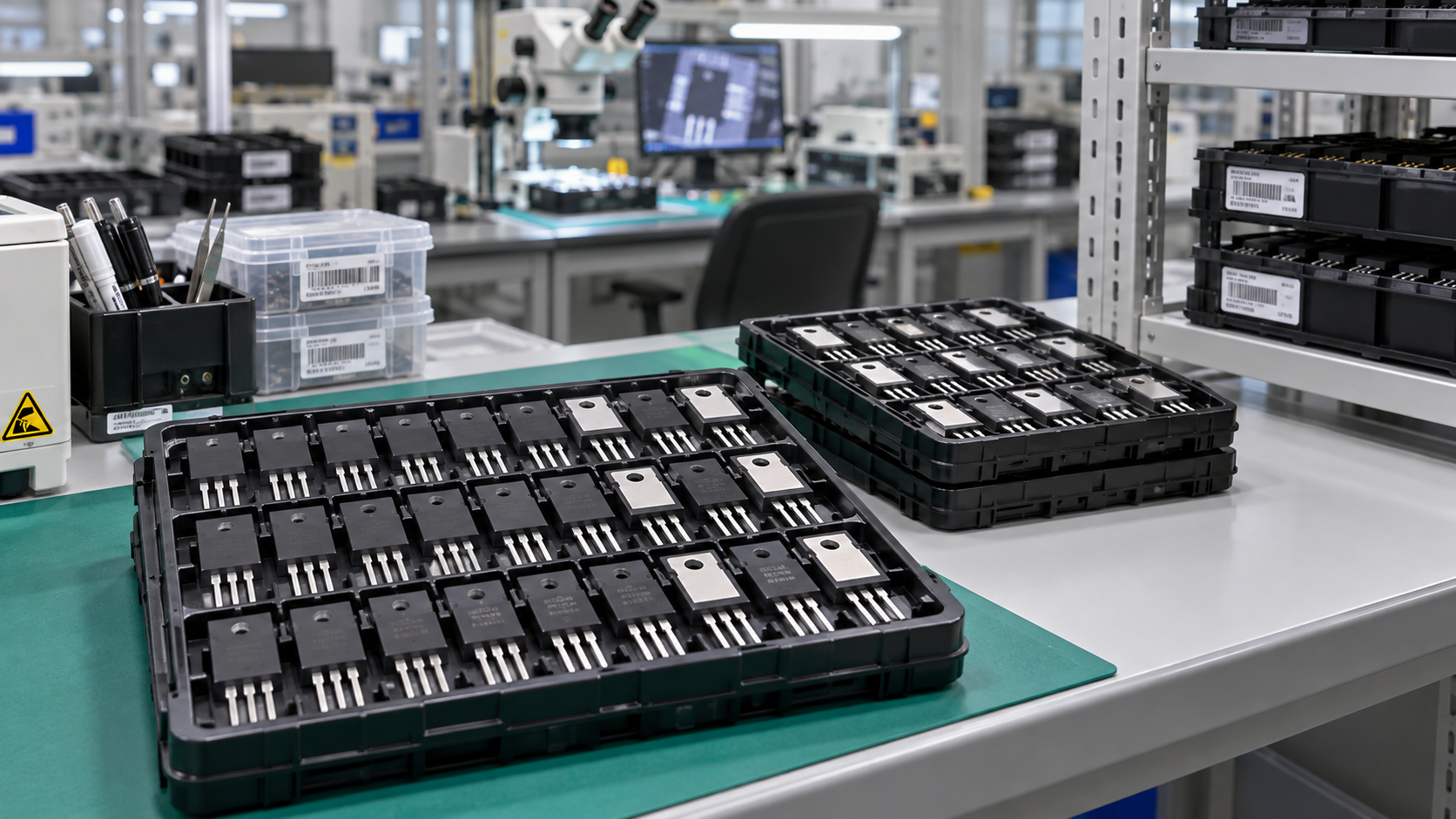
The announced device features a QDPAK top-side-cooled package and is specified to support 200°C junction temperature operation. Toshiba also stated that the package has passed IEC 62368-1 enhanced isolation and surge tests for HVDC power systems.
The currently public information indicates that this product is positioned as a high-reliability option that may help industrial power and energy storage PCS manufacturers in Europe and the United States consider an alternative that does not require secondary safety recertification. At this stage, the confirmed development is the opening of engineering sample applications rather than a broader market rollout outcome.
Which Industry Segments Are Affected
Industrial power supply manufacturers
Industrial power supply companies are likely to be directly affected because the announcement specifically references HVDC-related safety testing under IEC 62368-1. This matters where product teams are evaluating power semiconductor options not only on electrical performance, but also on packaging, thermal design, and compliance alignment.
From an industry perspective, the main impact is on early-stage component evaluation and design decision-making. Engineering teams may pay closer attention to whether a device with an already disclosed safety-test basis can reduce validation friction in targeted applications. Procurement and compliance teams may also need to reassess approved device lists if a new sample candidate is being introduced into design reviews.
Energy storage PCS manufacturers
Energy storage power conversion system manufacturers are another directly affected group, since the announcement explicitly highlights relevance for this segment. The combination of a 1200V SiC MOSFET, top-side cooling, and 200°C junction temperature capability may influence how PCS developers compare alternative power-device options for reliability-focused designs.
Analysis shows that the impact is less about immediate volume substitution and more about giving engineering teams another option to assess during sample and qualification stages. For companies serving Europe and North America, the mention of no secondary recertification as an alternative pathway may become relevant in product planning, provided later official documentation supports practical implementation.
Power electronics design and manufacturing teams
Companies involved in converter, inverter, and power module design may also be affected because package structure and thermal management are central design variables. A top-side-cooled QDPAK package can change how teams approach board layout, cooling architecture, and assembly evaluation during prototype development.
Observably, the main influence here is on engineering workload distribution. Device packaging is not only a semiconductor selection issue; it also affects mechanical integration, thermal path verification, and system-level reliability checks. That means R&D and manufacturing engineers may need to coordinate more closely when deciding whether to request and test samples.
Compliance, certification, and supply-chain functions
Certification specialists, sourcing managers, and supply-chain planners should also monitor this development. The disclosed IEC 62368-1 HVDC enhanced isolation and surge test result may affect how these teams screen alternative components for regulated markets.
Current attention should focus on the fact that this is a sample-opening event, not a confirmed procurement shift across the market. Even so, companies that depend on stable qualification processes may view the announcement as an early signal to prepare internal assessment criteria, supplier communication plans, and documentation checklists.
What Companies and Practitioners Should Watch and How to Respond Now
Track subsequent official disclosures and sample-stage updates
Companies should closely monitor Toshiba's follow-up statements, especially any additional documentation related to sample availability, application conditions, package specifications, and compliance scope. Analysis shows that the current announcement establishes technical and certification-related signals, but practical adoption decisions depend on the next layer of official detail.
Separate certification signals from actual design-in readiness
The IEC 62368-1 HVDC testing result is an important disclosed point, but engineering and compliance teams should distinguish between a favorable certification-related signal and full design-in readiness for their own products. From an industry perspective, internal validation, system matching, and end-application requirements still need to be checked against the company’s own product architecture and market obligations.
Review target applications where thermal design and reliability are critical
Teams working on industrial power supplies and energy storage PCS should identify projects where top-side cooling, high junction temperature tolerance, or qualification efficiency could materially affect design choices. Current attention should focus on whether these features align with actual project constraints, rather than treating the announcement as a universal fit across all platforms.
Prepare procurement and cross-functional evaluation workflows early
For companies considering sample requests, it is more appropriate to prepare a practical internal workflow covering engineering review, compliance review, sourcing communication, and prototype test planning. Observably, the value of a sample-stage opportunity depends on how quickly cross-functional teams can verify technical fit, compliance relevance, and potential supply implications without assuming immediate commercialization impact.
Editorial View / Industry Observation
Observation suggests that this announcement currently functions more as a market signal than as a completed market outcome. The opening of global engineering sample applications indicates that Toshiba is placing this 1200V SiC MOSFET into active evaluation channels, while the disclosed IEC 62368-1 HVDC test result adds a compliance-related dimension that may matter in industrial and energy storage design discussions.
Analysis shows that the most meaningful aspect is not simply the release of another SiC device sample, but the combination of package form, high-temperature operation support, and disclosed safety-test positioning. That combination may matter to manufacturers seeking alternatives in regulated, reliability-sensitive applications. Still, it is more appropriate to understand this as an early-stage selection and qualification signal rather than proof of immediate large-scale adoption.
From an industry perspective, this development deserves continued attention because sample availability often marks the beginning of deeper evaluation activity across engineering, sourcing, and certification functions. Whether it leads to broader substitution or procurement changes will depend on later validation, official documents, and actual project-level adoption.
Conclusion
Toshiba’s decision to open global engineering sample applications for the TW007D120E adds a new reference point for industrial power supply and energy storage PCS companies assessing 1200V SiC MOSFET options. The disclosed QDPAK package, 200°C junction temperature support, and IEC 62368-1 HVDC test status give the announcement practical relevance beyond a routine product update.
At this stage, the industry significance lies in the emergence of a potentially useful evaluation option rather than a confirmed shift in market structure. Current attention should focus on follow-up official information, internal technical review, and application-specific qualification planning. More appropriately, this news should be understood as an actionable early signal for product and sourcing teams, not as a finalized competitive outcome.
Source Information
Main source: Toshiba Semiconductor announcement disclosed in the provided information.
Items requiring continued observation: subsequent official details on sample application progress, technical documentation, qualification scope, and any further clarification regarding use in industrial power supply and energy storage PCS applications.
Get weekly intelligence in your inbox.
No noise. No sponsored content. Pure intelligence.
 Apr 28, 2026When do rapid prototyping 3D printing services save real costWhen do rapid prototyping 3D printing services save real cost
 Apr 28, 2026What Can Go Wrong in Fan-out Wafer Level Pkg?What Can Go Wrong in Fan-out Wafer Level Pkg?
 Apr 28, 2026What Makes Optical LiDAR Modules Better for Autonomy?What Makes Optical LiDAR Modules Better for Autonomy?
 Apr 28, 20262026 Market Trends in Supply Chain Resilience for Fabs2026 Market Trends in Supply Chain Resilience for Fabs
 Oct 26, 2026How do buying decisions in the B2B market differ from those in B2C?How do buying decisions in the B2B market differ from those in B2C?
 Oct 26, 2026JW Insights’ 2026 SiC Report: Substrate Price Rebound Signals Industry Turning PointJW Insights’ 2026 SiC Report: Substrate Price Rebound Signals Industry Turning Point
 Oct 25, 2026How SiC power semiconductors for motor drives reduce switching lossesHow SiC power semiconductors for motor drives reduce switching losses
 Oct 25, 2026AI Overcapacity Fears Rattle US Chip Stocks as October Losses Reach $2.2 TrillionAI Overcapacity Fears Rattle US Chip Stocks as October Losses Reach $2.2 Trillion
 Oct 24, 2026How post-CMP cleaning materials affect wafer particle removalHow post-CMP cleaning materials affect wafer particle removal
 Oct 24, 2026AI, GaN and Robotics: What Comes Next for Power SemiconductorsAI, GaN and Robotics: What Comes Next for Power Semiconductors
 Oct 23, 2026How noise affects MEMS accelerometers in wearable medical devicesHow noise affects MEMS accelerometers in wearable medical devices
 Oct 23, 2026U.S. Commerce Announces Up to $389 Million in CHIPS R&D FundingU.S. Commerce Announces Up to $389 Million in CHIPS R&D Funding
 Oct 22, 2026How to avoid counterfeit power conversion components in the Middle EastHow to avoid counterfeit power conversion components in the Middle East
 Oct 22, 2026Nvidia Partners Expand AI Supply Chain; Amkor Plans Over 300% Capacity IncreaseNvidia Partners Expand AI Supply Chain; Amkor Plans Over 300% Capacity Increase
 Oct 21, 2026When are portable solar panels cost-effective for remote worksites?When are portable solar panels cost-effective for remote worksites?
 Oct 21, 2026Infineon and Wolfspeed Sign Multiyear 8-Inch SiC Wafer Supply AgreementInfineon and Wolfspeed Sign Multiyear 8-Inch SiC Wafer Supply Agreement
 Oct 20, 2026Can FFU systems alone achieve ISO 14644-1 Class 1 cleanliness?Can FFU systems alone achieve ISO 14644-1 Class 1 cleanliness?
 Oct 20, 2026Aixtron Q3 Orders More Than Double as Orders and Profit Beat ExpectationsAixtron Q3 Orders More Than Double as Orders and Profit Beat Expectations
 Oct 19, 2026How to evaluate power semiconductor suppliers for supply continuityHow to evaluate power semiconductor suppliers for supply continuity
 Oct 18, 2026How system-in-package technology reduces PCB space in wearablesHow system-in-package technology reduces PCB space in wearables
 Oct 17, 2026How to size gate resistors in 1200 V SiC power semiconductor designsHow to size gate resistors in 1200 V SiC power semiconductor designs
 Oct 16, 2026How to select 1200 V SiC MOSFETs for 800 V EV traction invertersHow to select 1200 V SiC MOSFETs for 800 V EV traction inverters
 Oct 15, 2026What voltage rating do SiC power modules for railway traction need?What voltage rating do SiC power modules for railway traction need?
 Oct 14, 2026How third-generation semiconductors achieve high breakdown voltagesHow third-generation semiconductors achieve high breakdown voltages
 Oct 13, 2026When does parallel testing cut high-volume semiconductor testing costs?When does parallel testing cut high-volume semiconductor testing costs?
 Oct 12, 2026Industrial Accelerometer Specifications for Machine Vibration MonitoringIndustrial Accelerometer Specifications for Machine Vibration Monitoring
 Oct 12, 2026What Makes an Industrial Gas Sensor Supplier Reliable for Long-Term Supply?What Makes an Industrial Gas Sensor Supplier Reliable for Long-Term Supply?