Infineon Raises 1200V SiC MOSFET Prices Again
Infineon’s confirmed second-round price increase for its full range of 1200V CoolSiC™ G2 MOSFETs will take effect on July 1, 2026, making this a closely watched development for HVDC power infrastructure, automotive on-board charger supply chains, power electronics manufacturing, and semiconductor distribution. The update matters because the increase of 12%–15%, including on booked but unshipped backlog orders, comes alongside lead times extending beyond 22 weeks, forcing affected companies to reassess sourcing plans, delivery commitments, and supply-chain resilience.
Event Overview
According to the disclosed information, Infineon confirmed on June 3, 2026 that a second-round price increase for all 1200V CoolSiC™ G2 MOSFET products will take effect on July 1, 2026. The announced increase is 12%–15% and applies not only to new transactions but also to backlog orders that have been placed and not yet shipped.
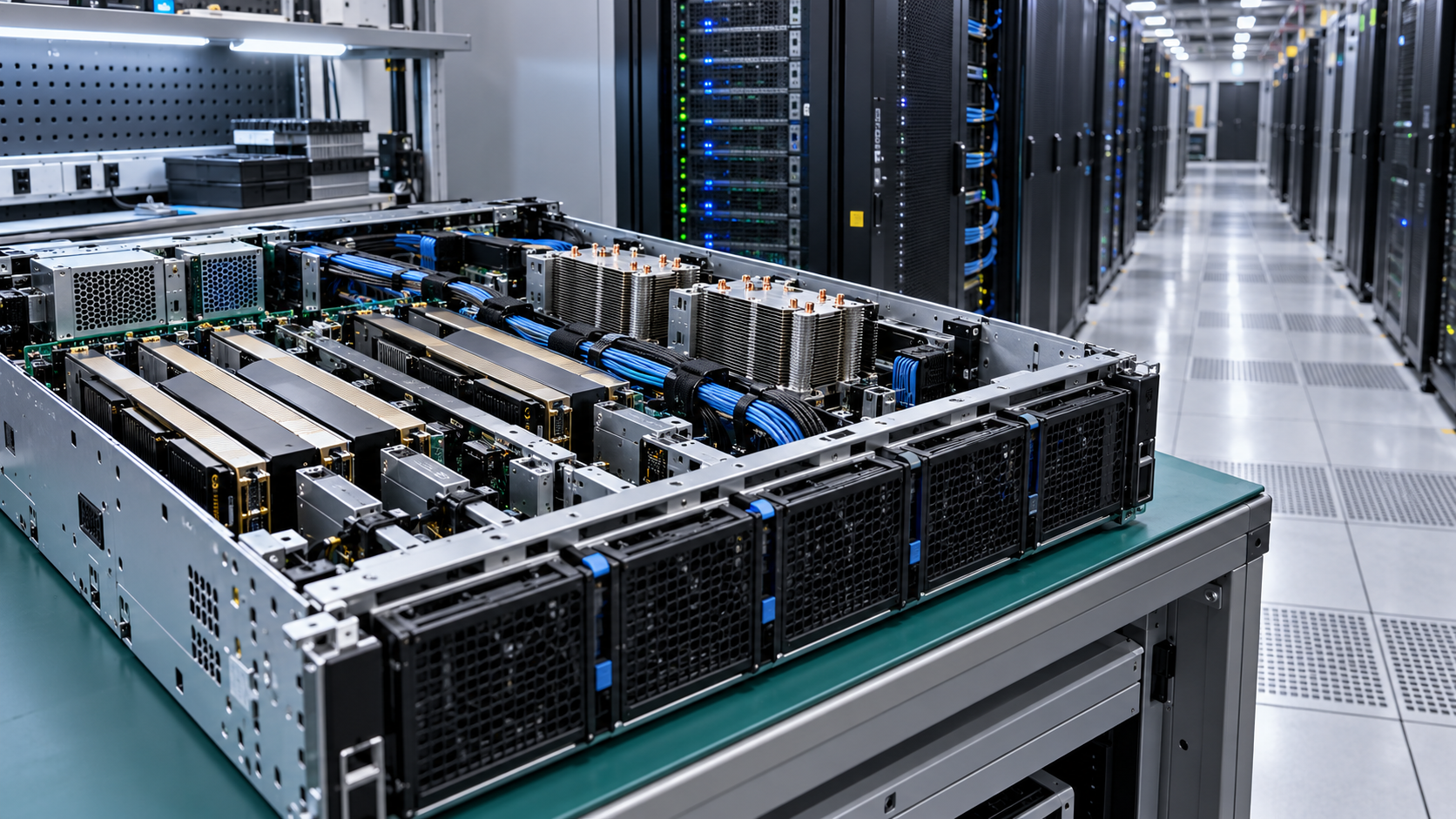
The disclosed reason is pressure on 8-inch wafer capacity caused by AI data center high-voltage direct current (HVDC) build-outs, combined with a sharp rise in automotive-grade on-board charger (OBC) demand. The currently disclosed market consequence is that lead times have again stretched to more than 22 weeks. Overseas system integrators, power supply manufacturers, and distributors are therefore being pushed to reassess supply continuity and high-reliability alternative sourcing paths.
Which Industry Segments Are Affected
HVDC system integrators
HVDC-related customers are directly affected because the disclosed supply pressure is tied to AI data center HVDC construction itself. For this group, the impact is not limited to component pricing. It also extends to project quoting, delivery scheduling, and design-to-procurement coordination, especially where 1200V SiC MOSFET availability is central to power conversion architecture.
From an industry perspective, the immediate issue is that higher component costs and longer lead times can compress project planning flexibility. Where orders are already placed but not yet shipped, the inclusion of backlog orders in the price adjustment raises near-term budget uncertainty.
Automotive OBC and vehicle power electronics manufacturers
Automotive on-board charger demand is explicitly identified as one of the drivers behind the tighter supply situation. That means OBC-related manufacturers may face a two-layer impact: continued demand pressure for automotive-grade devices and a less predictable procurement environment for 1200V SiC components.
Analysis shows that for these companies, the key concern is not only unit cost. It is also the risk of mismatch between production planning and incoming component schedules. If lead times remain above 22 weeks, production sequencing, customer delivery commitments, and inventory strategy may all need to be reviewed.
Power supply manufacturers
Power supply manufacturers are named among the affected market participants and may face direct margin and fulfillment pressure. This is especially relevant where contracts were built around earlier component assumptions and where SiC devices account for a meaningful share of the bill of materials.
Observably, the application of higher prices to unshipped backlog orders creates an additional challenge for manufacturers that had expected previous pricing to hold through existing commitments. The impact may therefore appear in revised quotations, renegotiated delivery windows, or tighter prioritization of product lines.
Distributors and channel operators
Distributors are affected because they sit between supplier pricing actions and end-customer expectations. A second-round increase combined with longer lead times can quickly alter inventory valuation, allocation decisions, and communication with downstream buyers.
Current attention should focus on whether channel participants can still provide stable lead-time guidance and whether they need to rebalance committed stock across customer groups. For distributors carrying backlog exposure, the inclusion of booked but unshipped orders in the price increase may also complicate order management and customer negotiations.
Procurement and supply-chain service teams
Procurement departments and supply-chain service providers are affected even when they are not the final product manufacturers. They must manage the operational consequences of a confirmed supplier price move, extended lead times, and the growing need to assess alternative sourcing routes.
From an industry perspective, the practical impact is that supplier risk review can no longer be handled as a routine price update alone. This development links cost, supply continuity, and technical substitution into a single procurement issue.
What Companies and Industry Practitioners Should Watch and How to Respond
Track official supplier updates and scope of implementation
Companies with exposure to 1200V CoolSiC™ G2 MOSFETs should verify how the July 1, 2026 price increase is being applied across current purchase orders, backlog orders, and pending quotations. The disclosed information already confirms inclusion of booked but unshipped orders, so procurement teams should review which commitments are affected and whether any order-stage distinctions still apply in practice.
Current attention should focus on formal supplier notices, distributor confirmations, and any updated lead-time guidance tied to the same product family.
Reassess high-risk product lines and delivery commitments
Manufacturers and system integrators should identify where 1200V SiC devices are concentrated in active projects, especially in HVDC and OBC-related programs. This is not a generic sourcing exercise; it should be tied specifically to products, contracts, and shipments that depend on the affected Infineon device category.
Analysis shows that the most urgent review areas are projects with fixed delivery milestones, cost-sensitive quotations, and production plans built around previously expected component arrival dates.
Separate price impact from substitution feasibility
Companies evaluating alternatives should distinguish between two issues: immediate commercial exposure and actual technical replacement feasibility. The disclosed information indicates that overseas customers are urgently reassessing alternative paths, but that does not mean every alternative can be adopted without qualification, verification, or scheduling implications.
Observably, a disciplined response requires teams to map where alternative sourcing is commercially necessary and where technical validation may still limit near-term switching.
Prepare customer and internal communication early
For distributors, power supply manufacturers, and system integrators, early communication is now a practical requirement. Teams should prepare updated cost assumptions, revised lead-time expectations, and contingency scenarios for customers and internal planning units.
Current attention should focus on avoiding a mismatch between supplier-side changes and downstream commitments. Where backlog orders are affected, stakeholders should clarify impact quickly rather than wait for shipment-stage escalation.
Editorial View / Industry Observation
Observably, this development is more than a routine component price adjustment. It signals that pressure around 1200V SiC supply is now being felt simultaneously through pricing, lead times, and backlog order exposure. That combination matters more to the industry than a standalone list-price change.
Analysis shows that the event should be understood as both a current operating issue and a forward-looking market signal. It is already a concrete result for companies holding relevant orders, because the increase takes effect on July 1, 2026 and includes unshipped backlog. At the same time, it is also a signal that supply competition tied to AI data center HVDC build-out and automotive OBC demand is reshaping procurement risk priorities.
From an industry perspective, continued attention is necessary because the disclosed information points to a chain reaction rather than an isolated supplier notice: higher costs, longer lead times, and accelerated evaluation of high-reliability alternatives are now moving together.
In summary, Infineon’s second price increase on 1200V CoolSiC™ G2 MOSFETs is significant not simply because prices are rising, but because it affects backlog orders and arrives with lead times extending beyond 22 weeks. For HVDC customers, OBC-related manufacturers, power supply companies, and distributors, the practical issue is how quickly they can reassess cost exposure, order commitments, and sourcing resilience.
Current attention should focus on understanding this development as a supply-chain risk signal with immediate commercial consequences, rather than as a standalone pricing headline. A rational reading is that the market impact is already visible, while the full downstream effects on procurement and delivery planning still require close observation.
Source Note
Main sources: the provided event brief; Infineon’s confirmed June 3, 2026 notice as described in the provided information.
Items requiring continued observation: any subsequent official clarification on implementation scope, updated lead-time guidance, and how affected customers adjust sourcing and alternative qualification plans.
Get weekly intelligence in your inbox.
No noise. No sponsored content. Pure intelligence.
 Apr 28, 2026When do rapid prototyping 3D printing services save real costWhen do rapid prototyping 3D printing services save real cost
 Apr 28, 2026What Can Go Wrong in Fan-out Wafer Level Pkg?What Can Go Wrong in Fan-out Wafer Level Pkg?
 Apr 28, 2026What Makes Optical LiDAR Modules Better for Autonomy?What Makes Optical LiDAR Modules Better for Autonomy?
 Apr 28, 20262026 Market Trends in Supply Chain Resilience for Fabs2026 Market Trends in Supply Chain Resilience for Fabs
 Oct 26, 2026How do buying decisions in the B2B market differ from those in B2C?How do buying decisions in the B2B market differ from those in B2C?
 Oct 26, 2026JW Insights’ 2026 SiC Report: Substrate Price Rebound Signals Industry Turning PointJW Insights’ 2026 SiC Report: Substrate Price Rebound Signals Industry Turning Point
 Oct 25, 2026How SiC power semiconductors for motor drives reduce switching lossesHow SiC power semiconductors for motor drives reduce switching losses
 Oct 25, 2026AI Overcapacity Fears Rattle US Chip Stocks as October Losses Reach $2.2 TrillionAI Overcapacity Fears Rattle US Chip Stocks as October Losses Reach $2.2 Trillion
 Oct 24, 2026How post-CMP cleaning materials affect wafer particle removalHow post-CMP cleaning materials affect wafer particle removal
 Oct 24, 2026AI, GaN and Robotics: What Comes Next for Power SemiconductorsAI, GaN and Robotics: What Comes Next for Power Semiconductors
 Oct 23, 2026How noise affects MEMS accelerometers in wearable medical devicesHow noise affects MEMS accelerometers in wearable medical devices
 Oct 23, 2026U.S. Commerce Announces Up to $389 Million in CHIPS R&D FundingU.S. Commerce Announces Up to $389 Million in CHIPS R&D Funding
 Oct 22, 2026How to avoid counterfeit power conversion components in the Middle EastHow to avoid counterfeit power conversion components in the Middle East
 Oct 22, 2026Nvidia Partners Expand AI Supply Chain; Amkor Plans Over 300% Capacity IncreaseNvidia Partners Expand AI Supply Chain; Amkor Plans Over 300% Capacity Increase
 Oct 21, 2026When are portable solar panels cost-effective for remote worksites?When are portable solar panels cost-effective for remote worksites?
 Oct 21, 2026Infineon and Wolfspeed Sign Multiyear 8-Inch SiC Wafer Supply AgreementInfineon and Wolfspeed Sign Multiyear 8-Inch SiC Wafer Supply Agreement
 Oct 20, 2026Can FFU systems alone achieve ISO 14644-1 Class 1 cleanliness?Can FFU systems alone achieve ISO 14644-1 Class 1 cleanliness?
 Oct 20, 2026Aixtron Q3 Orders More Than Double as Orders and Profit Beat ExpectationsAixtron Q3 Orders More Than Double as Orders and Profit Beat Expectations
 Oct 19, 2026How to evaluate power semiconductor suppliers for supply continuityHow to evaluate power semiconductor suppliers for supply continuity
 Oct 18, 2026How system-in-package technology reduces PCB space in wearablesHow system-in-package technology reduces PCB space in wearables
 Oct 17, 2026How to size gate resistors in 1200 V SiC power semiconductor designsHow to size gate resistors in 1200 V SiC power semiconductor designs
 Oct 16, 2026How to select 1200 V SiC MOSFETs for 800 V EV traction invertersHow to select 1200 V SiC MOSFETs for 800 V EV traction inverters
 Oct 15, 2026What voltage rating do SiC power modules for railway traction need?What voltage rating do SiC power modules for railway traction need?
 Oct 14, 2026How third-generation semiconductors achieve high breakdown voltagesHow third-generation semiconductors achieve high breakdown voltages
 Oct 13, 2026When does parallel testing cut high-volume semiconductor testing costs?When does parallel testing cut high-volume semiconductor testing costs?
 Oct 12, 2026Industrial Accelerometer Specifications for Machine Vibration MonitoringIndustrial Accelerometer Specifications for Machine Vibration Monitoring
 Oct 12, 2026What Makes an Industrial Gas Sensor Supplier Reliable for Long-Term Supply?What Makes an Industrial Gas Sensor Supplier Reliable for Long-Term Supply?