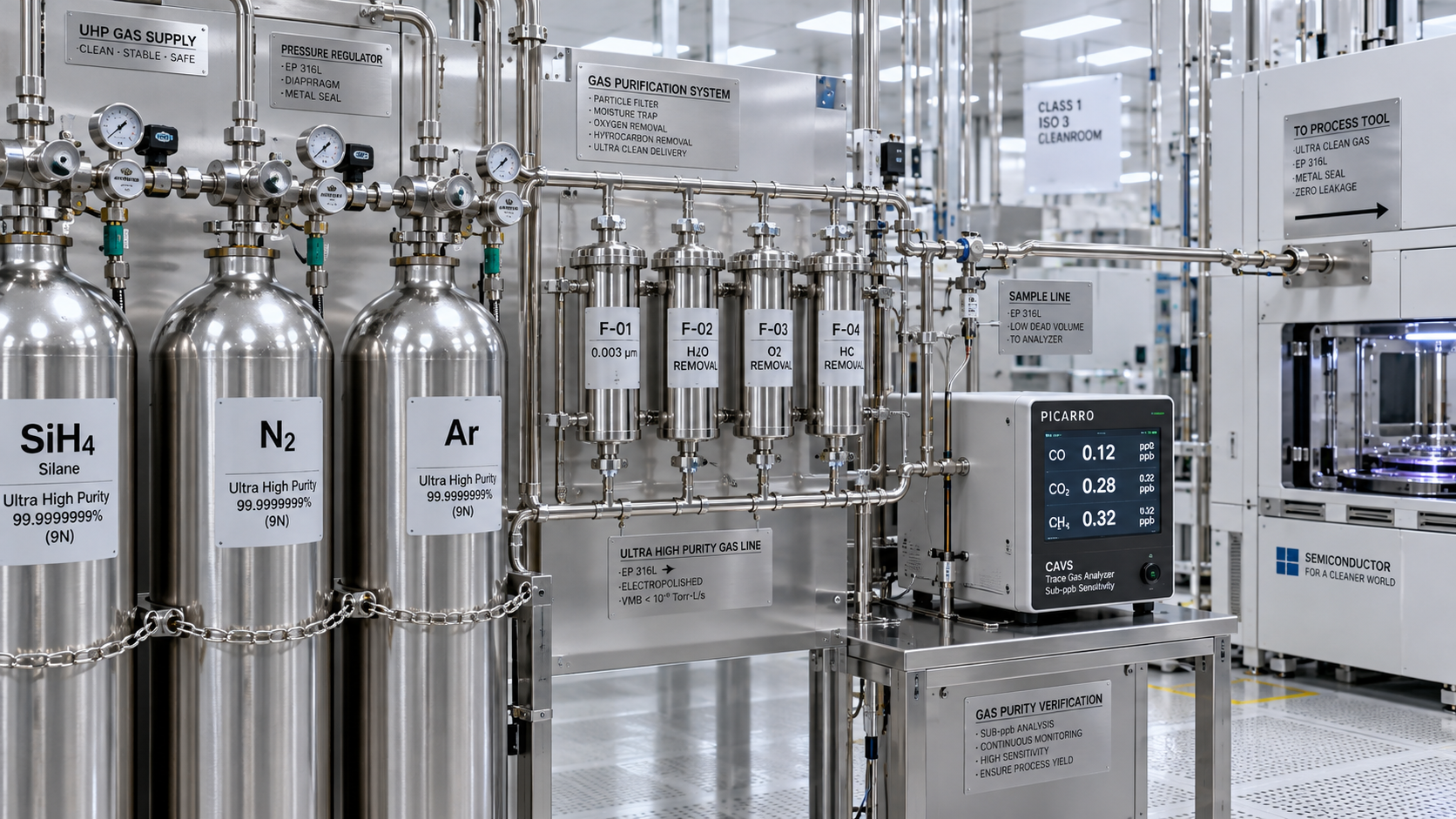
FDA Updates Import Requirements for Electronic Specialty Gases Equipment
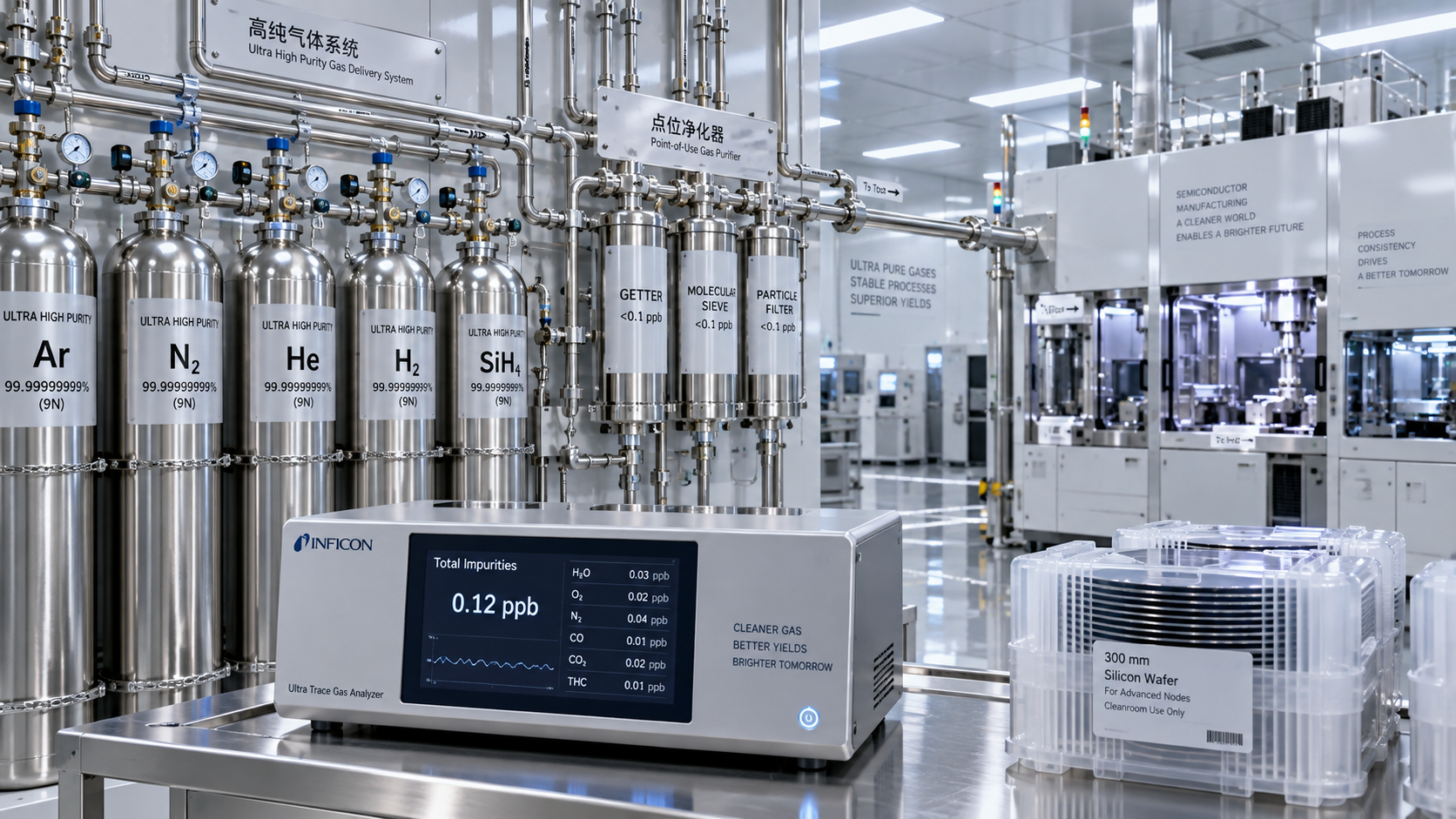
The U.S. Food and Drug Administration (FDA) issued revised import compliance requirements for electronic specialty gas equipment on May 28, 2026. Effective July 1, 2026, all Ultra-Pure Gas (UPG) delivery systems and Airborne Molecular Contamination (AMC) filtration units intended for front-end semiconductor manufacturing must be accompanied by third-party laboratory test reports verifying sub-part-per-trillion (sub-ppt) migration levels of trace metals — specifically Fe, Ni, Cr, and Na. This development directly affects exporters from China supplying wafer fabs in the U.S., South Korea, and Southeast Asia, with implications for market access timelines and shipment scheduling.
Event Overview
On May 28, 2026, the FDA published an official revision to its import compliance checklist for electronic specialty gas-related equipment. The update mandates that, starting July 1, 2026, all UPG delivery systems and AMC filtration units used in semiconductor front-end processes must submit third-party laboratory test reports demonstrating trace metal (Fe, Ni, Cr, Na) migration at sub-ppb levels. The requirement applies to products entering U.S. customs for use in semiconductor fabrication facilities. No further implementation details — such as accepted testing standards, lab accreditation criteria, or enforcement procedures — have been publicly released as of the announcement date.
Industries Affected
Direct Exporters (U.S./Korea/SEA-bound)
These companies supply UPG systems or AMC filters directly to overseas semiconductor fabs or their system integrators. They are now required to obtain new test documentation prior to customs clearance. Impact includes delayed shipments if testing is not completed in time, potential rejection at port, and added cost for sub-ppb-level trace metal analysis.
Manufacturers of UPG Delivery Systems & AMC Filtration Units
Producers — particularly those based in China — must verify material compatibility and leaching behavior of wetted components (e.g., valves, housings, gaskets) under simulated gas delivery conditions. The requirement shifts quality validation upstream: product qualification now depends on migration testing, not just composition or surface cleanliness.
Supply Chain Service Providers (Testing, Certification, Logistics)
Third-party labs capable of sub-ppb trace metal migration testing — especially for low-volatility metallic species in high-purity gas contact scenarios — will face increased demand. Certification bodies and freight forwarders handling regulated electronics-grade equipment may need to update documentation checklists and pre-clearance verification protocols.
Key Considerations and Recommended Actions
Monitor Official Guidance for Testing Specifications
The FDA has not yet specified which analytical method(s), sampling protocol(s), or reference materials will be accepted for Fe/Ni/Cr/Na migration testing. Exporters and manufacturers should track subsequent FDA communications — including any guidance documents or stakeholder webinars — before finalizing test plans.
Confirm Applicability by End-Use Context
The requirement explicitly covers equipment deployed in front-end semiconductor processes. Companies supplying similar hardware for back-end packaging, display manufacturing, or non-semiconductor applications should verify whether their shipments fall within scope — rather than assuming blanket applicability.
Engage Labs Early for Method Validation
Sub-ppb migration testing for refractory metals in gas-handling components is analytically demanding. Lead times for method development, blank control validation, and inter-lab comparability assessments may extend beyond standard certification cycles. Initiate discussions with accredited labs no later than June 2026.
Review Documentation Workflow for U.S. Customs Entry
Test reports must accompany shipments as part of FDA import submission. Ensure internal documentation systems — including labeling, packing lists, and electronic entry filings — can accommodate new report references and metadata (e.g., lot-specific migration results, test date, lab ID).
Editorial Perspective / Industry Observation
Observably, this update reflects a tightening of regulatory alignment between material safety expectations and process-critical contamination control in advanced semiconductor manufacturing. Analysis shows the FDA is extending its oversight beyond pharmaceutical-grade materials into adjacent high-purity industrial infrastructure — signaling growing cross-agency attention on supply chain integrity for technology-critical inputs. From an industry perspective, the requirement is best understood not as an isolated compliance checkpoint, but as an early indicator of broader trace-element accountability trends likely to influence export regulations in other high-tech sectors. It remains unclear whether this is a pilot initiative or the start of a standardized framework; ongoing monitoring of FDA’s follow-up publications is warranted.
Conclusion
This FDA update marks a procedural inflection point for exporters and manufacturers of ultra-high-purity gas handling equipment. Its immediate significance lies in operational readiness — not technological novelty. It does not introduce new material science thresholds, but rather enforces existing metrological capabilities as a gatekeeping condition. Currently, it is more appropriately understood as a documentation and timing constraint than a fundamental redesign mandate — provided affected parties act promptly to align testing, reporting, and customs processes ahead of the July 1, 2026, effective date.
Information Sources
Primary source: U.S. Food and Drug Administration (FDA), Import Compliance Checklist Revision Notice, issued May 28, 2026.
Note: Specific testing methodologies, enforcement timelines beyond July 1, 2026, and applicability to non-U.S. import regimes (e.g., Korea’s MFDS or ASEAN harmonized rules) remain unconfirmed and require continued observation.
Get weekly intelligence in your inbox.
No noise. No sponsored content. Pure intelligence.
 Apr 28, 2026When do rapid prototyping 3D printing services save real costWhen do rapid prototyping 3D printing services save real cost
 Apr 28, 2026What Can Go Wrong in Fan-out Wafer Level Pkg?What Can Go Wrong in Fan-out Wafer Level Pkg?
 Apr 28, 2026What Makes Optical LiDAR Modules Better for Autonomy?What Makes Optical LiDAR Modules Better for Autonomy?
 Apr 28, 20262026 Market Trends in Supply Chain Resilience for Fabs2026 Market Trends in Supply Chain Resilience for Fabs
 Oct 12, 2026When does fan-out wafer level packaging outperform flip-chip packaging?When does fan-out wafer level packaging outperform flip-chip packaging?
 Oct 11, 2026How energy management can reduce peak demand chargesHow energy management can reduce peak demand charges
 Oct 10, 2026When do integrated sensor systems reduce commissioning risks?When do integrated sensor systems reduce commissioning risks?
 Oct 09, 2026How North American semiconductor fabs control airborne molecular contaminationHow North American semiconductor fabs control airborne molecular contamination
 Oct 08, 2026When do custom aluminum extrusions reduce fabrication costs?When do custom aluminum extrusions reduce fabrication costs?
 Oct 07, 2026How semiconductor packaging affects thermal reliability in EV power electronicsHow semiconductor packaging affects thermal reliability in EV power electronics
 Oct 06, 2026When do corrugated plastic boxes make sense for returnable shipping?When do corrugated plastic boxes make sense for returnable shipping?
 Oct 05, 2026What to verify before choosing semiconductor distributors in North AmericaWhat to verify before choosing semiconductor distributors in North America
 Oct 04, 2026How to assess a high purity materials manufacturer’s traceabilityHow to assess a high purity materials manufacturer’s traceability
 Oct 03, 2026How SiC power conversion solutions improve high-voltage invertersHow SiC power conversion solutions improve high-voltage inverters
 Oct 02, 2026When do SiC MOSFET benefits justify the higher device cost?When do SiC MOSFET benefits justify the higher device cost?
 Oct 01, 2026Which semiconductor reliability testing standards apply to power devices?Which semiconductor reliability testing standards apply to power devices?
 Sep 30, 2026How to qualify a semiconductor photoresist supplier for KrF/ArF productionHow to qualify a semiconductor photoresist supplier for KrF/ArF production
 Sep 29, 2026What image quality should portable ultrasound scanners deliver for triage?What image quality should portable ultrasound scanners deliver for triage?
 Sep 28, 2026How sub-ppb impurity control gases protect process consistencyHow sub-ppb impurity control gases protect process consistency
 Sep 27, 2026How chemical purity affects defect rates in semiconductor depositionHow chemical purity affects defect rates in semiconductor deposition
 Sep 26, 2026When do high voltage power semiconductor devices need SiC over IGBTs?When do high voltage power semiconductor devices need SiC over IGBTs?
 Sep 25, 2026How to verify quality controls at a die casting parts supplier in ChinaHow to verify quality controls at a die casting parts supplier in China
 Sep 24, 2026How to verify electronic gas purity for sub-ppb semiconductor processesHow to verify electronic gas purity for sub-ppb semiconductor processes
 Sep 23, 2026When sensory data integration improves industrial motion monitoringWhen sensory data integration improves industrial motion monitoring
 Sep 22, 2026How supply chain resilience reduces the cost of production disruptionsHow supply chain resilience reduces the cost of production disruptions
 Sep 21, 2026What autonomous systems OEMs should verify before sourcing LiDAR modulesWhat autonomous systems OEMs should verify before sourcing LiDAR modules
 Sep 20, 2026How gas purity affects defect density in epitaxial wafer growthHow gas purity affects defect density in epitaxial wafer growth