Choosing a High-Purity Chemicals Supplier for Lower Defect Risk in IC Cleaning Solvents
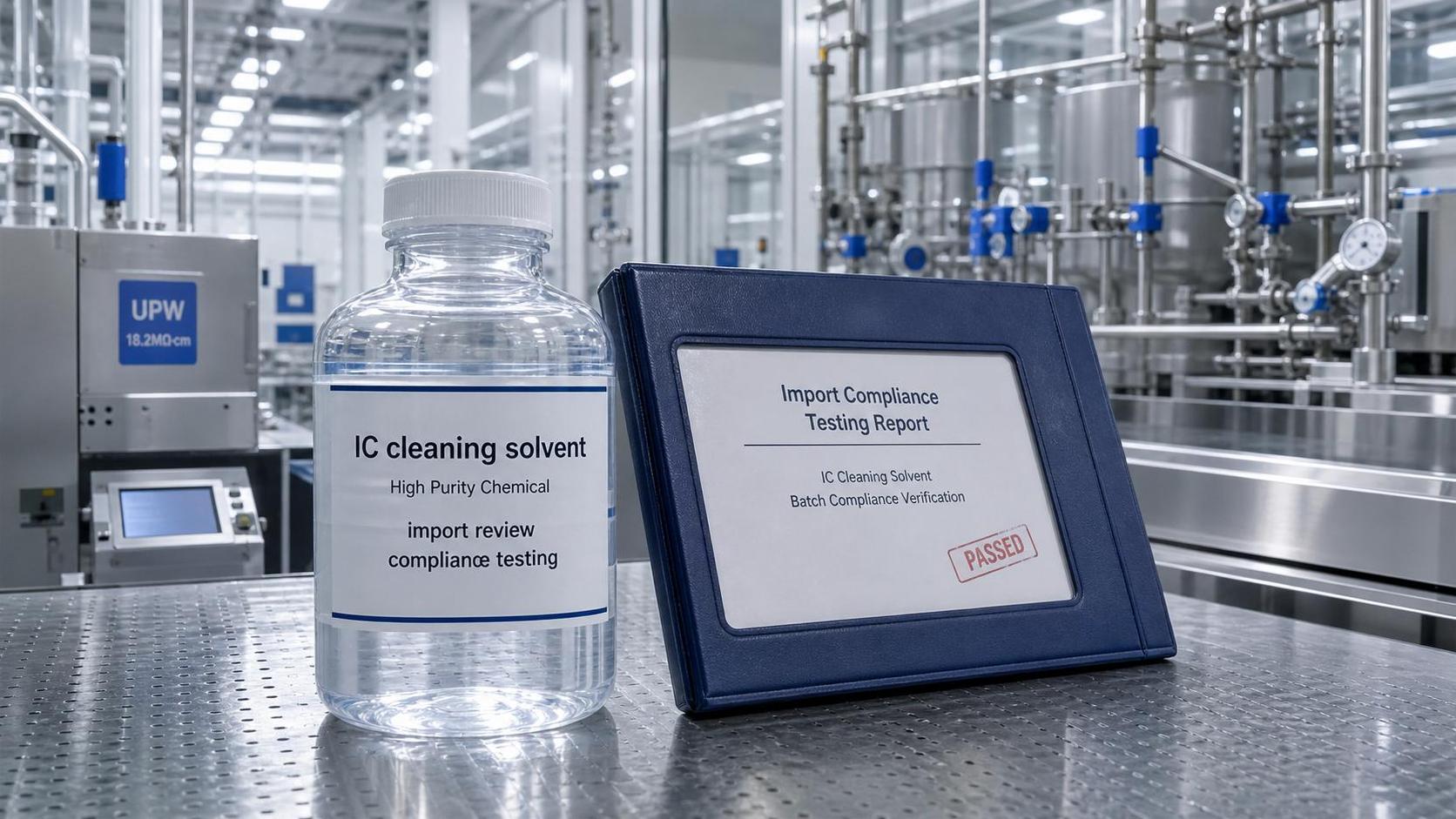
In IC cleaning, tiny impurities can become major yield losses. A reliable High-Purity Chemicals supplier helps reduce particle residue, ionic carryover, and lot-to-lot process variation.
That decision also affects audit readiness, EHS performance, and long-term fab stability. In semiconductor environments, solvent quality is tightly linked to defect risk, tool uptime, and customer confidence.
Purity Control and Supplier Definition in IC Cleaning
A High-Purity Chemicals supplier provides solvents and wet-process materials engineered for semiconductor-grade cleanliness, packaging integrity, and traceable production control.
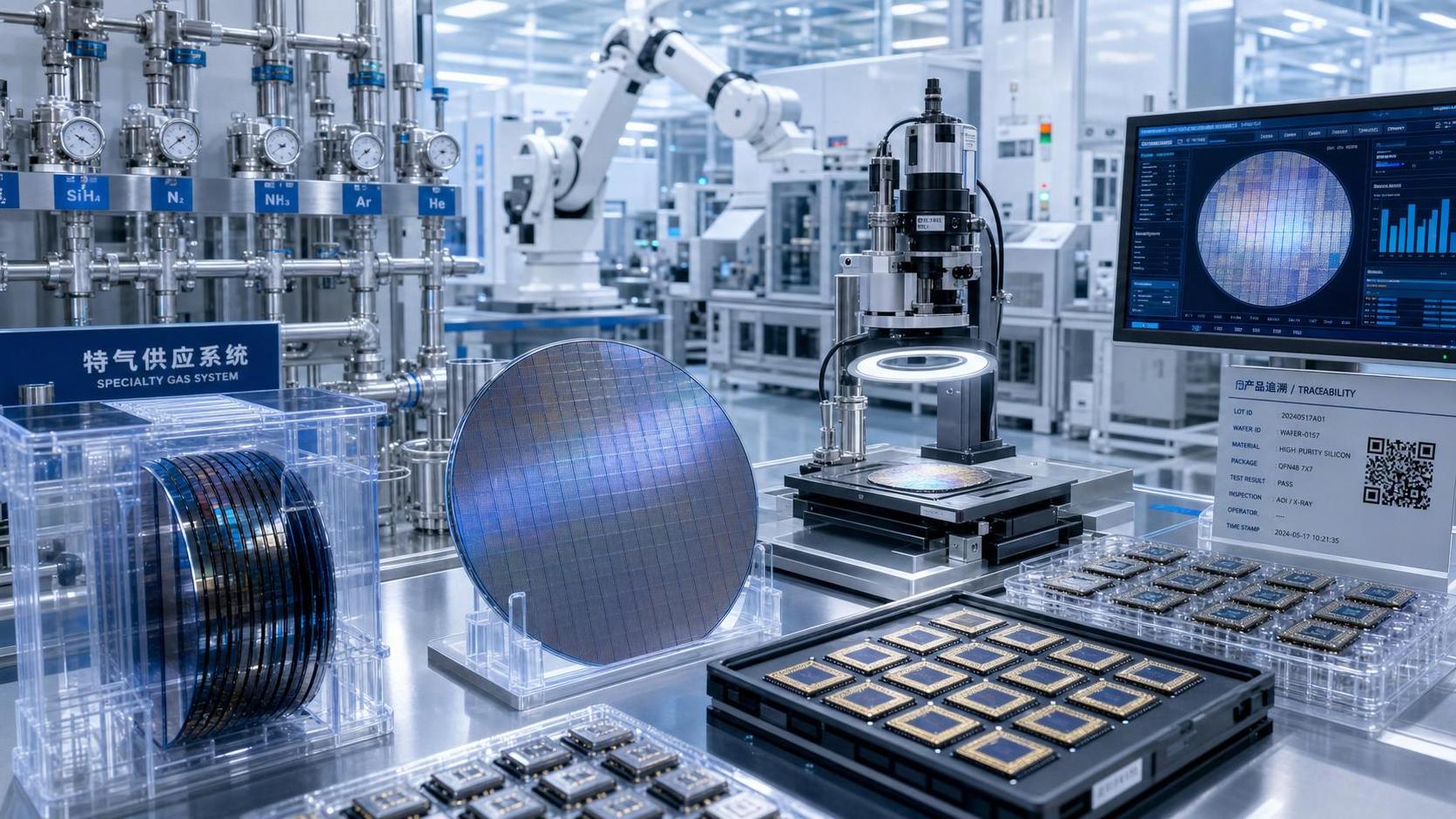
For IC cleaning solvents, purity means more than assay percentage. It includes metallic contamination, non-volatile residue, particles, moisture, organics, and container-related extractables.
In advanced and mature-node production alike, cleaning steps protect wafer surfaces before lithography, deposition, etch, packaging, and testing. Poor solvent quality can quietly weaken every downstream stage.
G-SSI benchmarking across semiconductor chemicals highlights one principle. Purity consistency matters as much as peak purity. A single unstable lot can disrupt established process windows.
Key quality dimensions
- Trace metal control at semiconductor-relevant thresholds
- Low particle counts across filling and transport stages
- Stable moisture and non-volatile residue performance
- Documented lot traceability and change management
- Clean packaging, sealed handling, and compatible materials
Industry Context and Current Evaluation Priorities
Semiconductor supply chains are becoming more localized, but quality expectations remain global. This raises the importance of choosing a High-Purity Chemicals supplier with verifiable process discipline.
The issue is especially relevant in China’s expanding mature-node ecosystem, where throughput pressure can expose weaknesses in solvent filtration, packaging, and analytical reproducibility.
At the same time, international customers continue to expect alignment with SEMI frameworks, ISO/IEC 17025 testing credibility, and disciplined contamination control across logistics and storage.
These signals show that supplier review is no longer a simple price comparison. It is part of yield engineering, compliance governance, and digital infrastructure resilience.
Business Value of the Right High-Purity Chemicals Supplier
The right High-Purity Chemicals supplier lowers hidden quality costs. It reduces rework, scrap exposure, excursion investigations, and unnecessary process tuning after solvent changes.
In front-end cleaning, stable solvent purity protects critical dimensions and surface condition. In back-end packaging, it supports adhesion, underfill reliability, and residue-free assembly steps.
This also matters in adjacent sectors. MEMS, smart sensors, power devices, and advanced packaging all rely on clean interfaces and dependable wet chemistry behavior.
Operational impact areas
- Lower defectivity from reduced particles and ionic contaminants
- Better yield stability across lots and production sites
- Fewer unplanned tool and bath maintenance events
- Stronger compliance evidence during customer or regulatory audits
- Improved long-term confidence in process qualification data
When viewed across a full line, solvent reliability is a strategic asset. A qualified High-Purity Chemicals supplier supports both technical precision and supply continuity.
Typical Evaluation Scenarios and Supplier Classification
Not every cleaning application carries the same contamination sensitivity. Supplier selection should match process criticality, tool design, and final device reliability requirements.
A practical classification model separates suppliers into baseline industrial grade, electronics grade, and semiconductor-critical grade. Only the last category should serve sensitive IC cleaning solvent applications.
Practical Review Criteria for Lower Defect Risk
To compare candidates, build a review framework that combines analytical data, packaging control, system discipline, and responsiveness during deviations.
1. Purity consistency across lots
Ask for trend data, not one certificate. A credible High-Purity Chemicals supplier can show historical variation for particles, metals, moisture, and non-volatile residue.
2. Test capability and laboratory credibility
Review method sensitivity, calibration practice, blank control, and whether testing aligns with ISO/IEC 17025 or equivalent disciplined laboratory systems.
3. Packaging and point-of-use protection
Container material, valve cleanliness, filling environment, and tamper control all influence delivered purity. The cleanest solvent can be compromised by weak packaging execution.
4. Traceability and change control
Every batch should link to raw materials, filtration steps, storage conditions, and shipment records. Unannounced changes create process instability and audit exposure.
5. Response quality during excursions
A dependable High-Purity Chemicals supplier provides root-cause analysis, retention sample review, CAPA evidence, and realistic containment timing when events occur.
Recommended checklist
- Verify semiconductor-grade specifications and trend limits.
- Audit filling, filtration, and packaging cleanliness controls.
- Review retention samples and complaint handling records.
- Check logistics conditions and storage compatibility.
- Run incoming validation on critical lots before release.
Implementation Path and Next-Step Actions
The safest approach is phased qualification. Start with document review, continue with audit and sample testing, then move into controlled production trials.
Define acceptance windows for metals, particles, NVR, moisture, and packaging defects. Connect those limits to actual process sensitivity, not generic catalog values.
For long-term control, maintain scorecards covering quality, delivery stability, change notifications, and excursion response. Requalification should follow major process or source changes.
A strong High-Purity Chemicals supplier relationship should support technical dialogue, shared risk visibility, and continuous contamination control improvement.
Within the G-SSI perspective, chemical purity is inseparable from semiconductor sovereignty, sensor fidelity, and infrastructure reliability. Supplier choice should reflect that strategic reality.
Use a structured qualification matrix, compare evidence beyond the COA, and prioritize consistency over claims. That is the most practical route to lower defect risk in IC cleaning solvents.
Get weekly intelligence in your inbox.
No noise. No sponsored content. Pure intelligence.
 Apr 28, 2026When do rapid prototyping 3D printing services save real costWhen do rapid prototyping 3D printing services save real cost
 Apr 28, 2026What Can Go Wrong in Fan-out Wafer Level Pkg?What Can Go Wrong in Fan-out Wafer Level Pkg?
 Apr 28, 2026What Makes Optical LiDAR Modules Better for Autonomy?What Makes Optical LiDAR Modules Better for Autonomy?
 Apr 28, 20262026 Market Trends in Supply Chain Resilience for Fabs2026 Market Trends in Supply Chain Resilience for Fabs
 Jun 21, 2026Japan Updates JIS C 5400-2026 for ISO Class 1 FFU TestingJapan Updates JIS C 5400-2026 for ISO Class 1 FFU Testing
 Jun 21, 2026Infineon-JCET Consortium Wins 2.5D SiP Order at PCIM AsiaInfineon-JCET Consortium Wins 2.5D SiP Order at PCIM Asia
 Jun 21, 2026SEMI China Sets New Export Packaging BarSEMI China Sets New Export Packaging Bar
 Jun 21, 2026BIS Listing Update Puts Chinese GaN Module Packaging Under ReviewBIS Listing Update Puts Chinese GaN Module Packaging Under Review
 Jun 21, 2026EU Sets Mandatory SiC MOSFET Efficiency PathEU Sets Mandatory SiC MOSFET Efficiency Path
 Jun 20, 2026Solar Water Heaters: Installation Mistakes That Raise Energy CostsSolar Water Heaters: Installation Mistakes That Raise Energy Costs
 Jun 20, 2026Orthopedic Implants: How to Compare Materials, Fit, and Long-Term OutcomesOrthopedic Implants: How to Compare Materials, Fit, and Long-Term Outcomes
 Jun 20, 2026Manufacturing Trends Reshaping Cost, Capacity, and Lead Times in 2026Manufacturing Trends Reshaping Cost, Capacity, and Lead Times in 2026
 Jun 20, 2026How Semiconductor Supply Chain Precision Reduces Yield and Delivery RiskHow Semiconductor Supply Chain Precision Reduces Yield and Delivery Risk
 Jun 20, 2026Third-Generation Semiconductors: Key Use Cases and 2026 Market ShiftsThird-Generation Semiconductors: Key Use Cases and 2026 Market Shifts
 Jun 20, 2026FDA Tightens Import Review for IC Cleaning SolventsFDA Tightens Import Review for IC Cleaning Solvents
 Jun 20, 2026GaN Module Buying Rises, but Local Packaging Becomes KeyGaN Module Buying Rises, but Local Packaging Becomes Key
 Jun 20, 2026METI Tightens Import Rules for Sub-ppb Electronic GasesMETI Tightens Import Rules for Sub-ppb Electronic Gases
 Jun 20, 2026SEMI Clarifies Export Boundaries for TSV and μBump ChipletsSEMI Clarifies Export Boundaries for TSV and μBump Chiplets
 Jun 20, 2026Wolfspeed SiC Certification Raises EU Import BarWolfspeed SiC Certification Raises EU Import Bar
 Jun 19, 2026SiC vs IGBT for EV Charging Station EfficiencySiC vs IGBT for EV Charging Station Efficiency
 Jun 19, 2026Heavy Duty Shelving: Load Limits, Layout, and SafetyHeavy Duty Shelving: Load Limits, Layout, and Safety
 Jun 19, 2026Cold Chain Logistics Failures and How to Prevent LossCold Chain Logistics Failures and How to Prevent Loss
 Jun 19, 2026Port Automation Tech: Where ROI Improves FirstPort Automation Tech: Where ROI Improves First
 Jun 19, 2026Supply Chain Shifts Reshaping Inventory Risk in 2026Supply Chain Shifts Reshaping Inventory Risk in 2026
 Jun 19, 2026SEMI China White Paper Maps Export Rules for Gas SensorsSEMI China White Paper Maps Export Rules for Gas Sensors
 Jun 19, 2026PCIM Europe 2026 Signals Shift to GaN Die SourcingPCIM Europe 2026 Signals Shift to GaN Die Sourcing
 Jun 19, 2026JETRO Tightens UPW Skid Import Documentation for JapanJETRO Tightens UPW Skid Import Documentation for Japan