Third-Generation Materials Supplier Selection Risks in 2026
Third-Generation Materials Supplier selection became a risk filter in 2026
In 2026, a Third-Generation Materials Supplier influences more than component sourcing. It shapes uptime, certification exposure, thermal margins, and regional supply resilience.
That change is most visible in SiC and GaN programs tied to electric mobility, energy conversion, industrial automation, and sensory infrastructure.
A datasheet may look competitive. The real question is whether the supplier can hold process stability across lots, fabs, and delivery windows.
This is why supplier review now sits closer to technical risk management than routine commercial comparison.
Within the G-SSI perspective, benchmarking must connect material performance with sovereign-grade reliability, thermal control, and traceable compliance.
Actual applications diverge faster than supplier brochures suggest
Different scenarios do not fail for the same reason. That is where many Third-Generation Materials Supplier evaluations become misleading.
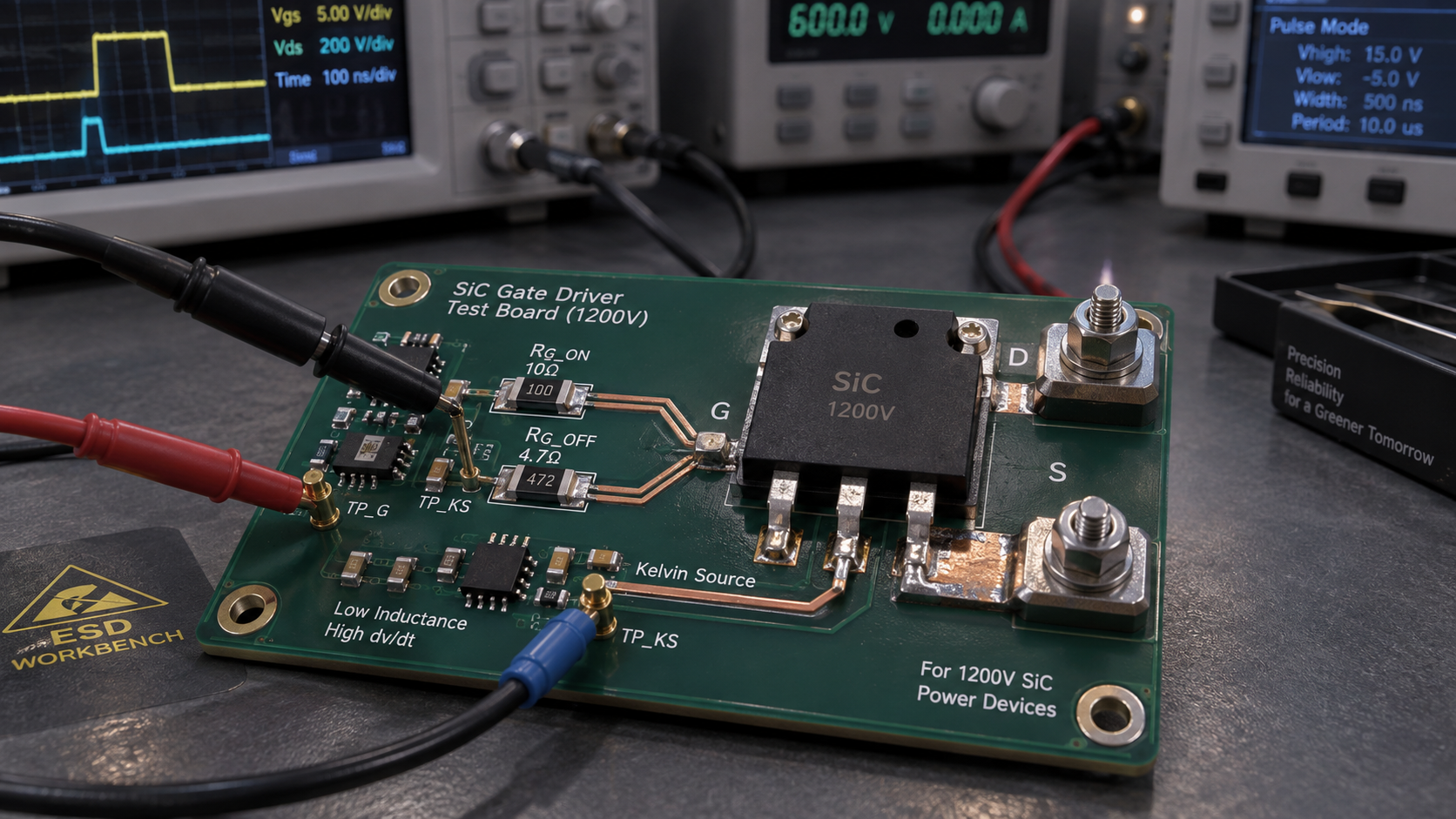
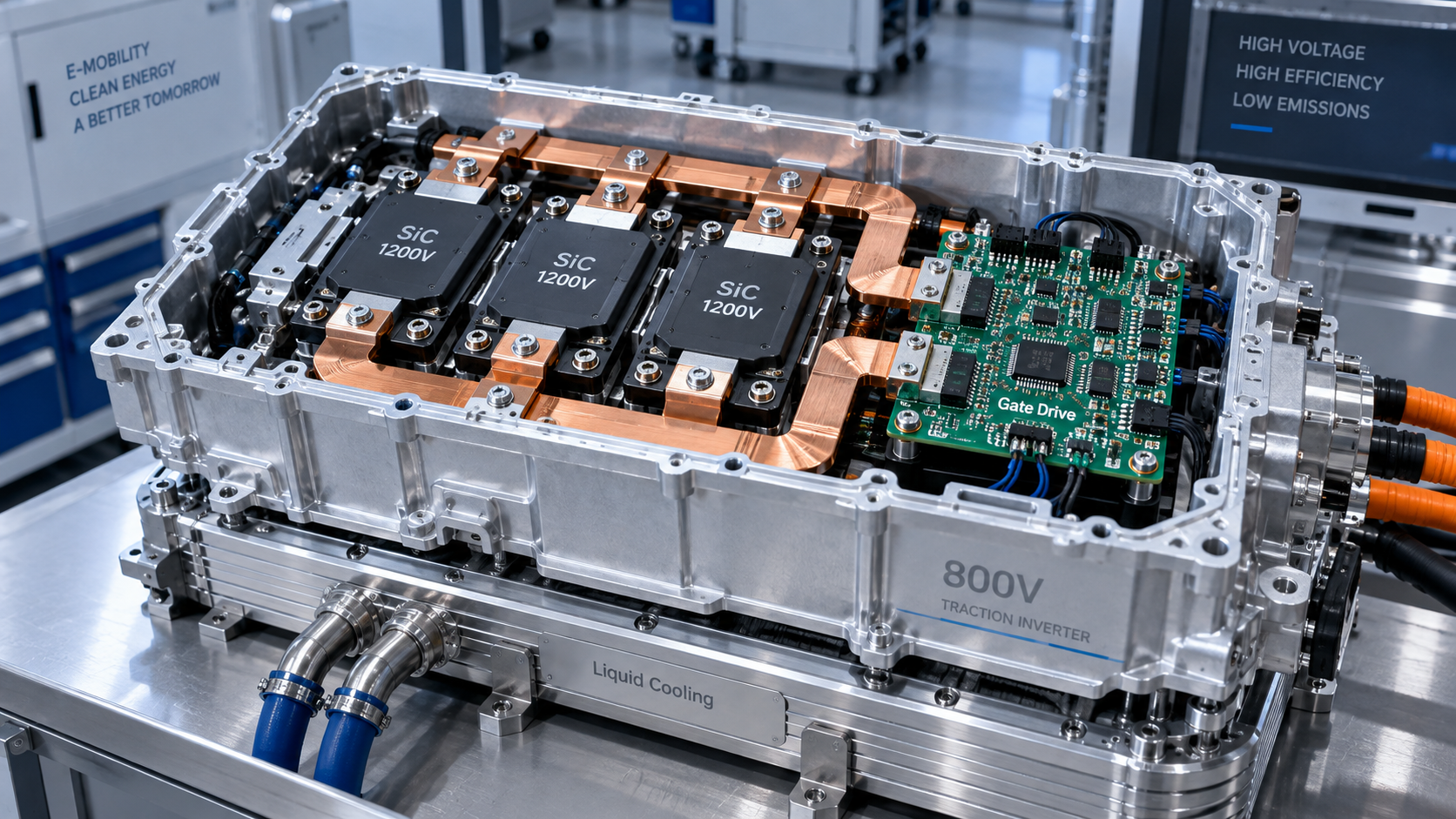
A high-voltage traction inverter stresses defect density, wafer consistency, and long-cycle qualification evidence.
A compact fast charger often cares more about switching efficiency, thermal packaging interaction, and yield stability at scale.
Industrial sensor nodes add another layer. Here, the Third-Generation Materials Supplier must support low-noise behavior, rugged operation, and environmental repeatability.
The gap matters because a supplier suitable for one power architecture may underperform once duty cycle, humidity, pulse load, or qualification geography changes.
Why the same SiC or GaN source can fit one deployment and fail another
Material selection sits upstream of packaging, module assembly, cooling design, and field reliability.
So the better judging method is not “Which supplier has the best headline parameter?”
It is “Which Third-Generation Materials Supplier can support the exact operating window without creating downstream instability?”
In power-dense mobility systems, wafer quality is only the starting point
For traction, onboard charging, and high-load converters, SiC usually enters the discussion because efficiency gains are measurable.
Yet the hidden risk is not simply electrical performance. It is lifetime predictability under thermal cycling and field variation.
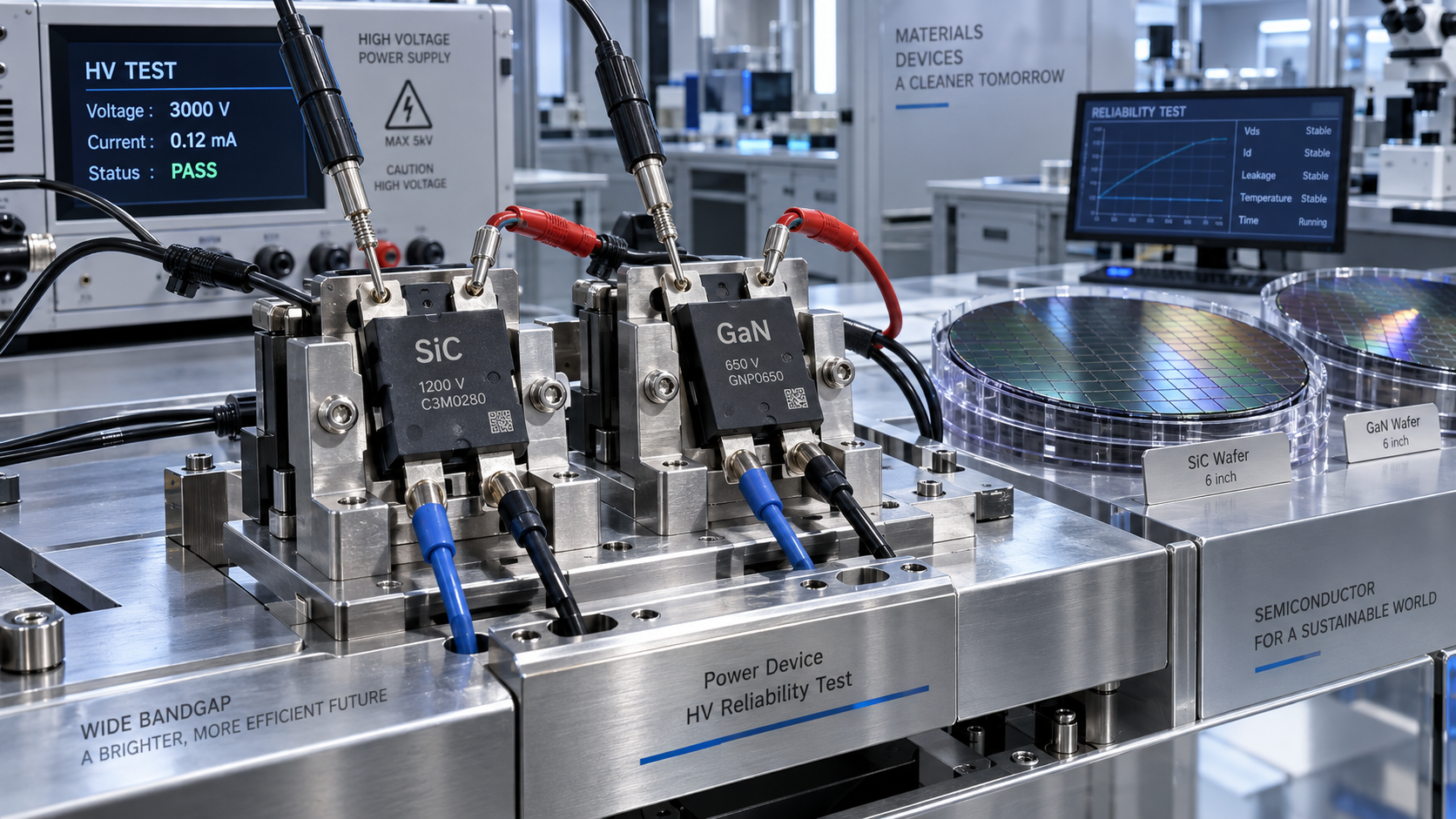
In this scenario, a Third-Generation Materials Supplier should be checked for micropipe control, basal plane defect management, epi uniformity, and qualification depth.
Evidence tied to AEC-oriented practices, failure analysis closure, and lot genealogy becomes more useful than marketing claims.
Another practical point is regional continuity. A dual-fab story sounds reassuring, but mirrored process windows are what actually matter.
If die behavior shifts between fabs, module tuning, thermal design, and validation cost can rise unexpectedly.
For chargers and industrial power supplies, process repeatability often matters more than peak claims
GaN adoption keeps expanding in fast charging, telecom power, server power shelves, and compact industrial conversion.
These environments reward fast switching. They also punish inconsistency in threshold behavior, dynamic RDS(on), and packaging interaction.
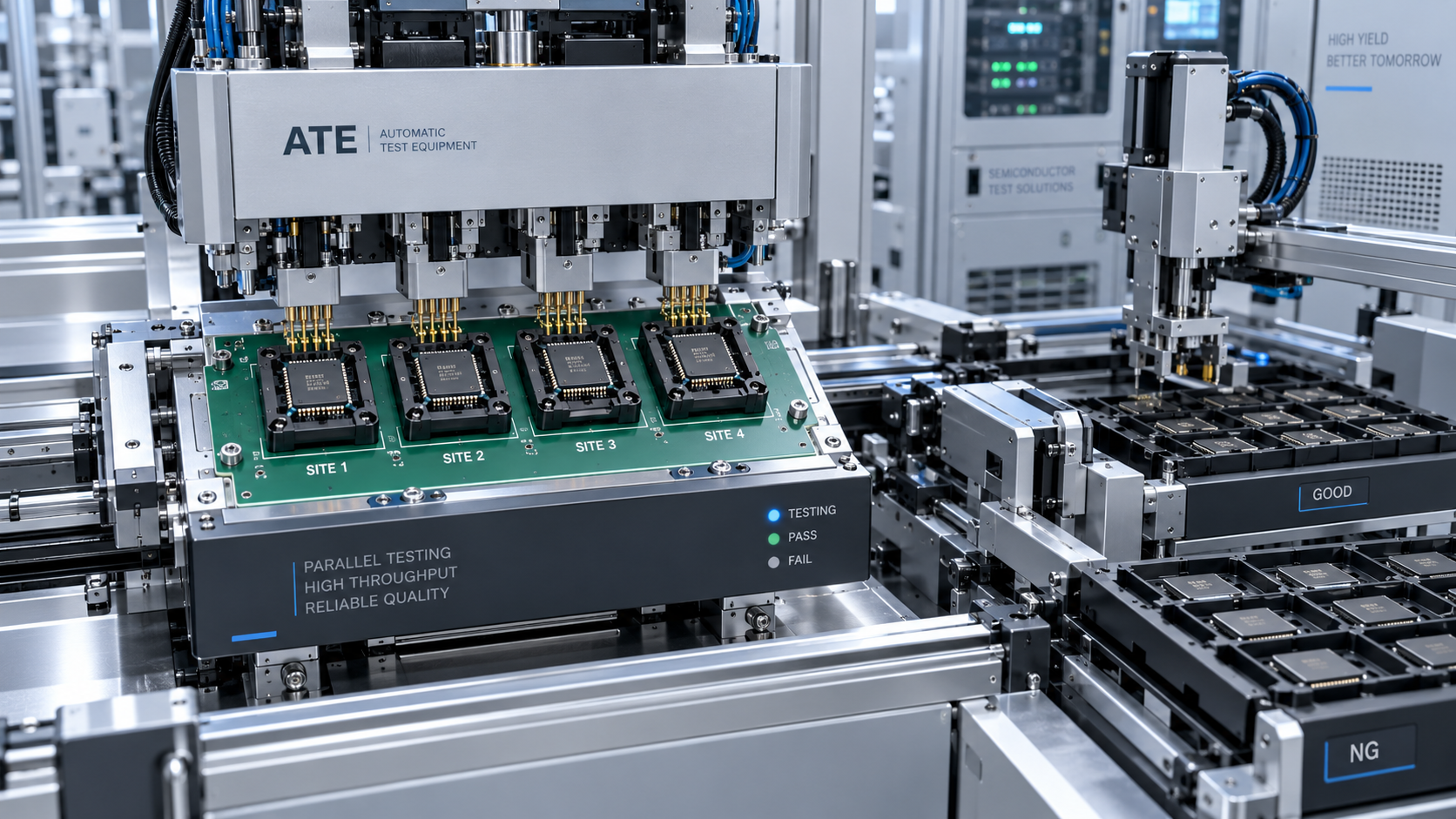
A Third-Generation Materials Supplier serving this space must show stable process control across volume ramps, not just excellent sample performance.
In actual deployment, EMI behavior, gate robustness, and thermal interface sensitivity can decide whether a platform scales cleanly.
This is where G-SSI style benchmarking helps. Cross-checking lab data with packaging, test, and environment-control disciplines gives a more realistic picture.
Sensor-rich infrastructure creates a different supplier risk profile
Not every Third-Generation Materials Supplier is judged by pure power conversion metrics.
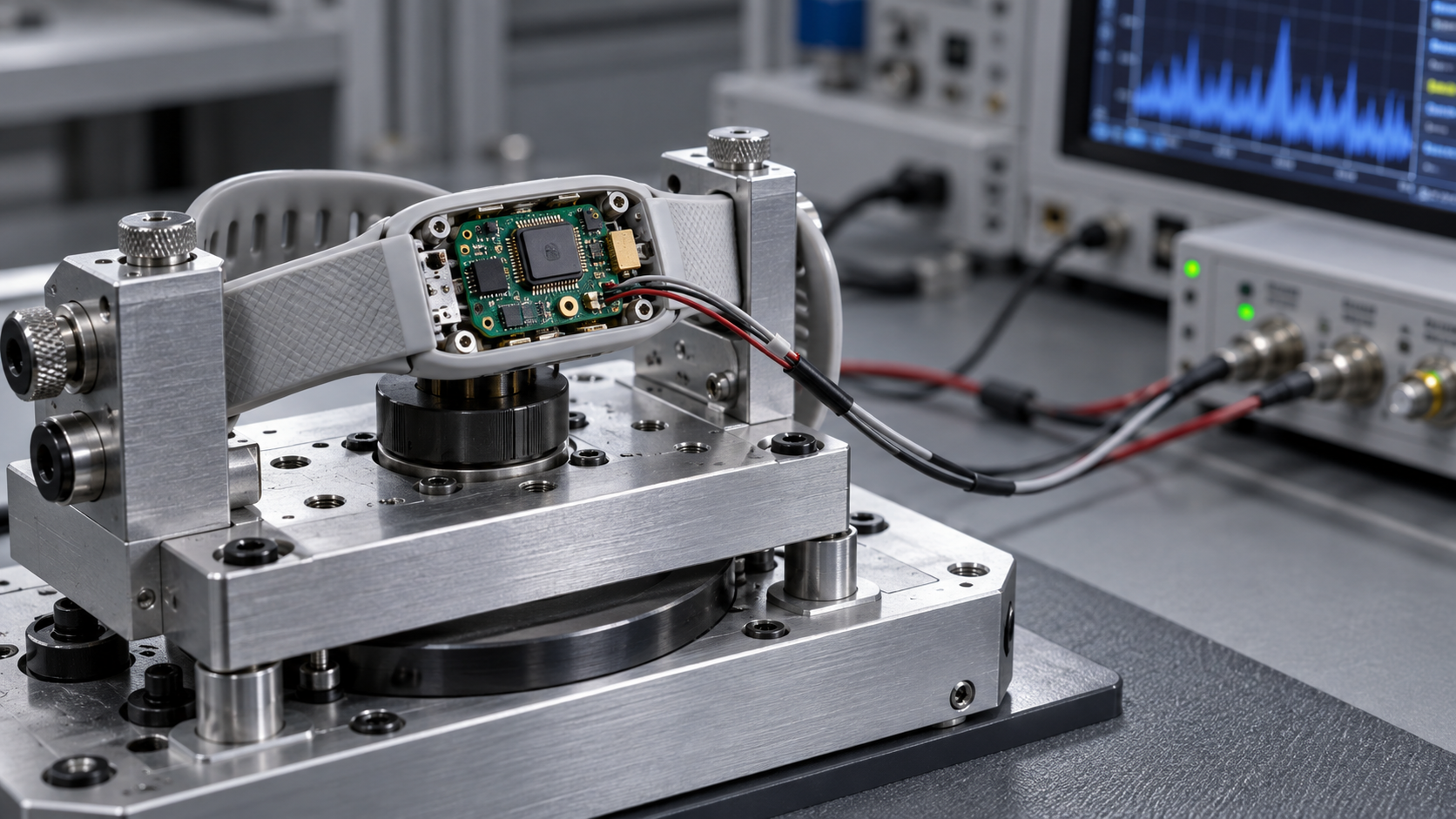
In sensory infrastructure, edge control systems, and industrial IoT nodes, material behavior affects signal integrity, heat drift, and maintenance intervals.
This is especially relevant when power devices operate close to MEMS sensors, mixed-signal circuits, or precision control boards.
A suitable Third-Generation Materials Supplier should therefore be reviewed alongside contamination control, package stress behavior, and environmental compatibility.
The evaluation should not stop at device-level numbers. It should ask how the material behaves inside a tightly integrated system.
Different scenarios change the judging priorities
A side-by-side comparison makes the selection logic clearer.
The same Third-Generation Materials Supplier may rank highly in one row and poorly in another.
What often gets overlooked before supplier approval
The most common mistake is treating material selection like a static part-number exercise.
- Looking only at efficiency curves, while ignoring thermal cycling and environmental stress.
- Accepting certifications at face value, without checking test scope, lab independence, and update frequency.
- Comparing unit price, while skipping scrap exposure, qualification reruns, and redesign cost.
- Assuming China capacity expansion automatically means globally consistent reliability performance.
- Reviewing the device alone, without checking packaging, gases, chemicals, and environment-control dependencies.
That last point matters more in 2026. Semiconductor resilience is increasingly a chain issue, not a single-supplier issue.
Compliance should be practical, not decorative
A reliable Third-Generation Materials Supplier should map evidence to the standards that actually govern deployment.
SEMI alignment, ISO/IEC 17025-backed testing, and application-relevant automotive or industrial references are stronger than generic compliance language.
The useful question is whether the documentation predicts field behavior, not whether it only supports sales qualification.
A workable way to assess Third-Generation Materials Supplier fit
In practice, selection improves when technical and operational filters are reviewed together.
- Define the real operating window, including surge events, thermal peaks, humidity, and maintenance access.
- Separate sample performance from mass-production consistency.
- Check traceability from substrate and epi through packaging and test release.
- Review second-source feasibility without assuming two names mean two equivalent outcomes.
- Request failure analysis examples and process change notification discipline.
- Evaluate regional compliance readiness for export, automotive, energy, and infrastructure programs.
This kind of review aligns with the broader G-SSI approach, where power materials are not isolated from packaging, testing, purity control, and fab environment quality.
The better decision is usually the one that matches the deployment path
Choosing a Third-Generation Materials Supplier in 2026 is rarely about finding the most advanced claim on paper.
It is about matching SiC or GaN capability to the exact application path, qualification burden, and supply continuity risk.
For mobility systems, focus on lifetime evidence and process discipline. For compact conversion, prioritize repeatability under scale. For sensory infrastructure, test system interaction early.
The next useful step is to map each deployment scenario against operating conditions, standards, packaging dependencies, and fallback sourcing options.
Once those conditions are explicit, the right Third-Generation Materials Supplier becomes easier to identify, and expensive surprises become easier to avoid.
Get weekly intelligence in your inbox.
No noise. No sponsored content. Pure intelligence.
 Apr 28, 2026When do rapid prototyping 3D printing services save real costWhen do rapid prototyping 3D printing services save real cost
 Apr 28, 2026What Can Go Wrong in Fan-out Wafer Level Pkg?What Can Go Wrong in Fan-out Wafer Level Pkg?
 Apr 28, 2026What Makes Optical LiDAR Modules Better for Autonomy?What Makes Optical LiDAR Modules Better for Autonomy?
 Apr 28, 20262026 Market Trends in Supply Chain Resilience for Fabs2026 Market Trends in Supply Chain Resilience for Fabs
 Oct 26, 2026How do buying decisions in the B2B market differ from those in B2C?How do buying decisions in the B2B market differ from those in B2C?
 Oct 26, 2026JW Insights’ 2026 SiC Report: Substrate Price Rebound Signals Industry Turning PointJW Insights’ 2026 SiC Report: Substrate Price Rebound Signals Industry Turning Point
 Oct 25, 2026How SiC power semiconductors for motor drives reduce switching lossesHow SiC power semiconductors for motor drives reduce switching losses
 Oct 25, 2026AI Overcapacity Fears Rattle US Chip Stocks as October Losses Reach $2.2 TrillionAI Overcapacity Fears Rattle US Chip Stocks as October Losses Reach $2.2 Trillion
 Oct 24, 2026How post-CMP cleaning materials affect wafer particle removalHow post-CMP cleaning materials affect wafer particle removal
 Oct 24, 2026AI, GaN and Robotics: What Comes Next for Power SemiconductorsAI, GaN and Robotics: What Comes Next for Power Semiconductors
 Oct 23, 2026How noise affects MEMS accelerometers in wearable medical devicesHow noise affects MEMS accelerometers in wearable medical devices
 Oct 23, 2026U.S. Commerce Announces Up to $389 Million in CHIPS R&D FundingU.S. Commerce Announces Up to $389 Million in CHIPS R&D Funding
 Oct 22, 2026How to avoid counterfeit power conversion components in the Middle EastHow to avoid counterfeit power conversion components in the Middle East
 Oct 22, 2026Nvidia Partners Expand AI Supply Chain; Amkor Plans Over 300% Capacity IncreaseNvidia Partners Expand AI Supply Chain; Amkor Plans Over 300% Capacity Increase
 Oct 21, 2026When are portable solar panels cost-effective for remote worksites?When are portable solar panels cost-effective for remote worksites?
 Oct 21, 2026Infineon and Wolfspeed Sign Multiyear 8-Inch SiC Wafer Supply AgreementInfineon and Wolfspeed Sign Multiyear 8-Inch SiC Wafer Supply Agreement
 Oct 20, 2026Can FFU systems alone achieve ISO 14644-1 Class 1 cleanliness?Can FFU systems alone achieve ISO 14644-1 Class 1 cleanliness?
 Oct 20, 2026Aixtron Q3 Orders More Than Double as Orders and Profit Beat ExpectationsAixtron Q3 Orders More Than Double as Orders and Profit Beat Expectations
 Oct 19, 2026How to evaluate power semiconductor suppliers for supply continuityHow to evaluate power semiconductor suppliers for supply continuity
 Oct 18, 2026How system-in-package technology reduces PCB space in wearablesHow system-in-package technology reduces PCB space in wearables
 Oct 17, 2026How to size gate resistors in 1200 V SiC power semiconductor designsHow to size gate resistors in 1200 V SiC power semiconductor designs
 Oct 16, 2026How to select 1200 V SiC MOSFETs for 800 V EV traction invertersHow to select 1200 V SiC MOSFETs for 800 V EV traction inverters
 Oct 15, 2026What voltage rating do SiC power modules for railway traction need?What voltage rating do SiC power modules for railway traction need?
 Oct 14, 2026How third-generation semiconductors achieve high breakdown voltagesHow third-generation semiconductors achieve high breakdown voltages
 Oct 13, 2026When does parallel testing cut high-volume semiconductor testing costs?When does parallel testing cut high-volume semiconductor testing costs?
 Oct 12, 2026Industrial Accelerometer Specifications for Machine Vibration MonitoringIndustrial Accelerometer Specifications for Machine Vibration Monitoring
 Oct 12, 2026What Makes an Industrial Gas Sensor Supplier Reliable for Long-Term Supply?What Makes an Industrial Gas Sensor Supplier Reliable for Long-Term Supply?