Reliability Standards Certification: Key Tests and Common Gaps
Why does Reliability Standards Certification matter beyond audit readiness?
Reliability Standards Certification is often treated as a pass-or-fail milestone. In practice, it is a control system for product behavior, field risk, and qualification confidence.
That matters more in semiconductor and sensory-infrastructure environments. A component may meet electrical targets today, yet still fail under thermal cycling, humidity, vibration, or long-duration bias.
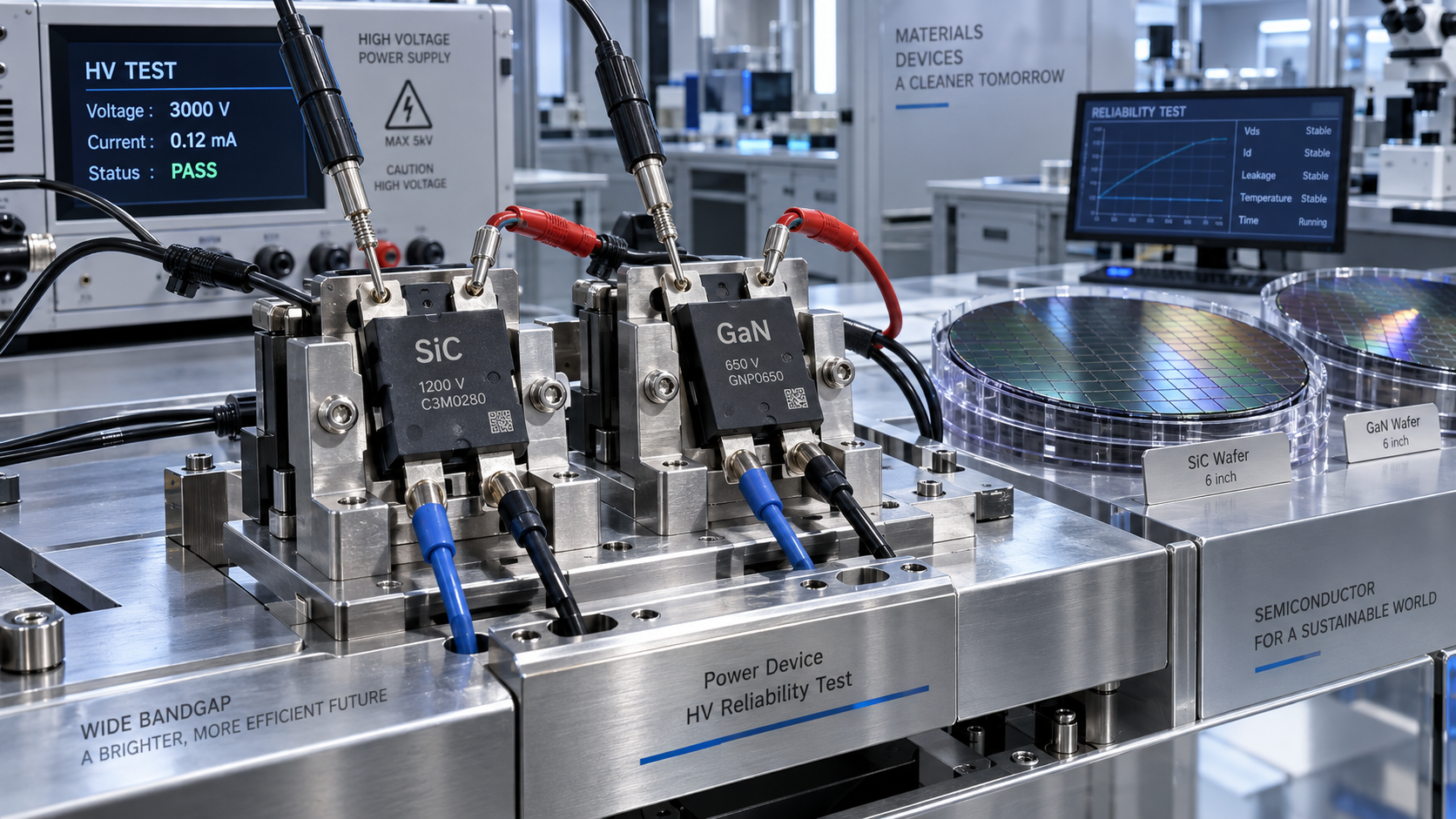
For this reason, Reliability Standards Certification links design intent with real operating stress. It helps verify whether a package, die, sensor element, gas purity control, or test method remains stable over time.
In sectors tracked by G-SSI, that link is especially important. SiC and GaN power devices, advanced packaging, MEMS sensors, and clean fabrication environments all depend on repeatable reliability evidence.
A useful way to view certification is simple. It is not only about market access. It is about proving that quality claims survive stress, variation, and scale.
Which tests usually sit at the center of Reliability Standards Certification?
Searches often focus on one standard name, yet certification usually depends on a test matrix rather than a single test. The right matrix changes with the product, package, and application profile.
For semiconductors and sensory systems, the most common groups include environmental, mechanical, electrical, and analytical validation.
- Temperature cycling checks resistance to expansion mismatch, solder fatigue, and package cracking.
- High temperature operating life evaluates degradation under voltage, current, and heat over extended periods.
- Highly accelerated stress tests expose latent weaknesses in materials, interfaces, and process margins.
- Humidity and biased humidity tests reveal corrosion risk, leakage shifts, and moisture-driven failures.
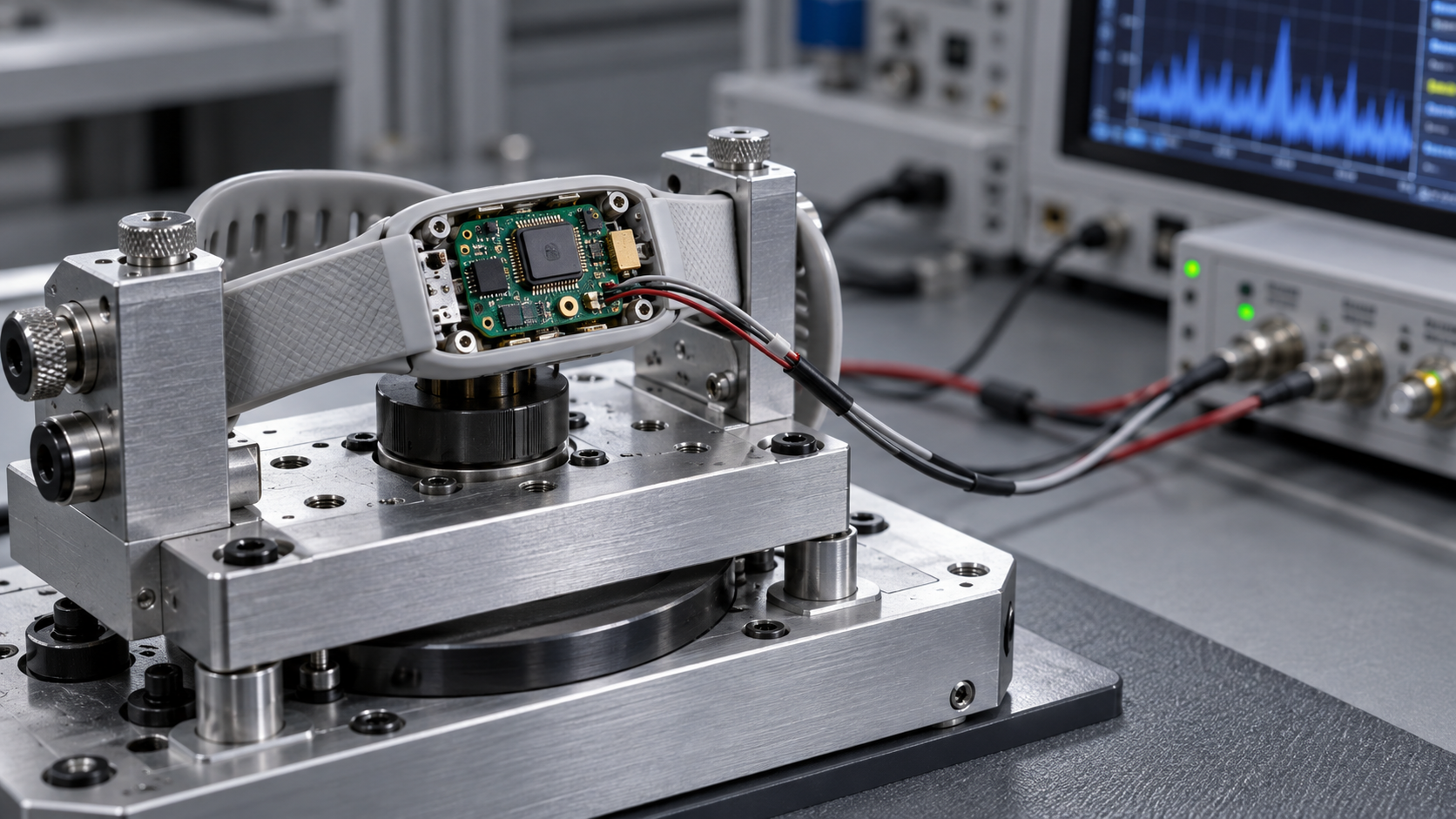
- Mechanical shock and vibration confirm structural integrity during transport, assembly, and service conditions.
- ESD and latch-up tests validate survivability against real handling and operating disturbances.
For sensors, data fidelity adds another layer. Drift, hysteresis, offset stability, response repeatability, and calibration retention can be as important as basic survival.
For fabrication materials and gases, reliability may depend on purity verification, contamination control, traceability, and laboratory competence under ISO/IEC 17025.
The table below helps connect typical certification questions with the tests that usually answer them.
How do you know which certification path actually fits the application?
This is where many projects slow down. The standard may be familiar, but the operating context is not always matched to the test plan.
A consumer-style stress profile is rarely enough for industrial power conversion, autonomous sensing, or harsh environment electronics. Reliability Standards Certification should follow the use case, not just a generic checklist.
A better starting point is to define the real exposure model.
- Operating temperature range and cycling frequency
- Voltage, current, switching stress, and duty cycle
- Humidity, contamination, and cleanroom sensitivity
- Mechanical load, vibration source, and transport route
- Expected service life and maintenance interval
In actual qualification work, standards such as AEC-Q100, SEMI references, IEC methods, and ISO/IEC 17025 do not compete. They often complement one another.
For example, AEC-style rigor may guide stress coverage for critical electronics. ISO/IEC 17025 supports confidence in the laboratory result itself. SEMI references matter when process environment and contamination control affect final reliability.
Reliability Standards Certification becomes more credible when the test logic clearly traces back to the field conditions it is meant to represent.
What are the most common gaps that delay approval or weaken certification value?
The most common problem is not missing effort. It is misaligned evidence. Teams may run many tests, yet still fail to prove the right claim.
Several gaps appear again and again in Reliability Standards Certification reviews.
- Test conditions do not reflect the real application envelope.
- Sample size is too small for meaningful reliability interpretation.
- Pass criteria are vague, missing parameter limits or failure definitions.
- Change control is weak after material, package, or process revision.
- Lab data lacks traceability, calibration proof, or method consistency.
- Failure analysis stops at symptom level without root-cause closure.
Advanced packaging often exposes another gap. Interconnect design may pass early screening, but underfill behavior, warpage, or interface stress is not fully characterized.
For MEMS and smart sensors, the weak point is frequently output trustworthiness rather than immediate failure. Certification may look complete, while drift under contamination or thermal aging remains under-tested.
In fabrication environments, purity and handling control are sometimes treated as procurement data only. Yet contamination excursions in chemicals or gases can undermine downstream reliability long before a device-level test shows it.
Does Reliability Standards Certification mainly affect cost and timeline?
Yes, but the more useful question is where cost and time are created. Certification itself is not always the expensive part. Rework, retesting, and unclear scope usually consume more resources.
A short qualification cycle can become long when the initial plan ignores failure analysis, lot variation, or laboratory scheduling. The same happens when evidence from suppliers cannot be mapped to the required standard language.
A practical review table can help identify where delays are likely.
When planned well, Reliability Standards Certification reduces total lifecycle cost. It cuts false confidence, unstable launches, and repeated supplier disputes.
What does a stronger certification workflow look like in real projects?
The stronger workflows are rarely the most complicated ones. They are the ones that connect risk, testing, evidence, and change control from the start.
In practice, a reliable path usually includes five habits.
- Build the test plan from failure mechanisms, not only from a legacy template.
- Confirm laboratory competence, calibration status, and method reproducibility early.
- Define measurable pass criteria for electrical, mechanical, and data-quality shifts.
- Keep supplier material data aligned with revision control and qualification scope.
- Treat failure analysis as part of certification, not as an afterthought.
This approach fits the broader G-SSI perspective. Reliability is not isolated at the device level. It is shaped by packaging, materials, test discipline, environmental purity, and long-term data integrity.
If the next step is unclear, begin with a gap review. List the target standard, the expected operating stress, the evidence already available, and the claims that still lack proof.
That exercise usually shows whether Reliability Standards Certification is on track, under-scoped, or carrying hidden approval risk. From there, the path becomes much easier to prioritize and defend.
Get weekly intelligence in your inbox.
No noise. No sponsored content. Pure intelligence.
 Apr 28, 2026When do rapid prototyping 3D printing services save real costWhen do rapid prototyping 3D printing services save real cost
 Apr 28, 2026What Can Go Wrong in Fan-out Wafer Level Pkg?What Can Go Wrong in Fan-out Wafer Level Pkg?
 Apr 28, 2026What Makes Optical LiDAR Modules Better for Autonomy?What Makes Optical LiDAR Modules Better for Autonomy?
 Apr 28, 20262026 Market Trends in Supply Chain Resilience for Fabs2026 Market Trends in Supply Chain Resilience for Fabs
 Oct 26, 2026How do buying decisions in the B2B market differ from those in B2C?How do buying decisions in the B2B market differ from those in B2C?
 Oct 26, 2026JW Insights’ 2026 SiC Report: Substrate Price Rebound Signals Industry Turning PointJW Insights’ 2026 SiC Report: Substrate Price Rebound Signals Industry Turning Point
 Oct 25, 2026How SiC power semiconductors for motor drives reduce switching lossesHow SiC power semiconductors for motor drives reduce switching losses
 Oct 25, 2026AI Overcapacity Fears Rattle US Chip Stocks as October Losses Reach $2.2 TrillionAI Overcapacity Fears Rattle US Chip Stocks as October Losses Reach $2.2 Trillion
 Oct 24, 2026How post-CMP cleaning materials affect wafer particle removalHow post-CMP cleaning materials affect wafer particle removal
 Oct 24, 2026AI, GaN and Robotics: What Comes Next for Power SemiconductorsAI, GaN and Robotics: What Comes Next for Power Semiconductors
 Oct 23, 2026How noise affects MEMS accelerometers in wearable medical devicesHow noise affects MEMS accelerometers in wearable medical devices
 Oct 23, 2026U.S. Commerce Announces Up to $389 Million in CHIPS R&D FundingU.S. Commerce Announces Up to $389 Million in CHIPS R&D Funding
 Oct 22, 2026How to avoid counterfeit power conversion components in the Middle EastHow to avoid counterfeit power conversion components in the Middle East
 Oct 22, 2026Nvidia Partners Expand AI Supply Chain; Amkor Plans Over 300% Capacity IncreaseNvidia Partners Expand AI Supply Chain; Amkor Plans Over 300% Capacity Increase
 Oct 21, 2026When are portable solar panels cost-effective for remote worksites?When are portable solar panels cost-effective for remote worksites?
 Oct 21, 2026Infineon and Wolfspeed Sign Multiyear 8-Inch SiC Wafer Supply AgreementInfineon and Wolfspeed Sign Multiyear 8-Inch SiC Wafer Supply Agreement
 Oct 20, 2026Can FFU systems alone achieve ISO 14644-1 Class 1 cleanliness?Can FFU systems alone achieve ISO 14644-1 Class 1 cleanliness?
 Oct 20, 2026Aixtron Q3 Orders More Than Double as Orders and Profit Beat ExpectationsAixtron Q3 Orders More Than Double as Orders and Profit Beat Expectations
 Oct 19, 2026How to evaluate power semiconductor suppliers for supply continuityHow to evaluate power semiconductor suppliers for supply continuity
 Oct 18, 2026How system-in-package technology reduces PCB space in wearablesHow system-in-package technology reduces PCB space in wearables
 Oct 17, 2026How to size gate resistors in 1200 V SiC power semiconductor designsHow to size gate resistors in 1200 V SiC power semiconductor designs
 Oct 16, 2026How to select 1200 V SiC MOSFETs for 800 V EV traction invertersHow to select 1200 V SiC MOSFETs for 800 V EV traction inverters
 Oct 15, 2026What voltage rating do SiC power modules for railway traction need?What voltage rating do SiC power modules for railway traction need?
 Oct 14, 2026How third-generation semiconductors achieve high breakdown voltagesHow third-generation semiconductors achieve high breakdown voltages
 Oct 13, 2026When does parallel testing cut high-volume semiconductor testing costs?When does parallel testing cut high-volume semiconductor testing costs?
 Oct 12, 2026Industrial Accelerometer Specifications for Machine Vibration MonitoringIndustrial Accelerometer Specifications for Machine Vibration Monitoring
 Oct 12, 2026What Makes an Industrial Gas Sensor Supplier Reliable for Long-Term Supply?What Makes an Industrial Gas Sensor Supplier Reliable for Long-Term Supply?