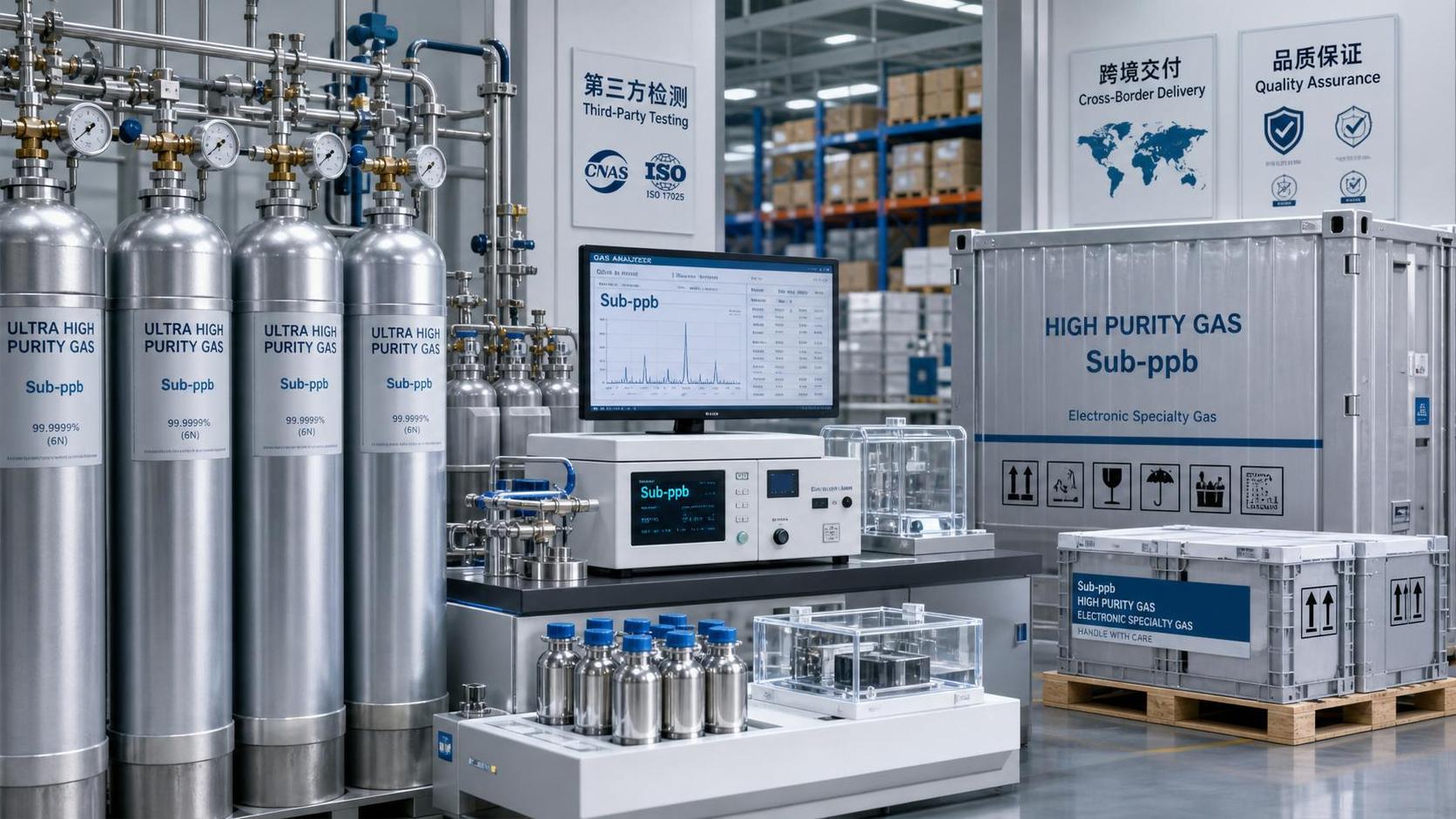
IC Testing Services: How to Avoid Delays Between Tape-Out and Qualification
For project managers and engineering leads, the period between tape-out and qualification can determine whether a product launch stays on schedule or slips into costly rework. Reliable IC Testing services help uncover packaging, reliability, and performance risks early, reducing validation bottlenecks and improving cross-team coordination. In today’s semiconductor landscape, a smarter test strategy is essential to protect timelines, quality, and customer confidence.
In practice, the post-tape-out window is rarely a single handoff. It is a compressed sequence of wafer sort planning, package validation, characterization, reliability screening, failure analysis, data review, and customer-facing qualification evidence. For teams building power devices, industrial sensors, advanced packages, or mixed-signal ICs, even a 2-week slip in one node can cascade into 6- to 10-week launch delays.
That is why IC Testing services are no longer just a lab function. They are a project control mechanism. For organizations operating across mature-node fabrication, advanced packaging, industrial MEMS, SiC/GaN power devices, and reliability-critical infrastructure, test strategy must be aligned with standards, sample planning, thermal constraints, and qualification gates from day 1. This article explains how to reduce delay risk between tape-out and qualification, what project leaders should monitor, and how to select testing support that protects both schedule and downstream product quality.
Why the Tape-Out-to-Qualification Window Becomes a Schedule Trap
Many programs underestimate the complexity of the period immediately after tape-out. The design team may consider the chip “finished,” but operations, package engineering, test engineering, quality, and customer qualification teams are only beginning their critical work. In semiconductor programs, delays typically emerge in 4 areas: incomplete test coverage, sample logistics, package-process interaction, and late reliability findings.
The hidden dependencies project managers often miss
A realistic qualification flow can involve 5 to 8 linked stages: test program preparation, first silicon characterization, probe and final test correlation, package assembly validation, preconditioning, environmental stress, failure analysis, and final data signoff. If any one stage starts with incomplete limits or unclear ownership, the entire timeline slows down. A project plan that shows only “engineering sample” and “qualification complete” is too coarse to control risk.
For example, industrial and automotive-adjacent devices often require extended temperature characterization, commonly from -40°C to 125°C or higher depending on the application. That adds setup time, soak cycles, data review, and possible re-test loops. For advanced packaging or chiplet-based assemblies, package warpage, interconnect integrity, and thermal dissipation can further extend validation beyond the original estimate.
Common causes of avoidable delay
- Test limits defined too late, forcing 2 to 3 rounds of program revision after first silicon.
- Insufficient sample allocation for characterization, reliability, and customer requests in parallel.
- Mismatch between wafer sort assumptions and package-level electrical behavior.
- Late discovery of thermal or leakage drift under high-load conditions.
- Failure analysis capacity booked only after qualification failures appear.
The table below shows where schedule risk usually accumulates and what a project leader can do before the issue becomes critical.
The key lesson is that delays are rarely caused by one dramatic failure. More often, they come from 4 or 5 small coordination gaps that stack up across engineering, packaging, test, and quality teams. Effective IC Testing services reduce these gaps by making dependencies visible early.
What High-Value IC Testing Services Should Cover Before Qualification Starts
For project leaders, not all testing support delivers the same schedule protection. The right IC Testing services should connect engineering data, qualification standards, and production readiness. In sectors influenced by SEMI, AEC-Q100, and ISO/IEC 17025 practices, the service scope needs to go beyond basic pass/fail results.
Core service blocks that shorten validation cycles
A robust test partner usually supports at least 6 critical blocks: test development, silicon characterization, package-level validation, reliability stress planning, failure analysis routing, and data reporting for qualification review. When these blocks are fragmented across multiple vendors without a common control plan, project response time slows dramatically.
This is especially true for devices in high-power and high-reliability environments. SiC MOSFETs, GaN power devices, sensor ICs, and industrial-grade mixed-signal products may require dynamic electrical measurement, thermal characterization, or package-related stress correlation. A generic digital test flow is not enough for these applications.
Minimum evaluation checklist for service scope
- Can the team support wafer sort and final test correlation within the same project plan?
- Do they define characterization coverage across temperature, voltage, and load conditions?
- Can they align reliability planning with target standards and customer requirements?
- Is there a fast-track path for FA when anomalies appear in fewer than 24–48 hours?
- Are reports delivered in a format usable by design, quality, and procurement teams?
The comparison below helps engineering managers distinguish between basic lab support and qualification-oriented IC Testing services.
The difference is not just technical depth. It is also organizational efficiency. When IC Testing services are qualification-oriented, decisions can be made in hours instead of days because the data is already structured for cross-functional review.
How to Build a Test Strategy That Prevents Rework
The most reliable way to avoid post-tape-out delays is to design the test path before silicon arrives. That means turning qualification into a managed workflow with clear entry criteria, sample plans, and escalation triggers. For most semiconductor programs, a 3-phase strategy is practical and scalable.
Phase 1: Pre-silicon alignment, usually 2–3 weeks before wafer output
In this phase, project managers should lock the device matrix, package options, expected operating corners, and the draft qualification path. Even if some limits remain provisional, the team should agree on what will be characterized at room temperature, hot, and cold conditions, and what data is required for go/no-go decisions.
- Define 4 key ownership tracks: design, package, test, and quality.
- Reserve sample quantities for engineering, reliability, FA, and contingency use.
- Set anomaly escalation rules, such as response within 24 hours for first critical failure.
Phase 2: First silicon learning loop, usually days 1–10 after arrival
This is the highest-leverage period. Fast characterization during the first 7 to 10 days often prevents 2 to 4 weeks of later rework. The objective is not only to see whether the die functions, but to understand parametric spread, thermal behavior, and any mismatch between simulation and package-level reality.
For power devices and sensor interfaces, include stress-relevant conditions early rather than waiting for formal qualification. If threshold shifts, on-resistance drift, leakage excursions, or offset instability appear at this stage, the team can still adjust limits, package assumptions, or screening logic before the qualification lot is consumed.
What to review in the first silicon meeting
- Electrical distribution across at least 3 operating corners.
- Correlation between wafer sort data and package test data.
- Any outliers that require FA, de-capsulation, or cross-section review.
- Readiness of test limits for engineering sample release.
Phase 3: Qualification execution with decision gates
Formal qualification should not be a blind stress run. It should include gate reviews after preconditioning, early read points, and failure screening milestones. For many projects, inserting 2 or 3 scheduled review gates can reduce wasted stress time because anomalous patterns are caught before the full duration completes.
In advanced packaging and industrial-grade products, these gates are particularly valuable because package reliability, interconnect fatigue, and thermal cycling issues may appear before final completion. Good IC Testing services provide not only stress execution but early pattern recognition that keeps the schedule under control.
Selecting an IC Testing Partner for Schedule, Quality, and Supply Chain Resilience
Choosing a testing partner is a procurement decision as much as a technical one. Project managers need a provider that can operate across mature-node realities and international reliability expectations. This matters even more when products serve industrial automation, energy conversion, sensing infrastructure, or sovereign digital systems where field failure costs are high and customer audits are detailed.
Decision criteria that matter in real programs
A useful vendor evaluation should cover at least 5 criteria: technical coverage, turnaround predictability, reporting discipline, standards familiarity, and escalation responsiveness. Lowest unit pricing can be misleading if the provider cannot support correlation studies, reliability review, or rapid FA routing when the project hits a critical issue.
The table below provides a procurement-oriented framework suitable for engineering leads and sourcing teams.
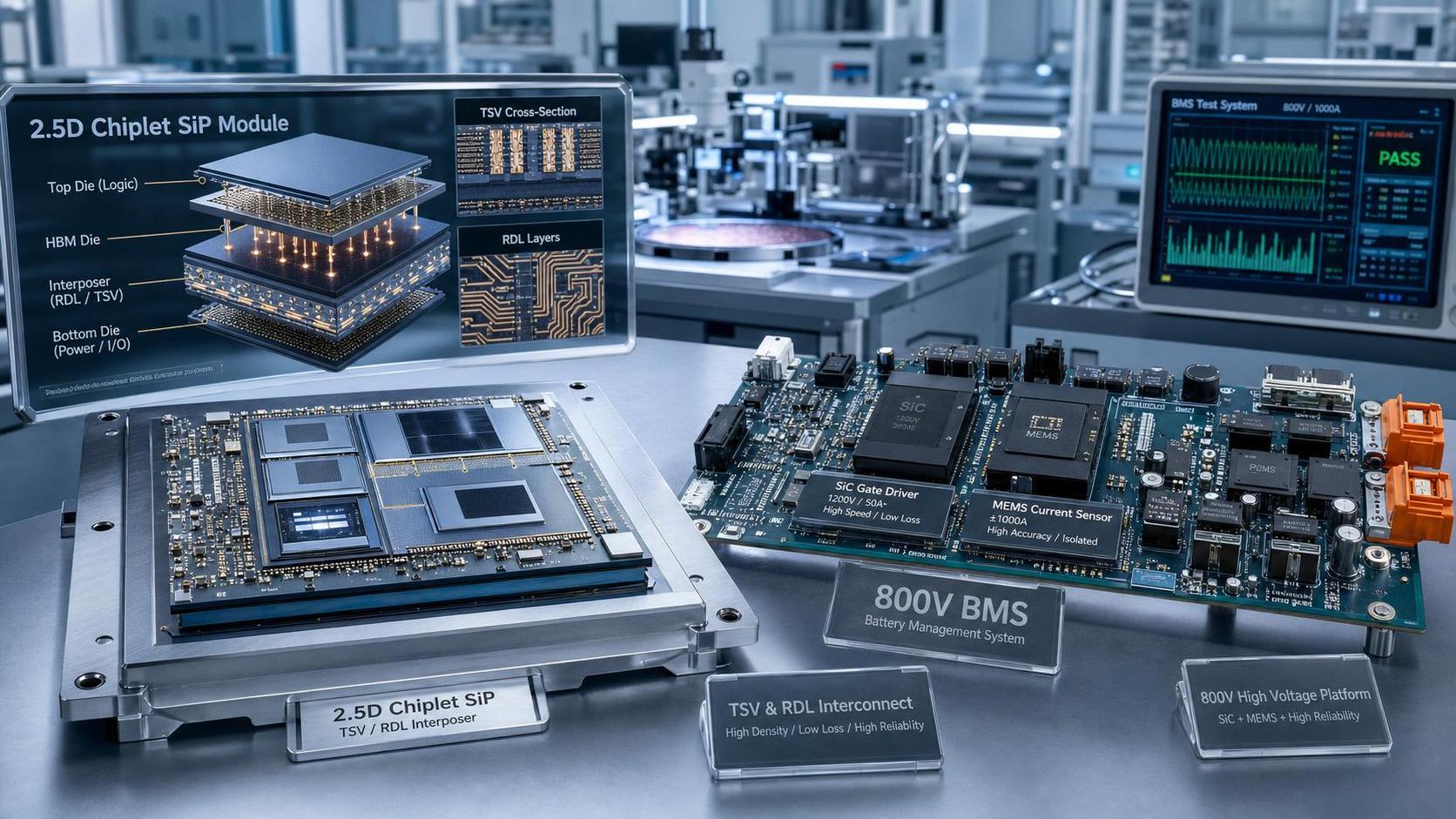
A capable partner should also understand the interaction between package architecture, thermal conditions, and electrical behavior. For example, 2.5D/3D integration, high-voltage SiC structures, or industrial sensor modules may each require different stress assumptions and data views. When the provider understands these distinctions, qualification planning becomes much more predictable.
Warning signs during vendor selection
- Lead time is quoted only for standard lots, with no answer on urgent re-test or FA support.
- Reports focus on raw output but not engineering interpretation or qualification linkage.
- No clear method exists for correlation between wafer sort, package test, and reliability screening.
- Technical team access is limited, slowing issue closure during active project phases.
Practical FAQ for Project Managers and Engineering Leads
When should IC Testing services be engaged?
Ideally 2 to 4 weeks before first silicon availability. That gives enough time to align limits, reserve capacity, confirm package assumptions, and define the qualification evidence needed by internal quality teams or external customers.
How much contingency should a schedule include?
For a standard industrial IC program, many teams hold a 10% to 15% contingency buffer in the qualification phase. For new package platforms, high-voltage devices, or sensor products with environmental sensitivity, a larger reserve may be prudent because characterization and FA loops can be less predictable.
What is the biggest mistake after tape-out?
Treating testing as a downstream execution task instead of a cross-functional control plan. Once data, sample allocation, and escalation paths are fragmented, even a small anomaly can force multiple teams into serial problem solving, which is where schedule loss accelerates.
How do IC Testing services support customer confidence?
They create traceable evidence that the product meets expected electrical, package, and reliability conditions under defined use environments. For B2B buyers in industrial, power, or infrastructure markets, this traceability often matters as much as the nominal performance itself.
Between tape-out and qualification, speed matters, but controlled speed matters more. The most effective IC Testing services help project managers turn a risky handoff period into a governed process with clear milestones, measurable decision gates, and faster issue closure across design, test, package, and quality teams.
For organizations working across semiconductor packaging, power devices, MEMS, sensing infrastructure, and reliability-driven industrial systems, the right testing strategy improves more than timelines. It strengthens product confidence, supports customer audits, and reduces the cost of late-stage surprises. If you need a qualification-oriented approach tailored to your device type, package path, or reliability target, contact us now to get a customized solution and discuss the right IC Testing services for your next program.
Get weekly intelligence in your inbox.
No noise. No sponsored content. Pure intelligence.
 Apr 28, 2026When do rapid prototyping 3D printing services save real costWhen do rapid prototyping 3D printing services save real cost
 Apr 28, 2026What Can Go Wrong in Fan-out Wafer Level Pkg?What Can Go Wrong in Fan-out Wafer Level Pkg?
 Apr 28, 2026What Makes Optical LiDAR Modules Better for Autonomy?What Makes Optical LiDAR Modules Better for Autonomy?
 Apr 28, 20262026 Market Trends in Supply Chain Resilience for Fabs2026 Market Trends in Supply Chain Resilience for Fabs
 Jun 22, 2026TÜV Rheinland Issues New ISO Class 1 FFU Verification PaperTÜV Rheinland Issues New ISO Class 1 FFU Verification Paper
 Jun 22, 2026METI Tightens Import Checks for Sub-ppb Ultra-pure GasesMETI Tightens Import Checks for Sub-ppb Ultra-pure Gases
 Jun 22, 2026SEMI Approves TIM Test Standard for 2.5D Chiplet SiPSEMI Approves TIM Test Standard for 2.5D Chiplet SiP
 Jun 22, 2026DOE Opens Comment Period on GaN Module Label RuleDOE Opens Comment Period on GaN Module Label Rule
 Jun 22, 2026EU REACH Adds Limit for Phenolic Resin in SiC MOSFET PackagingEU REACH Adds Limit for Phenolic Resin in SiC MOSFET Packaging
 Jun 21, 2026IoT Sensors in 2026: Where Industrial Monitoring Is Heading NextIoT Sensors in 2026: Where Industrial Monitoring Is Heading Next
 Jun 21, 2026Centrifuge Machines: Common Failure Causes and Faster Troubleshooting StepsCentrifuge Machines: Common Failure Causes and Faster Troubleshooting Steps
 Jun 21, 2026How to Choose Die Casting Parts for Industrial Machinery That Last LongerHow to Choose Die Casting Parts for Industrial Machinery That Last Longer
 Jun 21, 2026Electronic Chemical Solutions for Chip Fabs: How to Reduce Contamination RiskElectronic Chemical Solutions for Chip Fabs: How to Reduce Contamination Risk
 Jun 21, 2026Supply Chain Intelligence: 5 Signals That Expose Hidden Supplier RiskSupply Chain Intelligence: 5 Signals That Expose Hidden Supplier Risk
 Jun 21, 2026Japan Updates JIS C 5400-2026 for ISO Class 1 FFU TestingJapan Updates JIS C 5400-2026 for ISO Class 1 FFU Testing
 Jun 21, 2026Infineon-JCET Consortium Wins 2.5D SiP Order at PCIM AsiaInfineon-JCET Consortium Wins 2.5D SiP Order at PCIM Asia
 Jun 21, 2026SEMI China Sets New Export Packaging BarSEMI China Sets New Export Packaging Bar
 Jun 21, 2026BIS Listing Update Puts Chinese GaN Module Packaging Under ReviewBIS Listing Update Puts Chinese GaN Module Packaging Under Review
 Jun 21, 2026EU Sets Mandatory SiC MOSFET Efficiency PathEU Sets Mandatory SiC MOSFET Efficiency Path
 Jun 20, 2026Solar Water Heaters: Installation Mistakes That Raise Energy CostsSolar Water Heaters: Installation Mistakes That Raise Energy Costs
 Jun 20, 2026Orthopedic Implants: How to Compare Materials, Fit, and Long-Term OutcomesOrthopedic Implants: How to Compare Materials, Fit, and Long-Term Outcomes
 Jun 20, 2026Manufacturing Trends Reshaping Cost, Capacity, and Lead Times in 2026Manufacturing Trends Reshaping Cost, Capacity, and Lead Times in 2026
 Jun 20, 2026How Semiconductor Supply Chain Precision Reduces Yield and Delivery RiskHow Semiconductor Supply Chain Precision Reduces Yield and Delivery Risk
 Jun 20, 2026Third-Generation Semiconductors: Key Use Cases and 2026 Market ShiftsThird-Generation Semiconductors: Key Use Cases and 2026 Market Shifts
 Jun 20, 2026FDA Tightens Import Review for IC Cleaning SolventsFDA Tightens Import Review for IC Cleaning Solvents
 Jun 20, 2026GaN Module Buying Rises, but Local Packaging Becomes KeyGaN Module Buying Rises, but Local Packaging Becomes Key
 Jun 20, 2026METI Tightens Import Rules for Sub-ppb Electronic GasesMETI Tightens Import Rules for Sub-ppb Electronic Gases