Digital Freight Matching: When Speed Adds Risk
Digital freight matching looks efficient, but high-value cargo changes the calculation
Digital freight matching is often presented as a simple efficiency upgrade. In ordinary freight, that framing may be acceptable. In semiconductor and sensory-infrastructure logistics, it is incomplete.
A faster truck match, quicker backhaul fill, or lower empty-mile ratio can help. Yet when cargo includes wafers, packaged ICs, MEMS sensors, specialty gases, or cleanroom-support materials, speed alone is not a safe decision rule.
That is where digital freight matching becomes a risk-management issue, not just a routing tool. The same platform logic that accelerates capacity access can also shorten verification time, weaken carrier screening, and blur accountability.
Within the G-SSI perspective, logistics performance must align with technical precision. Supply chain resilience depends on more than delivery times. It also depends on thermal stability, contamination control, chain of custody, and standards-based documentation.
In practice, the real question is not whether digital freight matching is useful. It is whether the matching logic fits the cargo profile, facility environment, compliance burden, and failure cost of each shipment.
Why the same digital freight matching model behaves differently across shipments
Different logistics scenarios create very different risk patterns. A pallet of sealed industrial parts and a lane carrying high-purity electronic chemicals do not tolerate the same carrier variability.
More importantly, semiconductor-related cargo often carries hidden sensitivity. Shock events may not cause visible damage. Temperature drift may not create immediate rejection. Traceability gaps may surface only during audit, warranty analysis, or yield investigation.
Digital freight matching works best when the shipment can be described through stable, searchable attributes. It becomes more difficult when requirements depend on nuanced handling conditions, validated equipment, or site-specific operating protocols.
This is why high-value technology supply chains should not evaluate digital freight matching by rate and ETA alone. The meaningful comparison starts with cargo criticality, route complexity, and the consequences of a logistics failure.
A quick comparison of scenario differences
When urgent fab support makes speed valuable but dangerous
One common use case for digital freight matching is emergency replenishment. A delayed part, spare subsystem, or process-support material can interrupt output and multiply downstream costs quickly.
In that setting, digital freight matching can be genuinely useful. It exposes spot capacity fast and can reduce response time on difficult lanes. The danger appears when urgency compresses the qualification process.
A matched carrier may be available, but availability does not confirm suitability. For fab-related shipments, equipment cleanliness, temperature capability, sealing integrity, and real-time exception reporting can matter more than pickup speed.
A practical approach is to build a tiered release rule. Pre-approved carriers can be auto-matched within defined limits. New carriers should trigger extra checks before dispatch, even when the lane is time-critical.
For IC packaging, MEMS, and sensor shipments, cargo integrity often outranks freight velocity
Not every delay is equally harmful. In many advanced packaging and sensor shipments, a slightly slower move with better handling discipline is safer than the fastest available option.
Digital freight matching platforms usually optimize around route availability, pricing, and pickup windows. Those variables help, but they do not automatically capture vibration exposure, humidity control, or repeated cross-dock handling.
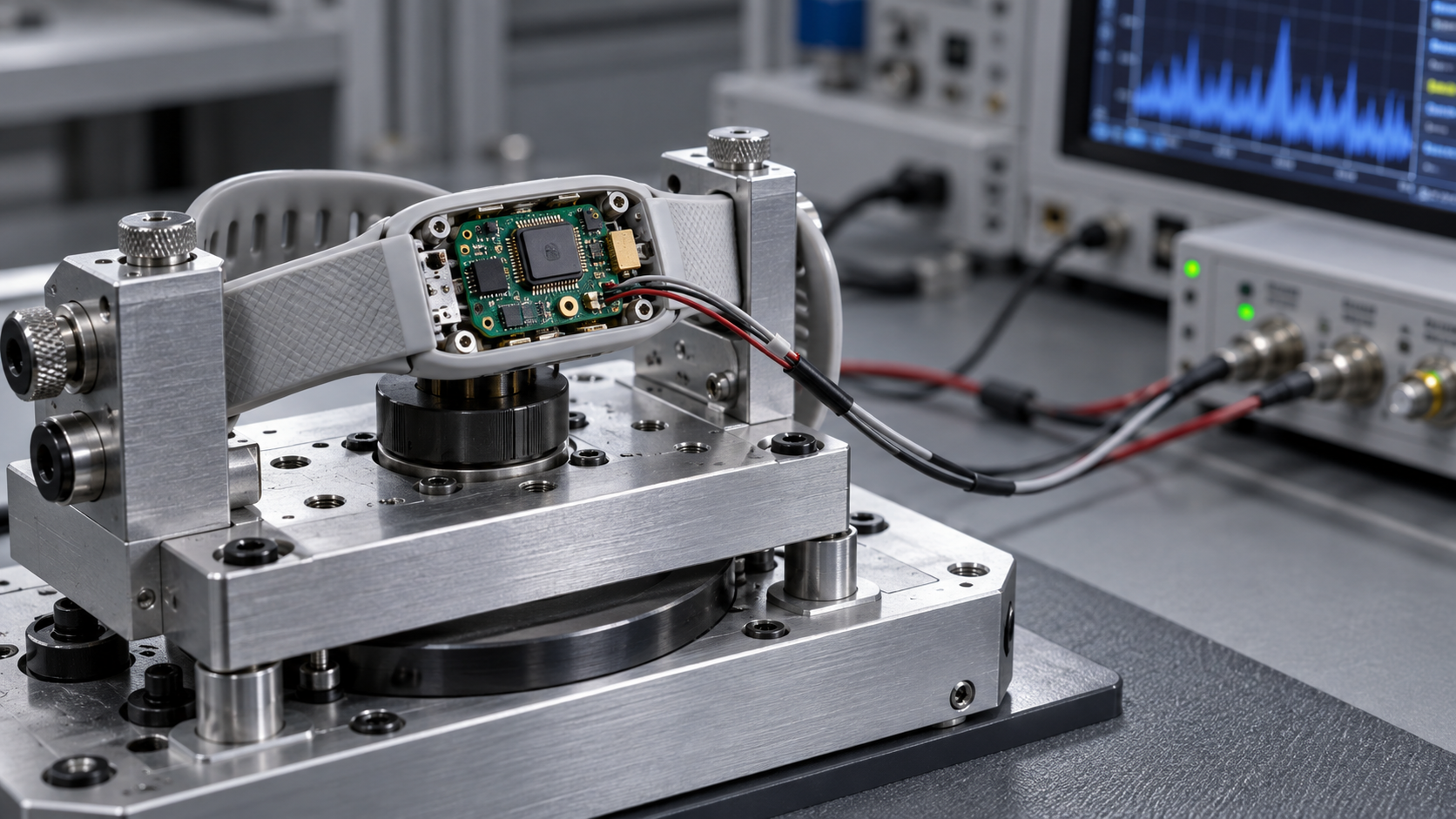
This matters for 2.5D/3D packaging flows, precision sensor modules, and calibration-sensitive devices. A shipment can arrive on time and still create downstream quality noise, intermittent failures, or unexplained testing variance.
In actual evaluation, it helps to ask whether the digital freight matching system stores performance evidence, not just profile claims. Past excursion records, route consistency, and packaging-compliance history are more useful than generic reliability scores.
Checks that deserve more weight in sensitive-device lanes
- Shock and tilt monitoring compatibility
- Humidity and temperature data capture during transit
- Limits on cross-docking or mixed-load exposure
- Proof of exception escalation within a defined time window
- Documented handling record for electronics or clean cargo
Chemical and gas logistics expose the limits of generic matching logic
The risk profile changes again for high-purity electronic chemicals and specialty gases. Here, digital freight matching must support compliance depth, not just transportation speed.
Sub-ppb purity expectations, hazardous materials controls, cylinder management, and contamination prevention demand very specific operating discipline. A platform that treats carriers as broadly interchangeable may hide critical gaps.
This is where G-SSI-aligned thinking becomes useful. International benchmarking standards such as SEMI, ISO/IEC 17025, and related quality frameworks shape what “acceptable logistics” really means for sensitive supply chains.
Digital freight matching can still add value here, but usually as part of a controlled network. The matching engine should sit behind qualification rules, approved lane logic, and document verification rather than replacing them.
Cross-border movements need traceability more than marketplace flexibility
Cross-border shipments often look attractive for digital freight matching because lane volatility is high. Capacity swings, regional disruptions, and customs timing create pressure for flexible carrier access.
Yet this is also where fragmented responsibility creates serious exposure. One digital match may lead to several handoffs, subcontracted legs, or data breaks between domestic pickup, bonded transit, and final delivery.
For semiconductor equipment parts, test assets, or controlled sensor systems, the loss is not only delay. It may include documentation inconsistency, customs challenge, insurance dispute, or incomplete custody evidence after an incident.
A better decision model is to separate “find capacity fast” from “release freight safely.” Digital freight matching can support the first task. The second still requires traceability design, handoff governance, and audit-ready records.
Where digital freight matching is often misjudged
A frequent mistake is assuming that carrier ratings inside a platform equal technical fitness. They usually reflect service responsiveness or general delivery performance, not contamination awareness or sensitive-electronics handling.
Another error is treating similar shipments as operationally identical. Power semiconductor modules, MEMS assemblies, and fab environment-control materials may move in the same region but require different packaging and monitoring rules.
There is also a cost illusion. Digital freight matching can lower spot rates while increasing hidden costs through claims, yield loss, line disruption, qualification rework, or additional inspection on receipt.
The final blind spot is governance. If the platform can match quickly but cannot preserve evidence, then every exception becomes harder to analyze. In high-reliability industries, poor traceability is itself a supply chain defect.
A more reliable way to apply digital freight matching in high-value technology chains
The most effective model is selective adoption. Use digital freight matching where the cargo profile, route conditions, and verification controls are clearly defined. Avoid blanket rollout across all freight categories.
In practical terms, that usually means mapping shipments into risk bands. Low-variability freight can use broader marketplace access. High-sensitivity cargo should use constrained matching with prequalified carriers and monitored lanes.
- Define cargo classes by contamination, shock, thermal, and compliance sensitivity
- Set release thresholds for new carriers, subcontracting, and route deviations
- Require sensor-backed transit visibility for critical loads
- Link platform data to claims, audit, and quality investigation workflows
- Review performance by lane and cargo type, not by aggregate platform score
This kind of discipline keeps digital freight matching useful without letting speed override technical control. It also aligns logistics decisions with the reliability expectations surrounding SiC/GaN devices, advanced packaging, sensors, and fab-support inputs.
Before expanding usage, clarify the scenario fit
Digital freight matching is not inherently risky. The risk appears when a fast marketplace model is applied to cargo that depends on verified handling, strict compliance, and complete traceability.
For high-value technology supply chains, the smarter next step is to review actual shipment scenarios one by one. Identify where speed creates value, where speed creates exposure, and where controls must tighten before scaling.
That review should compare lane volatility, cargo sensitivity, standards requirements, monitoring needs, and failure cost. Once those conditions are clear, digital freight matching can be used with far better judgment.
In other words, do not ask only whether digital freight matching is available. Ask whether it is appropriate for the shipment, defensible under audit, and resilient enough for the long-term demands of semiconductor and sensory-infrastructure operations.
Get weekly intelligence in your inbox.
No noise. No sponsored content. Pure intelligence.
 Apr 28, 2026When do rapid prototyping 3D printing services save real costWhen do rapid prototyping 3D printing services save real cost
 Apr 28, 2026What Can Go Wrong in Fan-out Wafer Level Pkg?What Can Go Wrong in Fan-out Wafer Level Pkg?
 Apr 28, 2026What Makes Optical LiDAR Modules Better for Autonomy?What Makes Optical LiDAR Modules Better for Autonomy?
 Apr 28, 20262026 Market Trends in Supply Chain Resilience for Fabs2026 Market Trends in Supply Chain Resilience for Fabs
 Oct 26, 2026How do buying decisions in the B2B market differ from those in B2C?How do buying decisions in the B2B market differ from those in B2C?
 Oct 26, 2026JW Insights’ 2026 SiC Report: Substrate Price Rebound Signals Industry Turning PointJW Insights’ 2026 SiC Report: Substrate Price Rebound Signals Industry Turning Point
 Oct 25, 2026How SiC power semiconductors for motor drives reduce switching lossesHow SiC power semiconductors for motor drives reduce switching losses
 Oct 25, 2026AI Overcapacity Fears Rattle US Chip Stocks as October Losses Reach $2.2 TrillionAI Overcapacity Fears Rattle US Chip Stocks as October Losses Reach $2.2 Trillion
 Oct 24, 2026How post-CMP cleaning materials affect wafer particle removalHow post-CMP cleaning materials affect wafer particle removal
 Oct 24, 2026AI, GaN and Robotics: What Comes Next for Power SemiconductorsAI, GaN and Robotics: What Comes Next for Power Semiconductors
 Oct 23, 2026How noise affects MEMS accelerometers in wearable medical devicesHow noise affects MEMS accelerometers in wearable medical devices
 Oct 23, 2026U.S. Commerce Announces Up to $389 Million in CHIPS R&D FundingU.S. Commerce Announces Up to $389 Million in CHIPS R&D Funding
 Oct 22, 2026How to avoid counterfeit power conversion components in the Middle EastHow to avoid counterfeit power conversion components in the Middle East
 Oct 22, 2026Nvidia Partners Expand AI Supply Chain; Amkor Plans Over 300% Capacity IncreaseNvidia Partners Expand AI Supply Chain; Amkor Plans Over 300% Capacity Increase
 Oct 21, 2026When are portable solar panels cost-effective for remote worksites?When are portable solar panels cost-effective for remote worksites?
 Oct 21, 2026Infineon and Wolfspeed Sign Multiyear 8-Inch SiC Wafer Supply AgreementInfineon and Wolfspeed Sign Multiyear 8-Inch SiC Wafer Supply Agreement
 Oct 20, 2026Can FFU systems alone achieve ISO 14644-1 Class 1 cleanliness?Can FFU systems alone achieve ISO 14644-1 Class 1 cleanliness?
 Oct 20, 2026Aixtron Q3 Orders More Than Double as Orders and Profit Beat ExpectationsAixtron Q3 Orders More Than Double as Orders and Profit Beat Expectations
 Oct 19, 2026How to evaluate power semiconductor suppliers for supply continuityHow to evaluate power semiconductor suppliers for supply continuity
 Oct 18, 2026How system-in-package technology reduces PCB space in wearablesHow system-in-package technology reduces PCB space in wearables
 Oct 17, 2026How to size gate resistors in 1200 V SiC power semiconductor designsHow to size gate resistors in 1200 V SiC power semiconductor designs
 Oct 16, 2026How to select 1200 V SiC MOSFETs for 800 V EV traction invertersHow to select 1200 V SiC MOSFETs for 800 V EV traction inverters
 Oct 15, 2026What voltage rating do SiC power modules for railway traction need?What voltage rating do SiC power modules for railway traction need?
 Oct 14, 2026How third-generation semiconductors achieve high breakdown voltagesHow third-generation semiconductors achieve high breakdown voltages
 Oct 13, 2026When does parallel testing cut high-volume semiconductor testing costs?When does parallel testing cut high-volume semiconductor testing costs?
 Oct 12, 2026Industrial Accelerometer Specifications for Machine Vibration MonitoringIndustrial Accelerometer Specifications for Machine Vibration Monitoring
 Oct 12, 2026What Makes an Industrial Gas Sensor Supplier Reliable for Long-Term Supply?What Makes an Industrial Gas Sensor Supplier Reliable for Long-Term Supply?