SEMI Enforces New GaN Module Logistics Rules
On July 7, 2026, SEMI formally put into effect a new global logistics protocol for GaN power modules, introducing mandatory temperature and humidity control together with blockchain-based traceability for export-grade shipments. The rule applies immediately to products exported to the EU, South Korea, and Canada, making it a practical issue not only for module manufacturers, but also for exporters, logistics providers, procurement teams, and customers managing delivery compliance and documentation.
What the New Protocol Requires
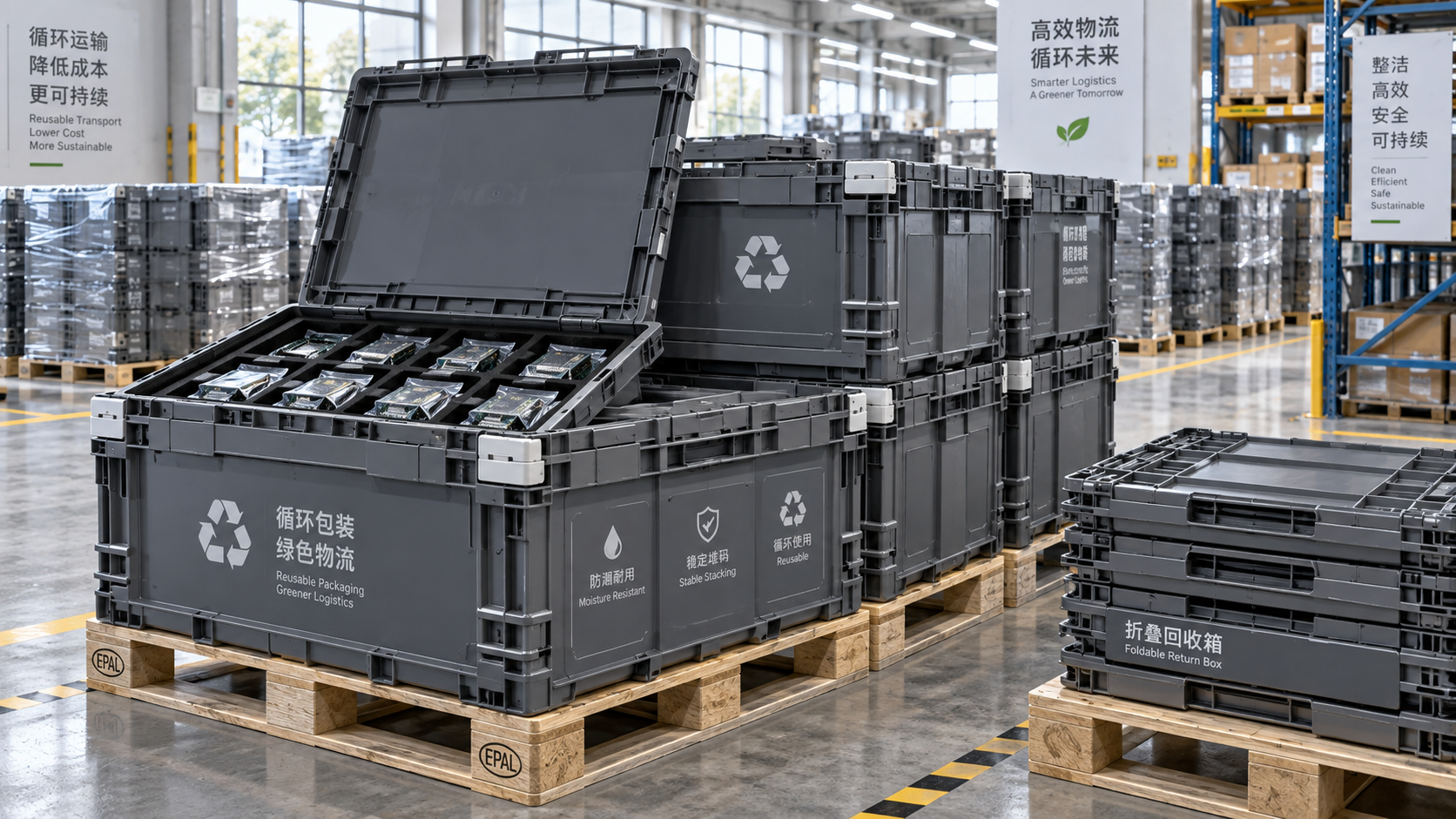
According to the information provided, SEMI implemented SEMI F77-0726: GaN Power Modules Global Logistics Protocol on July 7, 2026. The standard requires all export-grade GaN power modules to be transported in smart containers capable of temperature control from -20 degrees C to +40 degrees C.
The same protocol also requires real-time humidity tracking with relative humidity maintained at or below 15% RH. In addition, full-chain logistics data must be uploaded to a SEMI-certified blockchain logistics platform.
The rule applies to all relevant products exported to the European Union, South Korea, and Canada, and it is effective immediately.
Where the Impact Is Likely to Appear First
Export operations will face immediate execution pressure
From an industry perspective, companies directly shipping GaN power modules into the affected markets are the first group likely to feel the change. The impact is likely to appear in shipment planning, container selection, export compliance checks, and supporting records tied to each delivery. What deserves closer attention is that the requirement is not limited to packaging practice alone; it also introduces a documented data trail requirement through a certified blockchain platform.
Manufacturing and delivery teams may need tighter coordination
Analysis shows that manufacturers serving the EU, South Korea, and Canada may need to align production release, packaging readiness, and outbound logistics more closely than before. The reason is straightforward: temperature control, humidity tracking, and data upload now sit inside the shipment process itself. That makes handoff timing, shipping readiness, and logistics documentation more sensitive business steps.
Logistics and supply chain service providers move closer to compliance roles
Observably, supply chain service providers are also directly affected because the new rule specifies smart containers and blockchain-linked logistics records. Their role may extend beyond transport execution into equipment capability, data continuity, and proof of process compliance. For companies relying on external shipping partners, provider qualification may become a more important operational question.
Buyers and downstream customers may pay more attention to shipment evidence
For procurement teams and downstream application companies receiving these products in the covered markets, the new requirement may shift attention toward traceability records and transport-condition evidence. The practical concern is whether delivered products are accompanied by verifiable logistics data that matches the new protocol, especially where supply agreements or customer acceptance procedures depend on shipment integrity.
What Companies Should Watch Now
Check whether export flows already match the standard's scope
The first practical issue is scope. Companies should identify whether their GaN power module shipments fall within the export-grade category and whether current or near-term deliveries target the EU, South Korea, or Canada. Because the rule is already in force, this is an immediate screening task rather than a long-term planning item.
Verify container capability and humidity tracking readiness
What deserves closer attention is operational readiness at the shipment level. The protocol specifies smart containers with a temperature-control range of -20 degrees C to +40 degrees C and real-time humidity tracking at RH less than or equal to 15%. For affected exporters, the key issue is whether current logistics arrangements can actually meet those conditions and document them consistently.
Review blockchain data handoff and record ownership
Analysis shows that the blockchain requirement introduces a second layer beyond physical transport conditions: data-chain execution. Companies should pay attention to who is responsible for uploading logistics records, how chain-of-custody data is transferred across parties, and whether internal teams and service providers are aligned on documentation responsibilities. This matters because incomplete data handling could become a business risk even if physical transport conditions are met.
Prepare customer and supplier communication around compliance proof
Another immediate issue is communication. Exporters, manufacturers, and logistics partners may need clear alignment with customers and suppliers on what evidence will be used to demonstrate compliance under the new protocol. The distinction between a policy requirement and a fully executable delivery process is important here, especially for orders already scheduled or in preparation.
Why This Looks Like More Than a Shipping Detail
Observably, this development is not just about transport conditions in a narrow sense. It links environmental control requirements with traceable digital reporting, which suggests a stricter view of logistics as part of product assurance for export-grade GaN power modules.
At the same time, it is more appropriate to understand this as both an immediate operational change and a longer-term industry signal. The immediate part is clear because the rule is already effective for shipments to the named markets. The longer-term signal lies in how logistics conditions and traceability may become more tightly embedded in cross-border delivery expectations for sensitive electronic components.
That said, this remains an area that still requires continued observation. The provided information confirms the enforcement start, technical transport requirements, blockchain reporting requirement, and geographic scope, but it does not provide further implementation detail beyond those points.
How to Read the Development at This Stage
At this stage, the most balanced reading is that SEMI's new protocol creates a concrete compliance threshold for affected GaN power module exports rather than a symbolic standards update. For the industry, the significance lies in execution: shipment conditions, data traceability, service-provider capability, and customer-facing proof may now need to work as one connected process.
It is more appropriate to understand this development as an active rule change with broader strategic implications still unfolding. The short-term issue is compliance readiness. The longer-term question is whether similar requirements will shape expectations in additional markets or adjacent product categories, which remains something to monitor rather than assume.
Basis of This Article
This article is based on the user-provided news title, event date, and event summary regarding SEMI's implementation of SEMI F77-0726: GaN Power Modules Global Logistics Protocol on July 7, 2026.
For this type of industry update, commonly relevant source categories would include official announcements, industry association releases, company notices, standards organization documents, and reporting by authoritative trade media. A specific official source link was not provided in the input, so the exact original publication path still requires ongoing verification.
Further follow-up should focus on any additional official wording, implementation guidance, or clarifications related to shipment execution, certified blockchain platform access, and compliance documentation for exports to the EU, South Korea, and Canada.
Get weekly intelligence in your inbox.
No noise. No sponsored content. Pure intelligence.
 Apr 28, 2026When do rapid prototyping 3D printing services save real costWhen do rapid prototyping 3D printing services save real cost
 Apr 28, 2026What Can Go Wrong in Fan-out Wafer Level Pkg?What Can Go Wrong in Fan-out Wafer Level Pkg?
 Apr 28, 2026What Makes Optical LiDAR Modules Better for Autonomy?What Makes Optical LiDAR Modules Better for Autonomy?
 Apr 28, 20262026 Market Trends in Supply Chain Resilience for Fabs2026 Market Trends in Supply Chain Resilience for Fabs
 Oct 10, 2026When do integrated sensor systems reduce commissioning risks?When do integrated sensor systems reduce commissioning risks?
 Oct 09, 2026How North American semiconductor fabs control airborne molecular contaminationHow North American semiconductor fabs control airborne molecular contamination
 Oct 08, 2026When do custom aluminum extrusions reduce fabrication costs?When do custom aluminum extrusions reduce fabrication costs?
 Oct 07, 2026How semiconductor packaging affects thermal reliability in EV power electronicsHow semiconductor packaging affects thermal reliability in EV power electronics
 Oct 06, 2026When do corrugated plastic boxes make sense for returnable shipping?When do corrugated plastic boxes make sense for returnable shipping?
 Oct 05, 2026What to verify before choosing semiconductor distributors in North AmericaWhat to verify before choosing semiconductor distributors in North America
 Oct 04, 2026How to assess a high purity materials manufacturer’s traceabilityHow to assess a high purity materials manufacturer’s traceability
 Oct 03, 2026How SiC power conversion solutions improve high-voltage invertersHow SiC power conversion solutions improve high-voltage inverters
 Oct 02, 2026When do SiC MOSFET benefits justify the higher device cost?When do SiC MOSFET benefits justify the higher device cost?
 Oct 01, 2026Which semiconductor reliability testing standards apply to power devices?Which semiconductor reliability testing standards apply to power devices?
 Sep 30, 2026How to qualify a semiconductor photoresist supplier for KrF/ArF productionHow to qualify a semiconductor photoresist supplier for KrF/ArF production
 Sep 29, 2026What image quality should portable ultrasound scanners deliver for triage?What image quality should portable ultrasound scanners deliver for triage?
 Sep 28, 2026How sub-ppb impurity control gases protect process consistencyHow sub-ppb impurity control gases protect process consistency
 Sep 27, 2026How chemical purity affects defect rates in semiconductor depositionHow chemical purity affects defect rates in semiconductor deposition
 Sep 26, 2026When do high voltage power semiconductor devices need SiC over IGBTs?When do high voltage power semiconductor devices need SiC over IGBTs?
 Sep 25, 2026How to verify quality controls at a die casting parts supplier in ChinaHow to verify quality controls at a die casting parts supplier in China
 Sep 24, 2026How to verify electronic gas purity for sub-ppb semiconductor processesHow to verify electronic gas purity for sub-ppb semiconductor processes
 Sep 23, 2026When sensory data integration improves industrial motion monitoringWhen sensory data integration improves industrial motion monitoring
 Sep 22, 2026How supply chain resilience reduces the cost of production disruptionsHow supply chain resilience reduces the cost of production disruptions
 Sep 21, 2026What autonomous systems OEMs should verify before sourcing LiDAR modulesWhat autonomous systems OEMs should verify before sourcing LiDAR modules
 Sep 20, 2026How gas purity affects defect density in epitaxial wafer growthHow gas purity affects defect density in epitaxial wafer growth
 Sep 19, 2026How substrate defects affect third-generation material device yieldHow substrate defects affect third-generation material device yield
 Sep 18, 2026How trace impurities in specialty process gases affect wafer yieldHow trace impurities in specialty process gases affect wafer yield