GaN Power Modules and Intelligent Industrial Era Technologies
GaN Power Modules in Intelligent Industrial Era Technologies
As autonomous systems, efficient power conversion, and connected factories accelerate, GaN power modules are moving into the center of Intelligent Industrial Era Technologies.
They enable faster switching, lower losses, smaller magnetic components, and higher power density across industrial systems that demand precision and uptime.
Yet strong headline performance is not enough. Thermal behavior, packaging quality, reliability evidence, and standards alignment determine whether a module succeeds in real deployment.
For organizations benchmarking next-generation power platforms, a structured evaluation approach reduces risk and supports resilient Intelligent Industrial Era Technologies across global operations.
Why a Structured Evaluation Is Necessary
GaN devices often look similar in specifications, but field performance can differ sharply because of gate design, thermal interfaces, package parasitics, and qualification depth.
Industrial environments also introduce electrical noise, temperature swings, vibration, humidity, and maintenance constraints that are not visible in simplified marketing claims.
A practical checklist helps compare solutions on measurable criteria and connects semiconductor decisions with broader Intelligent Industrial Era Technologies goals, including efficiency, reliability, and supply assurance.
Core Evaluation Points for GaN Power Modules
- Verify switching frequency capability under real load conditions, not only ideal test benches, because industrial converters require stable efficiency across partial load and dynamic operating windows.
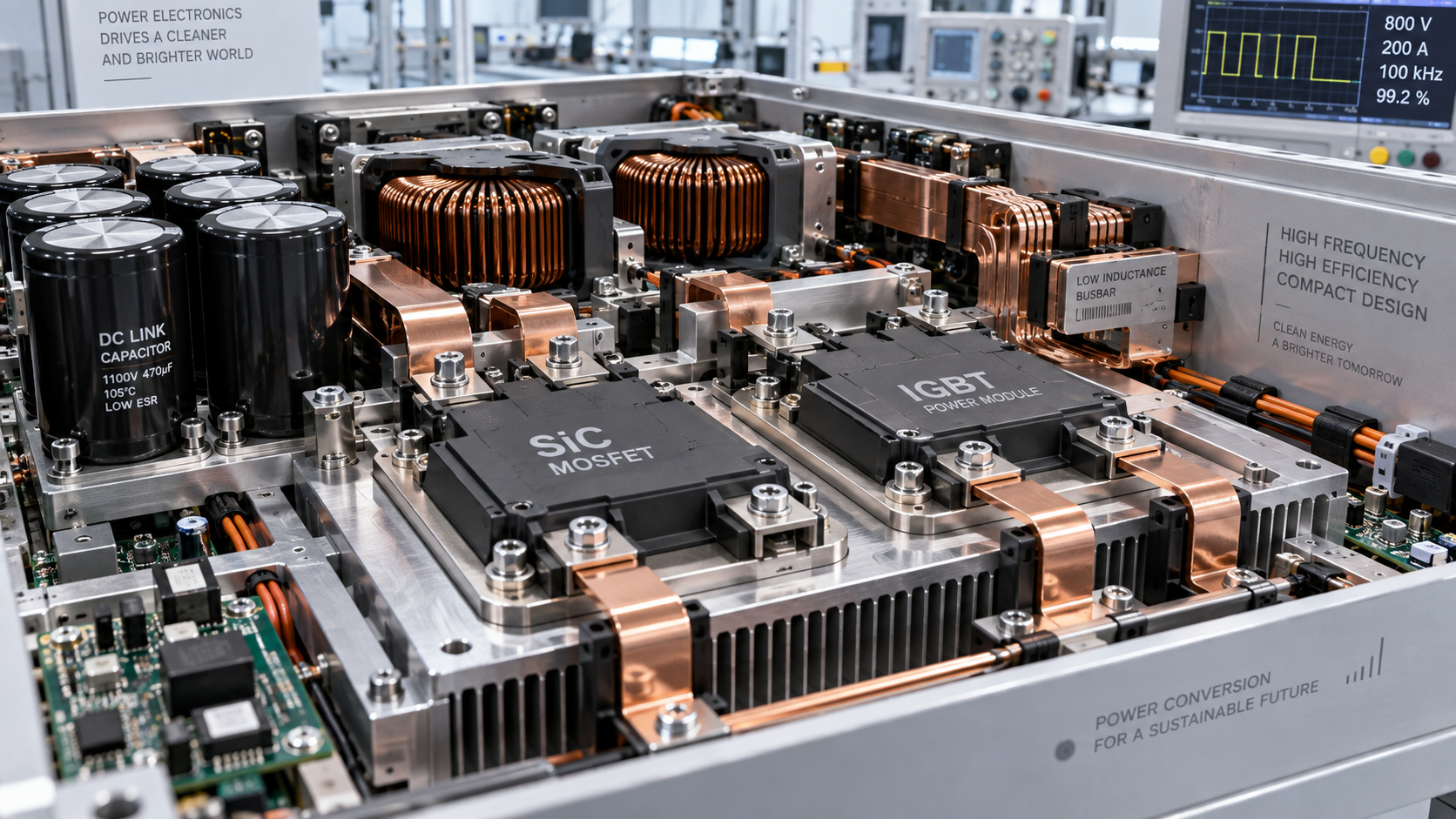
- Check thermal resistance, junction temperature behavior, and heat spreading design, since power density gains in Intelligent Industrial Era Technologies depend on controlled thermal margins.
- Review package parasitics and layout sensitivity, because low inductance packaging strongly affects overshoot, EMI behavior, and achievable switching speed in compact industrial hardware.
- Confirm gate driver compatibility and protection features, including dead-time control, short-circuit response, under-voltage lockout, and dv/dt immunity during transient events.
- Examine reliability qualification data against recognized benchmarks such as SEMI methods, AEC-Q100 references, and validated laboratory practices aligned with ISO/IEC 17025.
- Assess efficiency across the complete power stage, including magnetics, cooling, and control electronics, because module-level gains may disappear in poor system integration.
- Measure EMI performance early, especially common-mode noise and ringing, since Intelligent Industrial Era Technologies often integrate sensors, networking, and sensitive control loops nearby.
- Evaluate ruggedness under surge, overload, and repetitive switching stress, rather than relying only on nominal ratings or short-duration laboratory demonstrations.
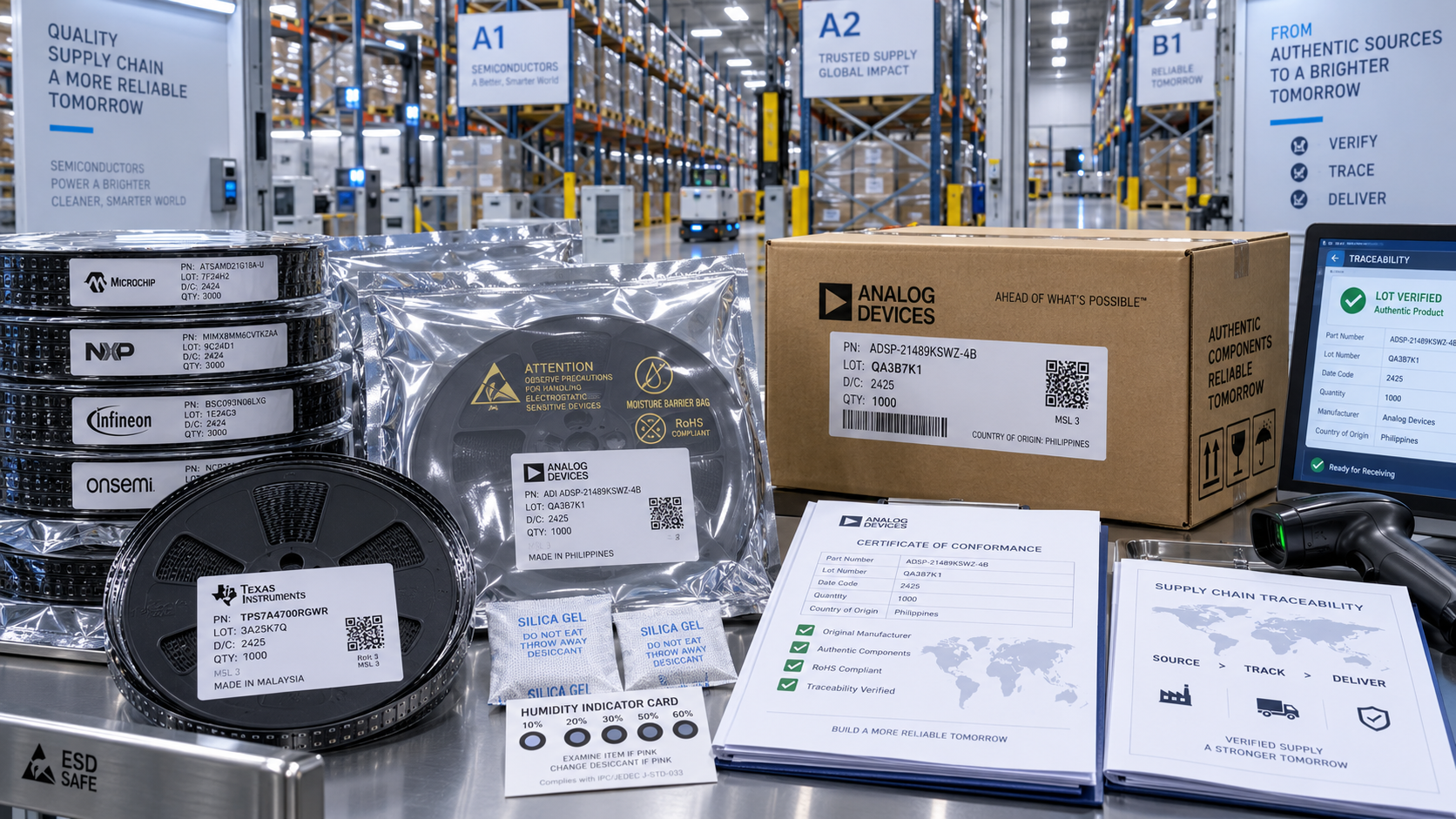
- Check production consistency, traceability, and supply continuity, because industrial deployment requires repeatable quality and long-term availability beyond prototype success.
- Compare total lifecycle value, including maintenance reduction, cooling savings, cabinet size, and downtime prevention, not just initial component pricing.
Technical Areas That Deserve Closer Review
Thermal Management and Power Density
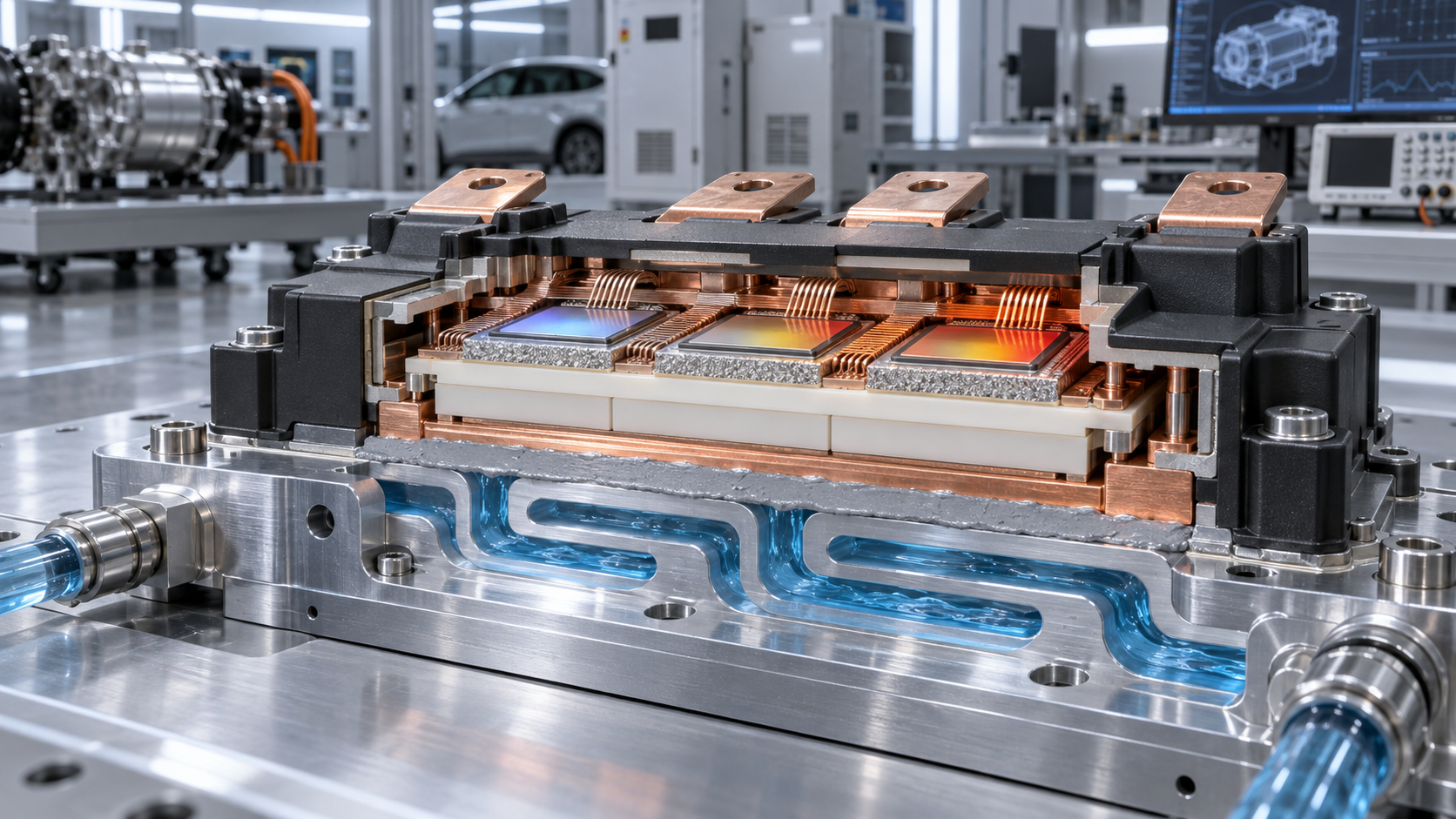
GaN power modules support compact designs, but higher density can create local hotspots. Thermal maps, interface material quality, and baseplate design should be reviewed together.
In Intelligent Industrial Era Technologies, stable thermal control protects uptime, sensing accuracy, and cabinet reliability, especially in sealed or space-constrained equipment.
Reliability and Standards Alignment
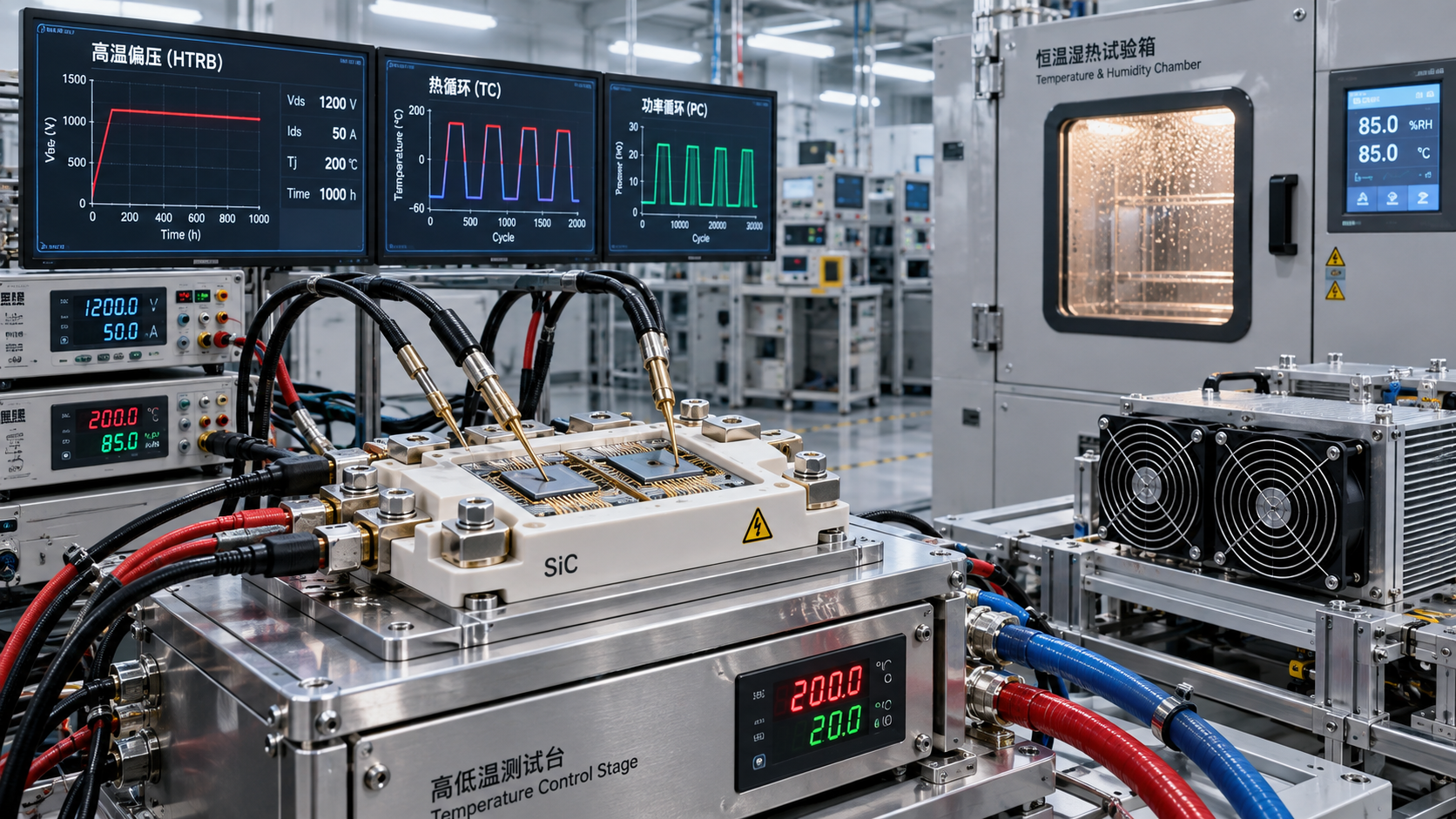
Reliability evidence should include temperature cycling, humidity stress, power cycling, and failure analysis depth. Qualification summaries alone rarely provide enough decision value.
Reference alignment with SEMI, AEC-Q100, and ISO/IEC 17025-backed testing improves confidence when building sovereign and resilient Intelligent Industrial Era Technologies platforms.
System Integration Quality
A strong module can still fail in a weak design. PCB layout, grounding, shielding, driver placement, and bus structure must be validated as a complete switching environment.
This system view is essential because Intelligent Industrial Era Technologies connect power electronics with communication, sensing, analytics, and safety functions.
Application Notes Across Industrial Scenarios
Factory Automation and Robotics
Servo drives and robotic motion systems benefit from fast switching and compact converters. Key checks include dynamic response, EMI control, and thermal stability under repetitive cycles.
Because robotics combines drives with encoders and sensors, GaN selection must support signal integrity within Intelligent Industrial Era Technologies environments.
Industrial Power Supplies and Data-Centric Facilities
High-efficiency AC-DC and DC-DC systems use GaN to reduce energy loss and cooling requirements. Focus on efficiency curves, redundancy behavior, and serviceability.
For digital infrastructure, dependable power architecture supports the continuity goals behind Intelligent Industrial Era Technologies and sovereign operational resilience.
EV Charging and Energy Infrastructure
GaN modules can improve charger size, conversion speed, and thermal efficiency. Validation should include surge tolerance, grid-side harmonics, and outdoor thermal conditions.
Where uptime is critical, module reliability becomes a strategic requirement within broader Intelligent Industrial Era Technologies and smart energy systems.
Industrial IoT and Smart Sensing Nodes
Compact edge devices need efficient local power conversion. Important checks include low-noise behavior, standby efficiency, and compatibility with sensitive MEMS and communication modules.
This matters because noisy power stages can reduce data fidelity, weakening the decision quality expected from Intelligent Industrial Era Technologies.
Commonly Overlooked Risks
One frequent mistake is assuming peak efficiency reflects practical value. Real systems operate across variable loads, ambient changes, and intermittent transients.
Another issue is underestimating EMI. Faster switching improves efficiency, but unmanaged noise can disrupt controllers, sensors, and communication links.
Some evaluations ignore packaging maturity. Die performance may be excellent while assembly quality, bonding durability, or substrate behavior limits field life.
Supply resilience is also missed. Intelligent Industrial Era Technologies require continuity plans, second-source visibility, and process traceability for long deployment cycles.
Finally, insufficient test correlation between simulation, bench validation, and field operation often leads to overly optimistic performance assumptions.
Practical Execution Recommendations
- Build a weighted comparison matrix covering efficiency, thermal resistance, EMI, reliability data, package design, and supply assurance before final selection.
- Request validated test conditions for all headline claims, including voltage, load profile, cooling method, and switching frequency used during measurement.
- Run side-by-side evaluation boards in the intended topology to compare losses, ringing, and temperature rise under identical operating conditions.
- Include compliance and laboratory evidence review early, especially when Intelligent Industrial Era Technologies projects require strict reliability governance.
- Document integration rules for drivers, layout, shielding, and thermal assembly so later design revisions do not erode module performance.
Frequently Asked Questions
Are GaN power modules always better than silicon solutions?
Not always. They are strongest where switching speed, efficiency, and compact size create measurable system benefits and where integration quality is well controlled.
What is the most important metric for Intelligent Industrial Era Technologies?
No single metric is enough. The best choices balance efficiency, thermal stability, reliability evidence, EMI behavior, and long-term supply resilience.
Why do standards matter so much?
Standards-based validation improves comparability and trust. It also reduces deployment risk in high-value industrial systems that require audited technical precision.
Conclusion and Next Action
GaN power modules are a strategic enabler of Intelligent Industrial Era Technologies, but only when evaluated beyond simple datasheet advantages.
A disciplined review of thermal design, switching behavior, packaging, standards alignment, and lifecycle resilience leads to better industrial decisions.
The next step is clear: create a technical scoring framework, validate under real operating conditions, and align module selection with long-term infrastructure goals.
Get weekly intelligence in your inbox.
No noise. No sponsored content. Pure intelligence.
 Apr 28, 2026When do rapid prototyping 3D printing services save real costWhen do rapid prototyping 3D printing services save real cost
 Apr 28, 2026What Can Go Wrong in Fan-out Wafer Level Pkg?What Can Go Wrong in Fan-out Wafer Level Pkg?
 Apr 28, 2026What Makes Optical LiDAR Modules Better for Autonomy?What Makes Optical LiDAR Modules Better for Autonomy?
 Apr 28, 20262026 Market Trends in Supply Chain Resilience for Fabs2026 Market Trends in Supply Chain Resilience for Fabs
 Oct 10, 2026When do integrated sensor systems reduce commissioning risks?When do integrated sensor systems reduce commissioning risks?
 Oct 09, 2026How North American semiconductor fabs control airborne molecular contaminationHow North American semiconductor fabs control airborne molecular contamination
 Oct 08, 2026When do custom aluminum extrusions reduce fabrication costs?When do custom aluminum extrusions reduce fabrication costs?
 Oct 07, 2026How semiconductor packaging affects thermal reliability in EV power electronicsHow semiconductor packaging affects thermal reliability in EV power electronics
 Oct 06, 2026When do corrugated plastic boxes make sense for returnable shipping?When do corrugated plastic boxes make sense for returnable shipping?
 Oct 05, 2026What to verify before choosing semiconductor distributors in North AmericaWhat to verify before choosing semiconductor distributors in North America
 Oct 04, 2026How to assess a high purity materials manufacturer’s traceabilityHow to assess a high purity materials manufacturer’s traceability
 Oct 03, 2026How SiC power conversion solutions improve high-voltage invertersHow SiC power conversion solutions improve high-voltage inverters
 Oct 02, 2026When do SiC MOSFET benefits justify the higher device cost?When do SiC MOSFET benefits justify the higher device cost?
 Oct 01, 2026Which semiconductor reliability testing standards apply to power devices?Which semiconductor reliability testing standards apply to power devices?
 Sep 30, 2026How to qualify a semiconductor photoresist supplier for KrF/ArF productionHow to qualify a semiconductor photoresist supplier for KrF/ArF production
 Sep 29, 2026What image quality should portable ultrasound scanners deliver for triage?What image quality should portable ultrasound scanners deliver for triage?
 Sep 28, 2026How sub-ppb impurity control gases protect process consistencyHow sub-ppb impurity control gases protect process consistency
 Sep 27, 2026How chemical purity affects defect rates in semiconductor depositionHow chemical purity affects defect rates in semiconductor deposition
 Sep 26, 2026When do high voltage power semiconductor devices need SiC over IGBTs?When do high voltage power semiconductor devices need SiC over IGBTs?
 Sep 25, 2026How to verify quality controls at a die casting parts supplier in ChinaHow to verify quality controls at a die casting parts supplier in China
 Sep 24, 2026How to verify electronic gas purity for sub-ppb semiconductor processesHow to verify electronic gas purity for sub-ppb semiconductor processes
 Sep 23, 2026When sensory data integration improves industrial motion monitoringWhen sensory data integration improves industrial motion monitoring
 Sep 22, 2026How supply chain resilience reduces the cost of production disruptionsHow supply chain resilience reduces the cost of production disruptions
 Sep 21, 2026What autonomous systems OEMs should verify before sourcing LiDAR modulesWhat autonomous systems OEMs should verify before sourcing LiDAR modules
 Sep 20, 2026How gas purity affects defect density in epitaxial wafer growthHow gas purity affects defect density in epitaxial wafer growth
 Sep 19, 2026How substrate defects affect third-generation material device yieldHow substrate defects affect third-generation material device yield
 Sep 18, 2026How trace impurities in specialty process gases affect wafer yieldHow trace impurities in specialty process gases affect wafer yield