GaN Module Output Rises, JEP180 Coverage Lags
On June 6, 2026, SEMI China released a quarterly map of global GaN Power Modules capacity that points to a practical standards issue rather than a simple production update. The report shows strong mainland China foundry output and yield performance, but also a limited share of production lines covered by JEDEC JEP180 reliability certification. For exporters, industrial power supply vendors, procurement teams, and qualification managers, the key issue is that certification status is directly shaping retesting requirements, delivery timing, and landed cost when serving Europe and the United States.
What the June 6 release confirms
According to the quarterly report released by SEMI China on June 6, 2026, mainland China accounts for 41% of global GaN Power Modules foundry capacity. The same release states that the average yield of mainland foundries has reached 92%.
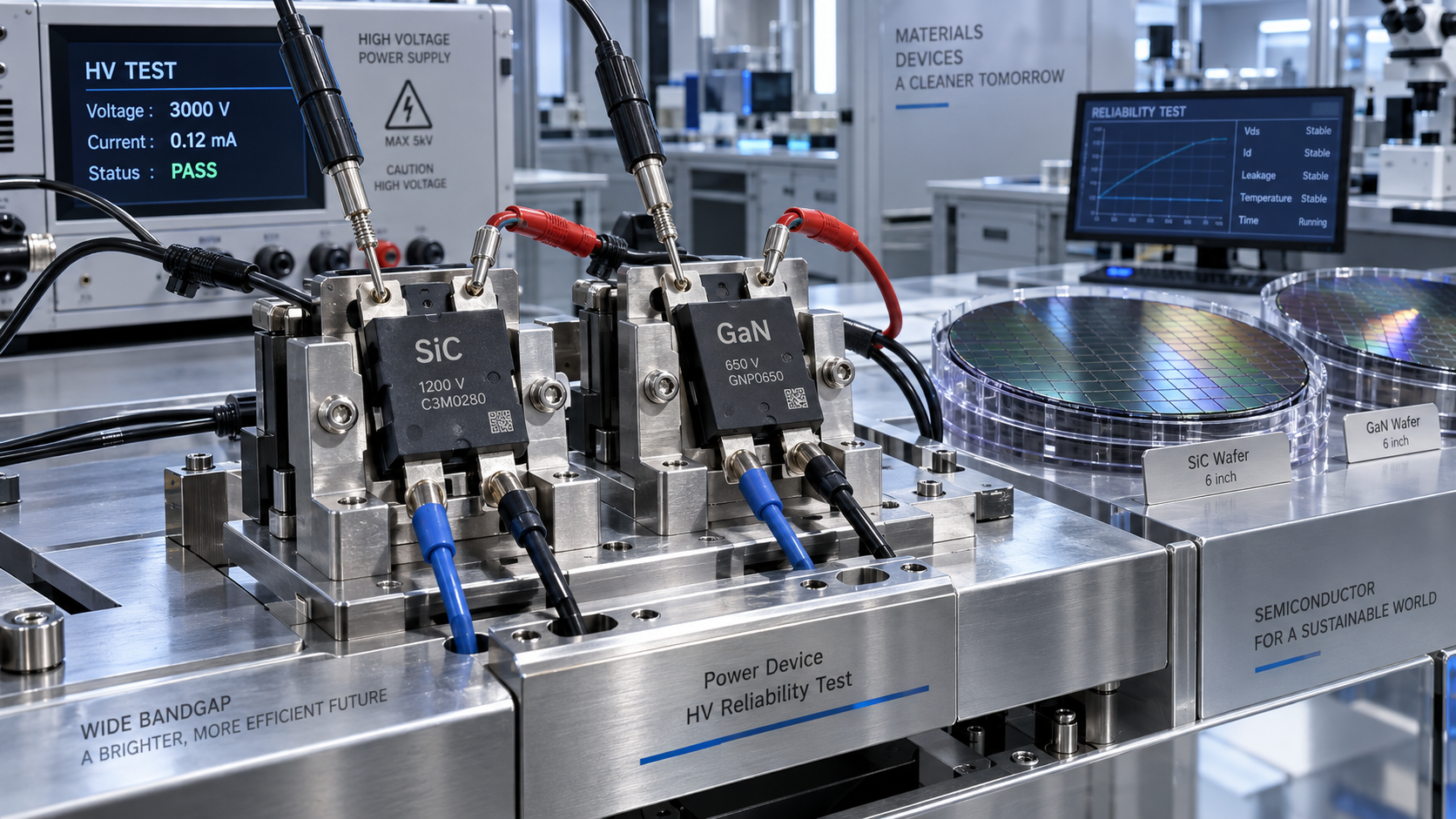
The report also states that only 12 production lines have passed JEDEC JEP180 reliability standard certification, representing 38% coverage. For manufacturers without that certification, exports to industrial power customers in Europe and the United States face a requirement for full third-party retesting, with delivery extended by 6 to 8 weeks and costs rising by 17% to 22%.
Where the standards gap shows up in business execution
Export orders face a qualification bottleneck
For export-oriented suppliers, the most direct impact is not output capacity but customer acceptance at the destination stage. When a production line lacks JEDEC JEP180 certification, the reported need for full third-party retesting can affect shipment scheduling, order confirmation, and delivery commitments. What deserves closer attention is the shift from manufacturing capability to documentation-backed qualification capability.
Procurement teams may need to separate yield from certifiable supply
For buyers and sourcing teams, a high average yield does not automatically mean a line is ready for all overseas industrial power projects. In practical terms, procurement reviews may need to pay closer attention to whether supplier qualification files, reliability records, and certification status align with customer or project requirements. The immediate pressure point is supplier selection and the timing of purchase planning.
Testing and compliance services become part of lead-time control
For certification-related firms and testing service providers, the report indicates that third-party retesting is not a secondary formality for some shipments but a factor that can add measurable time and cost. From an industry perspective, this can move testing documentation and reliability validation closer to the front end of export planning rather than leaving them as late-stage supporting materials.
Supply-chain coordination becomes more documentation-driven
For supply-chain service providers and program managers, the reported 6 to 8 week extension means that scheduling, buffer stock decisions, and customer communication may need to reflect certification status earlier in the order cycle. Observably, the operational question is no longer only whether a module can be produced on time, but whether it can clear the required qualification path without rework in the commercial process.
What companies should monitor now
Check whether certification status is being treated as a market-access condition
Analysis shows that companies serving overseas industrial power customers should closely review whether JEDEC JEP180 certification is being referenced in customer qualification checklists, technical review stages, or bidding documents. The report confirms retesting consequences for uncertified lines, but companies should avoid assuming that every transaction follows one identical execution path without further document review.
Prepare technical files before delivery windows are fixed
Where certification coverage is incomplete, businesses may need to review the readiness of reliability reports, test records, product specifications, and other supporting documents before committing to delivery dates. This is especially relevant where project schedules are sensitive to additional third-party review.
Reassess supplier approval and sourcing rhythm
For manufacturers and buyers using foundry partners, supplier approval may need to distinguish between production capability and certification-backed export readiness. Analysis shows that this affects not only vendor onboarding but also reorder timing, dual-sourcing decisions, and the credibility of promised lead times in customer-facing contracts.
Watch for changes in execution language and customer requirements
The report provides a clear signal on current certification coverage and the consequences cited for uncertified lines, but it does not provide full downstream execution detail. Companies should therefore keep watching for changes in qualification wording, acceptance criteria, and any updates in how customers or counterparties apply reliability requirements in practice.
Why this matters beyond a capacity statistic
Analysis shows that this development is better understood as an execution signal tied to standards compliance rather than as a pure manufacturing milestone. The combination of 41% capacity share and 92% average yield suggests production strength, while the 38% certification coverage figure highlights a narrower pool of lines positioned to move smoothly through higher-requirement export channels.
From an industry perspective, the report does not prove a universal rule change across all transactions, but it does show that certification status is already affecting lead time and cost in identifiable business scenarios. That makes this a practical market-access issue for parts of the GaN power module chain, especially where reliability verification is customer-facing and time-sensitive.
How this update is best understood
At this stage, it is more appropriate to understand the SEMI China update as evidence of a real compliance and delivery gap between manufacturing performance and recognized reliability coverage. The immediate takeaway is not that output growth has lost relevance, but that yield gains alone do not remove qualification friction in export business. For companies exposed to industrial power supply demand in Europe and the United States, the more rational reading is that certification readiness, document completeness, and lead-time planning now deserve closer operational attention.
Source note and follow-up points
This article is generated from the user-provided news title, event date, and event summary. For developments of this type, commonly relevant source categories may include industry association releases, standards organization documents, regulatory notices, trade authority information, customs-related updates, and reporting by established industry media. A specific official source link was not provided in the input, so further verification remains necessary. Follow-up observation should focus on later detail around certification interpretation, customer qualification practice, bidding document language, market feedback, and how companies implement these requirements in actual delivery and export workflows.
Get weekly intelligence in your inbox.
No noise. No sponsored content. Pure intelligence.
 Apr 28, 2026When do rapid prototyping 3D printing services save real costWhen do rapid prototyping 3D printing services save real cost
 Apr 28, 2026What Can Go Wrong in Fan-out Wafer Level Pkg?What Can Go Wrong in Fan-out Wafer Level Pkg?
 Apr 28, 2026What Makes Optical LiDAR Modules Better for Autonomy?What Makes Optical LiDAR Modules Better for Autonomy?
 Apr 28, 20262026 Market Trends in Supply Chain Resilience for Fabs2026 Market Trends in Supply Chain Resilience for Fabs
 Oct 26, 2026How do buying decisions in the B2B market differ from those in B2C?How do buying decisions in the B2B market differ from those in B2C?
 Oct 26, 2026JW Insights’ 2026 SiC Report: Substrate Price Rebound Signals Industry Turning PointJW Insights’ 2026 SiC Report: Substrate Price Rebound Signals Industry Turning Point
 Oct 25, 2026How SiC power semiconductors for motor drives reduce switching lossesHow SiC power semiconductors for motor drives reduce switching losses
 Oct 25, 2026AI Overcapacity Fears Rattle US Chip Stocks as October Losses Reach $2.2 TrillionAI Overcapacity Fears Rattle US Chip Stocks as October Losses Reach $2.2 Trillion
 Oct 24, 2026How post-CMP cleaning materials affect wafer particle removalHow post-CMP cleaning materials affect wafer particle removal
 Oct 24, 2026AI, GaN and Robotics: What Comes Next for Power SemiconductorsAI, GaN and Robotics: What Comes Next for Power Semiconductors
 Oct 23, 2026How noise affects MEMS accelerometers in wearable medical devicesHow noise affects MEMS accelerometers in wearable medical devices
 Oct 23, 2026U.S. Commerce Announces Up to $389 Million in CHIPS R&D FundingU.S. Commerce Announces Up to $389 Million in CHIPS R&D Funding
 Oct 22, 2026How to avoid counterfeit power conversion components in the Middle EastHow to avoid counterfeit power conversion components in the Middle East
 Oct 22, 2026Nvidia Partners Expand AI Supply Chain; Amkor Plans Over 300% Capacity IncreaseNvidia Partners Expand AI Supply Chain; Amkor Plans Over 300% Capacity Increase
 Oct 21, 2026When are portable solar panels cost-effective for remote worksites?When are portable solar panels cost-effective for remote worksites?
 Oct 21, 2026Infineon and Wolfspeed Sign Multiyear 8-Inch SiC Wafer Supply AgreementInfineon and Wolfspeed Sign Multiyear 8-Inch SiC Wafer Supply Agreement
 Oct 20, 2026Can FFU systems alone achieve ISO 14644-1 Class 1 cleanliness?Can FFU systems alone achieve ISO 14644-1 Class 1 cleanliness?
 Oct 20, 2026Aixtron Q3 Orders More Than Double as Orders and Profit Beat ExpectationsAixtron Q3 Orders More Than Double as Orders and Profit Beat Expectations
 Oct 19, 2026How to evaluate power semiconductor suppliers for supply continuityHow to evaluate power semiconductor suppliers for supply continuity
 Oct 18, 2026How system-in-package technology reduces PCB space in wearablesHow system-in-package technology reduces PCB space in wearables
 Oct 17, 2026How to size gate resistors in 1200 V SiC power semiconductor designsHow to size gate resistors in 1200 V SiC power semiconductor designs
 Oct 16, 2026How to select 1200 V SiC MOSFETs for 800 V EV traction invertersHow to select 1200 V SiC MOSFETs for 800 V EV traction inverters
 Oct 15, 2026What voltage rating do SiC power modules for railway traction need?What voltage rating do SiC power modules for railway traction need?
 Oct 14, 2026How third-generation semiconductors achieve high breakdown voltagesHow third-generation semiconductors achieve high breakdown voltages
 Oct 13, 2026When does parallel testing cut high-volume semiconductor testing costs?When does parallel testing cut high-volume semiconductor testing costs?
 Oct 12, 2026Industrial Accelerometer Specifications for Machine Vibration MonitoringIndustrial Accelerometer Specifications for Machine Vibration Monitoring
 Oct 12, 2026What Makes an Industrial Gas Sensor Supplier Reliable for Long-Term Supply?What Makes an Industrial Gas Sensor Supplier Reliable for Long-Term Supply?