How to Size UPW Skids for Semiconductor Fabrication
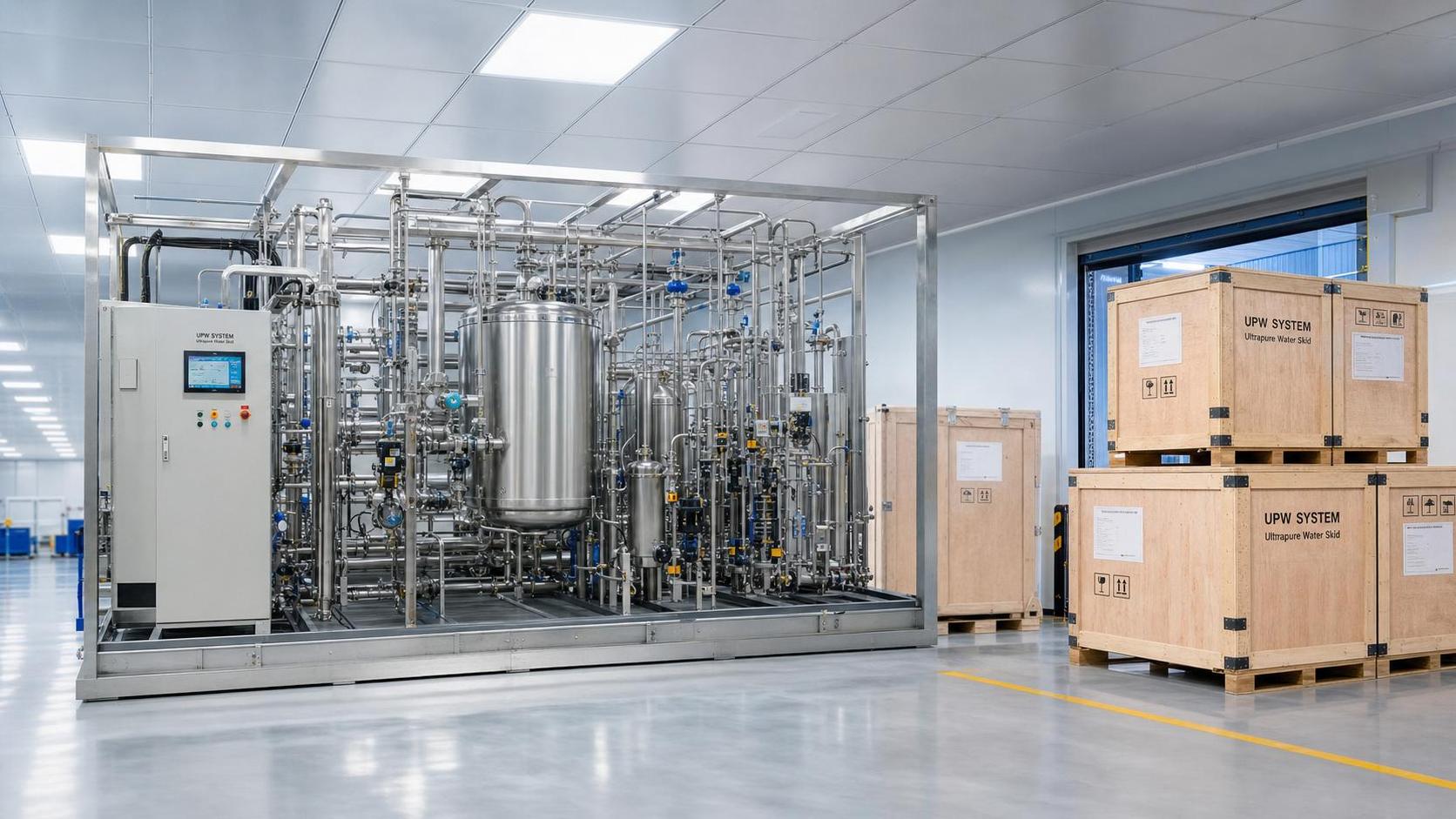
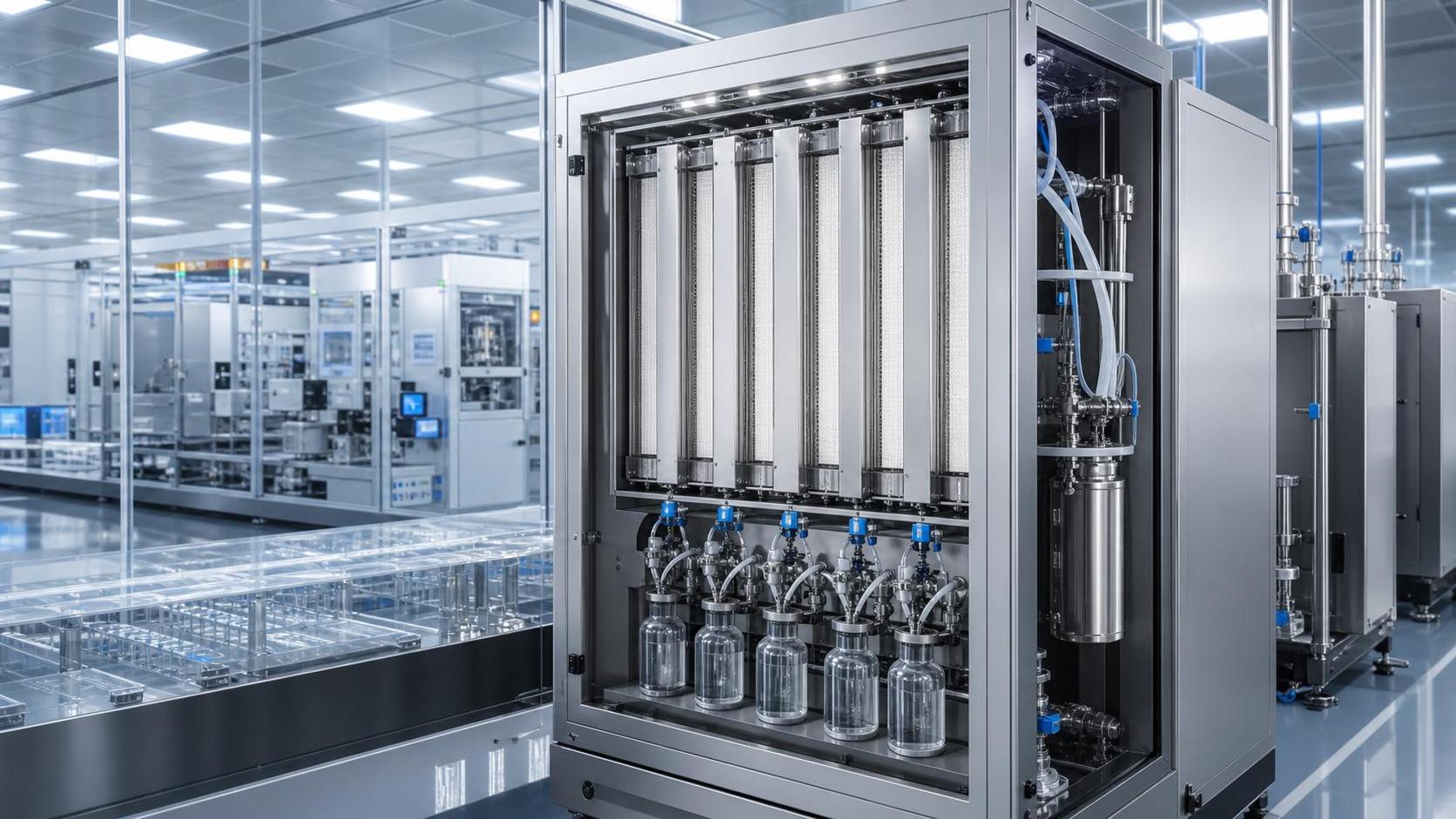
Sizing UPW skids for semiconductor fabrication is not just a utility engineering exercise. It determines whether a fab can consistently meet rinse quality, protect yield, support tool uptime, and scale production without introducing contamination or hidden cost. For most evaluation teams, the right answer is not “the biggest skid possible,” but a system sized around real process demand, peak loading, purity targets, recovery strategy, redundancy requirements, and expansion plans.
In practice, a well-sized ultra-pure water (UPW) skid should deliver three things at the same time: stable flow under variable fab demand, purity performance aligned with critical process nodes, and operational resilience during maintenance, upset conditions, and future capacity growth. If any one of these is underestimated, the result is usually expensive—either in yield loss, unnecessary capital spend, or preventable production risk.
This guide explains how to size UPW skids for semiconductor fabrication from both a technical and decision-making perspective, with attention to environment control, data fidelity, reliability, and long-term supply chain resilience.
What does “correctly sized” UPW skid capacity actually mean in a fab?
A correctly sized UPW skid is one that can reliably supply the required water quality and volume to all connected semiconductor processes under normal, peak, and abnormal operating conditions—without excessive oversizing that increases capital cost, footprint, chemical consumption, energy use, or stagnant water risk.
In semiconductor fabrication, UPW demand is rarely constant. It changes with:
- Tool mix and process type
- Wafer starts per day
- Batch versus continuous rinsing behavior
- CIP/SIP or maintenance-related flushes
- Expansion phases and future line additions
- Reject/rework events that temporarily increase rinse demand
That means skid sizing should not be based on average flow alone. It should be based on a demand model that includes:
- Average operating flow
- Peak instantaneous flow
- Peak sustained flow
- Minimum turndown conditions
- Buffer storage needs
- Recovery time after demand spikes or downtime events
For technical evaluation teams, the key question is: can the UPW system maintain target resistivity, TOC, particles, silica, dissolved oxygen, and microbial control while flow demand moves across real fab operating profiles?
For business and operations leaders, the parallel question is: does the sizing approach reduce the risk of future retrofits, process interruptions, and underutilized utility assets?
Which process and business inputs should be defined before sizing starts?
The most common reason UPW skids are mis-sized is that sizing begins before process assumptions are clear. A sound design basis should combine fabrication process data with operational and business planning inputs.
Start with the process-side inputs:
- Wafer size and expected throughput
- Technology node or process sensitivity
- Wet benches, scrubbers, CMP, single-wafer cleaning, and rinse-intensive tools
- Critical versus non-critical UPW use points
- Required point-of-use flow, pressure, and purity
- Return, reclaim, or reuse strategy
- Shift pattern and utilization rate
Then define business and facility-side inputs:
- Initial production phase versus full build-out capacity
- Target uptime and maintenance philosophy
- Redundancy expectations such as N, N+1, or 2N
- Available footprint and utility corridor constraints
- Local feedwater variability and supply reliability
- Discharge limits and sustainability targets
- Budget tolerance for capex versus lifecycle opex
For many fabs, this second group matters as much as pure technical demand. A skid that looks efficient on paper may still be the wrong choice if it cannot support expansion, local compliance, or resilience expectations for sovereign-level digital infrastructure.
How do you calculate required UPW flow without underestimating peak demand?
The most practical sizing method is to build demand from the tool level upward, then stress-test it against operating scenarios.
A typical approach includes the following steps:
- List all UPW consumers
Include process tools, point-of-use polish loops, humidification or support loads where relevant, maintenance flush requirements, and any shared systems. - Assign normal and peak flow rates to each use point
Do not rely only on nameplate values. Validate with tool supplier data and actual operating sequences where possible. - Apply simultaneity or diversity factors carefully
Not all tools peak at once, but many fab events create clustered demand. Conservative assumptions are justified for critical lines. - Model batch events and transient spikes
Short-duration rinse peaks can exceed average demand significantly, especially in wet cleaning and CMP-related applications. - Add distribution and control margin
This is not arbitrary oversizing. It accounts for control stability, loop balancing, startup conditions, aging membranes or resins, and uncertainty in future load. - Check recovery time
A skid may meet short-term peak flow with storage support, but if recovery is too slow, repeated peaks can degrade performance.
In many semiconductor facilities, the right answer is a combination of treatment capacity plus appropriately sized storage and recirculation—not treatment capacity alone. This distinction matters because some teams overbuild primary treatment when a balanced storage-and-loop strategy would meet process needs more efficiently.
Key outputs to define include:
- Design average flow
- Maximum hourly flow
- Maximum instantaneous flow
- Minimum stable operating flow
- Required storage buffer volume
- Recirculation loop turnover rate
How do purity targets affect UPW skid sizing and configuration?
Flow is only half the sizing problem. The other half is whether the skid can deliver the required water quality consistently at that flow. Semiconductor UPW systems are often judged by final purity values, but sizing decisions must account for how quality performance changes during variable operating conditions.
Typical performance parameters include:
- Resistivity
- Total organic carbon (TOC)
- Particles
- Silica
- Boron
- Dissolved oxygen
- Bacteria and endotoxin risk, where relevant
- Trace metals and ions
Higher purity requirements can influence sizing in several ways:
- Longer contact time may be needed in some treatment stages
- Polishing component loading may rise with higher throughput
- UV, degasification, membrane, EDI, and final filtration stages may require more conservative design margins
- Loop velocity requirements may increase to support microbiological and particle control
- Point-of-use polishing may become necessary for especially sensitive tools
This is why “same flow, different fab” does not mean “same skid.” A mature-node power device line, an advanced packaging facility, and a MEMS sensor fab may all need different purity control strategies even at similar bulk demand levels.
For evaluation teams, a better question than “What flow can this skid produce?” is: “At what sustained and transient flow conditions can this skid maintain required UPW quality at the point of use?”
What level of redundancy is appropriate for semiconductor fabrication?
Redundancy should be based on process criticality and cost of interruption, not on generic design preference. In semiconductor fabrication, even a brief UPW instability event can affect yield, tool qualification, and lot disposition. That makes redundancy a core sizing parameter, not an optional add-on.
Common approaches include:
- N design: no dedicated spare capacity; lowest capex but highest operational risk
- N+1 design: one standby or spare module/pump/train; common for balanced reliability and cost
- 2N or segregated redundant trains: used where downtime risk is unacceptable or phased maintenance flexibility is critical
Redundancy should be considered across more than pumps alone. Review:
- Pretreatment trains
- RO stages
- EDI or ion exchange polishing units
- UV oxidation units
- Degasification units
- Final filters
- Instrumentation and control architecture
- Critical valves and distribution loop pumps
For business decision-makers, the trade-off is straightforward: higher redundancy raises initial spend, but often lowers the far larger risk associated with production loss, excursion investigation, scrap, and emergency service intervention.
In many fabs, the most defensible strategy is modular N+1 sizing that supports maintenance without interrupting production and leaves room for incremental capacity expansion.
How should storage, recirculation, and distribution loops be included in sizing?
UPW skid sizing cannot be separated from storage and loop design. The treatment skid may produce the water, but the distribution loop determines whether that water arrives at point of use with stable pressure, flow, temperature, and purity.
Storage and distribution should be evaluated for:
- Buffering of short-term peak process demand
- Hydraulic stability during tool sequencing changes
- Continuous recirculation to limit stagnation and particle growth
- Loop velocity and dead-leg control
- Temperature management where required
- Maintenance isolation and system segmentation
Undersized storage can force the treatment skid to chase transient peaks it was never meant to handle directly. Oversized storage, however, can increase residence time and create water quality risk if circulation is not properly engineered.
Similarly, an undersized loop pump or poorly balanced distribution network can create pressure variation at sensitive tools, even when bulk skid capacity appears sufficient.
For semiconductor environment control, this is especially important because water quality degradation often appears first at the point of use, not at the central skid outlet. That makes loop design, monitoring placement, and return strategy critical parts of the overall sizing exercise.
What mistakes most often lead to underperforming or overbuilt UPW skids?
Several predictable errors appear in fab utility planning and technical procurement:
- Using average demand as the primary sizing basis
This leads to instability during peak process periods. - Ignoring tool sequencing and transient loads
Short rinse surges can dominate real capacity requirements. - Separating water quantity from water quality
A skid may meet flow targets while missing particle, TOC, or resistivity performance at actual operating conditions. - Assuming redundancy can be added later easily
Retrofit costs are often much higher than designing for modular resilience from the start. - Overdesigning without lifecycle analysis
Excess capacity can increase chemical use, energy, footprint, and control complexity. - Not aligning skid size with reclaim and sustainability strategy
Water reuse assumptions directly affect net UPW production needs. - Neglecting feedwater variability
Seasonal or local utility quality changes can alter pretreatment loading and downstream performance. - Insufficient instrumentation planning
Without robust monitoring, teams cannot validate actual loading, purity stability, or early degradation trends.
For procurement and technical assessment teams, one of the clearest signs of a weak proposal is a design that gives a single flow number without linking it to process profile, quality performance, redundancy logic, and future expansion assumptions.
How can decision-makers compare UPW skid options beyond headline capacity?
When multiple suppliers or design concepts are under review, comparing liters per hour or cubic meters per day is not enough. A better evaluation framework combines technical fitness with operational and financial outcomes.
Compare options using questions like these:
- What process assumptions were used to derive the design flow?
- What purity is guaranteed, at what flow range, and at which measurement points?
- How does the skid perform during startup, low-load, and peak-load conditions?
- What redundancy exists for each critical treatment stage?
- How easily can capacity be expanded in phases?
- What are the expected consumable replacement intervals?
- How does the design affect energy, chemical, and wastewater costs?
- What instrumentation supports quality assurance and root-cause analysis?
- What maintenance actions require production interruption?
- How well does the solution align with SEMI, internal QA protocols, and site reliability standards?
This approach helps different stakeholders see the same system through their own priorities:
- Technical teams assess process fit and control stability
- Quality and safety teams assess contamination risk and compliance confidence
- Business evaluators assess lifecycle cost and expansion flexibility
- Executives assess operational resilience and strategic fit
In high-value semiconductor environments, the best skid is usually the one that minimizes total risk-adjusted cost over time—not the one with the lowest bid or the largest headline capacity.
A practical checklist for sizing UPW skids for semiconductor fabrication
If your team is in early planning, retrofit review, or supplier comparison, use this checklist to keep the sizing exercise grounded:
- Define wafer throughput, tool set, and process-specific UPW demand.
- Model average, peak, and transient flow requirements.
- Set point-of-use purity targets, not just central skid outlet targets.
- Assess local feedwater quality and seasonal variation.
- Determine reclaim, reuse, and wastewater strategy.
- Choose redundancy level based on cost of downtime and maintenance needs.
- Size storage and recirculation loops alongside treatment capacity.
- Validate low-flow and high-flow operating stability.
- Review modular expansion path for future fab growth.
- Compare lifecycle cost, not capex alone.
- Require instrumentation and data visibility for QA and troubleshooting.
- Stress-test the design against contamination events, maintenance windows, and production ramp scenarios.
Conclusion: size for stable purity, production resilience, and realistic fab growth
How to size UPW skids for semiconductor fabrication comes down to one principle: design for actual fab behavior, not simplified averages. The correct skid size is the one that can maintain required ultra-pure water quality through changing process loads, protect yield at the point of use, support maintenance without disrupting production, and scale with business growth.
For semiconductor facilities serving advanced packaging, MEMS sensors, smart sensors, power semiconductors, and broader industrial digital infrastructure, UPW sizing decisions directly influence environment control, data fidelity, tool reliability, and supply chain resilience. A robust sizing approach therefore must integrate process engineering, quality assurance, operational risk, and lifecycle economics.
If stakeholders align early on demand profile, purity targets, redundancy, storage strategy, and expansion path, they can avoid the two most expensive outcomes in fab utilities: undersized systems that constrain production and oversized systems that waste capital without improving reliability.
Get weekly intelligence in your inbox.
No noise. No sponsored content. Pure intelligence.
 Apr 28, 2026When do rapid prototyping 3D printing services save real costWhen do rapid prototyping 3D printing services save real cost
 Apr 28, 2026What Can Go Wrong in Fan-out Wafer Level Pkg?What Can Go Wrong in Fan-out Wafer Level Pkg?
 Apr 28, 2026What Makes Optical LiDAR Modules Better for Autonomy?What Makes Optical LiDAR Modules Better for Autonomy?
 Apr 28, 20262026 Market Trends in Supply Chain Resilience for Fabs2026 Market Trends in Supply Chain Resilience for Fabs
 Jun 18, 2026SEMI China Maps Export Compliance Gaps for Gas SensorsSEMI China Maps Export Compliance Gaps for Gas Sensors
 Jun 18, 2026PCIM Europe 2026 Signals Shift in GaN Module SourcingPCIM Europe 2026 Signals Shift in GaN Module Sourcing
 Jun 18, 2026METI Opens Fast-Track UPW Skid Access for Chinese SuppliersMETI Opens Fast-Track UPW Skid Access for Chinese Suppliers
 Jun 18, 2026EU Sets Mandatory AMC Filter Unit Certification From Sept. 2026EU Sets Mandatory AMC Filter Unit Certification From Sept. 2026
 Jun 18, 2026BIS Adds 1200V+ SiC Modules to Export ControlsBIS Adds 1200V+ SiC Modules to Export Controls
 Jun 17, 2026Sensory Data Processing for Autonomous Vehicles: How to Reduce Latency and False AlertsSensory Data Processing for Autonomous Vehicles: How to Reduce Latency and False Alerts
 Jun 17, 2026Smart Manufacturing for Energy Sector: Where ROI Improves First in 2026Smart Manufacturing for Energy Sector: Where ROI Improves First in 2026
 Jun 17, 2026Industrial Gearboxes: 7 Checks Before You Compare Lifetime Operating CostIndustrial Gearboxes: 7 Checks Before You Compare Lifetime Operating Cost
 Jun 17, 2026Industrial IoT Architecture: Key Design Choices for Scalable Factory SystemsIndustrial IoT Architecture: Key Design Choices for Scalable Factory Systems
 Jun 17, 2026Smart Industrial Sensors: How to Cut Downtime With Predictive MonitoringSmart Industrial Sensors: How to Cut Downtime With Predictive Monitoring
 Jun 17, 2026SiC Module Orders Surge as Data Center Specs TightenSiC Module Orders Surge as Data Center Specs Tighten
 Jun 17, 2026UL Addendum Opens Entry for 2300V SiC ModulesUL Addendum Opens Entry for 2300V SiC Modules
 Jun 17, 2026EU RoHS Update Brings 1200V+ SiC Modules Into PFAS Filing ScopeEU RoHS Update Brings 1200V+ SiC Modules Into PFAS Filing Scope
 Jun 17, 2026Wolfspeed Starts Gen5 SiC MOSFET Sampling After AEC-Q101 QualificationWolfspeed Starts Gen5 SiC MOSFET Sampling After AEC-Q101 Qualification
 Jun 16, 2026EV Charging Stations Quick Installation Guide for SitesEV Charging Stations Quick Installation Guide for Sites
 Jun 16, 2026Solar Panels Wholesale Europe: How to Compare SuppliersSolar Panels Wholesale Europe: How to Compare Suppliers
 Jun 16, 2026Wearable Technology Trends Shaping Industrial SafetyWearable Technology Trends Shaping Industrial Safety
 Jun 16, 2026Electric Forklifts vs LPG: Cost and Downtime ComparedElectric Forklifts vs LPG: Cost and Downtime Compared
 Jun 16, 2026Wind Turbine Sizing: Key Factors Before You InvestWind Turbine Sizing: Key Factors Before You Invest
 Jun 16, 2026Japan Tightens SiC Epitaxy Exports to RussiaJapan Tightens SiC Epitaxy Exports to Russia
 Jun 16, 2026PCIM Europe 2026 Signals Stronger 1200V SiC Demand from Data CentersPCIM Europe 2026 Signals Stronger 1200V SiC Demand from Data Centers
 Jun 16, 2026UL add-on clears 2300V SiC module for U.S. 800V server PFCUL add-on clears 2300V SiC module for U.S. 800V server PFC
 Jun 16, 2026EU Expands RoHS Annex II for 1200V+ SiC ModulesEU Expands RoHS Annex II for 1200V+ SiC Modules