How to Vet a High-Purity Chemicals Supplier for IC Cleaning
Choosing a reliable High-Purity Chemicals supplier for IC cleaning is a critical decision for procurement teams balancing yield, compliance, and supply continuity. In semiconductor manufacturing, even trace contamination can affect device performance and long-term reliability. This guide outlines the key criteria buyers should use to evaluate supplier purity standards, certification systems, technical support, and global delivery capability before making a sourcing decision.
For buyers serving wafer fabs, OSAT facilities, MEMS lines, and industrial electronics programs, supplier qualification is no longer a simple price comparison. A capable High-Purity Chemicals supplier must support contamination control, lot consistency, documentation discipline, and stable delivery across 3 to 12 month purchasing cycles.
This is especially relevant in the G-SSI context, where semiconductor reliability, sensory data fidelity, and resilient sourcing all depend on disciplined materials selection. In IC cleaning, the wrong solvent, acid, or blended formulation can raise particle counts, introduce metal ions, or disrupt downstream packaging and testing performance.
Why Supplier Vetting Matters in IC Cleaning Procurement
IC cleaning chemicals are used at multiple stages, including pre-diffusion cleaning, post-etch residue removal, wafer surface preparation, packaging substrate cleaning, and maintenance cleaning for high-value equipment. In each stage, procurement decisions affect yield loss risk, tool uptime, and audit readiness.
Even when two products share the same chemical name, they may differ in trace metal profile, particle control, moisture content, filtration method, container cleanliness, and shelf-life stability. A purchasing team should evaluate at least 5 dimensions before approval: purity, quality systems, packaging integrity, service response, and logistics resilience.
The Cost of Inadequate Purity Control
Trace contamination at ppb or sub-ppm levels may be enough to affect fine-line structures, dielectric integrity, or adhesion performance. In advanced and mature-node production alike, recurring low-level defects are often more expensive than a visible single-event failure because they consume engineering time over 2 to 6 weeks of root-cause investigation.
For procurement teams, this means unit price should never be the only benchmark. A 3% to 8% saving on chemical cost can be erased quickly if one inconsistent batch causes line holds, extra incoming inspection, or requalification work across multiple process tools.
Who Should Use a Formal Evaluation Framework
- Procurement managers sourcing electronic-grade solvents, acids, and specialty blends
- Supplier quality engineers supporting fab, packaging, and sensor manufacturing lines
- Operations teams managing dual-source or regional sourcing strategies
- Technical buyers responsible for compliance with SEMI-related cleanliness expectations and ISO-based lab control
A formal framework is most valuable when annual demand exceeds 500 liters per SKU, when chemicals are used in critical cleaning steps, or when the plant operates under strict customer audits tied to automotive, industrial, or infrastructure-grade electronics.
Core Criteria for Evaluating a High-Purity Chemicals Supplier
A procurement review should move from basic qualification to evidence-based comparison. The strongest High-Purity Chemicals supplier is not simply the one with the broadest catalog, but the one that can prove repeatable cleanliness, process control, and change management.
1. Purity Specifications and Analytical Transparency
Start with the certificate of analysis and the test methods behind it. Buyers should review metallic impurities, anion and cation profile, non-volatile residue, moisture, particles, color, and assay. For IC cleaning use, the useful question is not only “What is the purity grade?” but also “What contaminants are controlled, and at what threshold?”
Ask whether the supplier can define typical versus maximum values, not just pass/fail limits. A supplier that reports broad ranges without process capability context may struggle with lot-to-lot consistency. Many buyers use 3 consecutive lots as a minimum review set before moving to plant trials.
Key documents to request
- Recent certificate of analysis for 3 lots
- Analytical method summary and detection limits
- Container cleanliness and packaging specifications
- Shelf-life and storage condition statement
- Change notification policy, ideally with 90-day notice for critical changes
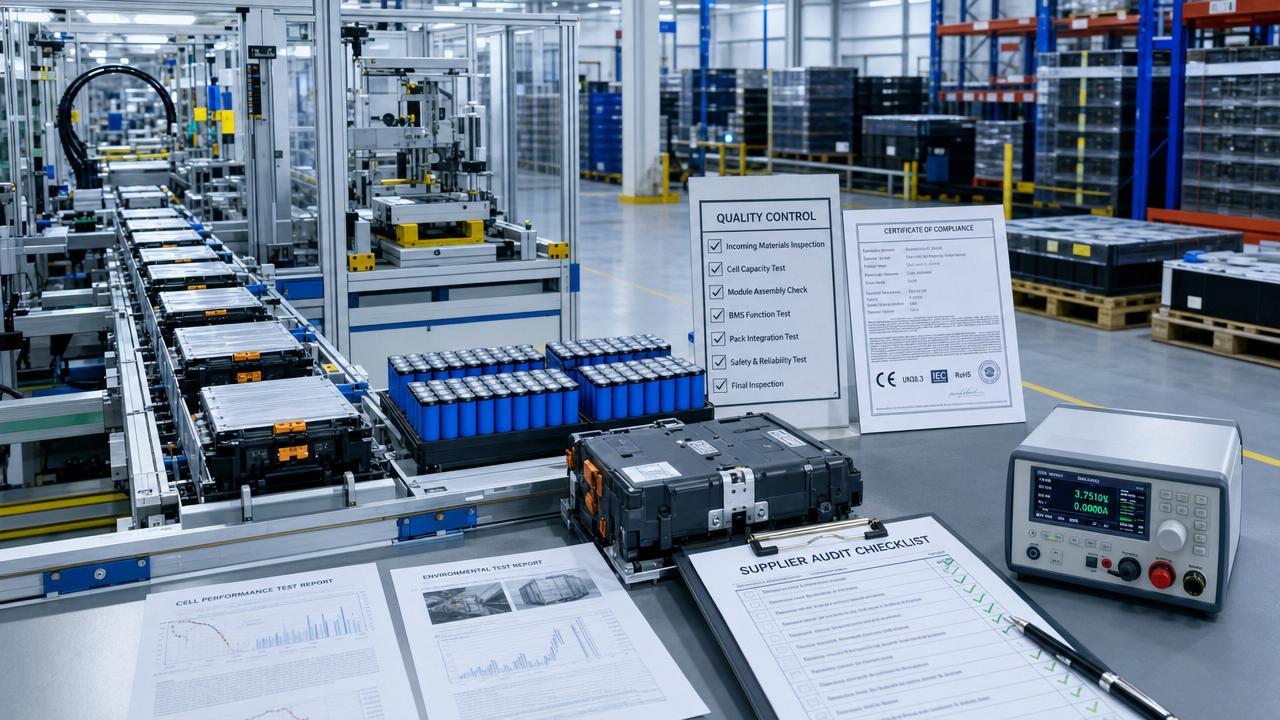
The checklist below helps compare candidate suppliers on the most practical technical and sourcing factors for IC cleaning applications.
The main takeaway is that chemical purity alone is not enough. Procurement should treat the supplier as part of the process control chain, especially where residue-sensitive cleaning steps interact with packaging, MEMS sensing surfaces, or high-reliability power devices.
2. Manufacturing Discipline and Certification Readiness
A credible High-Purity Chemicals supplier should be able to explain how chemicals are manufactured, filtered, sampled, tested, filled, and released. Buyers do not always need proprietary details, but they do need confidence that contamination control is built into the production routine rather than added as a final inspection step.
Look for structured management systems such as ISO 9001, and where relevant, laboratory competence aligned with ISO/IEC 17025 practices for test reliability. In semiconductor-facing supply chains, audit preparedness, documented CAPA workflow, and raw material traceability are often as important as the finished product specification.
Questions for a supplier audit or qualification call
- How many filtration stages are used before filling?
- Are containers pre-cleaned and verified before packaging?
- How are out-of-spec lots segregated and investigated?
- What is the retention period for batch records and reserve samples?
- How quickly can the supplier issue 8D or equivalent corrective action?
If the supplier cannot answer these basics within 1 to 2 business days, the issue is rarely only communication. It may indicate weak internal control or limited experience serving semiconductor-grade applications.
Supply Continuity, Packaging Integrity, and Regional Delivery Capability
For procurement teams, a technically acceptable product still fails if it cannot arrive on time, in clean condition, and with full documentation. This is why supplier vetting must include delivery planning, regional warehousing, packaging design, and emergency response capability.
Packaging Is a Quality Variable, Not Just a Logistics Detail
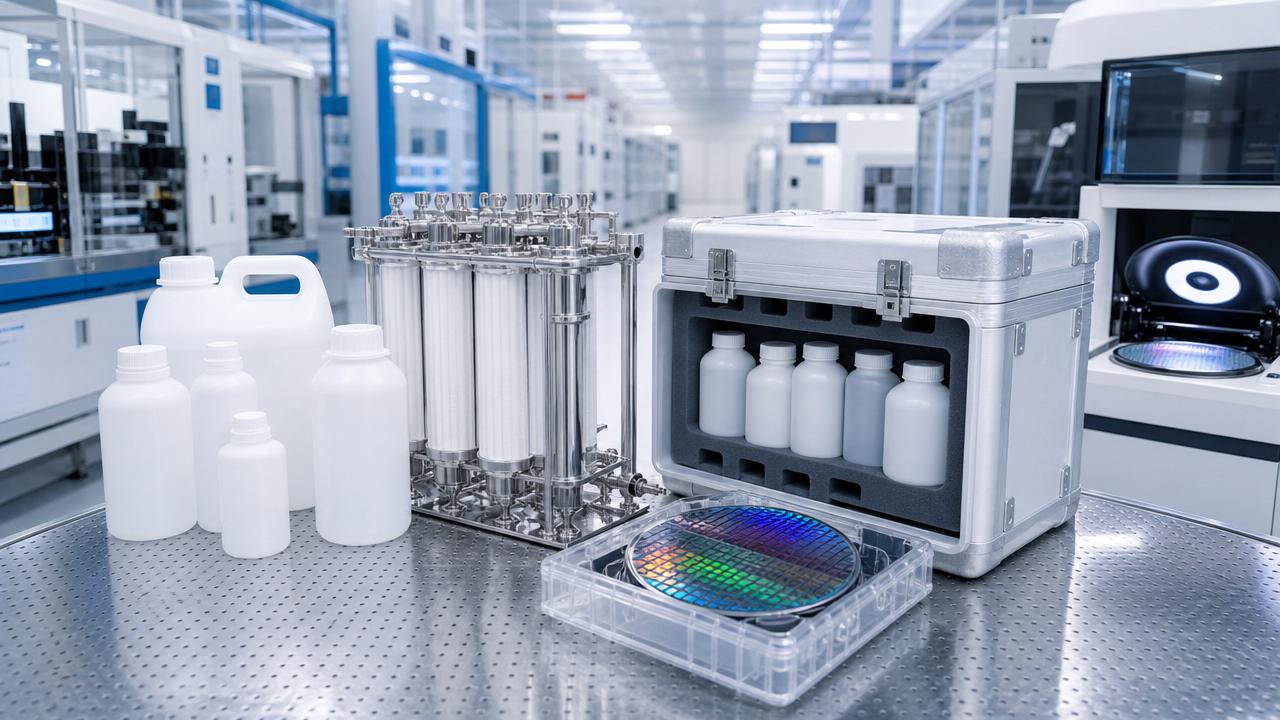
In high-purity IC cleaning chemicals, packaging can introduce particles, leachables, or moisture gain if not properly controlled. Buyers should confirm container material compatibility, tamper sealing, headspace management, labeling clarity, and whether filling is performed in a controlled environment.
A common procurement mistake is approving a chemical based on a sample bottle without reviewing commercial pack sizes such as 5 L, 20 L, 200 L, or IBC formats. The larger the pack, the greater the importance of valve cleanliness, dispensing method, and reclosure performance over repeated use.
Lead Time, Backup Stock, and Multi-Site Support
Standard lead times for electronic-grade chemicals often range from 2 to 6 weeks depending on raw materials, testing release, and hazardous goods transport rules. Buyers should ask what inventory is held regionally, what safety stock policy exists, and whether the supplier supports forecast locking for 30, 60, or 90 days.
This becomes critical when serving fabs or OSAT sites in more than one country. A supplier with only one filling point and no approved backup route may create hidden supply concentration risk, even if quality performance looks strong during the initial qualification phase.
The table below can be used during sourcing reviews to compare supply assurance and service readiness among shortlisted suppliers.
These benchmarks help distinguish a catalog vendor from a strategic High-Purity Chemicals supplier. The strategic supplier is the one that can protect continuity during line expansion, cross-border shipping constraints, or sudden increases in monthly consumption.
Regional and Global Considerations
As semiconductor sourcing becomes more regionalized, buyers increasingly need partners that understand customs handling, hazardous goods labeling, local language documentation, and destination-specific storage rules. This is particularly relevant when bridging China-based manufacturing growth with international reliability expectations.
For G-SSI-aligned procurement, resilience means balancing 3 priorities at once: process-grade purity, documented compliance, and deliverability across multiple industrial hubs. A supplier that supports only one of these three will create friction as volumes scale.
A Practical Qualification Process for Procurement Teams
A disciplined sourcing process can reduce qualification risk and shorten decision cycles. In many organizations, supplier approval for critical IC cleaning chemicals can be completed in 4 stages over 3 to 8 weeks, depending on internal lab capacity and application risk.
Stage 1: Desktop Review
Collect technical data sheets, safety documents, certificates, sample COAs, packaging details, and delivery terms. During this stage, remove suppliers that cannot provide basic traceability or have unclear impurity reporting. This often narrows a long list to 2 or 3 realistic candidates.
Stage 2: Technical and Quality Evaluation
Run incoming inspection and, if needed, side-by-side lab comparison on key parameters such as metals, particles, moisture, or residue behavior after evaporation. For higher-risk uses, involve process engineering, quality, and EHS together rather than letting procurement decide alone.
Stage 3: Pilot Trial and Process Fit
Use controlled pilot lots on the actual cleaning step. Monitor defectivity, surface condition, equipment compatibility, and operator handling. A good High-Purity Chemicals supplier should support this phase with technical guidance, not just shipment execution.
Stage 4: Commercial Approval and Risk Controls
After technical approval, finalize MOQ, incoterms, lead time commitment, complaint handling process, and change notification rules. For critical chemicals, buyers should also define at least 1 backup source or contingency plan before ramping to full production volume.
Common mistakes to avoid
- Approving on price before verifying contamination profile
- Ignoring packaging cleanliness and dispensing compatibility
- Reviewing only one batch instead of multiple lots
- Skipping service-level expectations in the supply agreement
- Assuming broad industrial chemical experience equals semiconductor readiness
What Strong Suppliers Typically Offer Beyond the Product
The most reliable suppliers create value beyond the drum or bottle. They help procurement and engineering teams reduce qualification time, strengthen audit readiness, and improve cross-functional coordination between sourcing, process, quality, and logistics.
Technical Support and Problem Resolution
When a cleaning issue appears, response speed matters. A supplier that can provide rapid lot traceability, comparative data, retained sample review, and corrective action within 5 business days is usually more valuable than a lower-cost supplier that takes 2 weeks to investigate.
Documentation for Audits and Customer Programs
In industrial, automotive, and infrastructure electronics, documentation can directly affect shipment approval. Procurement teams should favor suppliers that can support recurring COA issuance, specification control, annual quality reviews, and formal notice for raw material or process changes.
Alignment With Long-Term Semiconductor Growth
As fabs and advanced packaging lines expand, monthly demand can rise faster than expected. A supplier serving the semiconductor ecosystem should be prepared for phased scale-up, whether demand increases by 20%, doubles over 12 months, or expands into additional geographies.
For procurement leaders working with G-SSI-aligned priorities, the ideal High-Purity Chemicals supplier is one that combines purity assurance, dependable service, and international-grade control discipline. That combination supports silicon sovereignty, sensor accuracy, and more resilient digital infrastructure.
A smart sourcing decision for IC cleaning chemicals should be based on measurable purity control, strong quality systems, packaging reliability, and realistic delivery capability. Buyers who compare at least 4 to 6 decision points, review multi-lot data, and test service responsiveness are far more likely to secure stable long-term supply.
If your team is evaluating a High-Purity Chemicals supplier for semiconductor cleaning, now is the right time to build a structured qualification plan. Contact us to discuss your application, request a tailored sourcing checklist, or explore more solutions for high-purity electronic chemicals and semiconductor manufacturing support.
Get weekly intelligence in your inbox.
No noise. No sponsored content. Pure intelligence.
 Apr 28, 2026When do rapid prototyping 3D printing services save real costWhen do rapid prototyping 3D printing services save real cost
 Apr 28, 2026What Can Go Wrong in Fan-out Wafer Level Pkg?What Can Go Wrong in Fan-out Wafer Level Pkg?
 Apr 28, 2026What Makes Optical LiDAR Modules Better for Autonomy?What Makes Optical LiDAR Modules Better for Autonomy?
 Apr 28, 20262026 Market Trends in Supply Chain Resilience for Fabs2026 Market Trends in Supply Chain Resilience for Fabs
 May 22, 2026Solar Panels Wholesale USA: Pricing Shifts to Watch in 2026Solar Panels Wholesale USA: Pricing Shifts to Watch in 2026
 May 22, 2026Residential Photovoltaic Modules: What Impacts Long-Term OutputResidential Photovoltaic Modules: What Impacts Long-Term Output
 May 22, 2026How to Vet a Lithium-Ion Battery Manufacturer in ChinaHow to Vet a Lithium-Ion Battery Manufacturer in China
 May 22, 2026Lithium-Ion ESS Batteries: Key Safety Checks Before ProcurementLithium-Ion ESS Batteries: Key Safety Checks Before Procurement
![]() May 22, 2026Commercial EV Charging Installation: Cost Drivers and PaybackCommercial EV Charging Installation: Cost Drivers and Payback
May 22, 2026Commercial EV Charging Installation: Cost Drivers and PaybackCommercial EV Charging Installation: Cost Drivers and Payback![]() May 22, 2026How to Judge Sensory Data Precision Before System DeploymentHow to Judge Sensory Data Precision Before System Deployment
May 22, 2026How to Judge Sensory Data Precision Before System DeploymentHow to Judge Sensory Data Precision Before System Deployment May 22, 2026Industrial-Grade Sensor Specs That Matter in Harsh EnvironmentsIndustrial-Grade Sensor Specs That Matter in Harsh Environments
 May 22, 2026Best Power Semiconductor Materials for Fast-Switching DesignsBest Power Semiconductor Materials for Fast-Switching Designs
![]() May 22, 2026GaN Power Modules in 2026: Where Adoption Is AcceleratingGaN Power Modules in 2026: Where Adoption Is Accelerating
May 22, 2026GaN Power Modules in 2026: Where Adoption Is AcceleratingGaN Power Modules in 2026: Where Adoption Is Accelerating May 22, 20261200V+ SiC MOSFETs: Efficiency Gains vs IGBT Trade-Offs1200V+ SiC MOSFETs: Efficiency Gains vs IGBT Trade-Offs
 May 22, 2026China Accelerates Cleanroom Standards, Cuts Export Certification by 30%China Accelerates Cleanroom Standards, Cuts Export Certification by 30%
 May 22, 2026Hormuz Strait Fee Dispute May Delay Ultra-Pure Gas Shipments by 7–12 DaysHormuz Strait Fee Dispute May Delay Ultra-Pure Gas Shipments by 7–12 Days
 May 22, 2026ASTM F2100-26 Enforces High-Precision Gas Sensor Compliance for Medical MasksASTM F2100-26 Enforces High-Precision Gas Sensor Compliance for Medical Masks
 May 22, 2026China Customs Adds 'Restriction ID' for Photoresist/Solvent ExportsChina Customs Adds 'Restriction ID' for Photoresist/Solvent Exports
 May 22, 2026EU CBAM Tightens Reporting for Ultra-Pure Electronic GasesEU CBAM Tightens Reporting for Ultra-Pure Electronic Gases
 May 21, 2026Silicon Value Chain Analysis: 2026 Supply Risks for IC Cleaning SolventsSilicon Value Chain Analysis: 2026 Supply Risks for IC Cleaning Solvents
 May 21, 2026Intelligent Industrial Era Applications Expanding Demand for Gas SensorsIntelligent Industrial Era Applications Expanding Demand for Gas Sensors
 May 21, 2026How to Compare an Advanced IC Packaging Manufacturer in 2026How to Compare an Advanced IC Packaging Manufacturer in 2026
 May 21, 2026Silicon Value Chain Optimization for ArF Photoresist Cost ControlSilicon Value Chain Optimization for ArF Photoresist Cost Control
 May 21, 2026Industrial-Grade Sensors for IoT: Key Specs That Impact Field StabilityIndustrial-Grade Sensors for IoT: Key Specs That Impact Field Stability
 May 21, 2026Intelligent Industrial Era Technologies Driving MEMS Sensing UpgradesIntelligent Industrial Era Technologies Driving MEMS Sensing Upgrades
 May 21, 2026Sovereign Digital Infrastructure Development and Chiplet Packaging StrategySovereign Digital Infrastructure Development and Chiplet Packaging Strategy
 May 21, 2026Semiconductor Standards for Automotive: What Changes in 2026 LiDAR DesignSemiconductor Standards for Automotive: What Changes in 2026 LiDAR Design